The common adder holds a record no other snake can claim: it lives farther north than any other species on Earth, ranging well beyond the Arctic Circle in Scandinavia.
This stocky, venomous viper belongs to the family Viperidae and is spread across almost the entire Eurasian landmass, from Great Britain and France in the west to Sakhalin Island, North Korea, and northern China in the east. The IUCN lists it as Least Concern, a reflection of its huge range and large overall population, even though many local populations are shrinking.
In several European countries, including Britain, it is the only native venomous snake, and it has three recognized subspecies scattered across its range. Between its extreme cold tolerance, its sex-linked coloration, and centuries of folklore attached to it, the adder offers far more than its fearsome reputation suggests.
Identification and Appearance
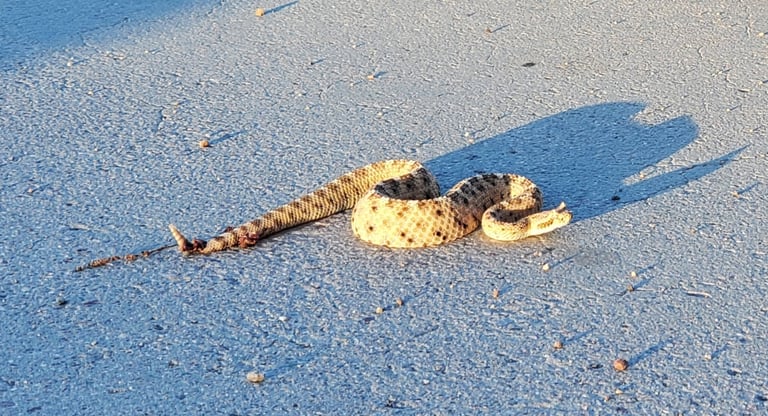
The clearest way to recognize an adder is the dark zigzag stripe running the length of its back and tail, usually paired with a dark V- or X-shaped mark on top of the head and a dark streak running from the eye back to the neck. Light-colored individuals show this pattern as broken crossbars, while darker snakes show a fainter brown version of the same design; occasional melanistic individuals are solid black with no visible pattern at all.
Adults are thick-bodied but modest in size, typically reaching about 55 to 60 cm in total length and weighing in the range of 50 to roughly 180 g. Scandinavian populations produce the largest individuals, regularly exceeding 90 cm, with two records of specimens reaching 104 cm; adders in France and Great Britain top out at 80–87 cm. The head is broad and distinct from the neck, with nearly flat, vertical sides and a snout edge raised into a low ridge, while the eye is large and often slightly smaller in females than in males.
Sex can often be told by color alone, which is unusual among snakes: males are typically a uniform gray with bold black zigzag markings, while females tend toward brown with dark brown markings that stand out less sharply. Melanistic, all-black individuals are disproportionately female. Scale counts also differ slightly between the sexes, with males carrying 132–150 ventral scales and 32–46 paired subcaudals, compared to 132–158 and 23–38 in females.
Distribution and Habitat
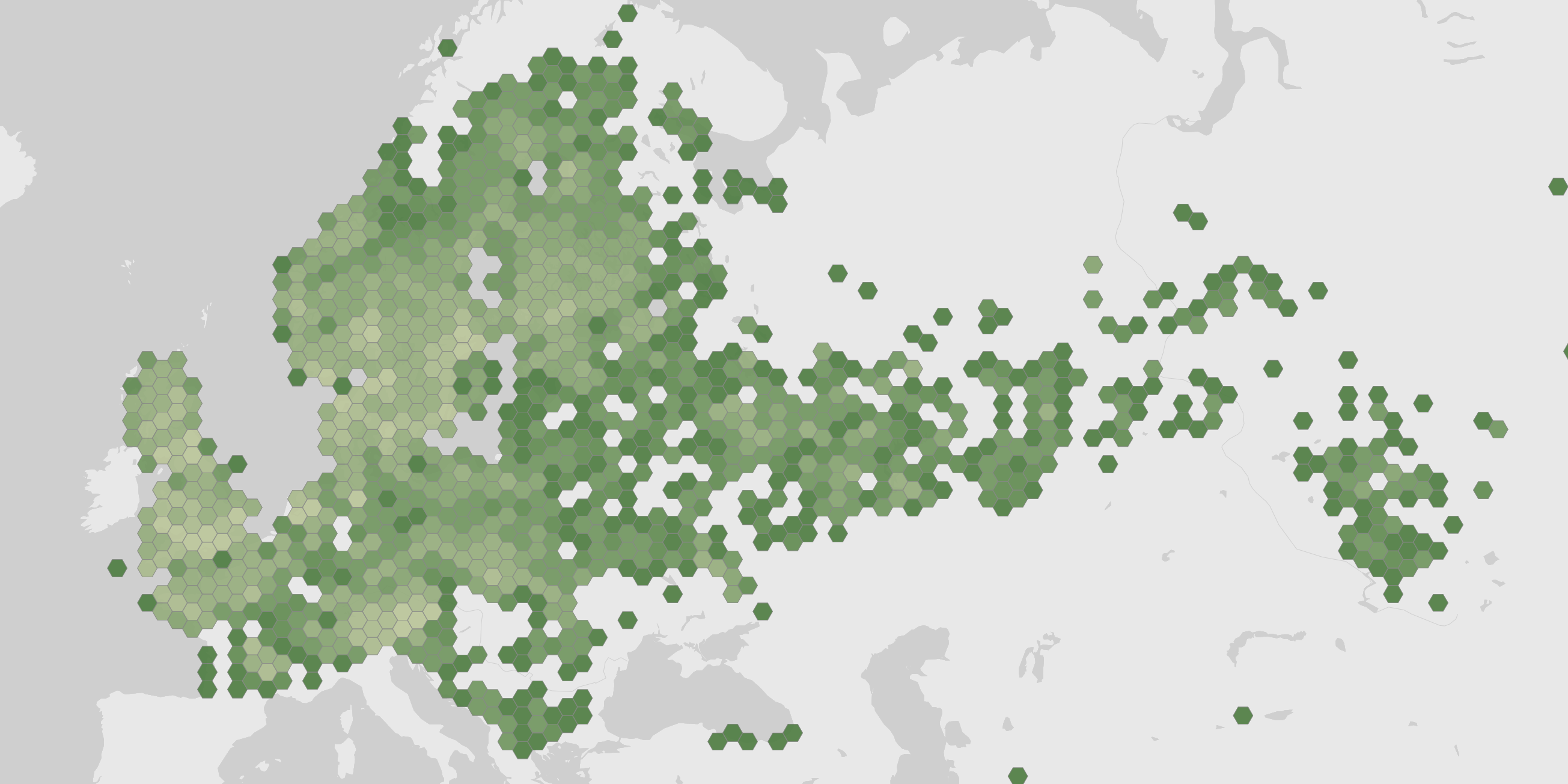
The adder's range stretches across almost the whole of temperate and northern Eurasia, from Great Britain, Belgium, the Netherlands, and Scandinavia through France, Italy, and the Balkans, across Russia to the Pacific coast, Sakhalin Island, North Korea, northern Mongolia, and northern China. It occurs farther north than any other snake, crossing the Arctic Circle in Scandinavia.
It uses a wide variety of habitats, including heathland, moorland, open woodland and woodland edges, chalky downs, rocky hillsides, sandy heaths, coastal dunes, and even old quarries and rubbish tips, always needing sunny glades or slopes for basking alongside dense ground cover for shelter. In the Swiss Alps it climbs to about 3,000 m, and in parts of southern Europe such as southern France and northern Italy it is found either in low wetlands or at high elevation, while in Hungary and Russia it tends to avoid open steppe country that is instead occupied by Vipera ursinii.
Monthly observation counts peak sharply between April and July, with numbers falling off through autumn and dropping to a low in winter. This pattern almost certainly reflects seasonal activity and basking behavior around spring emergence and the summer breeding period rather than any true change in population size, since the snakes become far harder to detect once they enter hibernation.
Behavior and Lifestyle
Adders are solitary animals that come together only to mate or to share communal hibernation sites, and they are most active around dusk, particularly in the southern part of their range; farther north, populations shift toward daytime activity. They move by slithering along the ground and are mostly terrestrial, though they will climb into low bushes or up banks to bask or hunt.
Hibernation begins in September or October and can last 150 days for British males, around 180 days for British females, and as long as 8 to 9 months in northern Sweden. Snakes gather in shared hibernacula, often old mammal, crayfish, or tortoise burrows, with a single site sometimes holding up to 100 individuals; as temperatures fall they move deeper to stay below the frost line, though mild winter days can draw them out to bask on patches of bare ground. Hibernation is costly: roughly 15% of adults and 30 to 40% of juveniles die over winter, and adders in milder parts of the range may stay active year-round instead.
Despite their venom, adders are timid rather than aggressive, typically vanishing into cover at the first sign of disturbance and biting only when cornered, alarmed, stepped on, or picked up. A threatened snake pulls the front of its body into an S-shape as a striking posture, and some individuals, often pregnant females, give a loud, sustained hiss as a warning before any strike.
Communication
Adders rely heavily on chemical and visual signals rather than sound. Their eyesight is well developed and used both for hunting and for general awareness, and although they lack an external ear, they can still detect vibrations through a skin-muscle-bone pathway that carries sound from the skin through the jaw to the inner ear.
Smell is arguably their most important sense for social communication. Tongue-flicking collects airborne particles that are passed to an olfactory organ in the roof of the mouth, letting the snake read chemical information left by other adders. Pheromones released into the environment can linger long after a snake has moved on, allowing individuals to track each other over distance and time.
This chemical channel is central to reproduction: pheromones signal whether a female is ready to breed, and males use scent trails, sometimes stretching hundreds of meters, to locate receptive mates during the spring mating season.
Hunting and Diet
Adders hunt using two distinct strategies rather than chasing down prey outright. The first is a sit-and-wait ambush: the snake stays motionless in one spot until prey passes close enough to strike, injecting venom through its fangs and then using its keen sense of smell to track the wounded animal to where it finally dies before swallowing it head first. The second strategy involves actively searching for prey, a tactic adders favor during their most active hours around dusk, when they are naturally crepuscular.
Their prey list centers on small vertebrates: voles, shrews, and mice make up much of the diet, supplemented by small lizards, birds, and frogs. This combination of ambush and active foraging lets adders exploit whatever prey is locally available across their varied habitats.
Reproduction and Life Cycle
Mating follows a strict seasonal rhythm tied to emergence from hibernation. Males come out first and stay near the hibernation site, on a patch known as the mating ground, waiting for females to appear; timing varies across the range, with copulation occurring in the last week of April in Hungary but not until the second week of May farther north, and occasional matings recorded as late as June or even October, though it is unclear whether autumn pairings produce offspring. Courtship involves synchronized side-by-side 'flowing' movements, tongue flicking along the female's back, tail vibration, and body quivering, and males track females over long scent trails before pairs stay together for a day or two after mating.
The mating system is polygynous, and rival males compete directly for access to females through the so-called
Population and Ecological Role
Adders help regulate the numbers of small mammals, particularly rodents, and also exert some control over small bird, frog, and lizard populations they prey on. In turn, they are themselves a food source for larger mammals and birds, placing them in the middle of local food webs rather than at the top.
Citizen-science survey work in the United Kingdom has documented extensive declines, especially among smaller, more isolated populations, pointing to an overall downward trend even where the species remains widespread across its full Eurasian range. Disturbance from public pressure, habitat fragmentation, and poor habitat management have been identified as the most likely drivers behind these localized losses.
Conservation and Threats
The IUCN lists Vipera berus as Least Concern, a status based on its extremely wide distribution, presumed large overall population, broad range of habitats, and a likely slow rate of decline, even though the global population trend is recognized as decreasing rather than stable.
The most significant threats are habitat loss and fragmentation driven by agriculture and development, along with scrub encroachment and deforestation that erode preferred sites; deliberate killing by people who fear the species regardless of its protected status compounds these losses. Collection for the pet trade and for venom extraction adds further pressure, and in the United Kingdom the release of an estimated 47 million pheasants and 10 million partridges each year for shooting has been linked to significant impacts on adder populations, with some projections suggesting the species could disappear from parts of Britain by 2032.
Legal protections exist across much of its range: killing, injuring, or selling adders is illegal in Great Britain under the Wildlife and Countryside Act 1981, and similar protections apply in Norway, Denmark, Finland, and Sweden, though Finnish and Swedish law permits killing as a last resort when a snake threatens safety on private property and cannot be safely relocated. Switzerland classifies the species as endangered domestically, it is listed under Appendix III of the Berne Convention, and it occurs within many protected areas across Europe.
Cultural Significance
British and European folklore has long cast the adder as a creature of strange powers and remedies. It was once believed to be deaf, an idea echoed in Psalm 58, yet paradoxically snake oil made from adders was used as a folk cure for deafness and earache. Traditional cures for adder bites included killing the offending snake and rubbing its corpse or fat on the wound, pressing a live pigeon or chicken against the bite, or jumping over water.
Older beliefs held that adders were drawn to hazel trees but repelled by ash, and the Druids were said to believe that large, frenzied gatherings of adders occurred each spring, centered on a polished 'adder stone,' or Glain Neidr in Welsh, thought to hold supernatural power. Beyond folklore, adder venom has a practical modern use: it is collected, or milked, from live snakes to help produce antivenom for treating adder bites, alongside the species' natural role in controlling populations of rodents and other animals often regarded as pests.
Fun Facts
- Vipera berus is the world's most northerly snake, with populations living beyond the Arctic Circle in Scandinavia.
- Melanistic, entirely black adders occur occasionally, and these dark individuals are usually female.
- Three subspecies of the adder are currently recognized across its enormous Eurasian range.
- The species' type locality was eventually fixed at Berthåga, near Uppsala, Sweden, following a 2008 neotype designation.
- Adder venom is deliberately collected, or 'milked,' from living snakes to manufacture antivenom used to treat bites.
- Old folklore claimed adders were attracted to hazel trees but repelled by ash wood.
Photos
Photographs from via iNaturalist, licensed under CC0 1.0., by Jan Thougaard via iNaturalist, licensed under CC BY 4.0., by Olexandr Shevchenko via iNaturalist, licensed under CC BY 4.0., by Maarten Trekels via iNaturalist, licensed under CC BY 4.0., by Fyodor Demin via iNaturalist, licensed under CC BY 4.0., by Valabe via iNaturalist, licensed under CC BY 4.0., by Фёдор via iNaturalist, licensed under CC BY 4.0., by Andrea via iNaturalist, licensed under CC BY 4.0., by Barry Stewart via iNaturalist, licensed under CC BY 4.0., by Allan T. Souza via iNaturalist, licensed under CC BY 4.0., by Ron de Goede via iNaturalist, licensed under CC BY 4.0., by Dietmar K. L. Moser via iNaturalist, licensed under CC BY 4.0., by Helen Waterman via iNaturalist, licensed under CC BY 4.0., by Daniel Buczkiewicz via iNaturalist, licensed under CC BY 4.0., by Полина Полежанкина via iNaturalist, licensed under CC BY 4.0., by ajott via iNaturalist, licensed under CC BY 4.0., and by Katharina Pi via iNaturalist, licensed under CC BY 4.0., credited on each photo.
Ecology and classification
Classification
- Phylum
- Chordata
- Class
- Squamata
- Family
- Viperidae
- Genus
- Vipera
- Species
- Vipera berus
Sources
- GBIF Species names and classification
- iNaturalist Photos
- Wikidata Common names and conservation status
- Wikipedia Summary extract
- Encyclopedia of Life Habitat, diet and behavior traits
- Animal Diversity Web Animal habitat, behavior and diet
- AnAge Longevity