Roman emperors reportedly prized this mushroom above all others, and its scientific name still echoes that imperial reputation. Amanita caesarea, commonly called Caesar's mushroom, is a species of fungus in the genus Amanita, first described by Giovanni Antonio Scopoli in 1772.
It belongs to the family Amanitaceae within the order Agaricales, and grows across parts of southern Europe and North Africa. Globally, the IUCN lists it as Least Concern, though its story is more complicated at the local level. Between its striking orange cap, its history at Roman tables, and its resemblance to some of the most dangerous mushrooms in the genus, Caesar's mushroom sits at an unusual crossroads of prized food and cautionary tale.
Fruiting Body and Identification
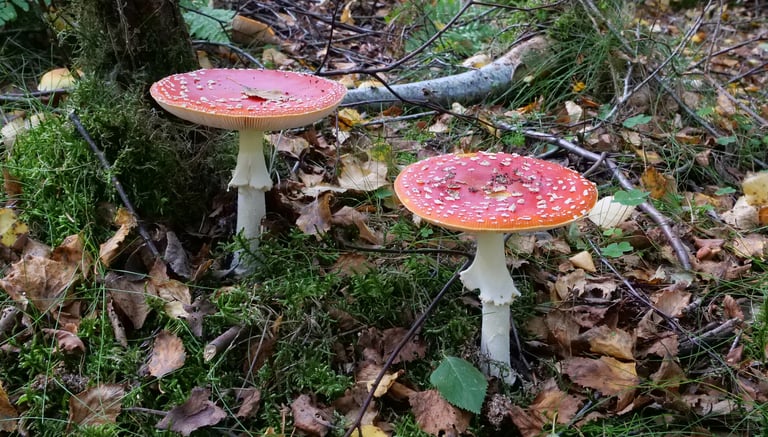
The most reliable identifying feature of Amanita caesarea is the combination of its orange-to-red cap and yellow gills atop a white, cup-like volva. The cap begins hemispherical, expands to convex, and finally flattens out, reaching up to 20 centimeters (8 inches) across. Its surface is smooth, with a margin that shows fine striations.
Beneath the cap, the gills are adnexed or free, closely spaced, and yellowish, matching the color of the similarly toned stipe. The stipe stands 5 to 15 centimeters (2 to 6 inches) tall and 1.5 to 3 centimeters (roughly half an inch to 1.25 inches) wide, often slightly paler than the cap. A loose, often striate ring hangs from the upper stipe, and the base is equal or slightly bulged, sitting inside a white, cup-shaped volva left over from the universal veil that enclosed the young mushroom. The spores are white, and the spore print ranges from white to faintly yellow.
Chemical analyses of fruit bodies have found notable levels of organic acids, around 6 grams per kilogram, dominated by malic and ascorbic acid alongside citric, ketoglutaric, fumaric, and shikimic acids, plus traces of succinic acid. Ergosterol has also been isolated from the species.
Distribution and Habitat
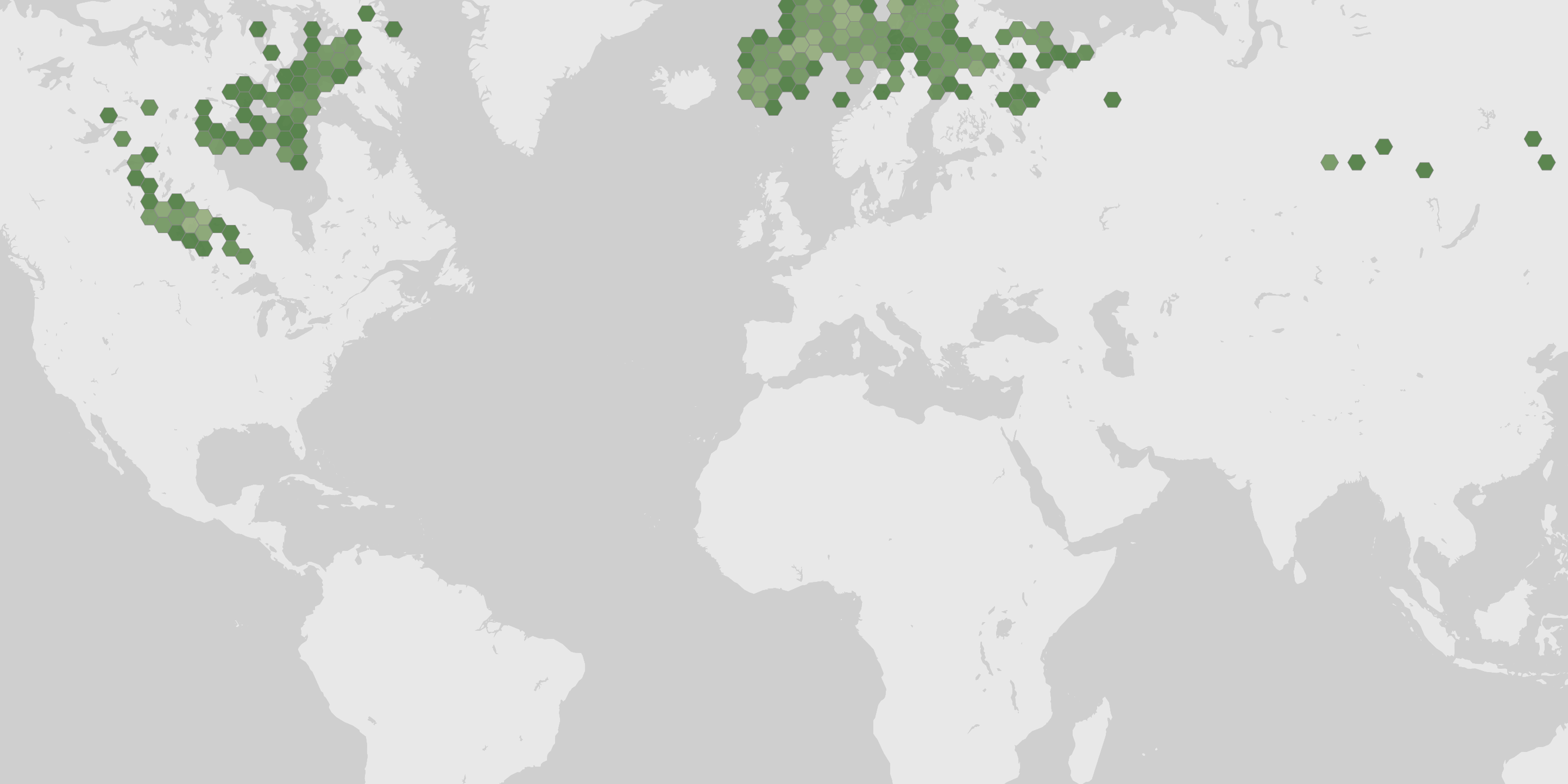
Amanita caesarea occurs across North Africa and southern Europe, with a stronghold in the hills of northern Italy. It is also recorded in the Balkans, Hungary, and possibly Iran, though Iran's mycological record is not well explored, so specimens there may belong to an undescribed taxon rather than true A. caesarea.
The species is thought to have spread north of the Alps with Roman armies, since it is most frequently found along old Roman roads, a detail that links its distribution directly to its human history. In Europe, it grows primarily in oak and pine forests, appearing individually or in groups from early summer to mid-autumn. In warmer climates it favors higher-elevation oak woodlands, sometimes mixed with conifers.
Monthly observation data (a record of presence, not abundance or a complete range map) shows counts rising sharply from June onward and peaking in September, with high numbers continuing through August and October before falling off by November. This pattern is consistent with a fruiting season concentrated in late summer and early autumn.
Uses and Cultural History
Amanita caesarea has long been a highly appreciated edible mushroom in Europe. In Italy it is traditionally gathered and eaten under names such as ovolo or ovolo buono ("good egg") and fungo reale ("royal mushroom"), reflecting centuries of culinary regard.
In Mexico it has traditionally been eaten roasted with a bit of epazote (Dysphania ambrosioides), a distinct regional preparation. It is also widely eaten in the Himalayas and Tibetan areas, showing a culinary reach well beyond the Mediterranean. An international export market for the mushroom developed in the 1990s, extending its commercial presence beyond the regions where it is traditionally foraged.
Beyond the kitchen, folk traditions in ancient Roman and Mediterranean cultures have attributed some measure of general healthfulness to the mushroom, though it has never held the prominence in medicine that species like reishi (Ganoderma lucidum) have in traditional Chinese medicine.
Conservation and Threats
The IUCN lists Amanita caesarea as Least Concern globally, meaning the species is not currently considered at risk of extinction across its overall range. That global assessment, however, does not reflect its status everywhere it grows.
At the national level, protection is notably stronger. The species is listed in the Red Data Book of Ukraine, and it is protected by law in Croatia, Slovenia, the Czech Republic, and Germany, an indication that at least some populations are considered vulnerable enough locally to warrant legal safeguards.
Conservation status
- LC
- NT
- VU
- EN
- CR
Least Concern
Fun Facts
- Heavy metal analysis of A. caesarea found cadmium levels roughly four times higher than the limit allowed for cultivated mushrooms under European Union standards, along with excess lead, suggesting metal accumulation may be a species-specific trait.
- Chemical studies isolated ergosterol from the species and measured a relatively high organic acid content, about 6 grams per kilogram, with malic and ascorbic acid as the most abundant compounds.
- Laboratory culture experiments found that isolates of A. caesarea grew best at a pH of 6 to 7 and a temperature of 24 to 28 °C (75 to 82 °F), though the exact optimum varied between isolates.
- The pleasing fungus beetle Tritoma biguttata affinis has been recorded on what was identified as A. caesarea, though the record may actually involve a similar species such as A. angelica, A. arkansana, or A. jacksonii, and the beetle does not appear to rely on it as a regular food source.
Ecology
Habitat
- Forest
- Woodland