Amanita porphyria, also called the grey veiled amanita or porphyry amanita, is a fairly common mushroom of the genus Amanita. It is found in Europe and North America, and it is inedible.
The species belongs to the family Amanitaceae, in the order Agaricales and the phylum Basidiomycota. Like other members of its genus, it is a gilled mushroom that forms a close partnership with the roots of trees.
Its grey-violet ring and raw potato smell set it apart from the very common Amanita citrina, which it otherwise resembles closely in overall shape.
Fruiting Body and Identification
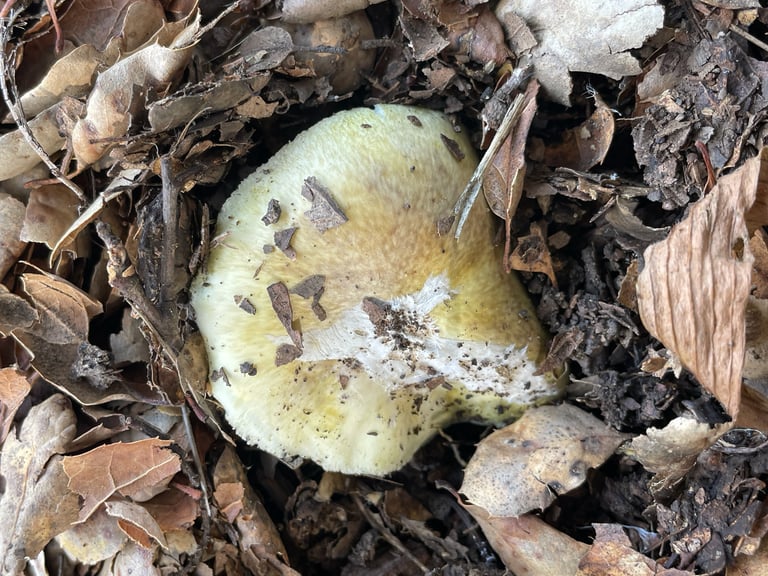
The cap is smooth and hemispherical when young, flattening with age. It measures about 4–10 centimetres (1.5–4 inches) across and is brown with a purplish or greyish tint. Grey patches of veil often remain on its surface.
The gills are whitish and free from the stem, and they darken when bruised. The spores are white and almost spherical, measuring 8–10 μm in diameter.
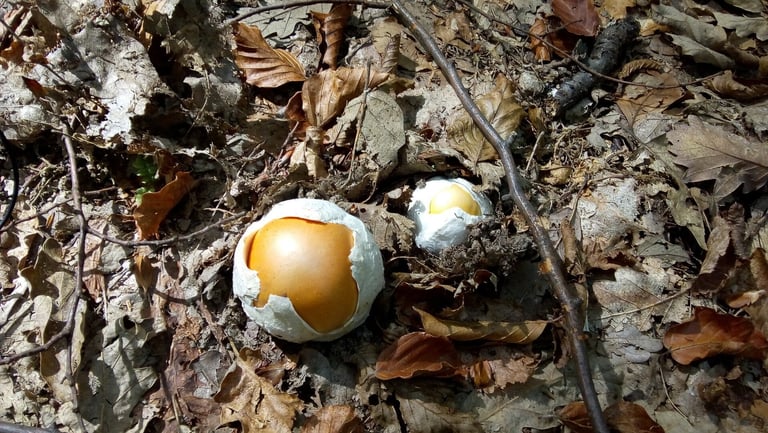
The stem is 5–12 centimetres tall and 0.6–1.5 centimetres thick. It has a basal bulb that may or may not be surrounded by a white, membranous volva. The fragile ring is grey-violet or blackened, and the white flesh smells of raw potato or radish.
Distribution and Habitat
Amanita porphyria usually grows on poor soil under coniferous trees, especially spruce. It also grows under fir, hemlock and some broadleaf trees such as birch.
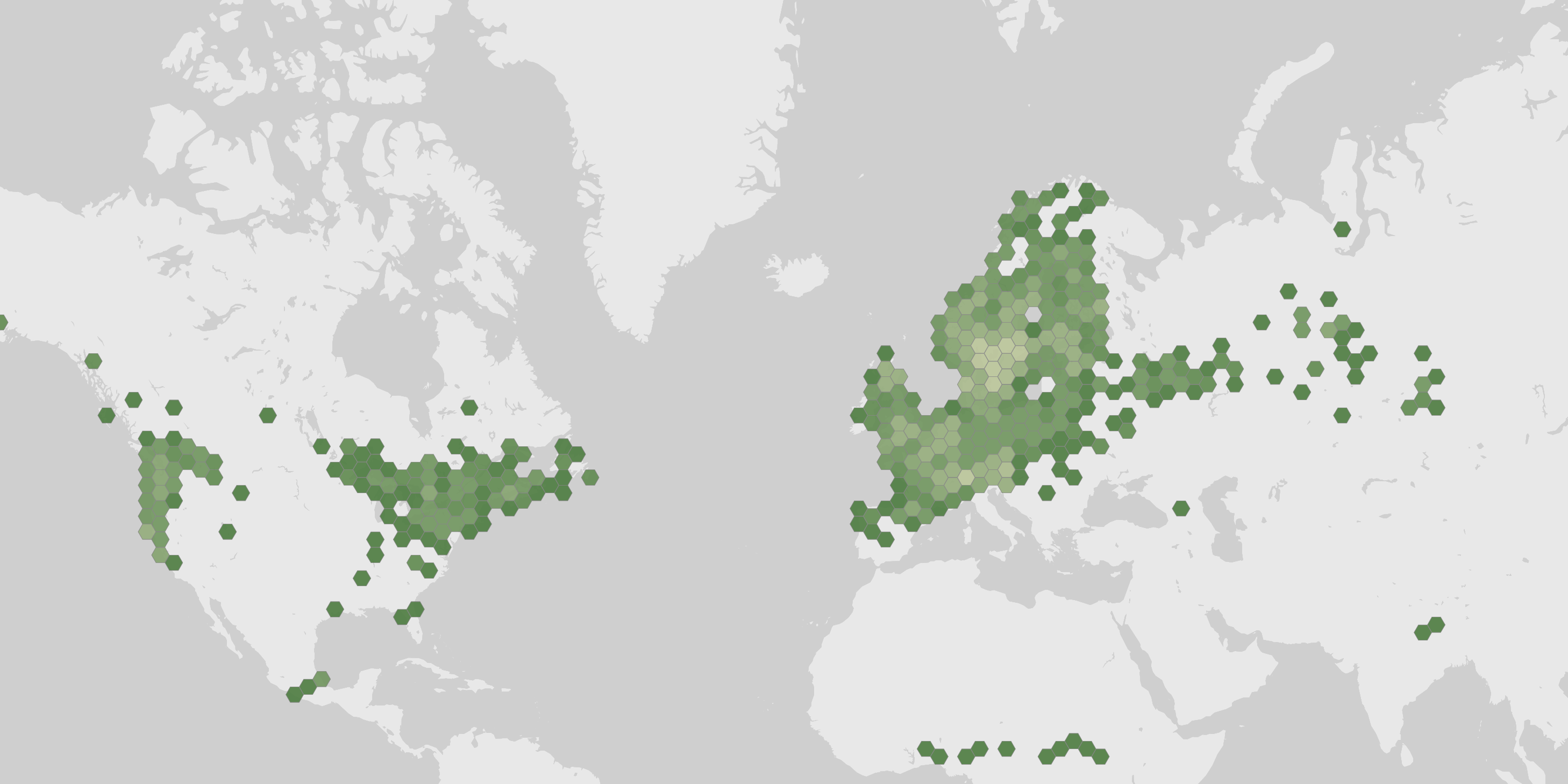
It is commoner in mountains and further north. In Europe it is very common in boreal and hemiboreal forests, but less so in temperate areas. Its occurrence in the northern part of the continent is particularly notable.
In North America it occurs across the northern part of the continent, from east to west. Recent DNA evidence shows that the North American variants belong to the same species as the European mushroom. It has also been found in Australia.
The mushroom appears from summer into autumn, and it is most often seen in late summer and early autumn.
Uses and Cultural History
Amanita porphyria is not suitable for consumption. Its main significance for people lies in its resemblance to much more poisonous species.
Photos
Photographs from via iNaturalist, licensed under CC0 1.0., by Christina s.l. via iNaturalist, licensed under CC BY 4.0., by Jerzy Tomes via iNaturalist, licensed under CC BY 4.0., by Ondřej Křivan via iNaturalist, licensed under CC BY 4.0., by Patrick Bayan via iNaturalist, licensed under CC BY 4.0., by Виктория Билоус via iNaturalist, licensed under CC BY 4.0., by Ewa Olchanowska via iNaturalist, licensed under CC BY 4.0., by Nina Filippova via iNaturalist, licensed under CC BY 4.0., by sylbobaggins via iNaturalist, licensed under CC BY 4.0., by ionafraser via iNaturalist, licensed under CC BY 4.0., by Tatyana Davidova via iNaturalist, licensed under CC BY 4.0., by Andrejus Gaidamavičius via iNaturalist, licensed under CC BY 4.0., and by Pyry Liedes via iNaturalist, licensed under CC BY 4.0., credited on each photo.
Ecology and classification
Classification
- Phylum
- Basidiomycota
- Class
- Agaricomycetes
- Order
- Agaricales
- Family
- Amanitaceae
- Genus
- Amanita
- Species
- Amanita porphyria
Sources
- GBIF Species names and classification
- iNaturalist Photos
- Wikidata Common names and conservation status
- Wikipedia Summary extract