Slender parsley-piert is a plant so small and inconspicuous that it is probably under-recorded across much of its range, easily overlooked among grasses on bare, acidic soil.
It is a sprawling, downy annual herb in the rose family (Rosaceae), found in acid grassland and on patches of bare ground throughout western Europe, from Britain and Scandinavia south to Morocco and east to Turkey. It has since spread with agriculture to parts of North America, Australia, and New Zealand. In Britain and France it is classed as Least Concern.
What makes it worth a closer look is its subtlety: a plant with no petals, flowers under 2 millimeters long, and a nearly identical relative that only careful examination can separate it from.
Identification and Appearance
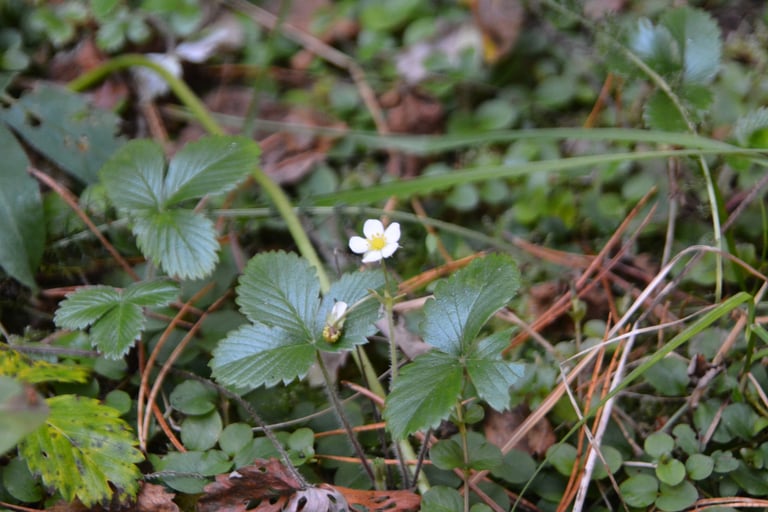
The most useful field mark is the leaf base: slender parsley-piert has leaves that narrow gradually into the stalk (a cuneate base), unlike the heart-shaped (cordate) base of its close relative, common parsley-piert.
This is a pale green, winter annual herb with prostrate, branched, leafy stems reaching up to 15 cm long. The alternate leaves spiral around the stem on short petioles, each about 0.5 cm long, broadly ternate with deeply lobed leaflets and sparsely hairy. Large, deeply-lobed stipules sit at the base of each leaf.
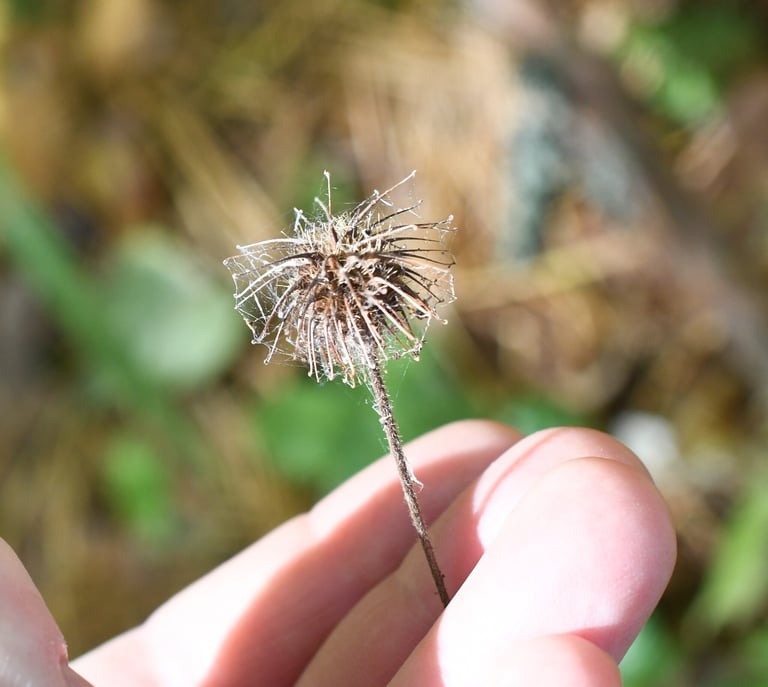
Flowers grow in tight clusters (glomerules) of 4 to 10, nestled within the stipules opposite each leaf base. Each flower is tiny, up to 2 mm long, pale green, sparsely pubescent, and has 4 sepals that never open fully; petals are absent entirely. A single stamen and single style are almost hidden within the sepals. Each flower produces one smooth, shining, ovoid achene.
Distinguishing it from common parsley-piert requires close inspection: slender parsley-piert has flowers only 1-1.9 mm long (versus 1.9-2.7 mm), upright rather than spreading sepals, smooth fruits rather than fruits furrowed at the base, deeply divided stipule teeth, and 6-9 leaf lobes rather than 7-15. It also tends to be smaller and a brighter green overall, and favors acid grassland rather than arable fields and waste ground.
Distribution and Habitat
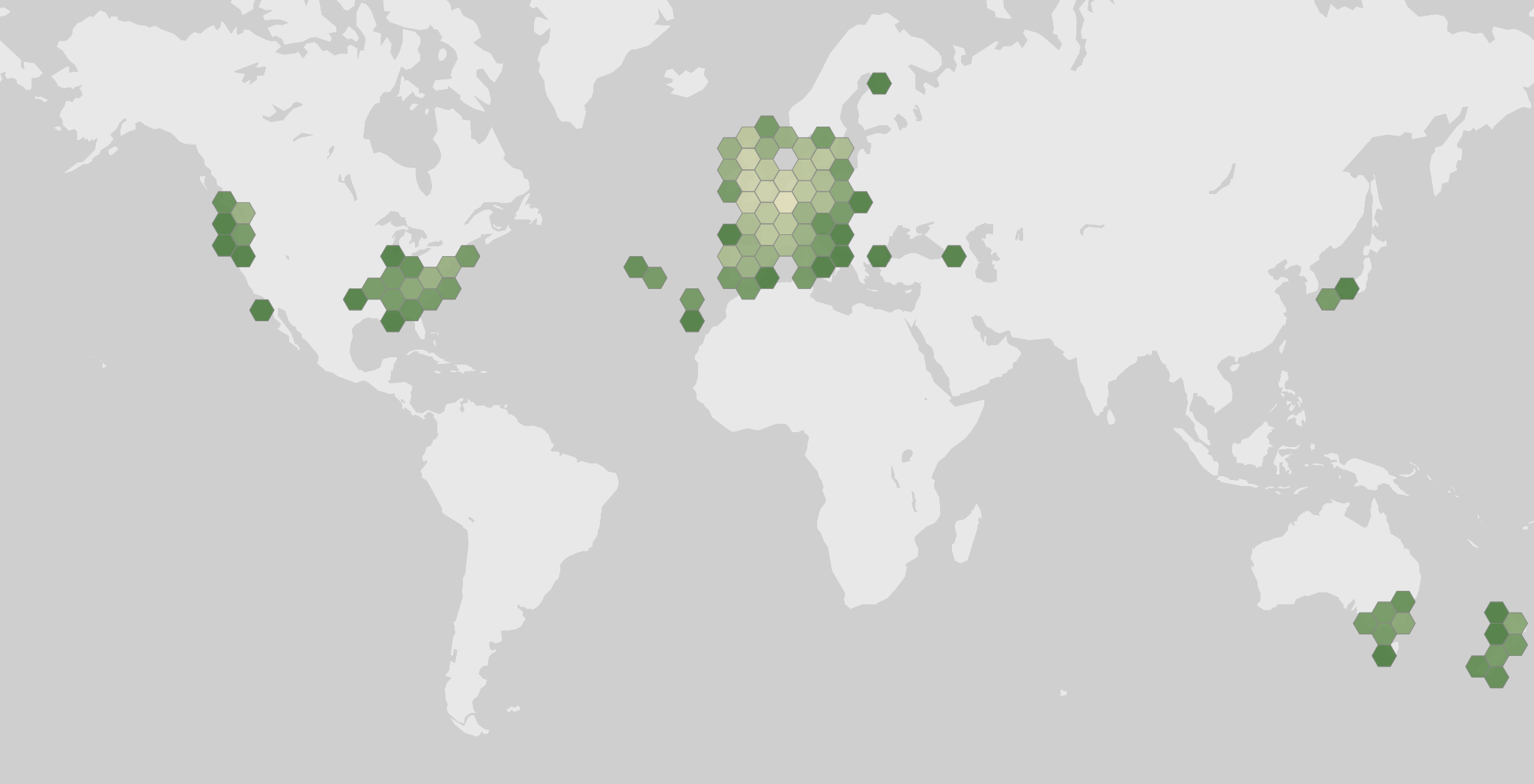
Slender parsley-piert occurs across western Europe, from Britain, Ireland, and Scandinavia south through France, Germany, and the Alps to Spain, Portugal, and Morocco, and east to Turkey, Lebanon, and Syria. It is absent from the Mediterranean islands.
The species favors moderate light, low moisture, and slightly acidic, nutrient-poor soils, and is intolerant of salt. In Britain its main habitat is upland acid grassland of the Festuca ovina type, though it also turns up on bare soil and sparsely vegetated ground within several other grassland and open-vegetation communities.
It has been introduced well beyond its native range, now established in parts of the eastern and western United States (from New York to Texas, and Oregon to British Columbia), as well as in Japan, Australia, and New Zealand, largely through agricultural spread.
Monthly observation counts peak sharply in spring, especially April and May, consistent with its habit as a winter annual that grows and flowers before warmer months set in.
Growth and Form
Slender parsley-piert grows as an annual, completing its life cycle within a single growing season as a winter annual: germinating in autumn or winter, remaining largely dormant through cold weather, and growing and flowering as conditions warm. Its stems remain prostrate and branched, spreading along the ground rather than standing upright, and reach a maximum length of about 15 cm.
Uses and Human Relationships
No specific human uses have been recorded for slender parsley-piert itself, though it is noted that any traditional uses of common parsley-piert, its close relative, would presumably apply equally to this species.
The common name derives from the plant's parsley-like leaves combined with the French term perce-pierre, meaning to break or pierce stone, reflecting its habit of growing in dry, barren, or rocky soils rather than any documented practical use.
Conservation and Threats
Slender parsley-piert has not yet been assessed for a global threat status. In Britain and France, however, it is classed as Least Concern, meaning there is no evidence of decline in those countries.
The species is described as native and local, and likely uncommon, though this may partly reflect under-recording given how easily it is overlooked. It remains widely naturalized well beyond its native European and Macaronesian range.
Fun Facts
- The different species of parsley-piert were not always clearly distinguished: Carl Linnaeus originally described only a single species, Aphanes arvensis, in his 1753 Species Plantarum, a name that covered both this species and its relative until they were later separated.
- Despite its scientific name suggesting an American origin, Aphanes australis is now considered an introduced species in the United States rather than a native one there.
- The plant is described as likely under-recorded, meaning its true abundance and distribution may be greater than existing records suggest.
Photos
Photographs from via iNaturalist, licensed under CC0 1.0., by zebedeugalinha via iNaturalist, licensed under CC BY 4.0., and by Sean Hartnett via iNaturalist, licensed under CC BY 4.0., credited on each photo.
Ecology and classification
Habitat
Growth habit
- Herb
Classification
- Phylum
- Tracheophyta
- Class
- Magnoliopsida
- Order
- Rosales
- Family
- Rosaceae
- Genus
- Aphanes
- Species
- Aphanes australis
Sources
- GBIF Species names and classification
- iNaturalist Photos
- Wikidata Common names and conservation status
- Wikipedia Summary extract
- Plants of the World Online Native range, life form and climate (WCVP)