The water avens produces nodding, reddish-pink flowers that hang downward rather than face the sky, a trait that sets it apart from many meadow flowers and gives it the alternate names nodding avens and drooping avens. It is a perennial flowering plant in the genus Geum, family Rosaceae, and carries the folk name Indian chocolate as well.
Native to temperate Europe, Central Asia, and parts of North America, it grows in bogs and damp meadows, flowering from May to September. Its IUCN status is Least Concern. Between its unusual flower structure, its wide range, and its place in folk tradition, it offers more to notice than its modest size suggests.
Identification and Appearance
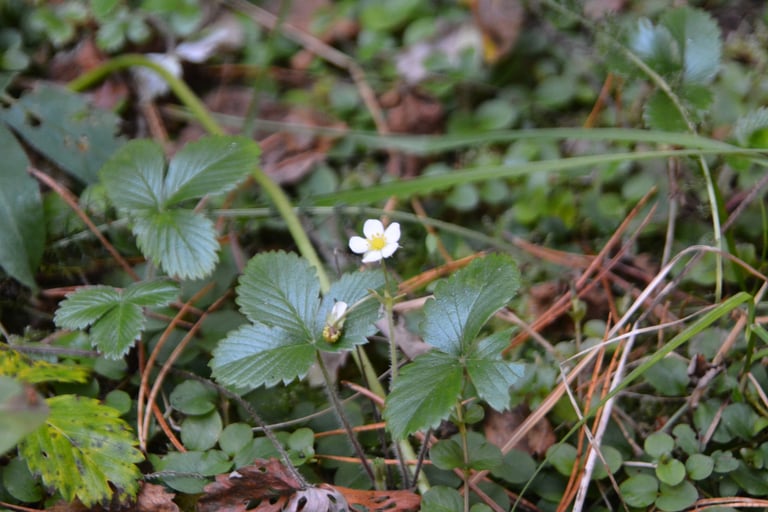
Geum rivale is best recognized by its nodding, bell-shaped flowers, which hang downward on slender stalks rather than opening upright like most of its relatives. The flowers are typically dusky red or pink, giving the plant its common name water avens and its country nickname water flower.
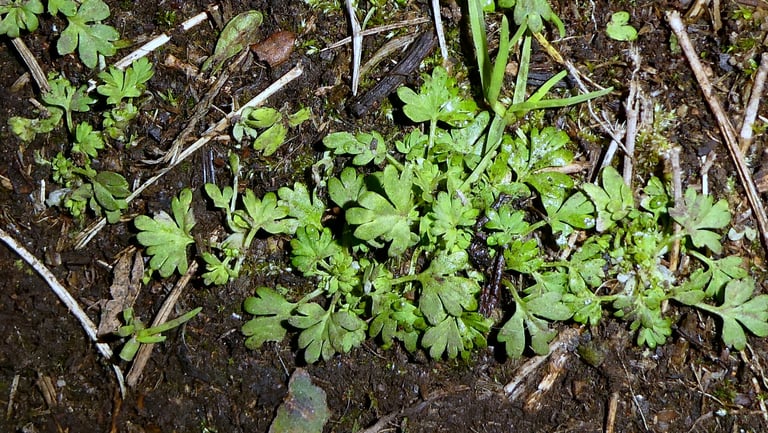
As a perennial herb, it forms a low rosette of lobed, hairy basal leaves from which the flowering stems rise. The drooping habit of the flowers, combined with their reddish coloring, distinguishes it readily in the field from upright-flowered relatives such as Geum urbanum, with which it is known to hybridize and overlap in flowering time.
Distribution and Habitat
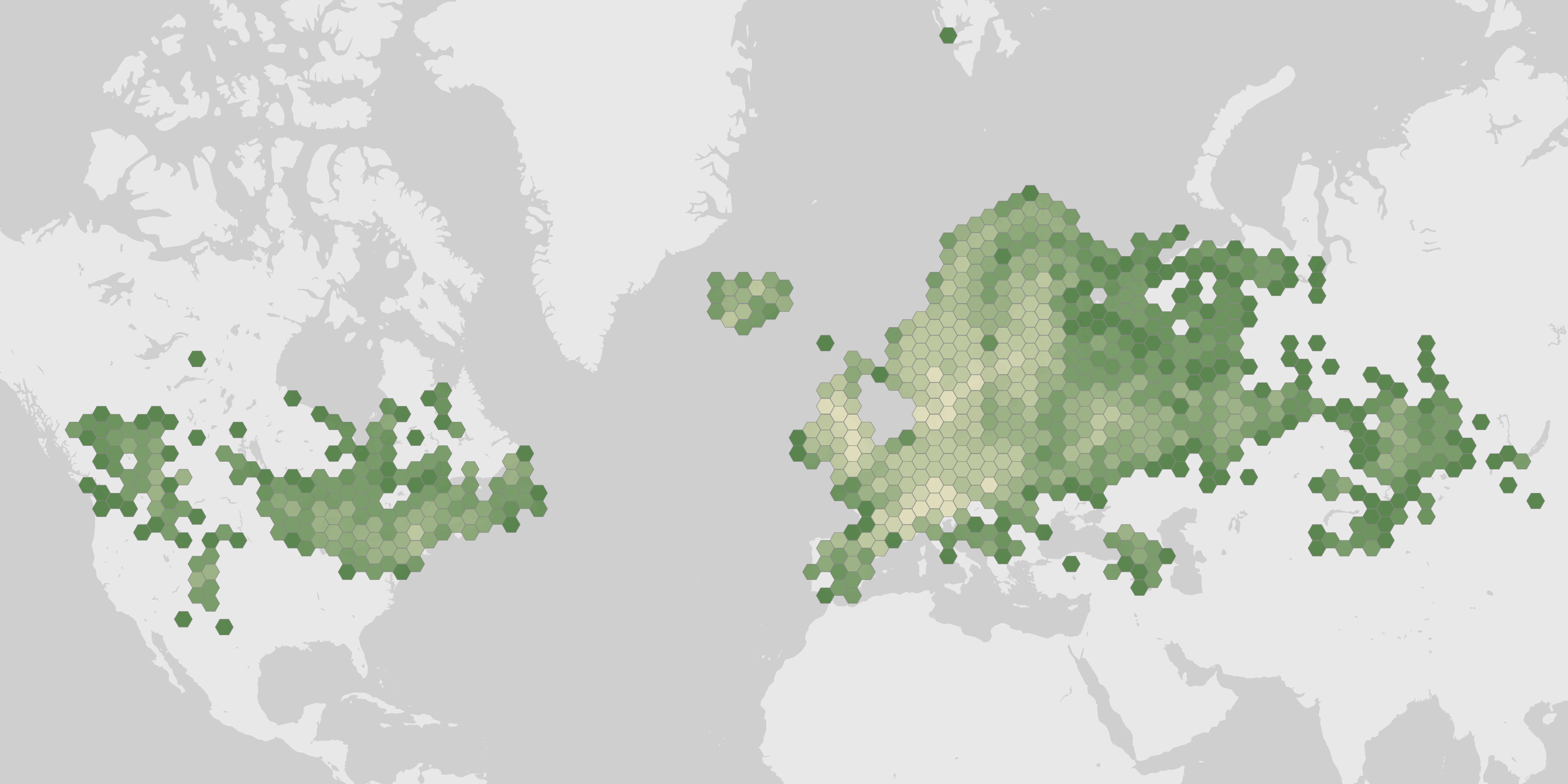
Geum rivale has one of the broadest ranges among European wildflowers, occurring from Iceland, the Faroes, and Scandinavia south through the British Isles and Central Europe, and east across Russia, Western Siberia, the Caucasus, and into Central Asia as far as the Tian Shan and Dzungaria. It also occurs natively across a broad swath of Canada and the northern and western United States, from Newfoundland and Ontario to Colorado, New Mexico, and Washington.
Within Europe it is notably absent from the Pannonian Basin and western France, and on the Italian and Iberian peninsulas it is restricted to scattered mountain locations, generally between 1,000 and 2,200 meters, including the Cantabrians, Pyrenees, and Sierra Nevada. In the Alps it climbs to 2,400 meters and in the Carpathians to 2,100 meters.
The species favors slow-draining or wet, mildly acidic to calcareous soils in full sun or partial shade. Typical habitats include stream sides, pond edges, damp deciduous woodland, hay meadows, and thickets, and in the UK it is a component of purple moor grass and rush pasture habitat on poorly drained neutral to acidic soils of the lowlands and upland fringe. Within the British Isles it occurs almost everywhere except south-east England, the Western Isles of Scotland, and parts of the midlands and west country.
Monthly observation records show a strong seasonal peak in late spring and summer, consistent with its flowering period, though these counts reflect presence observations rather than actual population size.
Growth and Form
Geum rivale is a perennial, returning from the same rootstock year after year rather than completing its life cycle in a single season. This habit fits its preference for consistently damp ground, where established plants can persist across multiple growing seasons.
Ecology and Relationships
Bees, particularly various Bombus species, are the primary pollinators of Geum rivale, with flies and beetles visiting less often. The flower's stigmas mature before its stamens, favoring cross-pollination with other plants, though the stamens later elongate to allow self-fertilization if cross-pollination has not occurred. It begins flowering slightly earlier than the related Geum urbanum, keeping its early pollinations within its own gene pool.
After flowering, the burr-like seeds attach to the fur of rabbits and other small mammals for dispersal, supplementing spread by rhizome growth. The plant also hosts insect life beyond its pollinators: it is parasitized by the powdery mildew Podosphaera aphanis, which can cause yellow leaf spotting, and by the downy mildew Peronospora gei.
Among recorded flower visitors, bumblebees such as Bombus pratorum, Bombus pascuorum, and Bombus soroeensis stand out as the most frequently documented, alongside occasional visits from hoverflies like Rhingia campestris.
Uses and Human Relationships
In European folklore, Geum rivale was believed to ward off evil spirits and provide protection, a belief reflected in its old country name cure-all. This traditional association placed the plant among herbs credited with protective rather than purely medicinal powers.
Fun Facts
- Beyond its use in folklore, Geum rivale serves as a host plant for the moth Geina didactyla and the leaf-mining moth Stigmella pretiosa.
- The plant carries several folk names beyond water avens, including nodding avens, drooping avens, cure-all, water flower, and Indian chocolate.
Photos
Photographs from by Марина Садыкова via iNaturalist, licensed under CC BY 4.0. and via iNaturalist, licensed under CC0 1.0., credited on each photo.
Ecology and classification
Growth habit
- Herb
Classification
- Phylum
- Tracheophyta
- Class
- Magnoliopsida
- Order
- Rosales
- Family
- Rosaceae
- Genus
- Geum
- Species
- Geum rivale
Sources
- GBIF Species names and classification
- iNaturalist Photos
- Wikidata Common names and conservation status
- Wikipedia Summary extract
- Encyclopedia of Life Habitat, diet and behavior traits
- Plants of the World Online Native range, life form and climate (WCVP)
- GloBI What it eats, what eats it, parasites and pollinators
- trophiCH
- DoPI
- Schwarz et al. 2021
- EuPPollNet