Few wildflowers advertise themselves as boldly as butterfly weed, whose blazing orange, yellow, or red umbels light up dry fields across much of North America, yet the butterfly it's named for rarely chooses it as a host plant. Asclepias tuberosa is a perennial milkweed in the family Apocynaceae, native to eastern and southwestern North America, growing from South Dakota to Texas, Mexico, Utah, and Arizona.
The plant carries a long history as "pleurisy root," once used in root extracts to treat respiratory illness, which gives it a cultural weight beyond its garden appeal. Between its unusual pollination story and its medicinal past, there is more to this common wildflower than its color alone suggests.
Identification and Appearance
The clearest field mark is a hairy, non-milky stem: unlike most milkweeds, breaking the stem of Asclepias tuberosa does not release the sticky white latex typical of the genus. This trait, combined with its flower color, separates it from relatives that share its habitat.
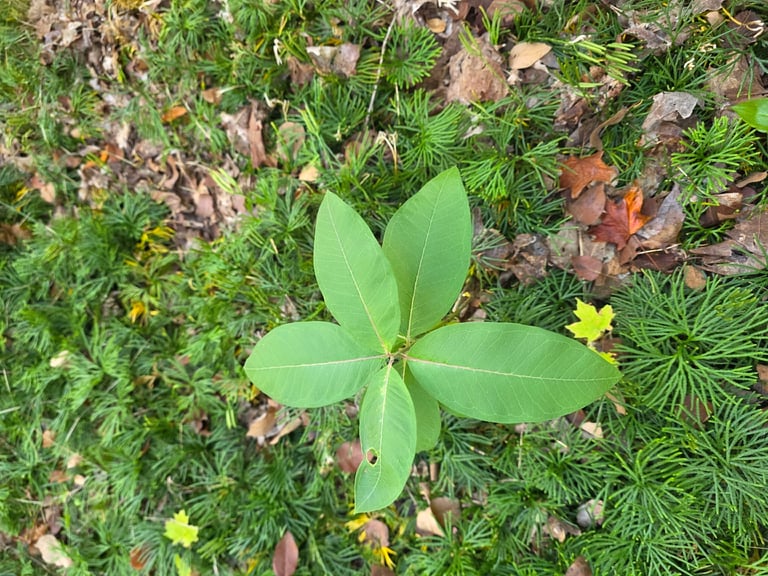
It is a perennial growing 0.3 to 1 meter (1 to 3.5 feet) tall, with spirally arranged, lance-shaped leaves 3 to 12 centimeters (1.25 to 4.75 inches) long and 2 to 3 centimeters (0.75 to 1.25 inches) wide. From April to September, umbels about 7.5 centimeters (3 inches) wide appear in the upper leaf axils, each carrying many individual flowers roughly 1.5 centimeters (0.5 inches) across with five petals and five sepals.
Flower color varies from orange to yellow to red, and it is uncertain whether this reflects soil mineral content, genetic differences between populations, or both. The cultivar 'Hello Yellow' was selected to produce more consistently yellow blooms than wild plants. Seed pods follow the flowers, growing 7.5 to 15 centimeters (3 to 6 inches) long and packed with numerous long-haired seeds built for wind dispersal.
Butterfly weed can be confused with lanceolate milkweed (Asclepias lanceolata), but its greater number of flowers per umbel and hairy, non-milky stems set it apart. The tropical milkweed (Asclepias curassavica), in its red-flowered form, can also resemble it, but likewise lacks the hairy stem.
Distribution and Habitat
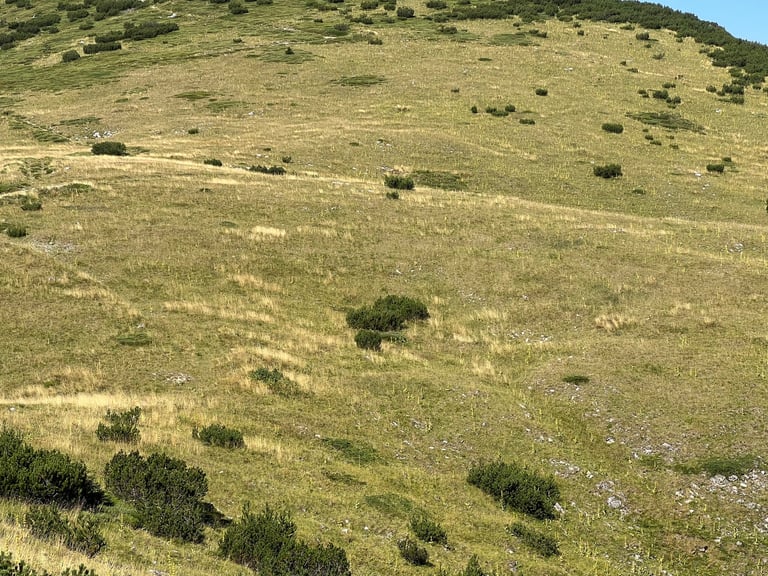
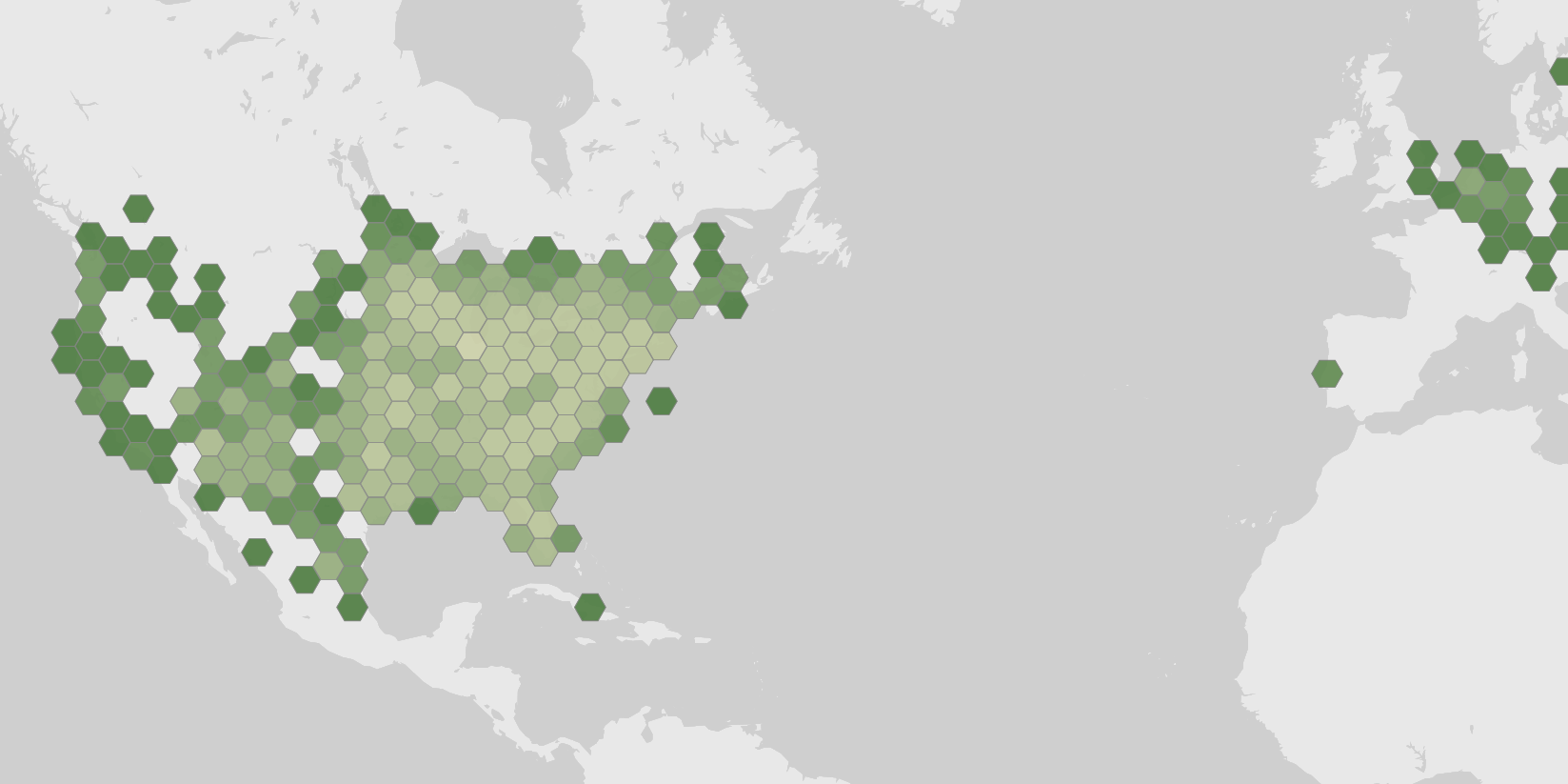
Butterfly weed ranges from South Dakota south through Texas and into Mexico, and west to Utah and Arizona, with additional populations extending across much of the eastern United States. It favors dry, sandy or gravelly soils in full sun, though it has also been recorded along stream margins, showing some tolerance for damper ground despite its usual preference for drought-prone sites.
Monthly observation records show a sharp seasonal pattern, rising from a few dozen sightings in winter to a pronounced peak in June, when counts exceed 22,000, before tapering through late summer and falling to low double digits by November and December. This spike almost certainly tracks the plant's flowering period rather than any true change in population size, since these are presence records from observers, not abundance counts, and the plant is far easier to spot and identify while in bloom.
Ecology and Relationships
Bees and wasps, not butterflies, are the primary pollinators of Asclepias tuberosa, with documented visitors in northern Florida including several Augochloropsis, Lasioglossum, and Megachile species. The plant is most easily propagated from seed and typically takes about three years to flower when sown outdoors after frost; once established, its deep, woody taproot makes transplanting difficult.
Despite its common name, butterfly weed is not a preferred host for monarch butterflies. Its rough, trichome-covered leaves make it less appealing for egg-laying, and it contains one of the lowest cardenolide concentrations of any Asclepias species, offering caterpillars comparatively poor chemical protection against bird predation and parasites. It nonetheless serves as a larval food plant for queen and monarch butterflies as well as the dogbane tiger moth, milkweed tussock moth, and unexpected cycnia, and caterpillars can be reared on it successfully even if they rarely choose it in the wild.
The species also shows notable resilience to disturbance: populations subjected to repeated prescribed burns remain largely unaffected, allowing it to persist in fire-managed grasslands and open fields.
Uses and Human Relationships
People have grown butterfly weed for centuries, first as a medicine and now mainly as an ornamental. Native Americans and European pioneers boiled its roots to treat diarrhea and respiratory illnesses, and an ethanol extract of the root was historically used to treat pleurisy, the origin of its common name "pleurisy root." Young seed pods were boiled through several changes of water and eaten, while the silky floss inside mature pods was spun into candle wicks.
Today the plant is grown chiefly for its showy orange flowers, which attract bees along with hummingbirds, moths, and butterflies, making it a staple of pollinator gardens in USDA zones 3 through 9. It grows readily from seed, though seedlings take two to three years to reach flowering size, and the deep taproot makes established plants hard to move.
The plant does carry real risks: it contains toxic progesterone-like steroids that can cause weakness, seizures, and corneal injury, and its use as an herbal remedy is contraindicated during pregnancy, lactation, and for infants and children.
Fun Facts
- The genus Asclepias takes its name from Asclepius, the Greek god of medicine, a nod to the plant's long history as an herbal remedy.
- Asclepias tuberosa has one of the lowest cardenolide contents of any milkweed species, chemicals that other milkweeds use to protect caterpillars from predators.
- Established plants tolerate repeated prescribed burns with little apparent harm, allowing them to persist through regular fire management.
- The cultivar 'Hello Yellow' was bred specifically to produce more uniformly yellow flowers than the naturally variable orange, yellow, or red wild plants.
Ecology
Habitat
- Wetland
- Grassland
Growth habit
- Herb