White bedstraw, Galium album, forms erect, square-stemmed stands that can reach over a meter and a half tall across pastures and grassy banks in much of Europe. It belongs to the bedstraw family, Rubiaceae, and grows as an herbaceous plant native to a broad stretch of the continent, from Britain to Morocco and east to Turkey and Western Siberia.
The plant thrives especially on dry, calcareous soils, where its clusters of small white or yellowish flowers stand out against shiny, nearly hairless foliage. Its wide native range and tolerance for a variety of grassland conditions make it one of the more familiar bedstraws across the European countryside.
Identification and Appearance
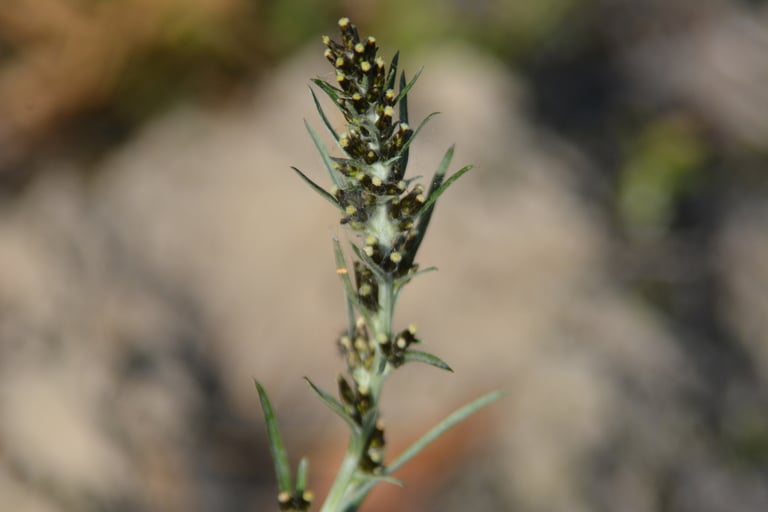
The most useful field mark is the square, slightly flanged stem, a trait typical of bedstraws but especially clean-lined in this species. Stems grow more or less erect with ascending branches and can reach at least 150 centimeters tall.
The plant is relatively hairless overall, with shiny stems and leaves that catch the light. Flowers appear in clusters and are white or yellowish, a useful detail when distinguishing it from similarly structured relatives.
The fruits, too, are hairless, a detail that can help separate Galium album from bedstraws with bristly or hairy seed cases.
Distribution and Habitat
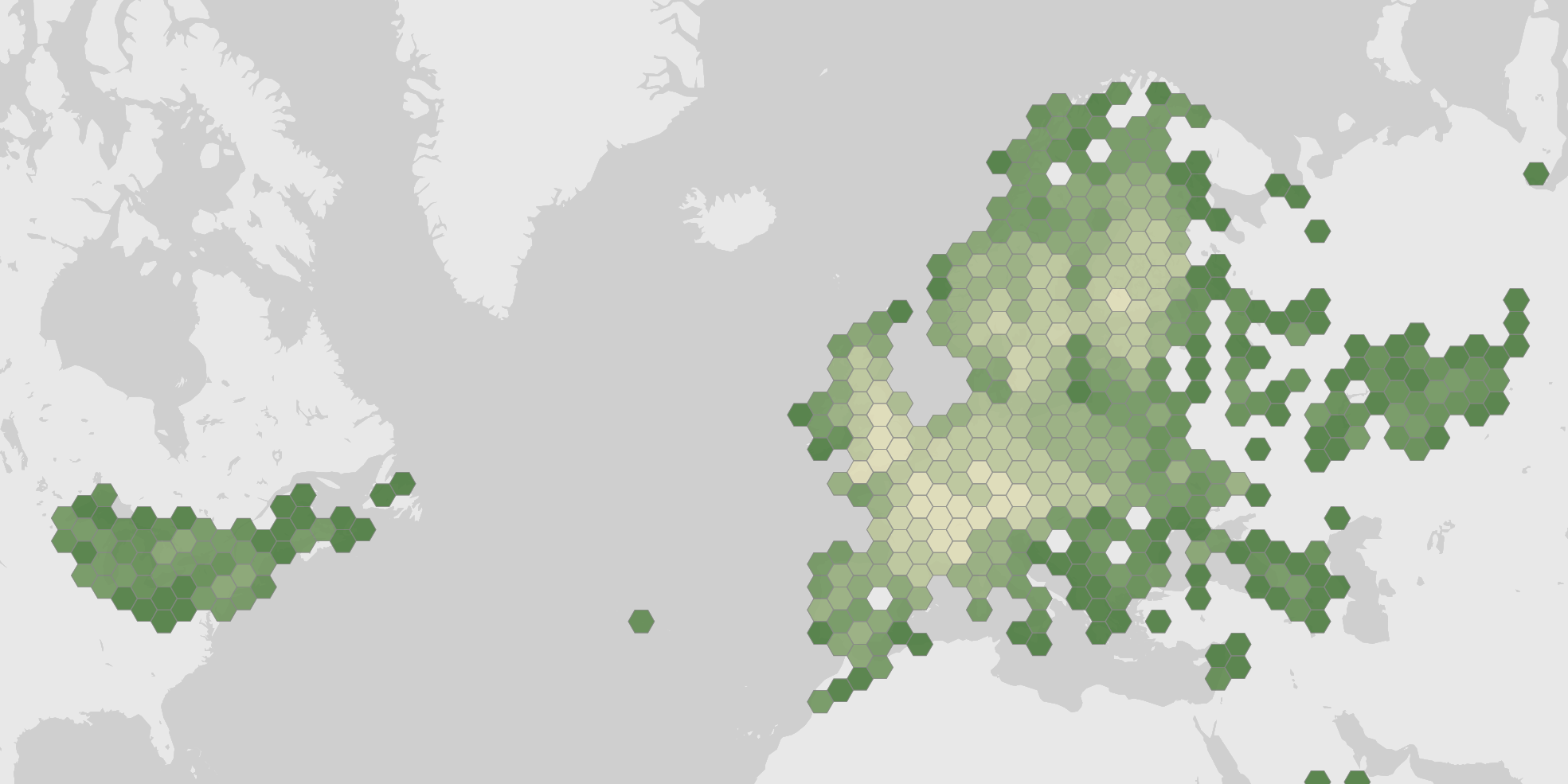
Galium album is native across a wide swath of Europe, stretching from Britain and Morocco in the west to Turkey and Western Siberia in the east. It has also been introduced and become naturalized in Ireland, parts of Scandinavia, Greenland, and South Australia.
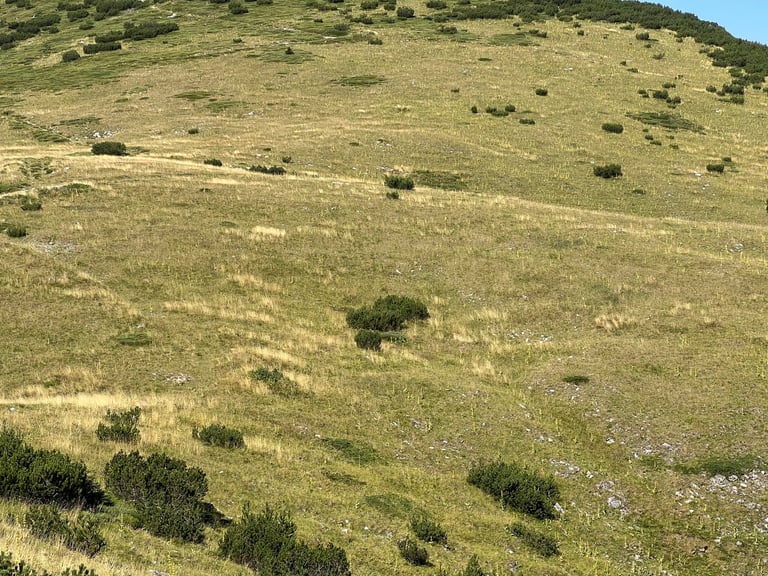
The species favors pastures and grassy banks, showing a particular preference for dry, calcareous soils. In Britain, its distribution narrows noticeably with latitude: it is locally common in lowland England, becomes rare farther north, and is very rare in Scotland.
Observation records through the year show a strong seasonal peak, with reports rising sharply from spring and clustering heavily around early to midsummer before tapering off into autumn and winter, consistent with the period when the plant is in visible growth and flower.
Growth and Form
Galium album grows as a perennial herb, persisting from year to year rather than completing its life cycle in a single season. Its stems are erect with ascending branches and can grow to at least 150 centimeters, giving it a notably tall, upright form among bedstraws found in open grassland.
Ecology and Relationships
Hoverflies make up the most frequently recorded visitors to the flowers of Galium album, with the group Syrphidae, and species such as Episyrphus balteatus and Sphaerophoria scripta, appearing often at its blooms; flies such as Thricops species also visit. A flower visit alone does not confirm pollination, but the pattern points to hoverflies as important flower associates.
The plant also serves as food for a range of insects, including moths such as Catarhoe cuculata and Cosmorhoe ocellata, and various bush-crickets and grasshoppers, among them Decticus albifrons, Omocestus viridulus, and Chorthippus species. This mix of feeding insects reflects its presence in open, grassy habitats where such insects are common.
Its preference for pastures and grassy banks, particularly on dry, calcareous ground, shapes the community of insects it supports, tying the plant closely to open grassland ecosystems.
Uses and Human Relationships
Galium album subsp. suberectum holds a place in various folklore and traditions, with historical uses and associations tied to the plant.
Fun Facts
- Galium album was historically classified under Galium mollugo as a variety or subspecies, appearing in older records as Galium mollugo var. bakeri and Galium mollugo subsp. album.
- The subspecies Galium album subsp. pycnotrichum is recognized as a distinct category within the species.
Photos
Photographs from via iNaturalist, licensed under CC0 1.0., by georges3 via iNaturalist, licensed under CC BY 4.0., by Teemu Helonheimo via iNaturalist, licensed under CC BY 4.0., by aga_l_ via iNaturalist, licensed under CC BY 4.0., by Jose Gutierrez Higa via iNaturalist, licensed under CC BY 4.0., by Jamie VanBuskirk via iNaturalist, licensed under CC BY 4.0., and by Ondřej Křivan via iNaturalist, licensed under CC BY 4.0., credited on each photo.
Ecology and classification
Habitat
Growth habit
- Herb
Classification
- Phylum
- Tracheophyta
- Class
- Magnoliopsida
- Order
- Gentianales
- Family
- Rubiaceae
- Genus
- Galium
- Species
- Galium album
Sources
- GBIF Species names and classification
- iNaturalist Photos
- Wikidata Common names and conservation status
- Wikipedia Summary extract
- Plants of the World Online Native range, life form and climate (WCVP)
- GloBI What it eats, what eats it, parasites and pollinators
- trophiCH
- Schwarz et al. 2021
- EuPPollNet