The peppered moth has become one of the most cited examples of population genetics and natural selection in the study of evolution, thanks to the way its wing patterns shift to match its surroundings.
This is a night-flying moth in the family Geometridae, found mainly across temperate regions of the northern hemisphere. Beyond its scientific fame, it is simply a striking, well-camouflaged insect worth a closer look.
Identification and Appearance
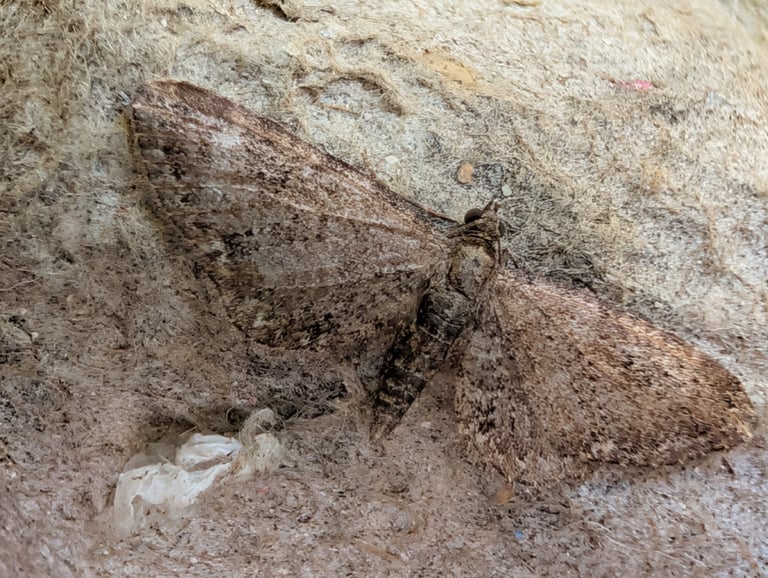
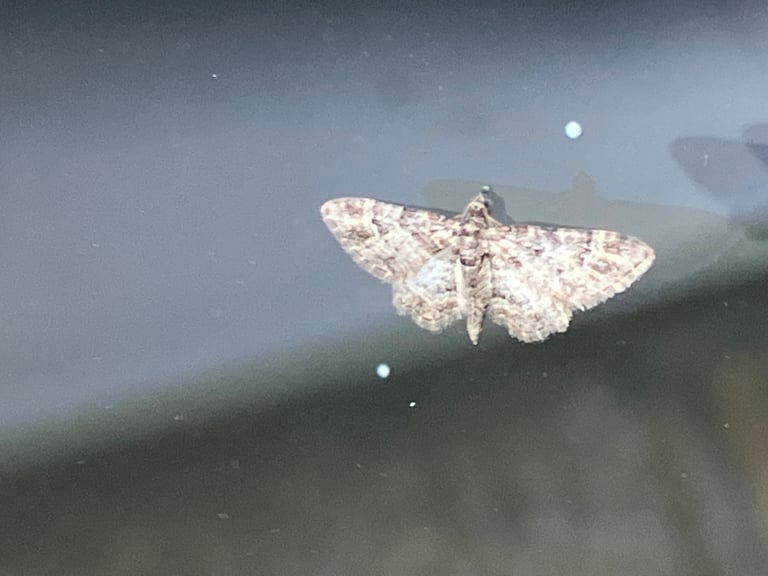
The most useful field mark is the moth's "peppered" wing pattern: white wings speckled with black spots and crossed by black lines of varying distinctness. The wingspan ranges from 45 to 62 mm, with a median around 55 mm.
The body is relatively stout, while the forewings are narrow and elongate by comparison. The amount of black speckling varies considerably between individuals, from wings that are nearly clear of spotting to ones so densely marked they appear black sprinkled with white.
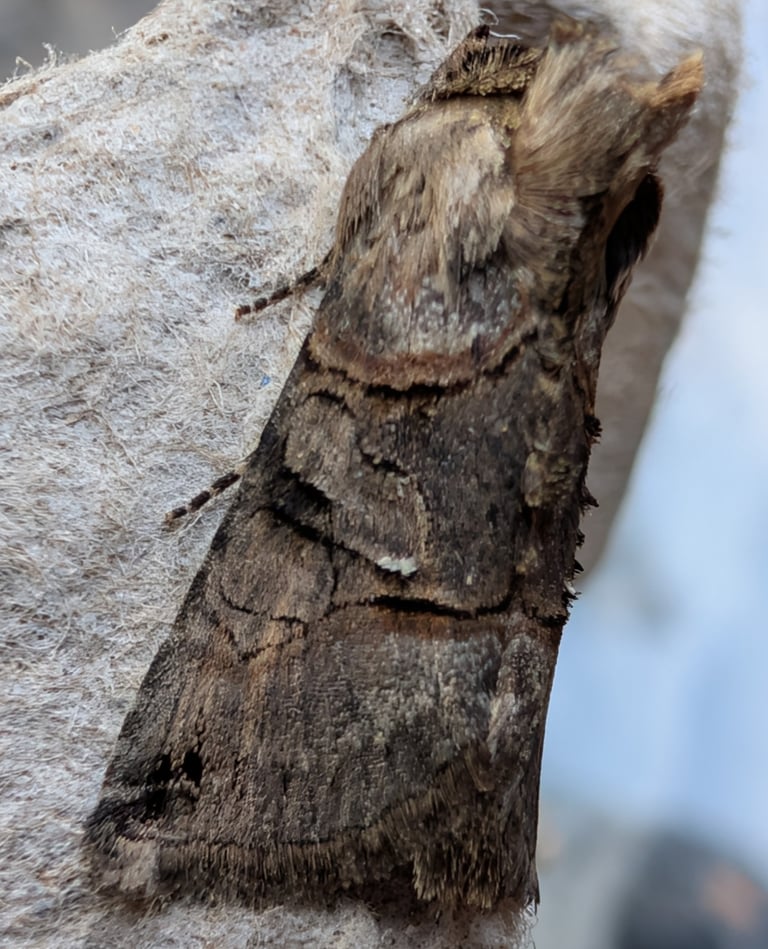
In rare instances, the speckling and cross-lines can appear grey or brown instead of black, and occasionally as a mixed brown and black/grey pattern. Males can be distinguished by their strongly bipectinate (feather-like) antennae, which they use to detect female pheromones.
Distribution and Habitat
The peppered moth occurs across a wide range of the northern hemisphere, including much of China (from Heilongjiang and Inner Mongolia to Sichuan, Yunnan, and Tibet), Russia, Mongolia, Japan, North and South Korea, Nepal, Kazakhstan, Kyrgyzstan, Turkmenistan, Georgia, Azerbaijan, Armenia, Europe, and North America.
It is widespread in deciduous and mixedwood forests, parklands, and shrublands, and also turns up in woodland, hedgerows, parks, and gardens, including urban settings.
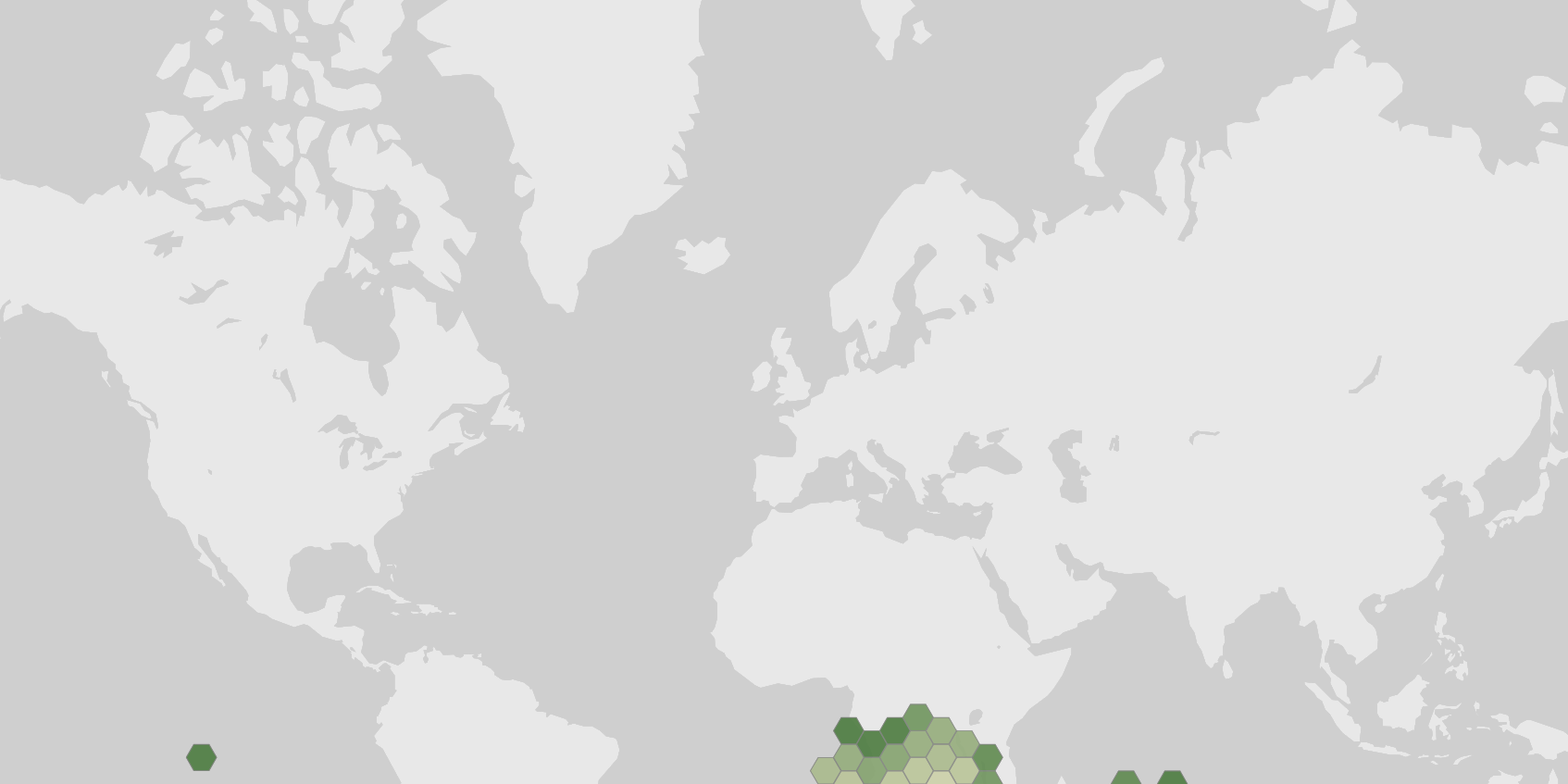
Observation records through the year show a sharp rise heading into summer, suggesting the adult flight period is concentrated in the warmer months, though these presence records do not reflect overall population size or the moth's complete range.
Behavior and Lifestyle
By day, the peppered moth hides from predators, particularly birds, choosing resting positions that make the most of its camouflage. It favors three main types of site: just below a branch-trunk joint on a tree trunk where it sits in shadow, the underside of branches, or on foliate twigs.
Studies watching where moths naturally settle found that in Cambridge, over half of 135 moths examined rested on tree branches, mostly on the lower half, 37% sat on tree trunks (mostly on the north side), and only about 12.6% rested on or under twigs.
Camouflage effectiveness depends on the background: the lighter-patterned form blends well against crustose lichens both to human eyes and in ultraviolet wavelengths, which birds can see, but is less well hidden against foliose lichens on tree trunks, since those lichens do not reflect ultraviolet light the way the moth's wings do.
When mating, a pair will spend the day hidden together, with the male staying close to the female to ensure paternity before moving on.
Diet and Nutrition
As larvae, peppered moth caterpillars feed on the foliage of a wide range of trees and shrubs, including beech (Fagus sylvatica), English oak (Quercus robur), goat willow (Salix caprea), and common alder (Alnus glutinosa).
They also take from birches, including silver birch (Betula pendula) and downy birch (Betula pubescens), as well as shrubby and herbaceous plants such as mugwort (Artemisia vulgaris), butterfly-bush (Buddleja davidii), hawthorn (Crataegus monogyna), and broom (Cytisus scoparius).
This broad range of recorded food plants, spanning trees, shrubs and herbs, points to a caterpillar that is not tied to a single host but can develop on whatever suitable deciduous foliage is available in its woodland, hedgerow or garden habitat.
Fun Facts
- Charles Darwin helped found the Entomological Society of London in 1833, yet he never wrote specifically about the peppered moth despite its later fame in evolutionary biology.
- In folklore and symbolism, black moths in general are often associated with sensuality, fragility, seduction, darkness, and death, and in many cultures they carry mysterious or magical associations.
Photos
Photographs from via iNaturalist, licensed under CC0 1.0., by Murray McGoogan via iNaturalist, licensed under CC BY 4.0., by Barry Stewart via iNaturalist, licensed under CC BY 4.0., by Emmett Collins-Sussman via iNaturalist, licensed under CC BY 4.0., by Will Taylor via iNaturalist, licensed under CC BY 4.0., by Alan Macnaughton via iNaturalist, licensed under CC BY 4.0., by Laura Gaudette via iNaturalist, licensed under CC BY 4.0., by Teá Montagna via iNaturalist, licensed under CC BY 4.0., by Sami Törnblom via iNaturalist, licensed under CC BY 4.0., by Jack Forrester via iNaturalist, licensed under CC BY 4.0., by Norah Tempus via iNaturalist, licensed under CC BY 4.0., by Rachel Stepek via iNaturalist, licensed under CC BY 4.0., and by yellowplant via iNaturalist, licensed under CC BY 4.0., credited on each photo.
Ecology and classification
Classification
- Phylum
- Arthropoda
- Class
- Insecta
- Order
- Lepidoptera
- Family
- Geometridae
- Genus
- Biston
- Species
- Biston betularia
Sources
- GBIF Species names and classification
- iNaturalist Photos
- Wikidata Common names and conservation status
- Wikipedia Summary extract
- Encyclopedia of Life Habitat, diet and behavior traits
- GloBI What it eats, what eats it, parasites and pollinators
- trophiCH