The Common Pug ranges across an enormous stretch of the Palearctic, from the Atlantic coast of Ireland and Portugal all the way east to the Russian Far East and Korea, taking in the Near East and North Africa along the way.
This is a moth of the family Geometridae, in the order Lepidoptera, and it is considered common throughout much of that range. Its adaptability to many habitats and its wide distribution make it a familiar, if easily overlooked, part of the night-flying moth fauna across two continents.
Identification and Appearance
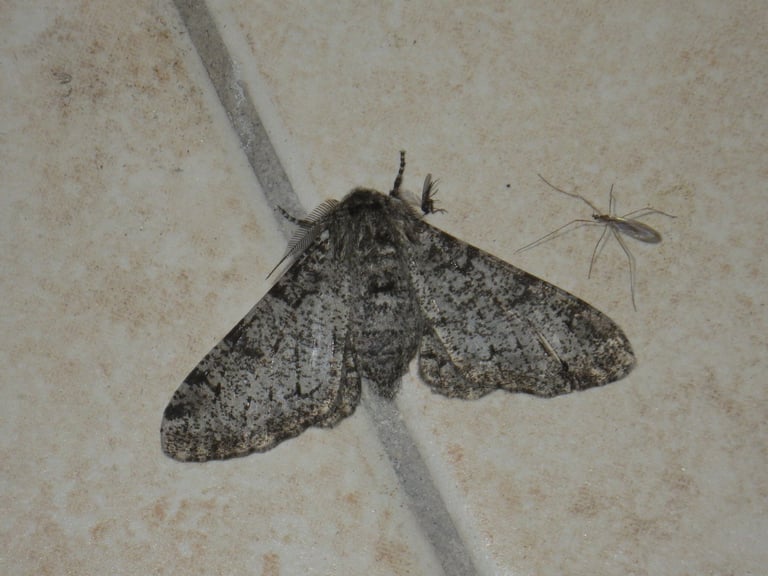
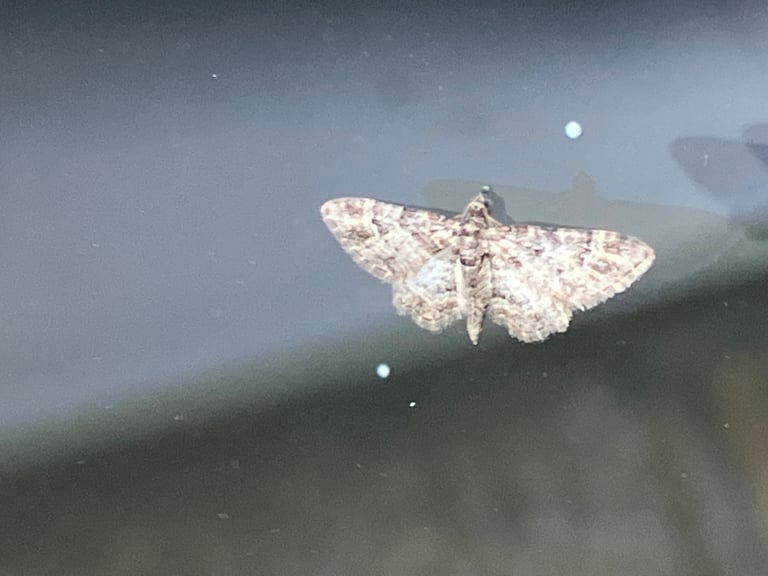
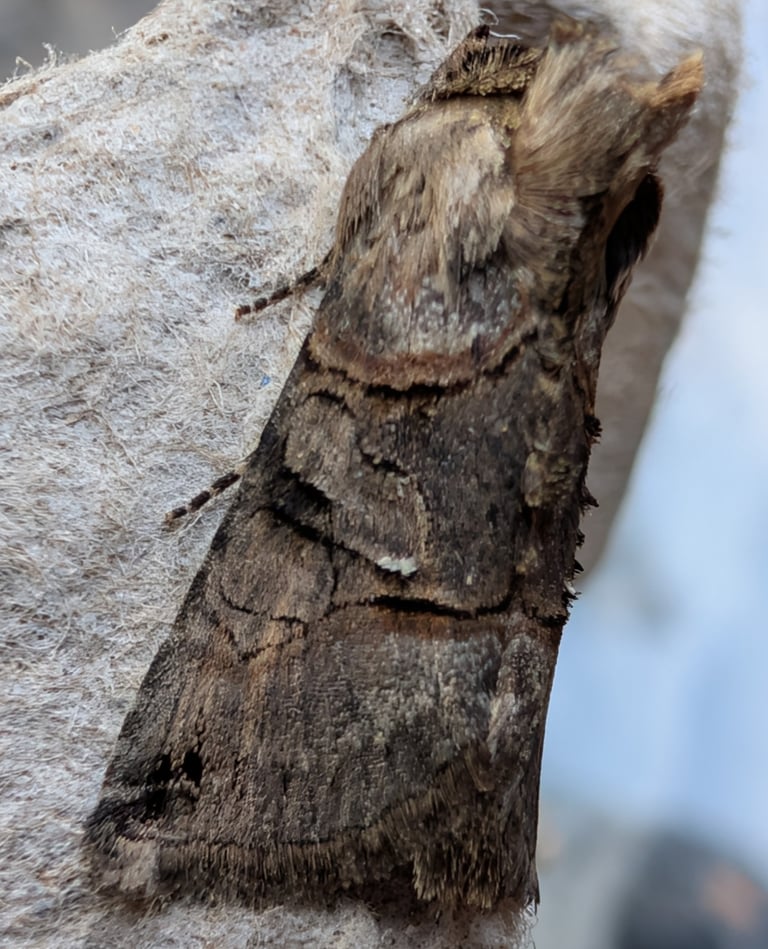
The most useful field mark is the pattern of angulated dark fuscous striae on the forewings, combined with a biangulate postmedian line and a small white mark at the tornus. The wingspan measures 18 to 21 millimeters.
The ground color of the forewings is highly variable, ranging from brown to fuscous with a reddish tinge, to ochreous or whitish tones. The posterior edge of the median band is marked with black, and the subterminal line breaks into whitish dots. Some individuals show a minute dark discal mark on the forewing, while others lack it entirely, and a crescent-shaped pale stain appears near the tornus.
The hindwings echo the forewing pattern but are less conspicuously marked. The larva is naked, long and slender, colored greyish green or light brown, with rhomboid darker spots along its back. The pupa is reddish brown with olive green wing sheaths and bears eight hook bristles at the pointed cremaster.
Distribution and Habitat
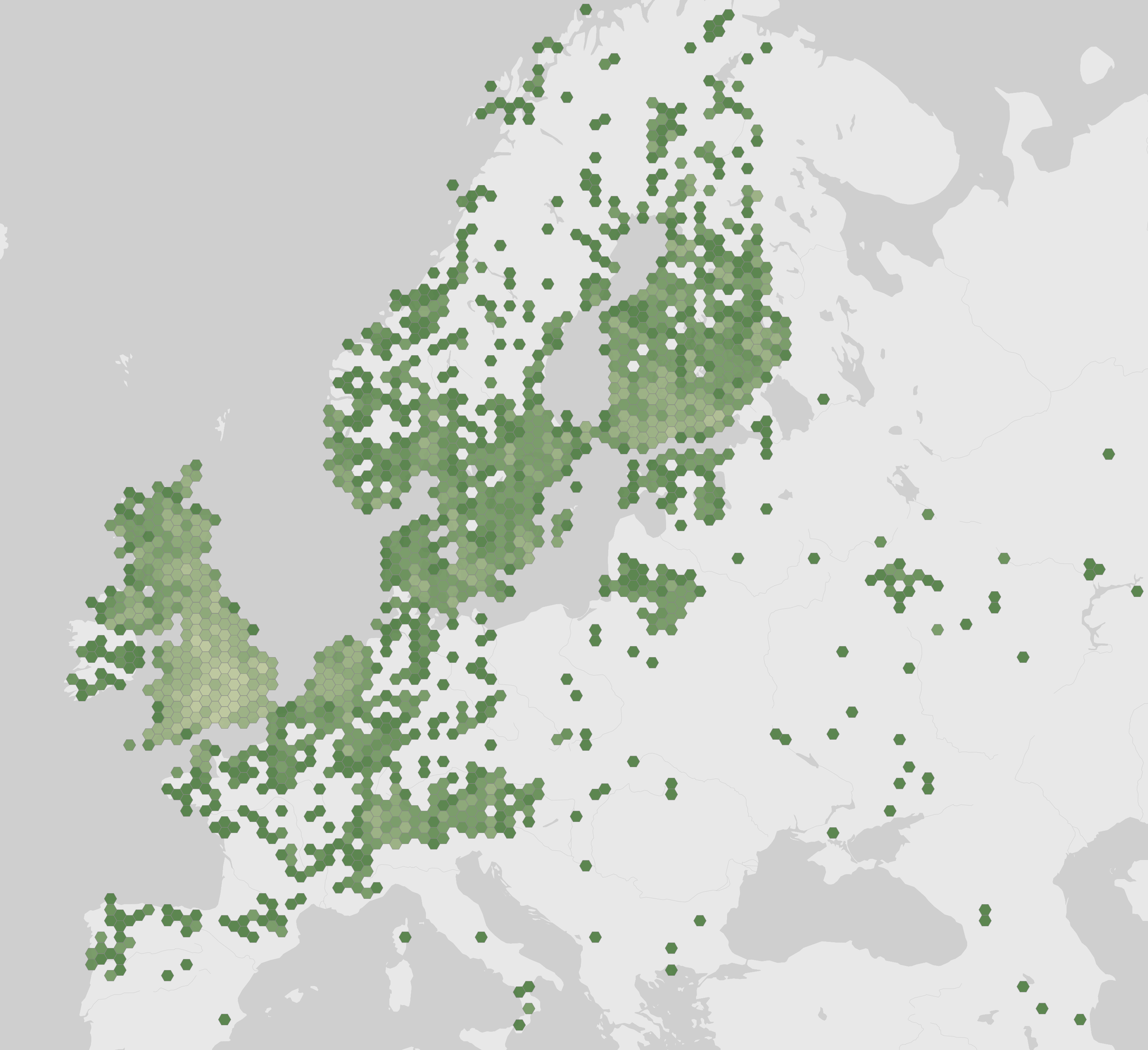
The Common Pug occupies a very wide Palearctic range, stretching from the Atlantic coasts of Ireland and Portugal across Europe, the Middle East, and Central Asia to the Russian Far East and Korea. It colonizes a variety of habitats, including forest edges, bushes, hedges, embankments, plant corridors, gardens, and parks, and in the Alps it occurs up to an elevation of 1,500 meters.
Observation records peak sharply in the summer months, consistent with its two annual broods of adults on the wing in May and June and again in August, though these presence records reflect when the moth has been noticed rather than its actual abundance.
Diet and Nutrition
The larvae of the Common Pug feed on a wide variety of plants rather than specializing on one host. Recorded food plants include yarrow (Achillea), mugwort (Artemisia), harebell (Campanula), knapweed (Centaurea), hawthorn (Crataegus), bedstraw (Galium), willow (Salix), ragwort (Senecio), goldenrod (Solidago), and bilberry (Vaccinium).
Among plants documented in feeding records, bilberry (Vaccinium myrtillus) stands out, alongside occasional records on foxglove (Digitalis grandiflora) and hop (Humulus lupulus). Willow and ragwort also appear among the recorded hosts.
The species overwinters as a pupa, and its broad diet across many unrelated plant families likely helps it colonize the many different habitats it occupies, from forest edges to gardens and parks.
Fun Facts
- The Common Pug was first described by Adrian Hardy Haworth in 1809.
- It has accumulated several taxonomic synonyms over time, including Eupithecia austeraria, Eupithecia impuncta, Eupithecia montium, Eupithecia nigrofasciata, and Eupithecia unicolor.
Photos
Photographs from via iNaturalist, licensed under CC0 1.0., by Susan Murphy via iNaturalist, licensed under CC BY 4.0., by Thierry Arbault via iNaturalist, licensed under CC BY 4.0., and by Eddie via iNaturalist, licensed under CC BY 4.0., credited on each photo.
Ecology and classification
Classification
- Phylum
- Arthropoda
- Class
- Insecta
- Order
- Lepidoptera
- Family
- Geometridae
- Genus
- Eupithecia
- Species
- Eupithecia vulgata