Bombus terrestris, the buff-tailed or large earth bumblebee, ranks among the most numerous bumblebee species in Europe, and its usefulness has carried it far beyond its natural range. Commercial breeders rear it by the millions as a greenhouse pollinator, and escaped colonies have established themselves in places as distant as Japan, Chile, Argentina, and Tasmania.
This eusocial insect lives in colonies with overlapping generations, division of labor, and cooperative brood care, all built around a single monogamous queen. Workers learn to associate flower colors with nectar rewards, refining their foraging efficiency over the life of the colony, a trait that makes the species a favorite subject for behavioral research as well as agriculture.
Identification and Appearance
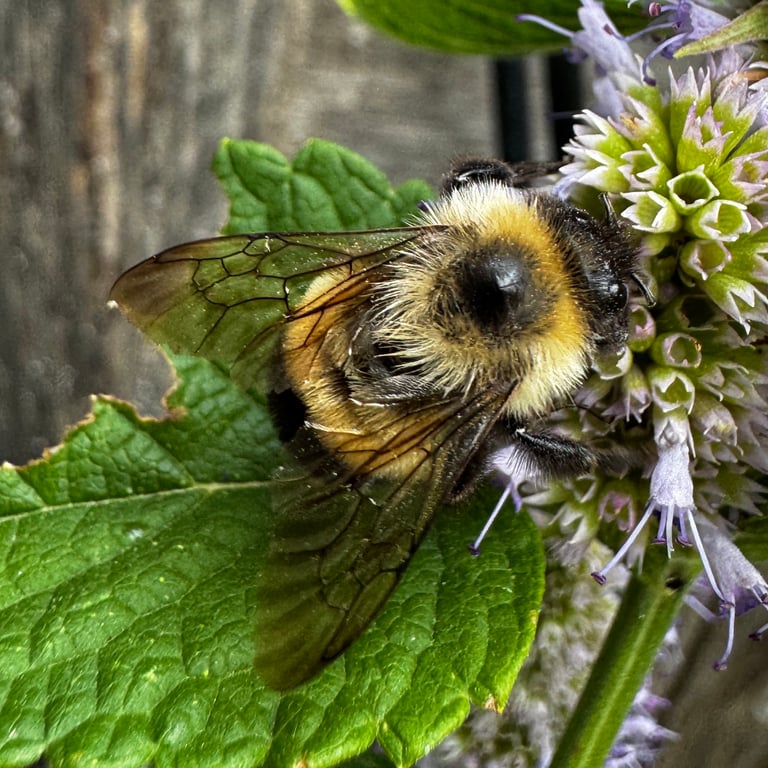
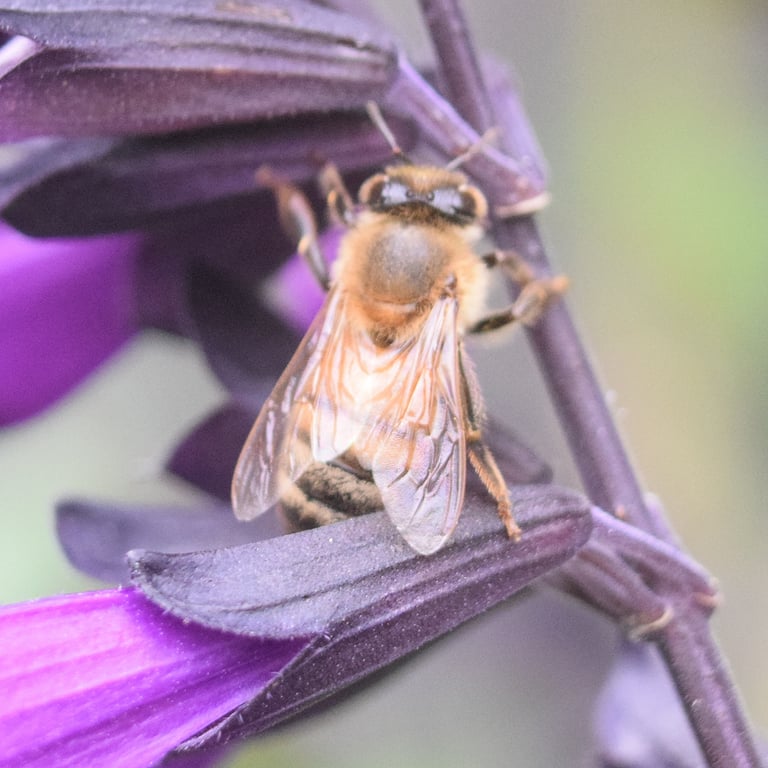
The clearest field mark is the pale, buff-white tip of the abdomen set against black-and-yellow banding, though the exact shade varies by caste. Queens measure 20 to 22 mm long and show a true buff-colored tail, while workers range from 11 to 17 mm and males from 14 to 16 mm.
Workers can be confused with the closely related white-tailed bumblebee, Bombus lucorum, since both have pale-tipped abdomens; the surest way to separate them is that B. terrestris workers show darker, more yellowish bands when compared side by side. Queens are easier to tell apart, because the buff tail that gives the species its name is diagnostic; B. lucorum queens have a purely white tail instead.
Unlike most bees, B. terrestris workers vary enormously in size within a single colony. Thorax length ranges from just 2.3 mm to 6.9 mm, and body mass spans from 68 mg to 754 mg, roughly an elevenfold difference between the smallest and largest workers of the same generation.
This size range is not random: it underlies a division of labor in which larger individuals take on foraging duties outside the nest while smaller workers handle tasks inside it.
Distribution and Habitat
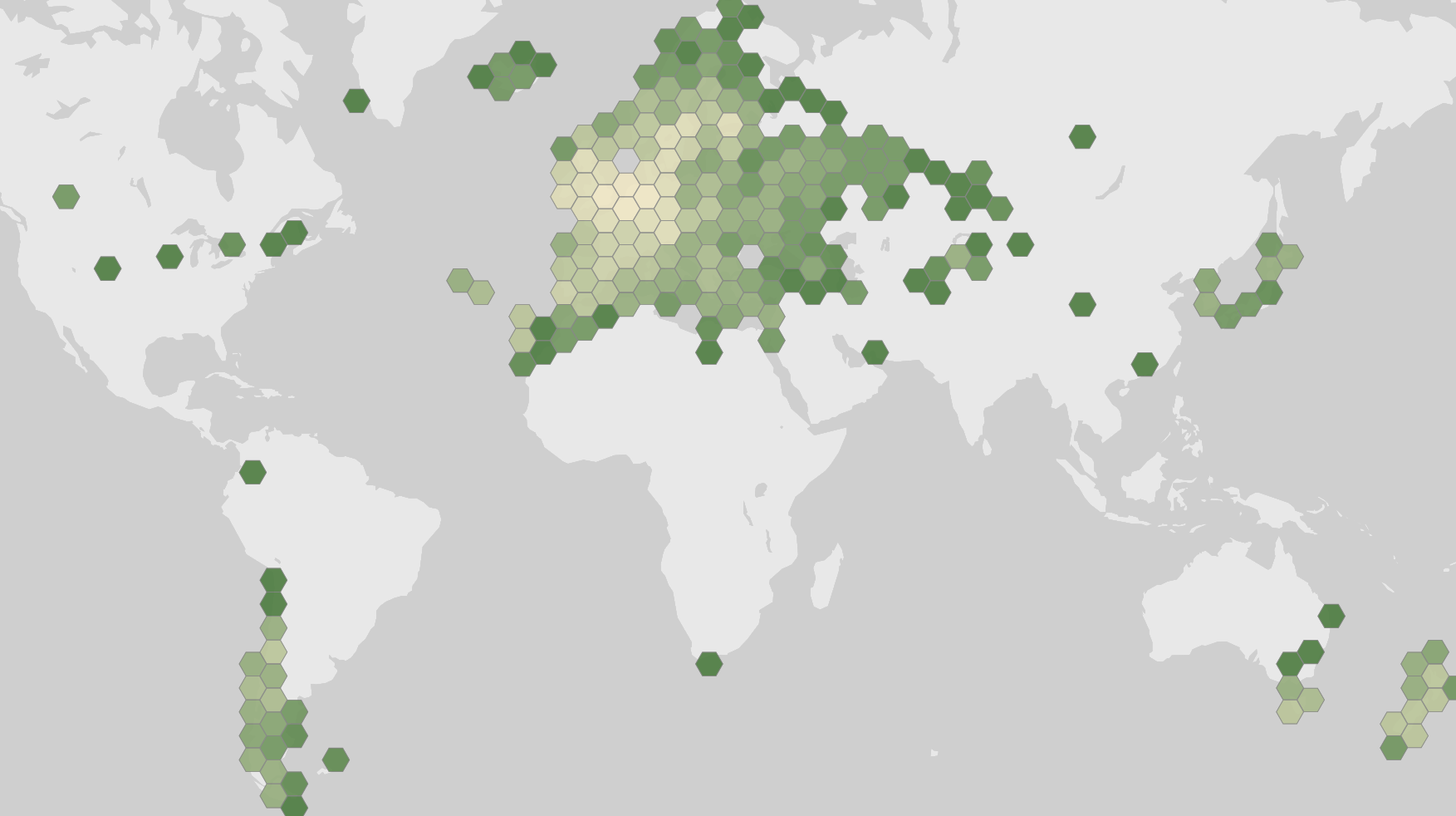
The species occurs throughout Europe in temperate climates and extends into the Near East, the Mediterranean islands, and Northern Africa, reflecting its tolerance for a wide range of conditions. Beyond this native range, escaped greenhouse stock has established feral populations in Japan, Chile, Argentina, and Tasmania, where the bee is now considered invasive.
Colonies nest underground, often taking over abandoned rodent burrows, where they build comb-like structures of egg cells rather than the hexagonal wax comb of honeybees. A typical colony produces between 300 and 400 bees over its cycle, though the number of workers varies considerably from nest to nest.
Monthly observation counts rise sharply from a low of under 4,000 in January to a peak above 146,000 in June, before tapering off through the autumn to under 4,000 again by December. Because these figures reflect presence observations rather than true abundance, they should be read only as a cautious indicator that the species is most actively encountered from late spring through midsummer, matching the period of peak colony activity.
Behavior and Lifestyle
Colony life in B. terrestris runs on strict genetic logic: the queen mates with only a single male, and that male plugs her reproductive tract with a sticky secretion that blocks further mating for several days. This singly-mated system leaves worker bees more closely related to their sisters than to any half-siblings a multiply-mated queen might produce, a key reason bumblebee societies stay so cooperative.
Workers occupy a shifting dominance hierarchy. Individuals born early in the first brood, being larger and older, are more likely to become egg layers themselves, since egg-laying workers must generally be at least 30 days old for their ovaries to develop. Workers who spend more time near the queen rather than foraging are also more likely to become reproductively active.
As a colony matures, older workers increasingly harass the queen, attacking her and buzzing loudly, until she is effectively displaced by sheer worker numbers; the colony is typically abandoned shortly after this point. The queen physiologically suppresses egg development in her workers by regulating juvenile hormone, and the hormone-producing corpora allata visibly enlarge in workers once the queen's influence is removed.
Colonies also show variation in when they switch from producing workers to producing reproductives. Early-switching colonies produce many more males than future queens, roughly 17 to 1, while late-switching colonies approach a more even ratio, reflecting a tension between the queen's preference for equal numbers of sons and daughters and the workers' preference for a three-to-one ratio favoring sisters.
Diet and Feeding Habits
B. terrestris forages on a wide variety of flowering plants, with activity peaking in the morning between roughly 7 and 8 a.m., when foragers favor ambient temperatures near 25 °C for collecting nectar and pollen. As the day warms further into the afternoon, foraging activity tends to decline.
Foraging tasks are distributed by body size, a pattern called alloethism: larger workers venture outside the nest and return with bigger loads of nectar and pollen, possibly because their size helps them cope with temperature swings, evade predators, or cover greater distances. Smaller bees, cheaper to rear, are kept for tasks inside the nest, while only some larvae are fed enough to grow into large foragers.
Successful foragers recruit nestmates to leave and search for food, not through the honeybee's ritualized dance but by running frantically around the nest, likely spreading a pheromone that signals nearby food. Colonies with low food stores respond more strongly to this signal, while well-stocked colonies largely ignore it to save energy.
Foragers typically work within about 5 km of the nest, with an average recorded foraging distance near 663 m in one mark-and-recapture study, though displaced bees have found their way home from as far as 13 km away over several days. Like honeybees, B. terrestris shows an innate attraction to blue and yellow, but experience teaches individual bees to favor whichever flower colors have proven most rewarding.
Population and Ecological Role
B. terrestris colonies face pressure from a range of specialized natural enemies rather than any single dominant threat. The cuckoo bee Bombus vestalis parasitizes this species exclusively, invading nests to seize reproductive control from the host queen, while the related Bombus bohemicus does the same but across several bumblebee species.
The microsporidian Nosema bombi infects the gut and causes a wasting disease that reduces host fitness, with infection rates that fluctuate over time and correlate with the bee's mitochondrial DNA lineage. Conopid flies parasitize foraging workers in Central Europe, and foragers show weaker immune encapsulation than non-foraging nestmates, suggesting that the energetic cost of flight leaves foragers more vulnerable to attack. Deformed wing virus, ordinarily a honeybee pathogen, has also crossed into commercially bred B. terrestris; in 2004 as many as 10 percent of commercially bred queens in Europe were found dead with crumpled, deformed wings.
The bee moth Aphomia sociella adds another pressure, laying its eggs inside bumblebee nests so its larvae can tunnel through and feed on unprotected eggs, larvae, and pupae, sometimes destroying large sections of the nest. Despite this web of parasites and pathogens, the species remains one of the most abundant bumblebees in Europe and a heavily used commercial pollinator, underscoring its ecological importance in the plant communities and crops it visits.
Fun Facts
- In some ancient cultures, bees symbolized diligence, hard work, and order, and were linked to goddesses such as Demeter, goddess of agriculture, and Artemis, symbol of purity.
- A Bombus terrestris specimen collected near Chania, Crete, in 1910 is preserved in the Smithsonian National Museum of Natural History's collection.
- Recent research cited by Science magazine has raised the possibility that bees, including bumblebees, may be capable of feeling pain.
- Male B. terrestris can fly much farther from the nest than workers, up to 9.9 km, likely because they range widely in search of mates rather than food.
Ecology
Behavior
- Burrowing
- Social
- Diurnal
Diet
- Nectarivore