Buddleja davidii carries the name of a French Jesuit missionary in China, yet it has become one of the most familiar shrubs on waste ground and railway lines across the temperate world.
Native to most of China outside the far northeast, this member of the figwort family (Scrophulariaceae) is widely grown as an ornamental and has escaped cultivation in dozens of countries. Commonly known as the butterfly-bush, orange eye, or summer lilac, it draws attention for the sheer volume of pollinators its flowers attract, and for the tension between its garden popularity and its tendency to spread into wild and disturbed ground.
Identification and Appearance
The clearest field mark is the long, arching flower panicle: terminal spikes of small, honey-scented blooms, usually lilac to purple but occasionally white, that can reach 30 cm long, though they are more often under 20 cm.
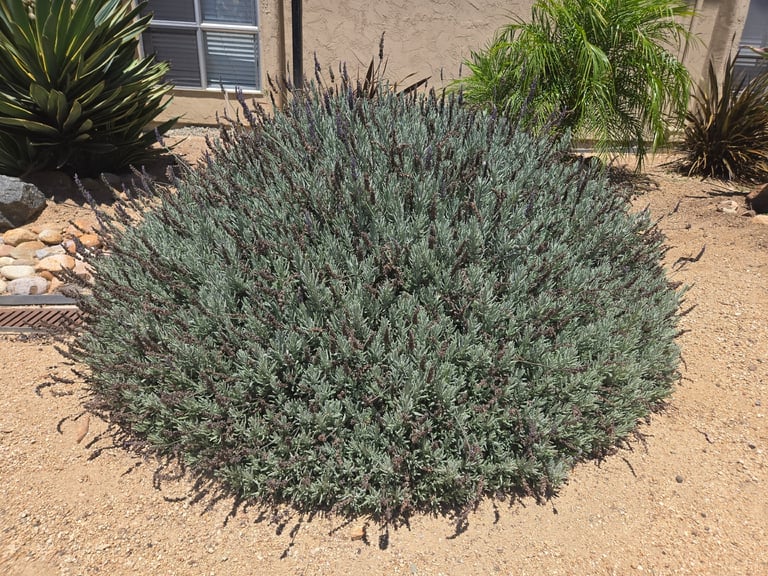
The shrub is vigorous and arching in habit, reaching up to 5 m in height. Its bark is pale grey-brown, becoming flaky to deeply fissured as the plant ages, and its branches are distinctly quadrangular in cross-section.
Leaves are opposite and lanceolate, 7–20 cm long and 2–7 cm broad, grey-green to dark green above. Young shoots and the undersides of young leaves carry a dense greyish-white tomentose covering, which fades to grey-green with age.
Each flower is hermaphrodite, bearing both male and female parts in the same bloom rather than separate male and female flowers, a point often stated incorrectly elsewhere. The species is tetraploid, with a chromosome count of 2n = 76, and produces very small, wind-dispersed seeds.
Distribution and Habitat
Buddleja davidii is native to a swath of China stretching from Tibet through north-central, south-central, and southeastern China, in a temperate climate. In its native range it grows in thickets on mountain slopes and along the sides of mountain draws, at elevations between 800 and 3,000 m.
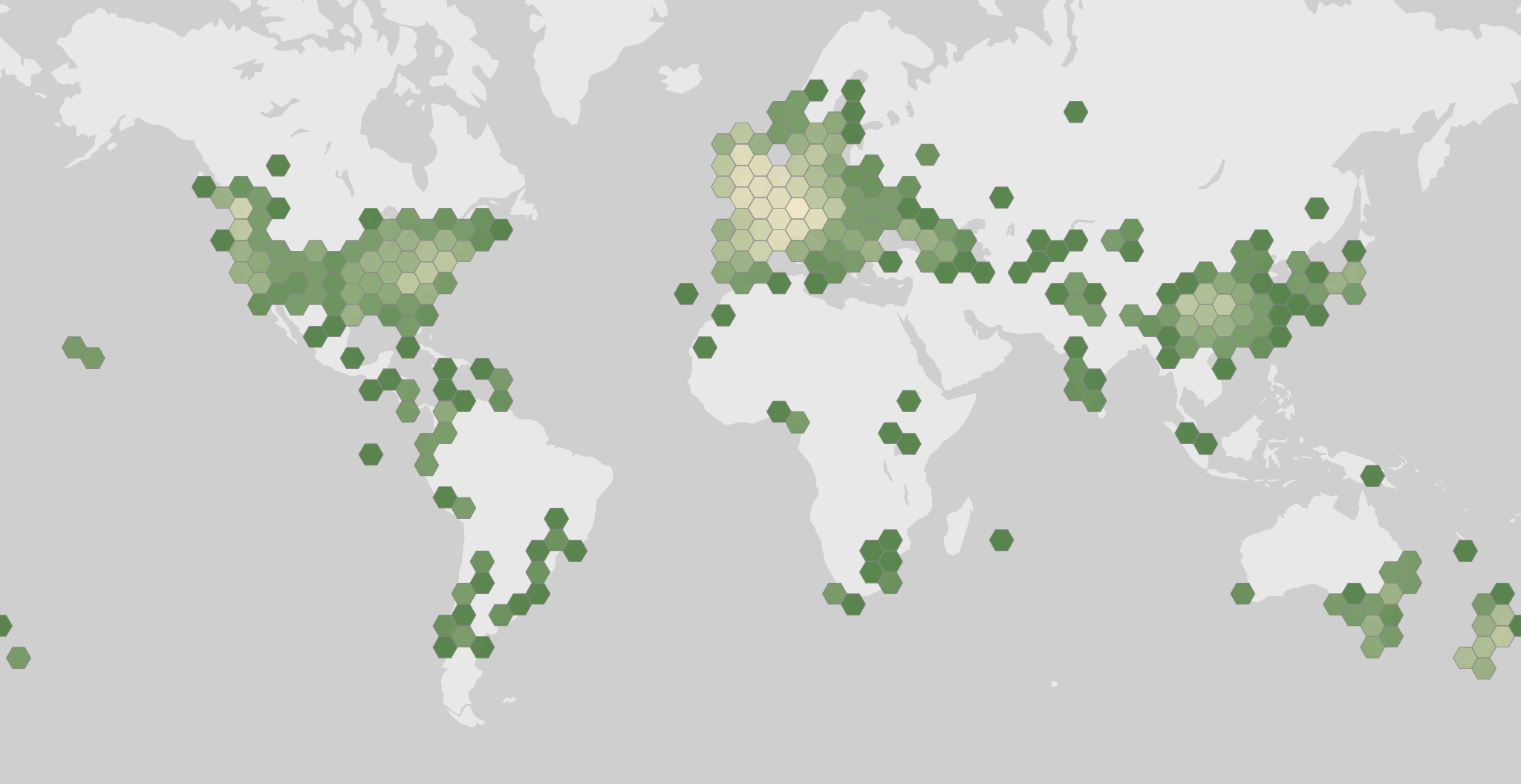
Outside its native range, the species has been introduced across an unusually wide set of regions, including much of Europe, the British Isles, large parts of the United States and Canada, New Zealand, Japan, parts of South America, and scattered locations in Africa and the Caribbean.
In these introduced areas it has escaped cultivation to become a common feature of waste ground, roadsides, railway corridors, quarries, and other urban and disturbed habitats, showing a clear preference for dry, disturbed sites rather than intact natural vegetation.
Observation records through the year show markedly higher counts from June through September, consistent with the plant's summer flowering season making it more visible and more frequently recorded during that period.
Growth and Form
Buddleja davidii grows as a shrub, with an arching, vigorous habit that can reach up to 5 m in height. Its bark texture changes noticeably with age, moving from smooth pale grey-brown bark to a flaky, deeply fissured surface on older wood.
Ecology and Relationships
The flowers of Buddleja davidii attract a very large number of visitors, with honeybees (Apis mellifera) and bumblebees such as Bombus terrestris and Bombus pascuorum recorded far more often than any other group, alongside hoverflies like Eristalis tenax. Butterflies also visit in numbers, including Pieris brassicae, Pieris rapae, and Vanessa atalanta, though a flower visit alone does not confirm that pollination took place.
A range of insects and some birds have been recorded feeding on the plant itself, including moths such as Phlogophora meticulosa and Acherontia atropos, the aphid Aphis verbasci, and birds like the redpoll (Acanthis flammea) and skylark (Alauda arvensis).
The species thrives on dry, disturbed ground, including quarries, railways, roadsides, and waste ground, in addition to the mountain thickets and slopes of its native range.
Uses and Human Relationships
Buddleja davidii and its roughly 180 cultivars are cultivated worldwide chiefly as ornamental shrubs, valued for the nectar their flowers offer to many butterfly species. However, the plant provides no food for butterfly larvae, and buddlejas can outcompete the host plants that caterpillars actually require to develop.
Growers manage the shrub through hard pruning in spring, since younger wood flowers more freely, and by removing spent flower panicles to reduce self-seeding and extend a flowering season otherwise limited to about six weeks. The species cannot survive harsh winters below roughly −15 to −20 °C, restricting it to USDA hardiness zones 5–9, and hybrids exist with other Buddleja species such as B. globosa and B. fallowiana.
Trials, including a six-year evaluation at the Chicago Botanic Garden, have compared dozens of varieties, and university studies have found that nectaring butterflies show stronger preferences for some cultivars, with 'Lo & Behold Blue Chip' and 'Pink Delight' ranking near the top of a list of eleven tested.
Fun Facts
- The species reached Kew Gardens in London in 1896 after Victorian-era plant collecting brought its seeds from China.
- Its genus name honors English botanist Reverend Adam Buddle, while its species name honors Father Armand David, the French missionary who first reported the shrub, giving the plant two separate namesakes from very different eras.
Photos
Photographs from via iNaturalist, licensed under CC0 1.0., by Rosy Thomson via iNaturalist, licensed under CC BY 4.0., by Bob via iNaturalist, licensed under CC BY 4.0., by jamie-aa via iNaturalist, licensed under CC BY 4.0., and by Samuel Paitreault via iNaturalist, licensed under CC BY 4.0., credited on each photo.
Ecology and classification
Growth habit
- Shrub
Classification
- Phylum
- Tracheophyta
- Class
- Magnoliopsida
- Order
- Lamiales
- Family
- Scrophulariaceae
- Genus
- Buddleja
- Species
- Buddleja davidii
Sources
- GBIF Species names and classification
- iNaturalist Photos
- Wikidata Common names and conservation status
- Wikipedia Summary extract
- Encyclopedia of Life Habitat, diet and behavior traits
- Plants of the World Online Native range, life form and climate (WCVP)
- GloBI What it eats, what eats it, parasites and pollinators
- trophiCH
- Wardeh et al. 2015 (EID2)
- DoPI
- Guzman et al. 2022
- EuPPollNet