Every part of the foxglove, from its speckled purple blooms to its woolly gray-green leaves, carries a compound potent enough to stop a human heart—or, in the right dose, to steady one. That compound, digitoxin, became the starting point for digoxin, one of the most enduring heart medications in modern use.
Digitalis purpurea, commonly called foxglove, is a biennial herb in the plantain family (Plantaginaceae). Native to Western Europe and North Africa, it spends its first year as a low rosette of leaves before sending up a tall flowering spike and dying in its second. It has since naturalized across North and South America, Asia, and Oceania, thriving wherever the ground has been disturbed.
Few plants combine ornamental appeal with such a sharp edge. Foxglove is prized in gardens for its height and color, feared for its toxicity, and credited with reshaping cardiac medicine—a combination that makes it one of the more consequential wildflowers of the temperate world.
Identification and Appearance
The clearest field mark is the flower spike itself: a tall, one-sided column of pendent, tubular blooms, each with a heavily spotted throat inside. In wild plants the flowers typically open along only one side of the stem, while cultivated forms often bear flowers arranged all around the spike.
The basal leaves are large, measuring 10 to 35 centimeters long and 5 to 12 centimeters broad, and are covered in gray-white, glandular hairs that give them a soft, woolly texture. These leaves form a tight rosette at ground level in the plant's first year. In the second year, a flowering stem rises 1 to 2 meters tall, occasionally taller.
Flower color is typically purple, though pink, rose, yellow, and white forms occur, especially among garden cultivars. Flowering begins in early summer, and some plants produce additional stems later in the season. Bees are frequent visitors, climbing fully inside the tube to reach the nectar.
After flowering, the plant produces a capsule fruit that splits open at maturity, releasing numerous seeds only 0.1 to 0.2 millimeters long—so small they are barely visible without close inspection.
Distribution and Habitat
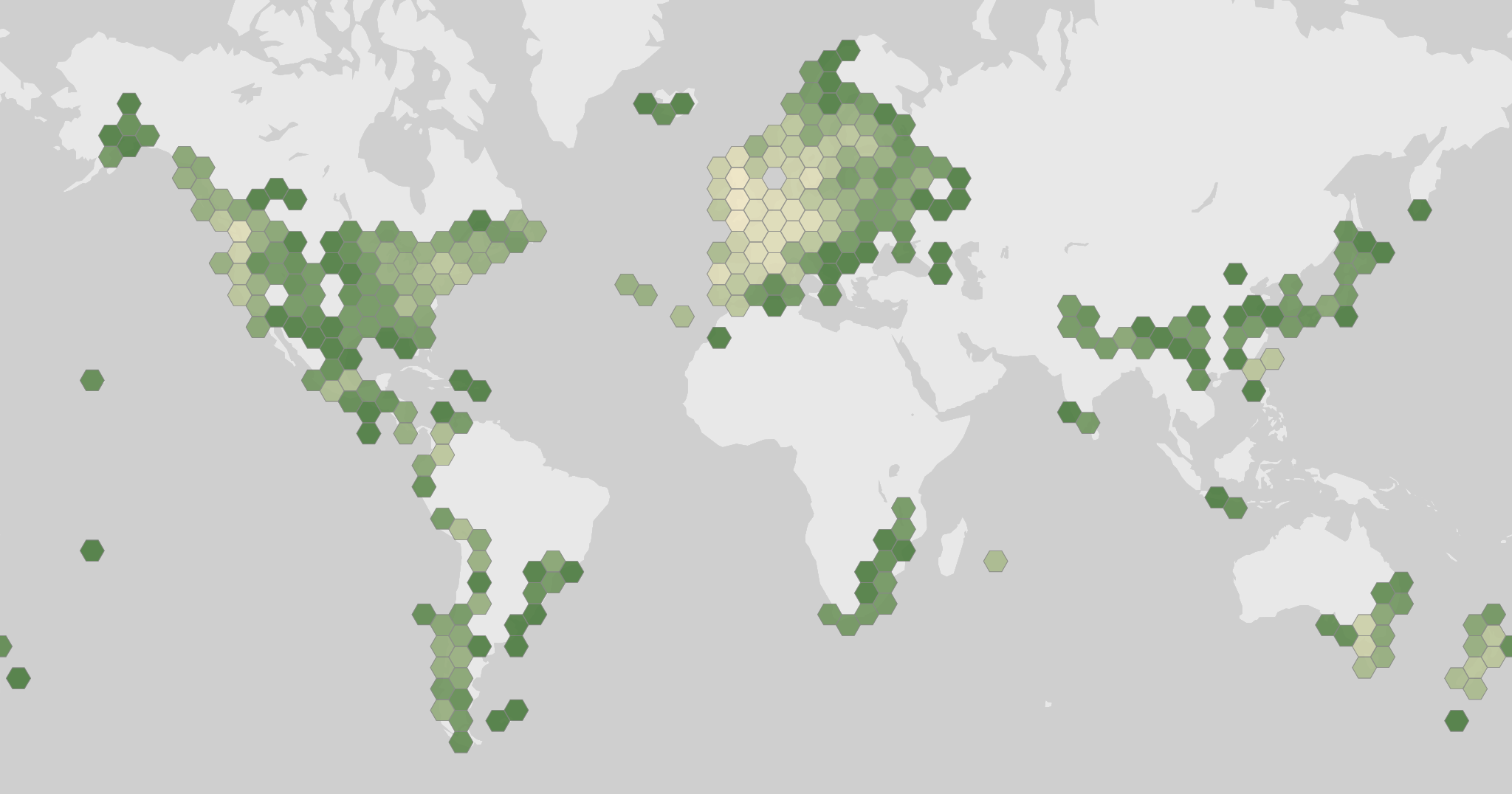
Foxglove is native to a broad swath of Western Europe and North Africa, including Belgium, the Czech Republic, France, Germany, Ireland, Norway, Portugal, Spain, Sweden, the United Kingdom, and Morocco, along with the islands of Corsica and Sardinia.
It has since been introduced far beyond this native range. Within Europe it now grows in Austria, the Baltic states, Belarus, Denmark, Hungary, the Netherlands, Poland, and Ukraine, among others, and it has reached the Azores, the Canary Islands, and Madeira. Overseas, it has established itself in more than twenty U.S. states and several Canadian provinces, across parts of South America from Argentina to Venezuela, in China, Korea, and Vietnam, and in New Zealand, where it is considered a weed in parts of Tasmania as well.
The species favors open woods, woodland clearings, moorland and heath margins, sea-cliffs, rocky mountain slopes, and hedge banks, and it readily colonizes ground disturbed by clear-felling, fire, or construction.
Monthly observation records show a sharp peak in June, with counts rising from around 30,000 in April to over 100,000 in June before tapering through the autumn. This pattern lines up with the plant's early-summer flowering period, though the figures reflect how often the plant was noticed and recorded, not its actual abundance or full range.
Ecology and Relationships
Foxglove thrives in acidic, humus-rich soils and tolerates conditions from partial sunlight to deep shade, but its seeds germinate only when exposed to light. This makes the plant a classic early colonizer: it is often among the first wildflowers to reappear on recently cleared woodland, burnt ground, or construction sites, yet it is largely absent from the interior of mature, shaded woodlands where light cannot reach the soil.
Bees are the plant's principal pollinators, crawling deep into the tubular flowers to reach the nectar, which they also use to produce honey.
Several moths depend on the plant for food. The caterpillar of the foxglove pug moth (Eupithecia pulchellata) seals itself inside a single flower with a silken web and feeds on the stamens and developing seeds before pupating there; it has been recorded in Britain, Germany, Switzerland, and Austria, though it remains uncommon. Other caterpillars feed on the leaves, including Melitaea athalia and Xestia ashworthii in Britain, Euphydryas aurinia in Romania, and Melitaea deione in Portugal.
Uses and Human Relationships
Foxglove is a widely grown ornamental, valued for the height and color it brings to gardens in late spring and early summer. Numerous cultivars have been bred in shades of white, pink, and purple, including seed mixtures such as the Excelsior hybrids, and some cultivated forms bear flowers completely around the spike rather than on one side as in the wild plant. The species is hardy to about −15°C (5°F), corresponding to USDA zones 4 through 9, and several selections have received the Royal Horticultural Society's Award of Garden Merit.
The plant's medical importance rests on the cardiac glycoside digitoxin, extracted from its leaves. Its clinical use was pioneered by William Withering, who in the eighteenth century recognized that it reduced fluid buildup, increased urine flow, and made the heart beat slower but more efficiently. During World War II, County Herb Committees in Britain collected Digitalis purpurea to help offset medicine shortages caused by German blockades, using it to help regulate heartbeat.
This dual identity, garden favorite and source of a narrow-margin heart drug, runs through the plant's whole relationship with people: the same leaves, flowers, and seeds that poison if eaten are also the raw material for one of the oldest continuously used cardiac medications.
Fun Facts
- In folklore, foxgloves are said to be beloved by fairies, and finding them growing wild was traditionally taken as a sign that fairies were nearby.
- Dew collected from foxglove blossoms was reportedly used in old spells meant to help people communicate with fairies—though gloves were advised, given the plant's toxicity.
- One observer described the plant as "a mystery waiting to be solved," noting that the longer they lived among foxgloves, the more they appreciated them and the less they felt they understood them.
Ecology
Habitat
- Coastal
- Woodland
- Mountain
- Disturbed Ground
Growth habit
- Herb