Dense mats of Callitriche stagnalis can crowd out native plants in the waters where it has spread, yet the plant poses no direct threat to people. This perennial aquatic plant, also called pond water-starwort, grows in lakes, ponds, slow-moving streams and even brackish water.
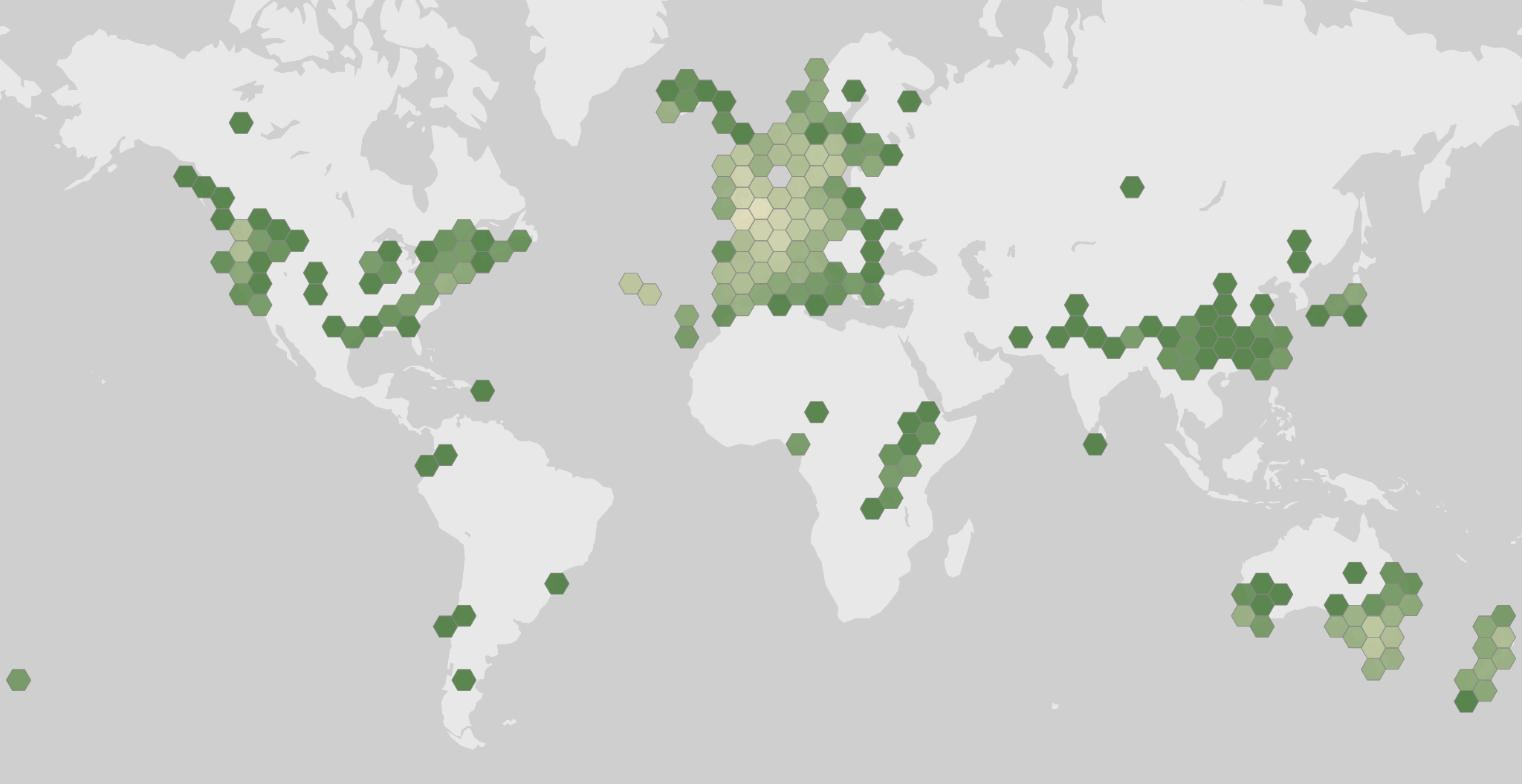
The species is native to Europe and North Africa, where it is widespread in aquatic and partly submerged habitats. It is now also found in North America, Asia, Australia, New Caledonia and New Zealand. The IUCN lists it as Least Concern.
Identification and Appearance
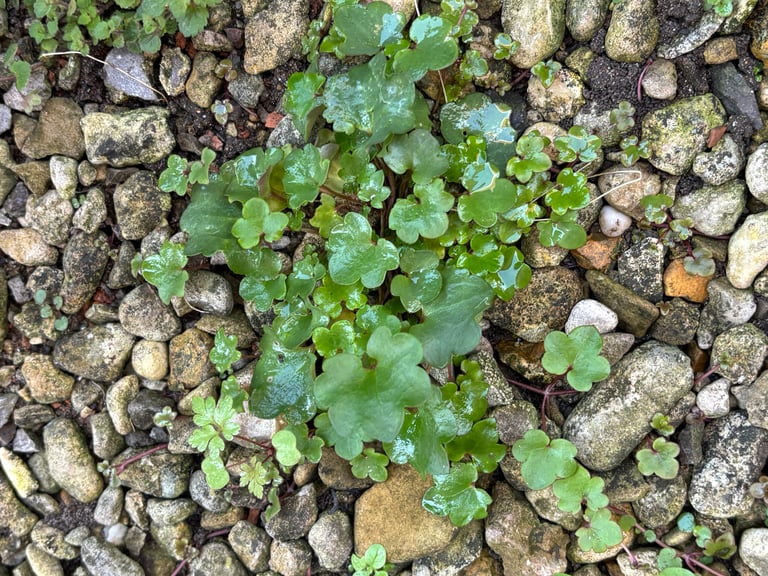
The most useful field mark is leaf shape, which changes between submerged and floating growth. Submerged leaves are linear, long and thin, with a single vein running up the center. They grow 4 to 10 mm long, and some are wider, reaching 5 to 8 mm across.
Floating leaves are spatulate to obovate, much broader than the submerged leaves, and have 5 to 7 veins. They are much shorter, reaching only about 2 mm in length. The leaves are arranged in opposite pairs along stems that run roughly 10 to 30 cm long.
The plant is monoecious, with separate male and female flowers. Each flower has two small bracts at its base that help hold it above the water. The fruit is nearly round in outline, about 1.5 to 2 mm thick, and made of several thin, winged segments.
Distribution and Habitat
Callitriche stagnalis is native to Europe and North Africa, extending from Macaronesia and northwest Africa through Europe to western Siberia and Türkiye. Within that range it grows in aquatic and partly submerged habitats.
It prefers water with little or no movement. The plant occurs in lakes, ponds, salt marshes and slow-moving rivers and streams, and it grows in both fresh and brackish water.
Outside its native range, the earliest North American record comes from New York and New Jersey in 1861. The plant was first found on the West Coast in Oregon in 1871. Its introduction mechanism is unclear, though shipping may have released it. By the end of the nineteenth century it had become a popular aquarium plant, and it is believed this spread it inland as well as along the coasts.
In the United States it now occurs throughout the mid-Atlantic states, Virginia, Tennessee, Alabama, Wisconsin, Montana, Washington, Oregon and California. In New England it occurs in Massachusetts, Connecticut and Maine. It has also become established in Australia, New Zealand, New Caledonia and parts of Chile.
Growth and Form
Callitriche stagnalis is a perennial herb, so it persists through the years from the same root system. Its long stems and opposite leaves form a plant that can be entirely submerged or partly floating.
Because it multiplies by clonal spread, a single plant can expand into a dense mat. These mats grow outward across the water surface and beneath it, filling the available space.
Ecology and Relationships
Aphids, beetles and waterfowl feed on the plant. The aphid Rhopalosiphum nymphaeae is a main consumer, and leaf beetles in the order Coleoptera also feed on it. Ducks in the order Anseriformes are main consumers as well, and the diving duck Aythya ferina is an occasional one.
Bees in the order Hymenoptera visit its flowers. Several mining and sweat bees, including species of Andrena, Halictus, Lasioglossum and Osmia, visit its flowers regularly.
The plant grows in still or slow-moving fresh and brackish water, where its mats provide shelter and surface for other organisms.
Conservation and Threats
The IUCN classifies Callitriche stagnalis as Least Concern. The species does not pose a threat to humans, but it can threaten native vegetation where it has been introduced.
The main concern is its clonal spread. It forms thick, locally dense vegetative mats that take up limited space and nutrients, crowding out native and other local plants.
In areas where it has established outside its native range, the dense mats are the main way it affects local vegetation.
Photos
Photographs from via iNaturalist, licensed under CC0 1.0., by Ondřej Křivan via iNaturalist, licensed under CC BY 4.0., by jonathon love via iNaturalist, licensed under CC BY 4.0., by Shaun via iNaturalist, licensed under CC BY 4.0., and by guywallbanks via iNaturalist, licensed under CC BY 4.0., credited on each photo.
Ecology and classification
Habitat
Growth habit
- Herb
Classification
- Phylum
- Tracheophyta
- Class
- Magnoliopsida
- Order
- Lamiales
- Family
- Plantaginaceae
- Genus
- Callitriche
- Species
- Callitriche stagnalis
Sources
- GBIF Species names and classification
- iNaturalist Photos
- Wikidata Common names and conservation status
- Wikipedia Summary extract
- Plants of the World Online Native range, life form and climate (WCVP)
- USDA Plants US plants: growth habit and growing conditions
- GloBI What it eats, what eats it, parasites and pollinators
- trophiCH