On the South Downs in southern England, Calocybe gambosa has formed fairy rings so large they are thought to be several hundred years old, a scale that hints at how slowly and persistently this fungus spreads through grassland turf.
Known as St. George's mushroom because it typically appears around Saint George's Day in the United Kingdom, Calocybe gambosa is a gilled fungus in the family Lyophyllaceae, though it was long classified within the large genus Tricholoma. It grows across Europe, especially in grasslands on limestone soils, and is assessed as Least Concern by the IUCN.
Its early spring fruiting, distinctive fairy-ring growth, and long history as a prized regional food make it one of the more culturally notable mushrooms of the European calendar, even as it demands caution from anyone who forages it.
Fruiting Body and Identification
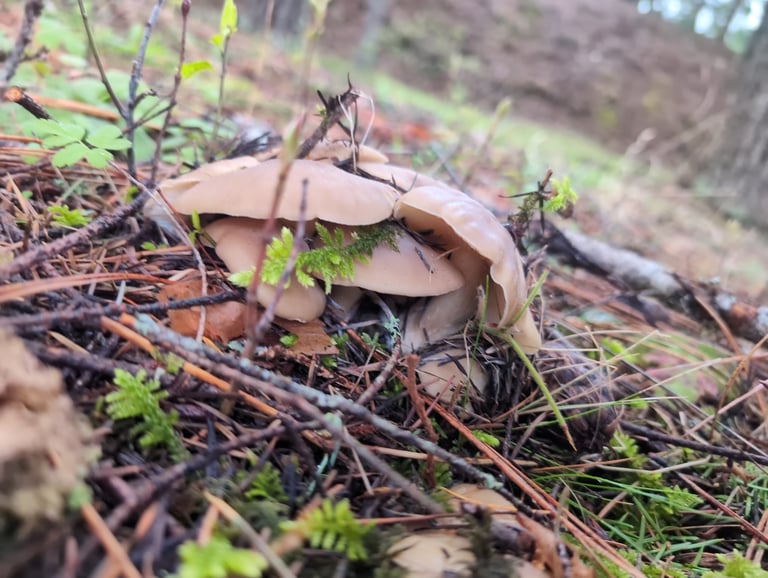
The most useful identifying features of Calocybe gambosa are its stocky, bulbous stem and its pale, cream-to-white color across the whole fruiting body. The cap measures 5 to 15 centimeters across, smooth but marked with faint ridges, and ranges from white to creamy in tone, matching the color of the stipe and flesh.
Beneath the cap, the gills are sinuate, white, and tightly crowded together. The stipe itself is short and stubby, thickening noticeably toward the base. The flesh is dense and soft, with a distinctive mealy or cucumber-like smell, and the spore print is white.
Identification requires care, because Calocybe gambosa grows in the same grassland habitats as several poisonous species. Inosperma erubescens is highly poisonous and can be mistaken for it, but has a more pungent, fruity smell and bruises red where handled. Entoloma sinuatum, also poisonous, gives off a rancid odor instead. The inedible Melanoleuca strictipes can likewise resemble it in the field.
Distribution and Habitat
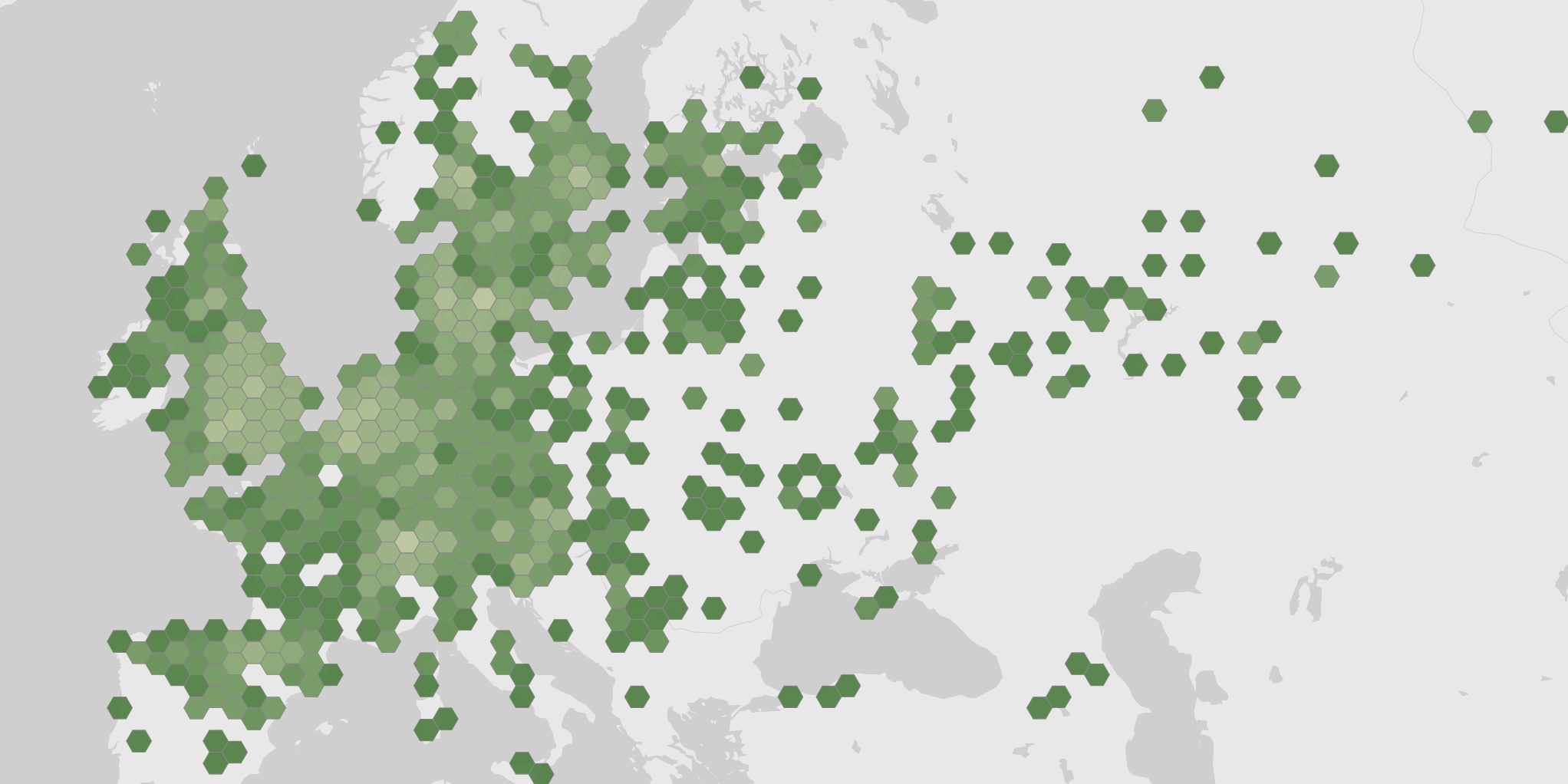
Calocybe gambosa is common in grasslands across Europe, with a strong preference for areas rich in limestone. It is well established on the Swedish Baltic islands of Öland and Gotland, and in southern England it has formed extensive, long-lived fairy rings on the chalk grasslands of the South Downs.
Fruiting season shifts with climate: the species appears from April to June in the United Kingdom, earlier in warmer countries and later in cooler ones. In Italy it emerges as early as March, giving rise to its regional name marzolino, also known as prugnolo.
Monthly observation data show a sharp peak in April and May, with counts far higher than any other months, tapering off through June and dropping to low background levels for the rest of the year. This pattern lines up with its known spring fruiting window, though as presence records rather than abundance counts, the figures reflect when and where people have recorded the mushroom rather than its true population size.
Uses and Cultural History
St. George's mushroom has a long history as a prized food across Europe, best picked in dry weather and eaten cooked, pickled, or even raw. Its reputation stretches back centuries: in 1569 the naturalist Costanzo Felici described it as the most expensive and highly regarded mushroom in the Umbria and Marche regions of central Italy, and by 1777 Giovanni Targioni Tozzetti recorded similar esteem for it in the Apennine regions of Liguria, Tuscany, and Emilia-Romagna. It is still gathered and eaten locally in Emilia-Romagna and Tuscany today.
The mushroom holds particularly high status in the Basque Country of northern Spain, where it commands very high prices. In the province of Álava it is traditionally eaten alongside snails on the feast of Saint Prudentius, 28 April, and it forms a cornerstone of Bilbao's gastronomy, where it is typically prepared in an omelette.
Demand in the Basque Country is high enough that local supply cannot keep pace, and the species is now imported in commercial quantities from Romania, Hungary, and Turkey to meet it.
Fun Facts
- The genus name Calocybe comes from the Ancient Greek kalos ("beautiful") and kybe ("head"), a nod to the attractive shape of the cap.
- The species name gambosa derives from the Latin gambosus, meaning "club-footed," referring to the mushroom's thick, robust stipe.
- Beyond marzolino in Italy, the mushroom has long been foraged under regional names such as Maipilz in Germany, reflecting its status as an early-season delicacy across the continent.
- Calocybe gambosa can behave as both a mycorrhizal partner and, at times, a saprophyte, giving it more than one way of obtaining nutrients from its grassland habitat.
Conservation status
- LC
- NT
- VU
- EN
- CR
Least Concern
Ecology
Habitat
- Grassland