The giant bellflower (Campanula latifolia) is a tall perennial with some of the largest bells in its genus, and it grows naturally across much of Europe and western Asia. It belongs to the bellflower family, Campanulaceae, and is also called the large campanula and the wide-leaved bellflower.
Its native range stretches from Europe to southwestern Siberia and across western Asia, reaching as far east as Kashmir. It grows in broad-leaved woodland, coppices, parkland and forest margins.
It is worth reading about because it has moved well beyond its homeland. Gardens have carried it to many countries, and it now sets seed and spreads on its own in places far from its native range.
Identification and Appearance
The most useful field mark is the flower: a bell-shaped bloom with five dark violet-blue petals that are fused into a single bell. Each flower measures 35 to 60 millimeters (1.4 to 2.4 inches) long. Young flowers stand upright, and they later droop into a nodding position.
The plant forms clumps of erect, unbranched stems that reach 60 to 120 centimeters (24 to 47 inches) tall. The stems are shortly hairy. Flowers are borne in a many-flowered terminal raceme or in the leaf axils of the upper stem, each with its own bracts.
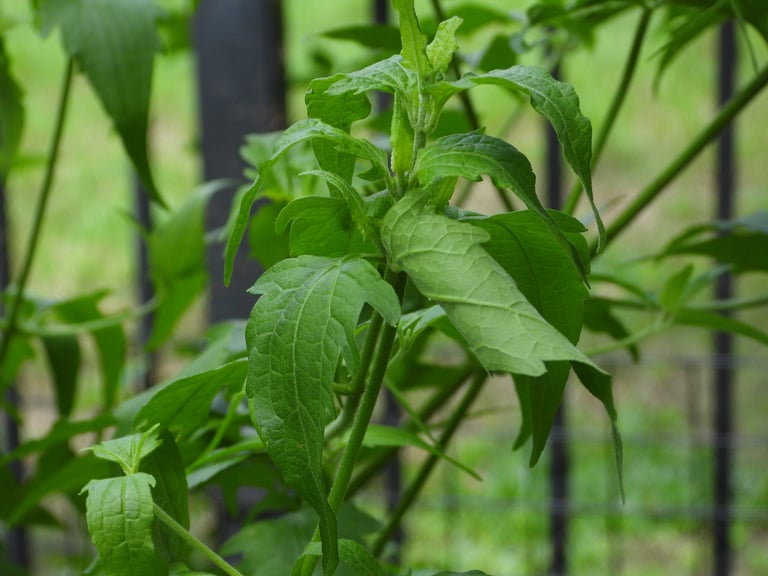
The lower leaves have stalks and are broadly ovate, with a heart-shaped base. The upper leaves are ovate-lanceolate, have no stalk, and are softly hairy with bluntly toothed edges.
Each flower has both male and female parts. It has five stamens and a single pistil made of three fused carpels, and the calyx has five narrow lobes that spread out as the flower matures.
Distribution and Habitat
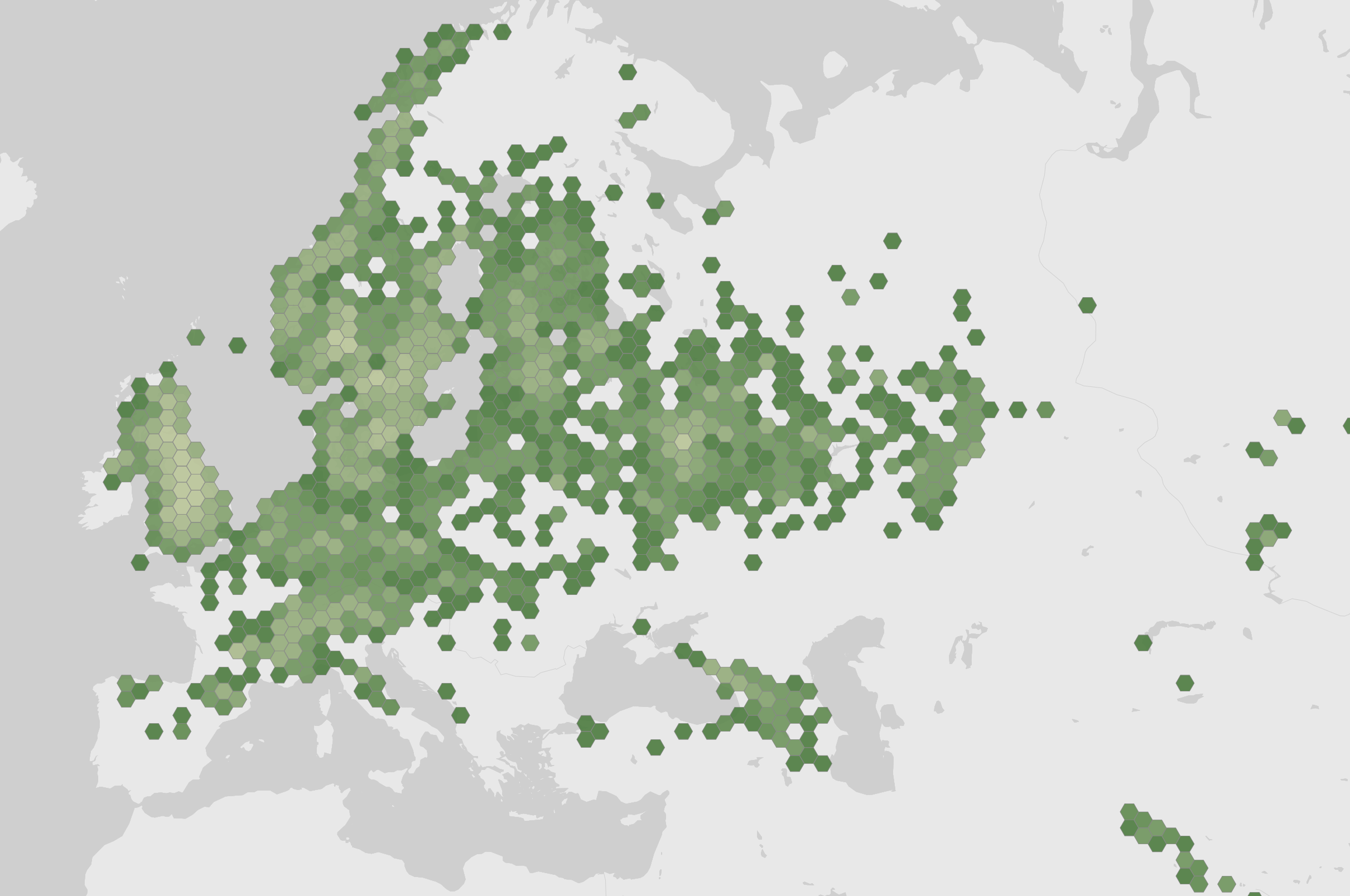
The giant bellflower is native to Europe and western Asia, ranging from Scandinavia and Britain south to Spain, Italy and Türkiye. Its range extends east through European Russia and Kazakhstan, and it reaches as far as Kashmir and the western Himalaya.
In its native range, it grows in broad-leaved woodland, coppices, parkland and the edges of forests. These open, partly shaded settings suit its clump-forming habit.
Outside its native range, it has established in several places, including parts of Belgium, Ireland, the Netherlands, Connecticut, Maine, Pennsylvania, Utah and Vermont. Some of these populations began as escapes from gardens.
Observations peak in July, with a smaller rise in May and June. This seasonal pattern follows the flowering period, and it reflects when people are most likely to see the plant rather than how many plants there are.
Growth and Form
The giant bellflower is a perennial herb that dies back to its root system each year and returns from the same plant in following seasons. It grows as a clump of erect, unbranched stems.
Mature plants reach 60 to 120 centimeters (24 to 47 inches) in height. The stems are not branched, so the height comes from a single upright stalk per shoot.
The plant also spreads outward through creeping rhizomes, which add new shoots around the original clump over time.
Ecology and Relationships
Several groups of animals feed on the giant bellflower. Songbirds, beetles and moths are the main groups that eat it, and skylarks and common redpolls are among the birds that stand out. Smaller numbers of pigeons, gamebirds, ducks and geese, grasshoppers and true bugs also feed on it.
Its flowers draw visits mostly from bees and flies. Bumblebees, solitary bees and hoverflies are the main visitors. Butterflies and true bugs visit less often.
The plant suits partly shaded woodland edges and open woodland, so it fits into the mix of habitats that these visiting insects use. Its ability to grow in partial to full shade helps it persist in such places.
Uses and Human Relationships
The giant bellflower is widely grown as an ornamental plant for its large, dark violet-blue bells. Gardeners plant it in borders and woodland settings, where its clump-forming habit suits partly shaded areas.
The plant grows well in partial to full shade and is hardy in USDA zone 5. It also tolerates drought quite well, which makes it adaptable to dry conditions once established.
It seeds freely and can become naturalized, spreading from gardens into wild places. Its rhizomes also let it spread through the ground, so it can become established in areas where people did not plant it.
Photos
Photographs from by Andrejus Gaidamavičius via iNaturalist, licensed under CC BY 4.0., via iNaturalist, licensed under CC0 1.0., by Анна via iNaturalist, licensed under CC BY 4.0., by Maria Kohanovskaya via iNaturalist, licensed under CC BY 4.0., by Екатерина Кравцова via iNaturalist, licensed under CC BY 4.0., by Andrew Skotnicki via iNaturalist, licensed under CC BY 4.0., by Илья Руденко via iNaturalist, licensed under CC BY 4.0., by Maria Khoreva via iNaturalist, licensed under CC BY 4.0., by betony13 via iNaturalist, licensed under CC BY 4.0., by Mark Costello via iNaturalist, licensed under CC BY 4.0., by guywallbanks via iNaturalist, licensed under CC BY 4.0., by Shivva Rudra via iNaturalist, licensed under CC BY 4.0., and by agujaceratops via iNaturalist, licensed under CC BY 4.0., credited on each photo.
Ecology and classification
Classification
- Phylum
- Tracheophyta
- Class
- Magnoliopsida
- Order
- Asterales
- Family
- Campanulaceae
- Genus
- Campanula
- Species
- Campanula latifolia
Sources
- GBIF Species names and classification
- iNaturalist Photos
- Wikidata Common names and conservation status
- Wikipedia Summary extract
- Plants of the World Online Native range, life form and climate (WCVP)
- USDA Plants US plants: growth habit and growing conditions
- GloBI What it eats, what eats it, parasites and pollinators
- trophiCH
- DoPI
- EuPPollNet