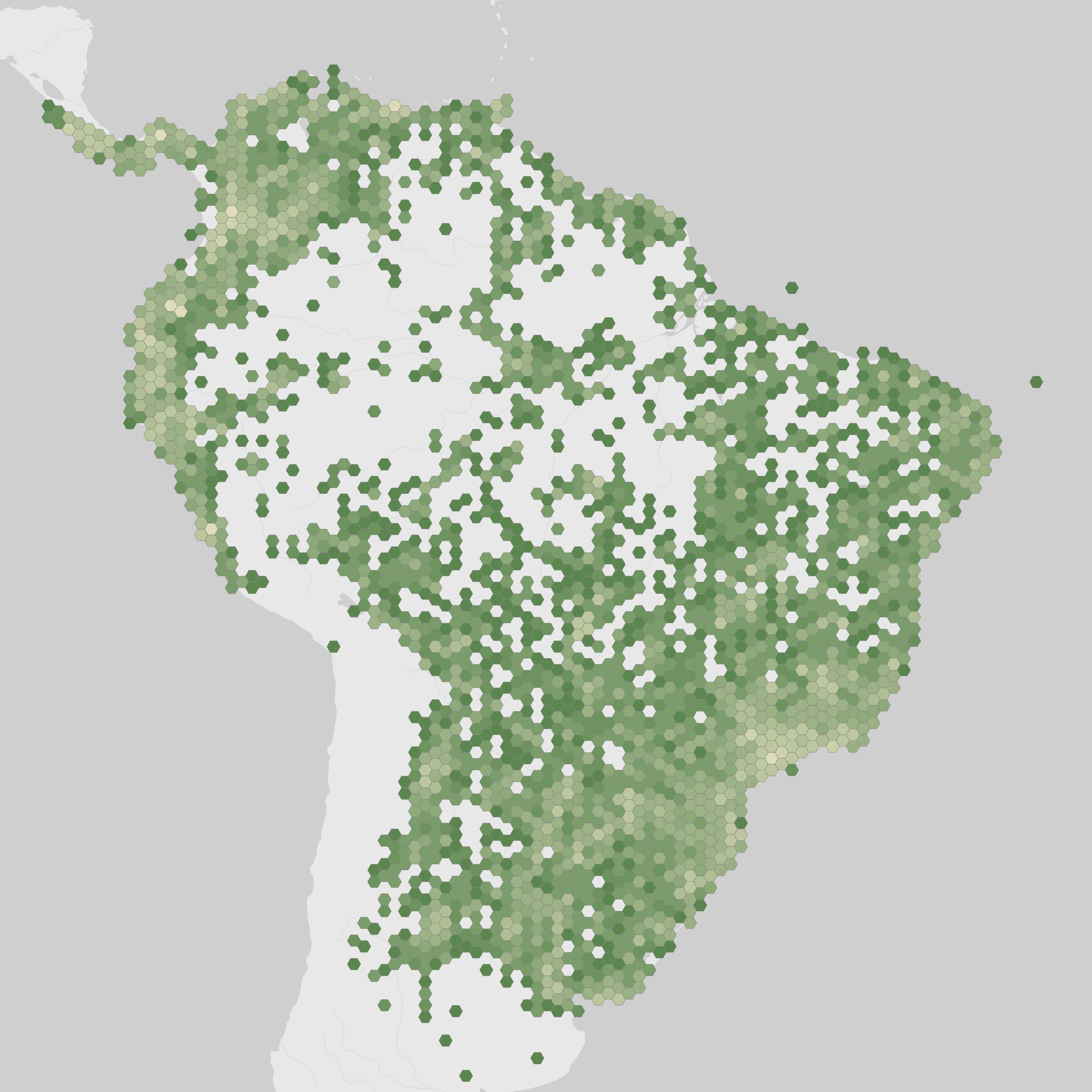
The southern beardless tyrannulet is a tiny flycatcher whose range stretches from Costa Rica all the way to Argentina, covering nearly every mainland South American country except Chile.
A member of the tyrant flycatcher family Tyrannidae, it is classed as Least Concern by the IUCN. Despite its plain look, its huge range and adaptability to human-altered landscapes make it one of the more widespread small birds of the Neotropics.
Identification and Appearance
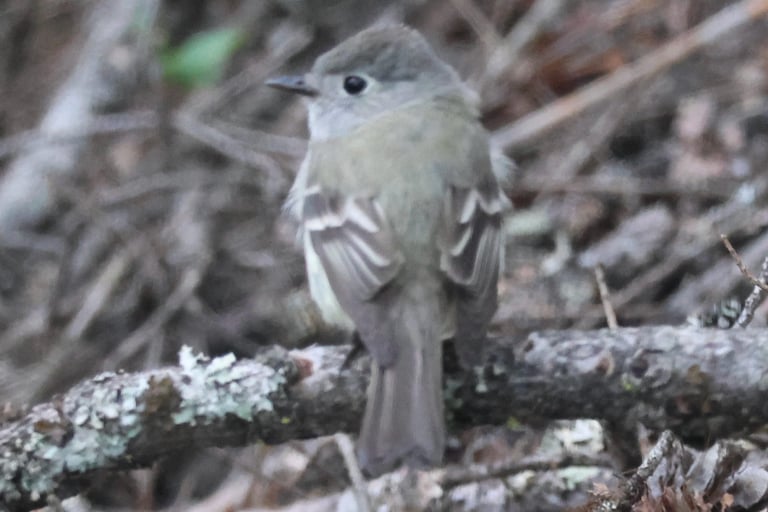
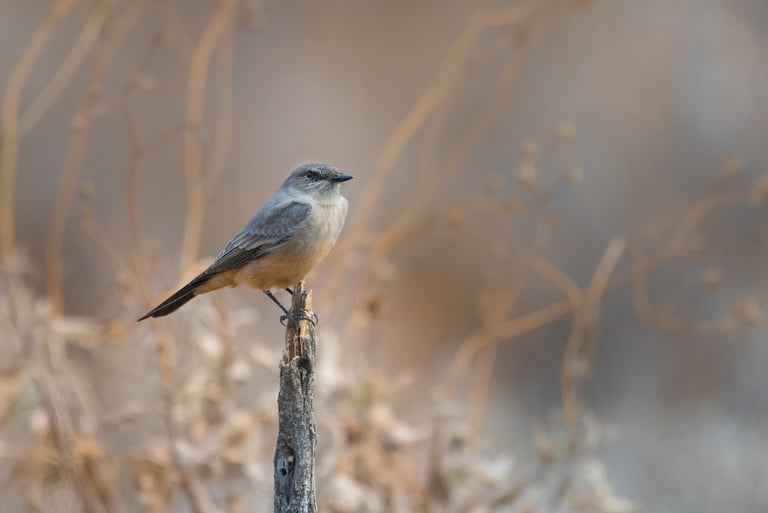
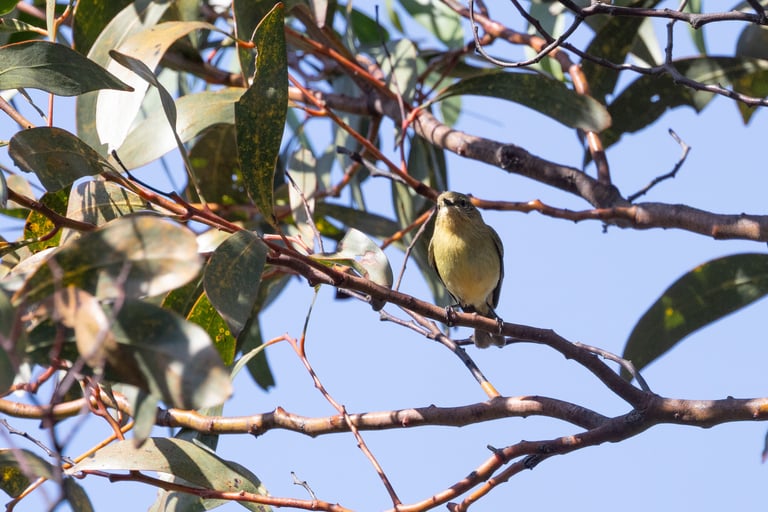
The most useful field mark is the combination of a bushy, often dark-centered gray crown, a broken white eyering, and two wide cinnamon wing bars on an otherwise plain grayish-olive bird. It measures 9.5 to 10.5 cm long and weighs only 7 to 9 grams, with a long, pointed, warbler-like bill unusual among flycatchers.
Adults show grayish-white faces with white lores, medium olive-gray upperparts and tail, and dusky wings edged in whitish to creamy tones. The throat is grayish white, grading into pale yellow underparts with a faint olive wash across the breast. The sexes look alike. Juveniles are duller and browner, with pale buffish-white underparts rather than yellow.
Across its many subspecies, plumage varies mainly in the intensity of yellow below and the shade of gray-olive above: C. o. olivaceum is brightly yellow-green, C. o. caucae and its relatives are much paler, and C. o. orphnum from Coiba Island is the smallest race with an especially dark crown. All subspecies share a brown iris, a horn-colored upper bill, a dull orangish or pinkish lower bill, and gray legs and feet.
Distribution and Habitat
The southern beardless tyrannulet occupies an enormous range, from Costa Rica and Panama through nearly every mainland South American country except Chile, as well as Trinidad. Subspecies divide this range into distinct regions, from the Pacific slope of Central America through the Andes, the Amazon basin, the Guianas, and south to Uruguay, Paraguay, and northern Argentina.
It favors open and semi-open habitats: open woodland, secondary growth, scrub, savanna with scattered trees, gardens, shaded plantations, desert scrub with cactus, and forest edges, generally avoiding the interior of continuous humid forest though it occasionally enters várzea and swamp forest. Elevation limits vary widely by region, reaching as high as 2,800 m in western Ecuador but staying below 1,000 m in parts of Panama and eastern Ecuador.
Most populations are year-round residents, though part of the southern population shifts northwest into southeastern Peru during the austral winter.
Behavior and Lifestyle
This tyrannulet is typically solitary or found in pairs rather than in flocks, reflecting its generally low-key, unobtrusive lifestyle in the vegetation it inhabits. It is insessorial, spending most of its time perched in trees and shrubs rather than on the ground.
It is sedentary across almost all of its range, remaining resident year-round, though part of the southern population undertakes a modest seasonal movement northwest into southeastern Peru during the austral winter.
Communication
The species has a varied vocal repertoire built around thin, high whistles. One common call is a rising-and-falling "fleeeeer," sometimes extended into "fleeeeee-pit-pit," while another is a descending series of clear, minor-key notes rendered as "fleee, flee-fleew-fleew."
When calling, it often raises its crest, adding a visual component to its vocal displays. It is notably responsive to playback of local pygmy owl calls, approaching closely while calling and fussing, a behavior likely tied to mobbing a potential predator.
Recordings
uncertain · Argentina · Graznidos y gorjeos · Public domain
Diet and Nutrition
The southern beardless tyrannulet feeds mostly on insects and spiders, gleaned actively from perches as it moves frequently through vegetation. Berries, including those of mistletoe and other small fruits, make up a significant secondary part of its diet.
It usually forages alone or in pairs, though it occasionally joins mixed-species feeding flocks. Most foraging happens in the crown of trees and the upper parts of lower vegetation, though west of the Andes it often feeds at any level, including closer to the ground.
It occasionally takes prey while briefly hovering, supplementing its typical perch-and-glean technique.
Nesting and Breeding
Breeding season timing varies widely by region: December to March in Central America, September to December in Suriname, and August to January in Argentina. The female alone builds the nest, a bulky globe with a side entrance, woven from varied plant materials, spider web, and cocoon cases, and lined with seed down and other fine materials.
Nests are placed anywhere from just above the ground to as high as 30 m up in a tree and are typically well hidden. In a study in Ecuador, 12 of 20 nests studied were placed near an active wasp nest, likely for protection from predators.
Clutch size is usually two eggs, rarely three. Incubation lasts 14 to 15 days, and fledging occurs about 17 days after hatching, with both parents provisioning the nestlings.
Conservation and Threats
The IUCN lists the southern beardless tyrannulet as Least Concern, reflecting its extremely large range and an estimated population of at least 50 million mature individuals believed to be stable. No immediate threats have been identified.
It is considered fairly common to very common across most of its range, though it is rare at the northern edge of its Costa Rican range, less numerous in eastern than western Ecuador, and uncommon in northeastern Peru. Its preference for scrub, lighter woodland, and semi-open habitats makes it less vulnerable to forest degradation than many other tyrannid species, since it can exploit converted, human-altered habitats.
Fun Facts
- Its name reflects a genuine anatomical quirk: it lacks the bristles at the corners of the mouth found in most other tyrant flycatchers, earning it the label "beardless."
- There are more than a dozen recognized subspecies across its range, differing subtly in crown darkness, underpart color, and overall size, from the tiny, dark-crowned C. o. orphnum of Coiba Island to the brightly colored C. o. olivaceum of the western Amazon.
Photos
Photographs from via iNaturalist, licensed under CC0 1.0., by Miguel A. Paixão via iNaturalist, licensed under CC BY 4.0., by avocat via iNaturalist, licensed under CC BY 4.0., by Pablo H Capovilla via iNaturalist, licensed under CC BY 4.0., by Nicolas Olejnik via iNaturalist, licensed under CC BY 4.0., by Anthony Batista via iNaturalist, licensed under CC BY 4.0., by PampaSorro via iNaturalist, licensed under CC BY 4.0., by RAP via iNaturalist, licensed under CC BY 4.0., by Dan Schofield via iNaturalist, licensed under CC BY 4.0., by William Stephens via iNaturalist, licensed under CC BY 4.0., by Mariano Cosentino via iNaturalist, licensed under CC BY 4.0., and by Marcello Mastroianni Albuquerque Araújo via iNaturalist, licensed under CC BY 4.0., credited on each photo.
Ecology and classification
Classification
- Phylum
- Chordata
- Class
- Aves
- Order
- Passeriformes
- Family
- Tyrannidae
- Genus
- Camptostoma
- Species
- Camptostoma obsoletum
Sources
- GBIF Species names and classification
- iNaturalist Photos
- Wikidata Common names and conservation status
- Wikipedia Summary extract
- Encyclopedia of Life Habitat, diet and behavior traits
- Xeno-canto Audio recordings
- AVONET Bird mass, habitat, migration, diet and range size