Say's phoebe is a hardy flycatcher that thrives where few other songbirds bother to live: dry, desolate, arid landscapes across western North America. It belongs to the tyrant flycatcher family, Tyrannidae, within the order Passeriformes, and carries a Least Concern conservation status.
Its comfort in barren, water-scarce terrain, paired with a habit of hovering over open fields like a small kestrel, makes it one of the more distinctive flycatchers to watch in the arid West.
Identification and Appearance
The single best clue to a Say's phoebe is its buffy cinnamon belly deepening to orange near the vent, paired with a black tail and gray-brown upperparts. It is a barrel-chested bird with a squared-off head, measuring about 19 centimeters (7.5 inches) long with a 33-centimeter (13-inch) wingspan and weighing roughly 21 grams.
The long tail and wings that end just past the rump when the bird is at rest give it a distinctive silhouette. In flight, the wings appear pale, an effect that can recall a female mountain bluebird at a glance.
Juveniles resemble adults but show buffy orange to whitish wingbars and a yellow gape, features that fade with maturity.
Distribution and Habitat
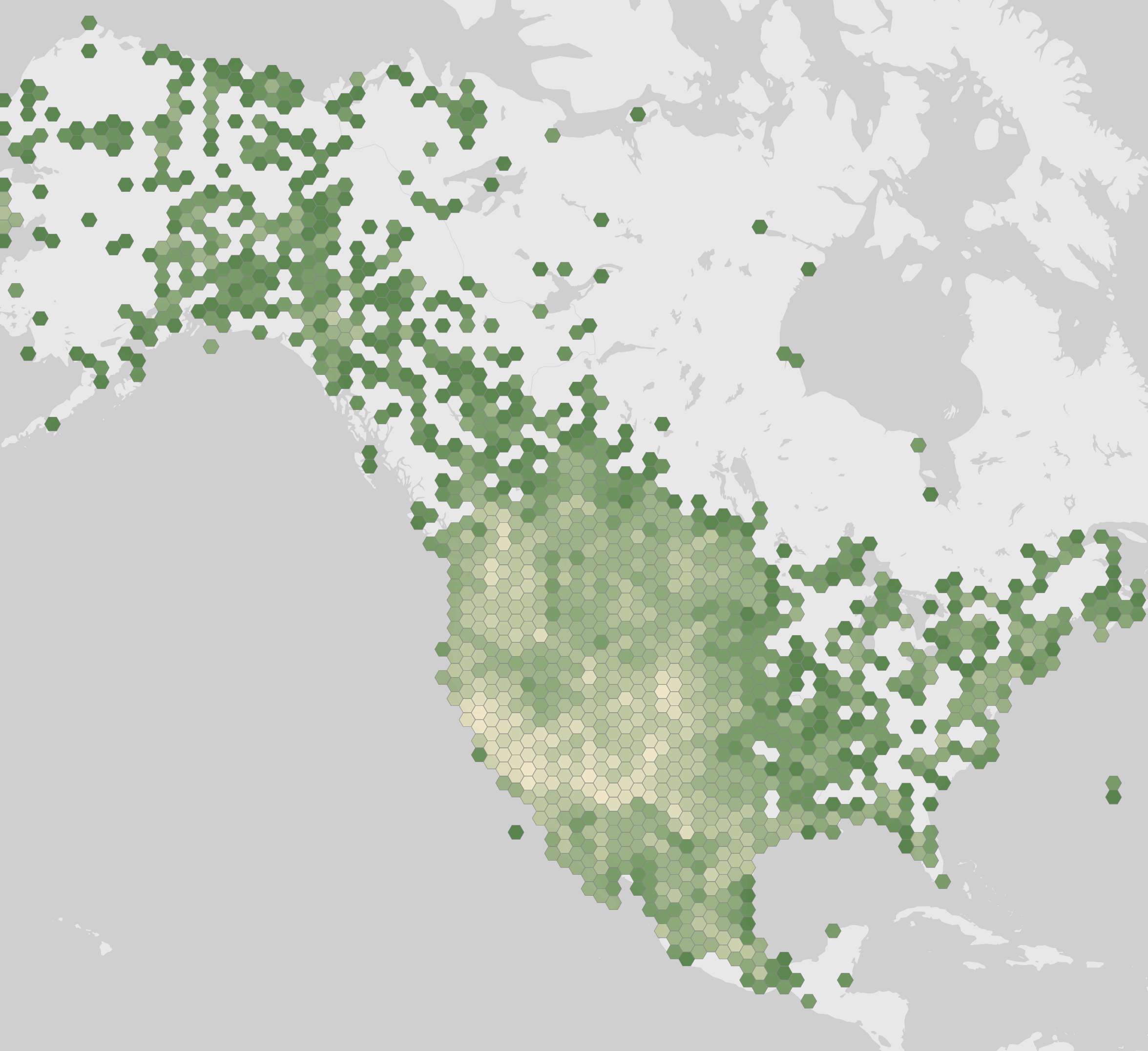
Say's phoebe occupies a broad range across western North America, from Alaska south through western and south-central Canada into North Dakota, the Midwest, New Mexico, and westward during the breeding season. Year-round populations occur from western Colorado southwest to southern California, east to the Texas panhandle, and south through western Mexico.
In winter, birds retreat to the desert Southwest, south Texas, and Mexico, reaching as far as northern Central America. During migration, individuals sometimes turn up thousands of miles out of range, with regular fall reports as far east as New England and Nova Scotia.
The species favors dry, desolate, arid landscapes, including farmland, savanna, and open woodland, usually near a water source. It tends to be among the earliest migrants returning to the western United States each year.
Behavior and Lifestyle
Say's phoebe hunts by sallying from a perch to snatch insects in midair, a classic flycatcher technique. It also hovers in a manner reminiscent of an American kestrel and dips its tail while perched, and it often feeds just above the surface of water.
The species is migratory, shifting between separate breeding and wintering grounds across its wide range. For nesting, it attaches cup-shaped nests built by the female under bridges, against canyon walls, in wells, and inside abandoned mine shafts, using grass, forbs, moss, and plant fibers lined with hair and other fine materials.
Communication
Song is the main channel of communication for Say's phoebe, delivered with a loud initial pitch that levels off into a steadier tone, a pattern distinctive among Sayornis species. Birds use this song to countersing rivals, announce their presence while patrolling territory, and signal readiness during the early stages of the mating season.
Almost all singing is done by males, though a few females also sing. The bird sometimes delivers its song while hovering over open ground, combining the vocal display with an aerial one.
Recordings
begging call · United States · Anne · Public domain
call, dawn song, song · United States · Diana Doyle · CC BY-SA
Hunting and Diet
Say's phoebe hunts insects by taking them in midair or by pouncing on them after they land on the ground, feeding mainly on grasshoppers, flies, crickets, beetles, and bees, though it is debated whether honey bees are genuinely suitable prey. It has also been observed eating small fish on occasion.
Nestlings eat differently from adults, consuming a higher share of soft foods rather than the tougher insect prey that makes up most of the adult diet.
Nesting and Breeding
Courtship and nesting activity in Say's phoebe can begin as early as late March and extend into late August. Breeding takes place across a broad elevation range, from 300 to 1,800 meters, with birds favoring open, arid country for nesting.
The breeding range is wide, stretching from arctic Alaska in the north to central Mexico in the south. The female builds a cup-shaped nest and lays three to seven eggs, usually four or five, white and mostly unmarked though some show red spots, each about 20 millimeters long.
Cultural Significance
The name Saya carries cultural weight far beyond the bird itself. In early Turkic mythology, particularly among the Altai, Anatolian, and Caucasus peoples, Saya (or Zaya) was a mythological male figure associated with summertime and with rituals held in rural areas during that season.
Among the Dane-zaa, an Athabaskan-speaking Indigenous people of northwestern Canada, Saya (also called Tsááyaa, or Swan) is a benevolent culture hero and transformer figure in traditional folklore, a creator figure central to their storytelling tradition.
Fun Facts
- Say's phoebe's song begins with a notably loud, high pitch before leveling off, a trait that sets it apart from other Sayornis species.
- It is one of the earliest migrant birds to return to the western United States each spring.
- The name "Saya" independently names a benevolent culture hero in Dane-zaa folklore, a figure unrelated to the bird but sharing its name.
Photos
Photographs from via iNaturalist, licensed under CC0 1.0., by ashleyrsteel via iNaturalist, licensed under CC BY 4.0., by Steve Young via iNaturalist, licensed under CC BY 4.0., by nerpanura via iNaturalist, licensed under CC BY 4.0., by Eric Austin via iNaturalist, licensed under CC BY 4.0., by Millie Basden via iNaturalist, licensed under CC BY 4.0., by louisiv826 via iNaturalist, licensed under CC BY 4.0., by Gavin Skeen via iNaturalist, licensed under CC BY 4.0., by arquivi via iNaturalist, licensed under CC BY 4.0., by Karen Offereins via iNaturalist, licensed under CC BY 4.0., by Annette Herz via iNaturalist, licensed under CC BY 4.0., and by yongestation via iNaturalist, licensed under CC BY 4.0., credited on each photo.
Ecology and classification
Classification
- Phylum
- Chordata
- Class
- Aves
- Order
- Passeriformes
- Family
- Tyrannidae
- Genus
- Sayornis
- Species
- Sayornis saya
Sources
- GBIF Species names and classification
- iNaturalist Photos
- Wikidata Common names and conservation status
- Wikipedia Summary extract
- Xeno-canto Audio recordings
- AnAge Longevity
- AVONET Bird mass, habitat, migration, diet and range size
- GloBI What it eats, what eats it, parasites and pollinators
- HWML Parasite Collection