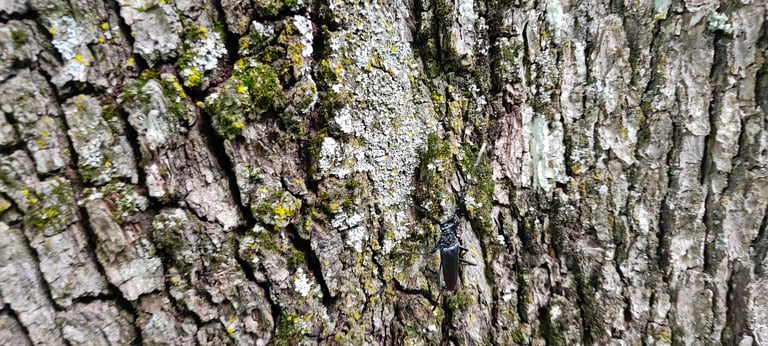
In large enough numbers, the larvae of Cerambyx scopolii can kill the very tree they grow inside.
Known as the Capricorn beetle, Cerambyx scopolii is a longhorn beetle (family Cerambycidae) native to Europe. It belongs to the order Coleoptera within the class Insecta, and its wood-boring lifestyle links it closely to the health of the deciduous forests it inhabits.
What makes this species worth attention is less its appearance than its impact: a small beetle whose larval stage can shape the fate of individual trees across its European range.
Identification and Appearance
Little is documented about the fine details of this species' appearance beyond its designation as a longhorn beetle, a group generally recognized by long, thread-like antennae that can rival or exceed body length.
The common name "Capricorn beetle" is shared with Cerambyx scopolii and reflects this hallmark trait of the longhorn beetle family, though specific measurements of body size, coloration, and markings for this species are not recorded here.
No information distinguishes sexes, age classes, or seasonal forms, and no similar species are named for comparison in the available material.
Distribution and Habitat
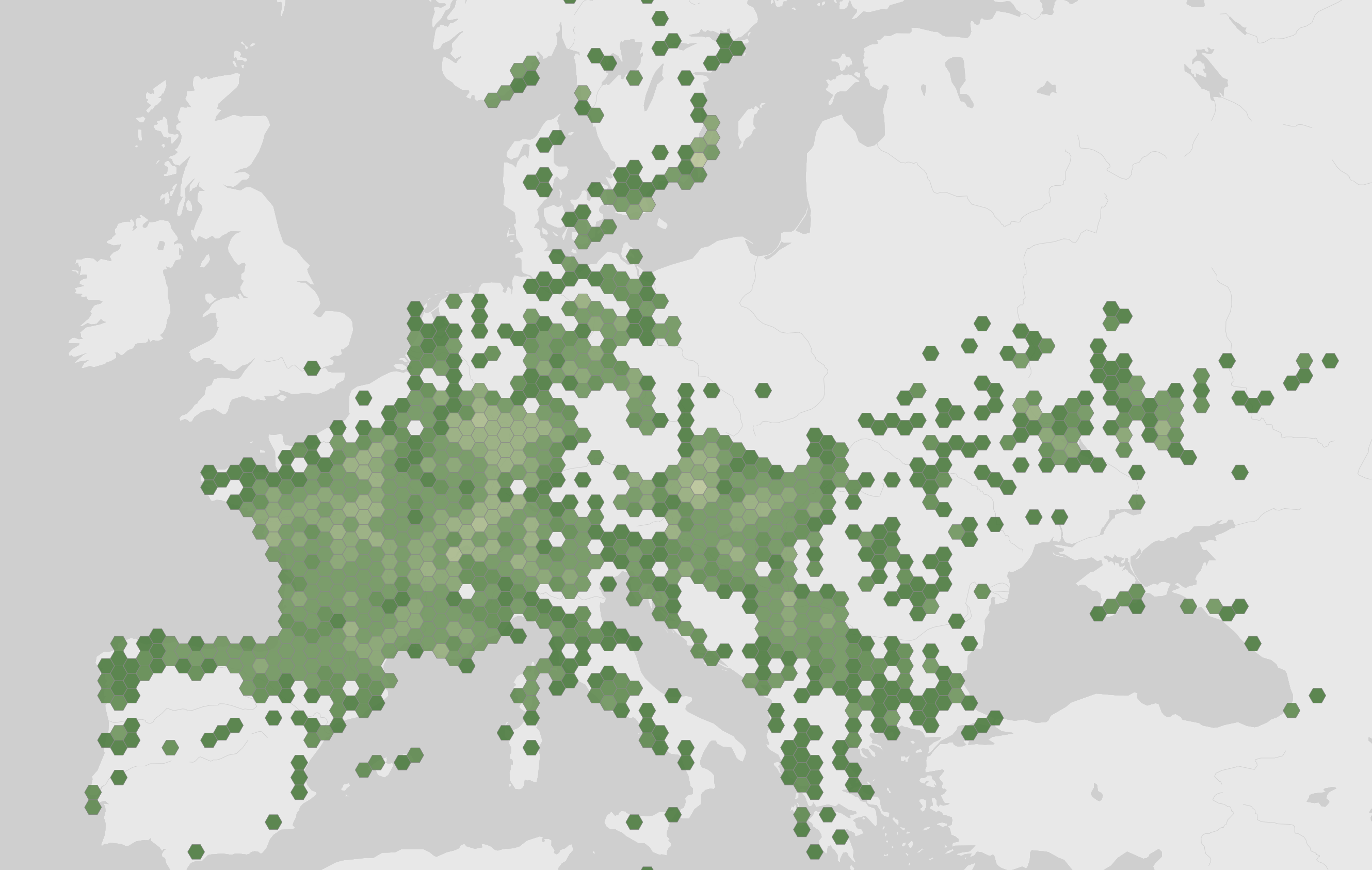
Cerambyx scopolii is native to Europe, where it lives in association with the deciduous trees its larvae depend on, including oak, willow, and chestnut.
Monthly observation records show a sharp seasonal pattern: sightings are low from December through March, then rise steeply, reaching a peak in May with over 11,700 recorded observations, before tapering off through the summer and returning to low numbers by autumn. This pattern likely reflects the period when adult beetles are active and visible above ground, rather than a change in overall population size.
Because these figures come from presence records rather than systematic surveys, they should be read as evidence of when and where the species has been observed, not as a measure of its abundance or the full extent of its range.
Fun Facts
- The species was first described by Füssly in 1775, giving it the full scientific name Cerambyx scopolii Fueßlins, 1775.
- Its larvae are recorded developing in three distinct tree types: oak, willow, and chestnut, spanning a range of forest environments across Europe.
- Despite its destructive larval stage, the species is simply cataloged as "species of beetle" in academic references, with no additional common names widely proposed.
Ecology
Habitat
- Forest
- Woodland
Diet
- Herbivore