Few European beetles rival the sheer bulk of Cerambyx cerdo, a species so large and heavily built that it stands out even among its long-horned relatives.
Known as the great capricorn beetle or cerambyx longicorn, it belongs to the family Cerambycidae within the order Coleoptera, and it ranges across North Africa, Europe, and West Asia. The IUCN lists it as Vulnerable, a status tied closely to the fate of the old, large-diameter trees it depends on. Its combination of imposing size, striking coloration, and reliance on aging woodlands makes it a useful indicator of forest health wherever it still survives.
Identification and Appearance
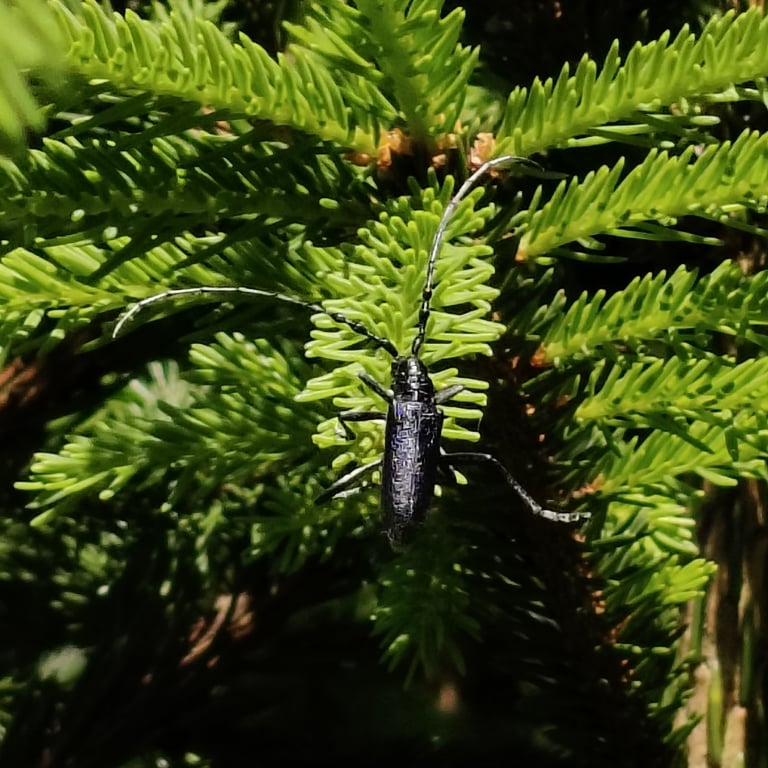
The clearest way to recognize Cerambyx cerdo is by its sheer size combined with its long, sweeping antennae: adults measure between 41 and 55 millimeters in body length, placing them among the largest beetles in Europe.
The body is elongated and robust, built like a heavy, armored cylinder rather than a delicate insect. Legs and most of the body are black, but the elytra (the hardened wing cases) turn reddish-brown toward their tips, creating a two-toned effect that is easy to spot once you know to look for it.
The antennae reveal the beetle's sex at a glance. In males, they are thread-like and longer than the entire body, giving the insect its "longicorn" nickname. Females carry shorter antennae, reaching only the length of the elytra rather than extending beyond them.
Distribution and Habitat
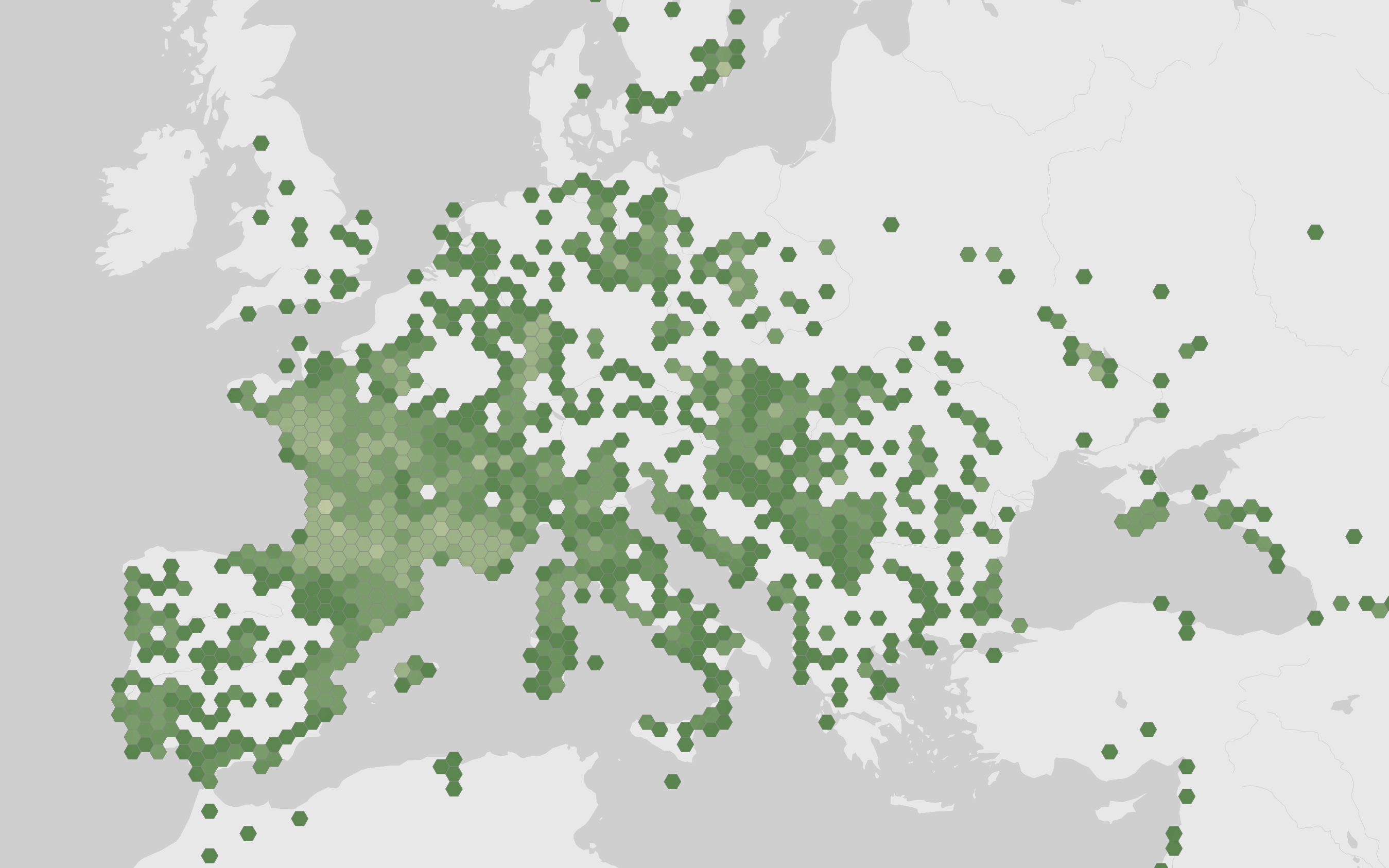
Cerambyx cerdo depends on the fresh wood of broadleaf trees, and across Central Europe it develops almost exclusively in oaks (genus Quercus). Farther south, in warmer parts of its range, it broadens its diet to include chestnuts (Castanea) and even carob trees (Ceratonia).
The species favors large, sun-exposed trunks rather than deep forest interiors. Solitary veteran oaks standing in open landscapes, or old pasture-woodlands where grazing has kept the canopy open, provide the warm, exposed bark this beetle needs to develop.
Monthly observation records show activity is heavily concentrated in early summer, with counts climbing sharply from spring and peaking in June and July before tapering off through late summer and into autumn. These figures come from GBIF occurrence data, which record where the species has been seen rather than true population size or the full extent of its range, so the pattern should be read as a seasonal presence signal rather than a measure of abundance.
Fun Facts
- The species carries two common names in English: the "great capricorn beetle" and the "cerambyx longicorn."
- It belongs to the family Cerambycidae, commonly known as the longhorn beetles, within the order Coleoptera.
- Its natural range spans three continents, stretching across North Africa, Europe, and West Asia.
- The IUCN currently classifies Cerambyx cerdo as Vulnerable.
Conservation status
- LC
- NT
- VU
- EN
- CR
Vulnerable
Ecology
Habitat
- Forest
- Woodland