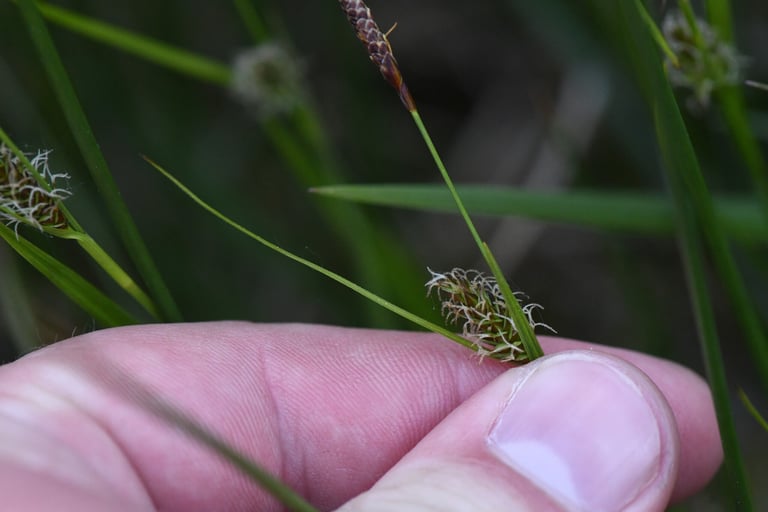
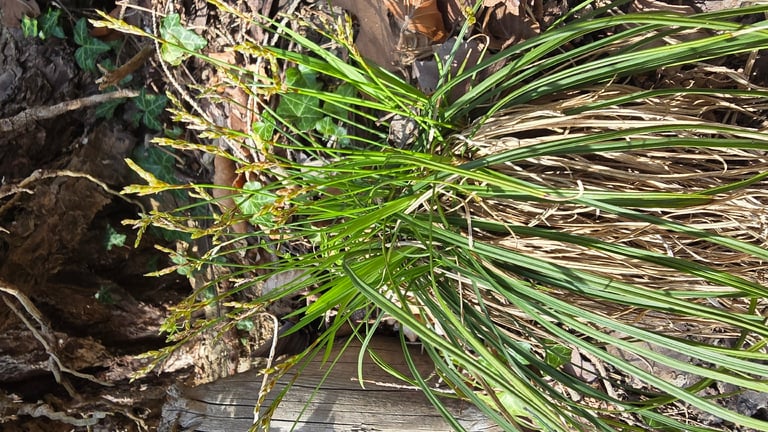
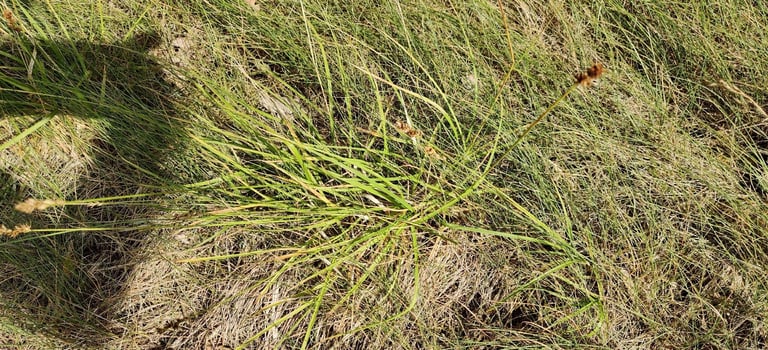
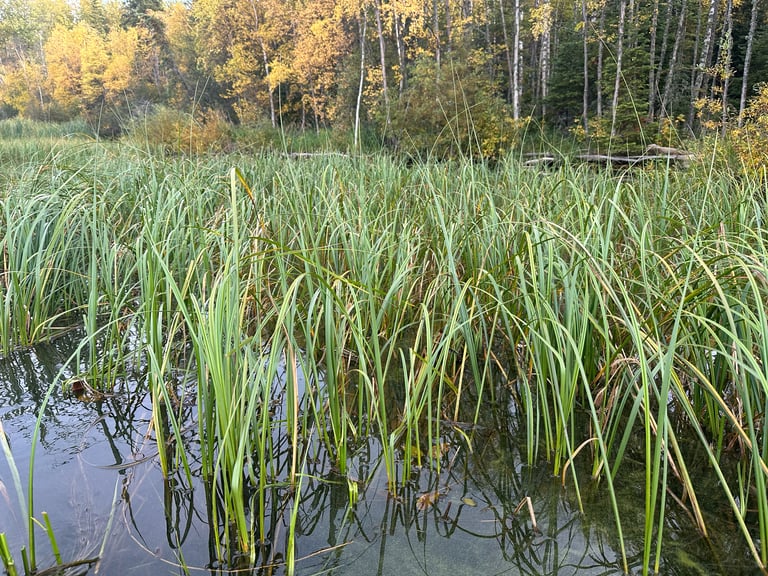
Carex lepidocarpa grows across a wide arc, from eastern Canada through most of Europe to northwest Africa in Morocco. Known as the long-stalked yellow-sedge, it is a flowering plant in the sedge genus Carex and the family Cyperaceae.
The species belongs to the Carex flava species complex, a group of closely related yellow-flowered sedges that are hard to tell apart. Its native range is in a temperate climate, and it is also found in Tasmania, where it has been introduced.
Its broad range and its place in a complex of similar sedges make it a useful species for studying how plants spread and vary across continents.
Distribution and Habitat
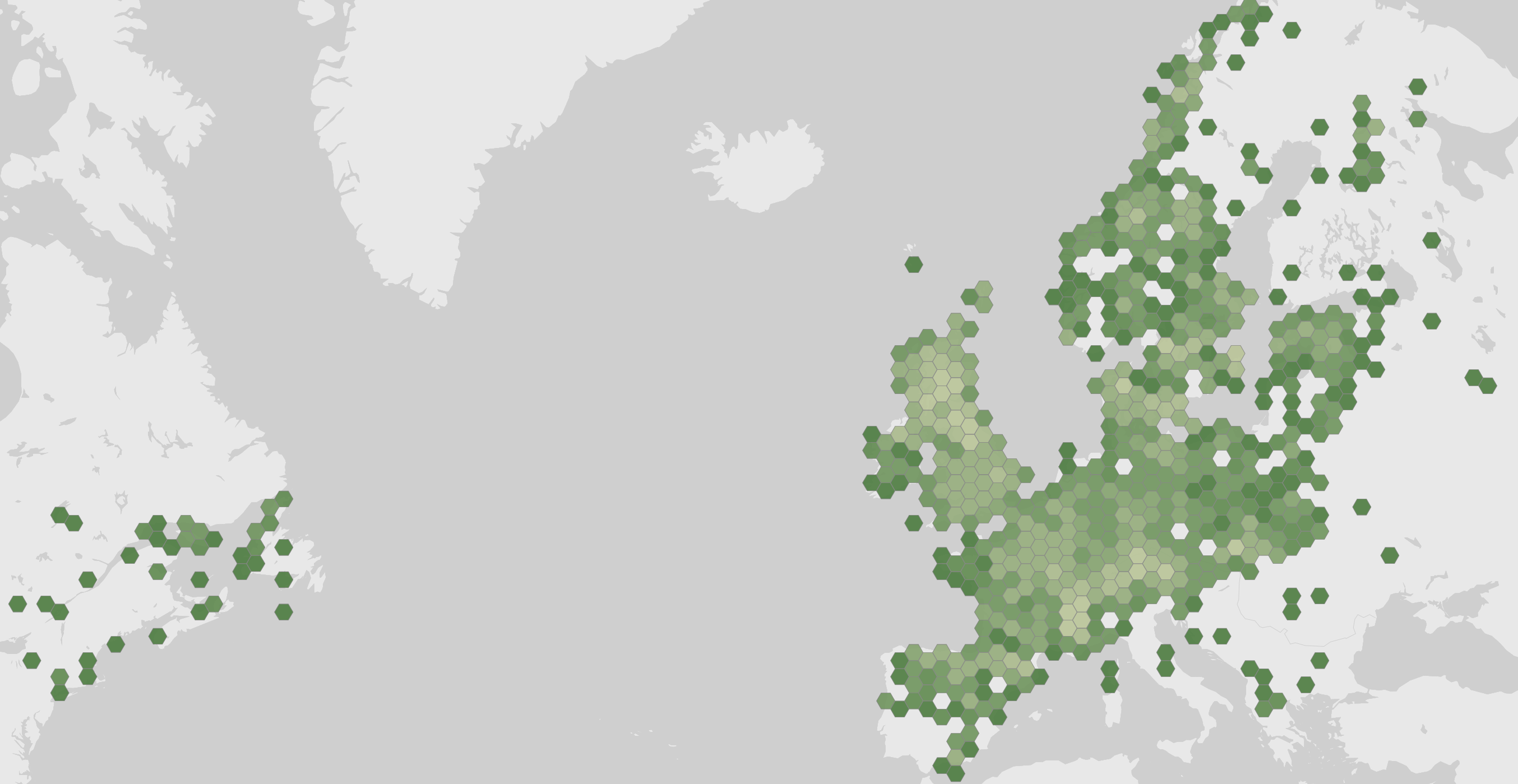
Carex lepidocarpa is native to eastern Canada, including Québec, New Brunswick, Nova Scotia and Newfoundland. In Europe it occurs across a large part of the continent, from Great Britain, Ireland, Spain and Portugal in the west to Finland, Norway, Sweden and the northern parts of Russia in the north and east. It also reaches Italy, Greece, Romania, Ukraine and Türkiye-in-Europe in the south and east, and it grows in Morocco in northwest Africa.
Outside its native range, the species has been introduced to Tasmania, Australia.
The species grows in a temperate climate across this range. Its presence records peak in early summer, with the highest numbers in July and a clear rise from May through August, which reflects when people most often observe it rather than a full picture of where it grows.
Growth and Form
Carex lepidocarpa is a graminoid, a grass-like plant with narrow leaves and slender stems. It is a perennial, so it lives for several years and regrows from its base each season.
As a sedge, it forms clumps of upright stems rather than a single woody stem, and it does not develop wood or branches.
Ecology and Relationships
Insects are the main animals that feed on Carex lepidocarpa. Grasshoppers are the most important group, and species such as Chorthippus parallelus, Gomphocerippus rufus and Chrysochraon dispar are among the grasshoppers that eat its leaves and stems. Beetles, including Plateumaris discolor and Chaetocnema arida, also feed on the plant. Bugs, moths and butterflies, flies and wasps and bees are further insect groups recorded as partners.
Birds in the duck and goose order, Anseriformes, also feed on the sedge, though less often than insects.
Because so many grasshoppers and beetles depend on it, the sedge is an important food source for insect herbivores within its range.
Photos
Photographs from via iNaturalist, licensed under CC0 1.0., by Flavien Saboureau via iNaturalist, licensed under CC BY 4.0., by Ondřej Křivan via iNaturalist, licensed under CC BY 4.0., by Antoine MARNAT via iNaturalist, licensed under CC BY 4.0., by Noé Fleury Frouart via iNaturalist, licensed under CC BY 4.0., by Rocco Lieghio via iNaturalist, licensed under CC BY 4.0., by Santiago Martín-Bravo via iNaturalist, licensed under CC BY 4.0., by Jens-Christian Svenning via iNaturalist, licensed under CC BY 4.0., by betony13 via iNaturalist, licensed under CC BY 4.0., and by Christoph Moning via iNaturalist, licensed under CC BY 4.0., credited on each photo.
Ecology and classification
Growth habit
- Graminoid
Classification
- Phylum
- Tracheophyta
- Class
- Liliopsida
- Order
- Poales
- Family
- Cyperaceae
- Genus
- Carex
- Species
- Carex lepidocarpa
Sources
- GBIF Species names and classification
- iNaturalist Photos
- Wikidata Common names and conservation status
- Wikipedia Summary extract
- Plants of the World Online Native range, life form and climate (WCVP)
- USDA Plants US plants: growth habit and growing conditions
- GloBI What it eats, what eats it, parasites and pollinators
- trophiCH