Bladder sedge has been used to make insulation for footwear in Norway, Sweden and among the Sami people, and North American peoples have used it for basketry.
Carex vesicaria is a sedge in the family Cyperaceae, known as bladder sedge, inflated sedge and blister sedge. It is essentially Holarctic, spreading across the cooler regions of Europe, Asia and North America. Its IUCN status is Least Concern.
The plant is worth reading about for its double life: a common wetland sedge in many northern landscapes, and a material that people have turned into warm footwear and woven goods.
Identification and Appearance
The most useful field mark is the fruit: each one is erect, glossy and bulbous, swelling into the bladder-like shape that gives the plant its common names.
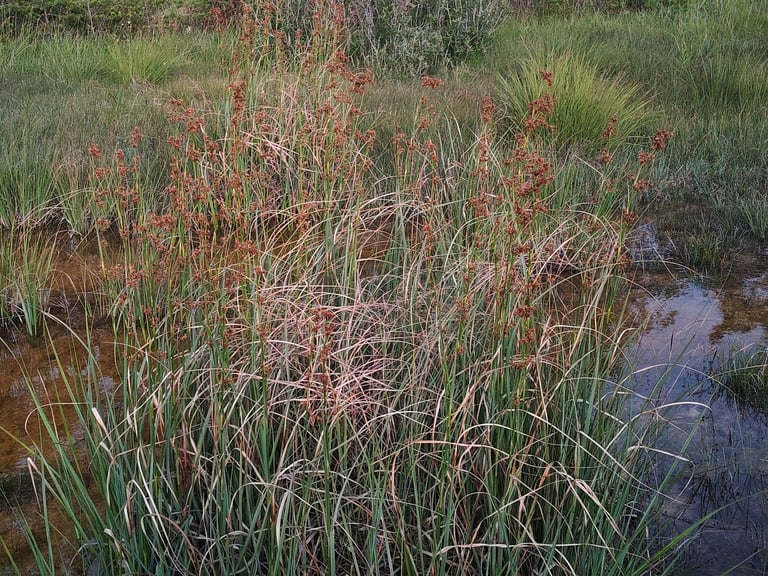
Bladder sedge is a perennial that forms small tufts from short creeping rhizomes. Plants usually reach 30 to 120 cm (12 to 47 inches) in height.
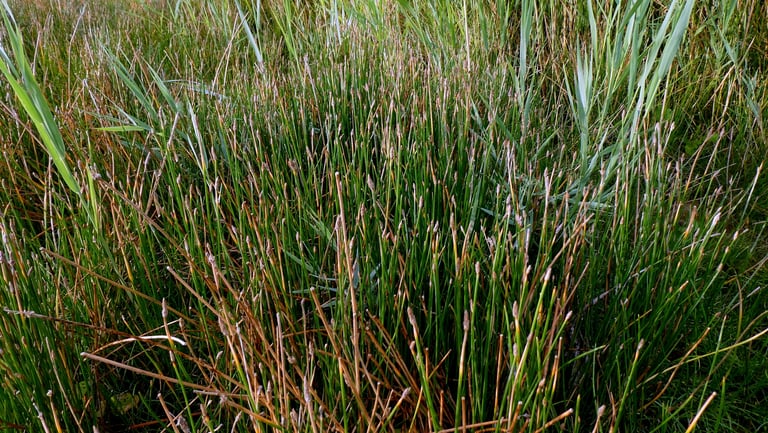
The stems are rough near the tip and smoother toward the base. The narrow, ridged and pleated leaves can reach about 1 m (3.3 feet) long or more, with fine toothed edges and sharp points.
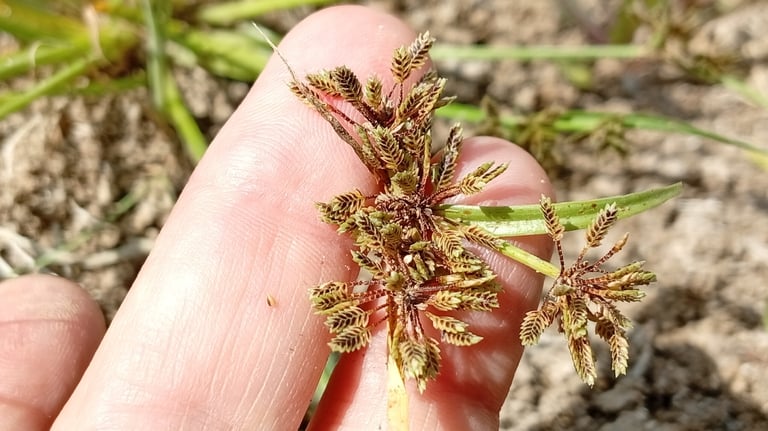
The flower clusters are long and cylindrical, and each one carries up to 150 developing fruits.
Distribution and Habitat
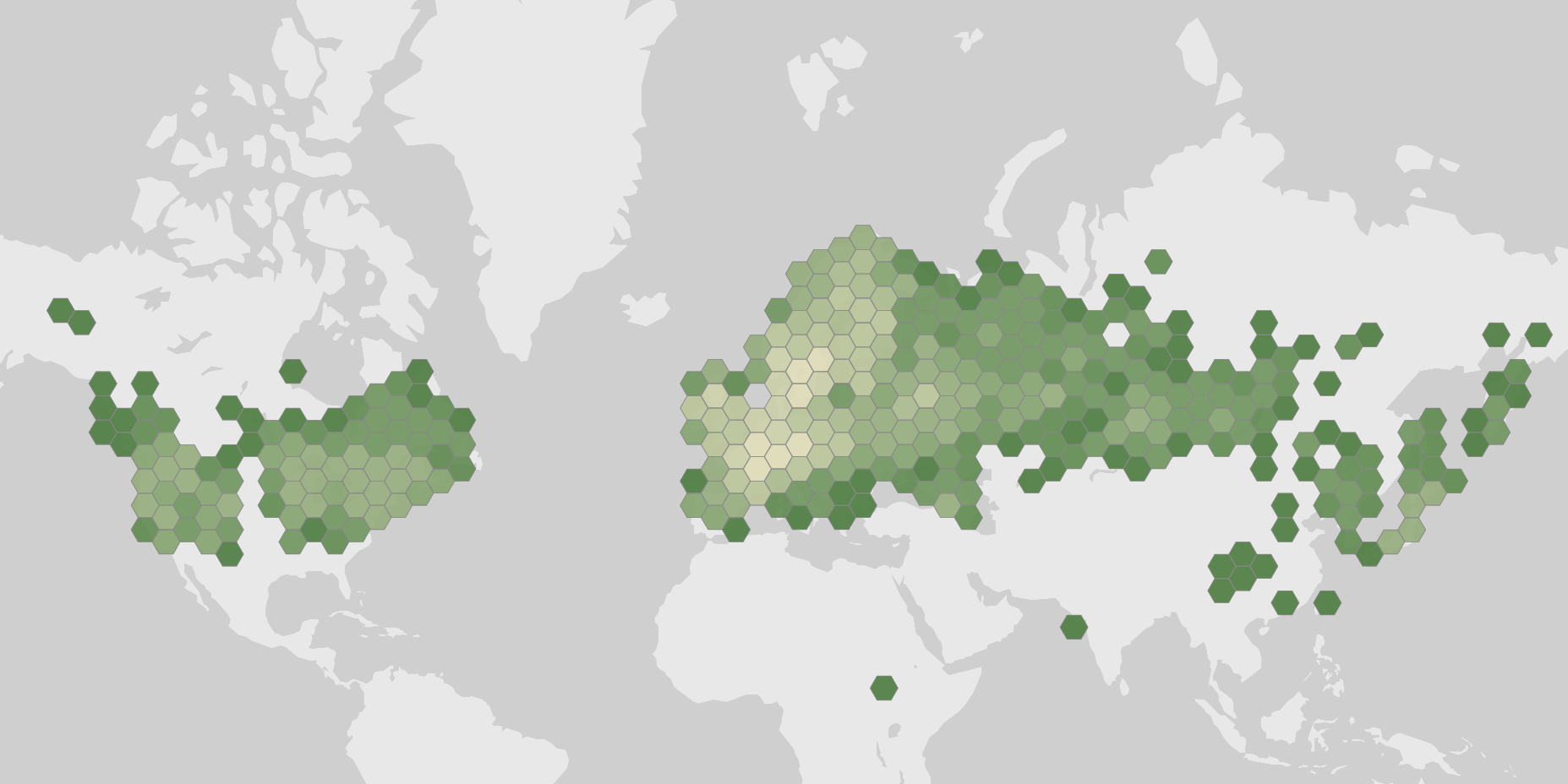
Bladder sedge has a circumpolar, boreo-temperate distribution. In North America it occurs over most of Canada and the northern United States, reaching as far south as California. In Eurasia it is found in nearly all of northern Europe and northern Asia, as far east as Japan and Korea.
In Britain and Ireland it is widespread, though it is absent from Orkney and Shetland and very rare in the Western Isles. In Britain it grows from sea level up to 455 m (1,493 feet), and its highest plants are at Llyn Gorast in Cardiganshire.
The species favors damp habitats where the water table is at or above the soil surface. It grows in swamps, wet thickets, marshes, sedge meadows, bogs, and along streams, ponds and lakeshores. It also appears in wet depressions in forests and pastures, and in wet woodlands.
It is often found on mesotrophic soils that are slightly basic. Sites are often flooded in spring and dry out during summer. It can also colonize wet pits dug for sand, gravel or clay.
Growth and Form
Bladder sedge is a graminoid perennial that spreads slowly from short creeping rhizomes, forming shoots that resemble small tufts. Its growth rate is moderate.
An established plant reaches a mature height of about 0.9 m (about 3 feet).
Ecology and Relationships
Songbirds, such as the skylark and the redpoll, feed on this sedge, and so do waterfowl, including the mallard. Several grasshoppers, along with beetles, true bugs, moths and flies, also eat it.
Bumblebees, including Bombus lapidarius, visit its flowers.
The sedge depends on wet conditions, with the water table at or near the surface. It tolerates a range of soil acidity, from pH 4.5 to 7.5.
Cultivation and Care
Bladder sedge flowers in late spring, and its flowers are green. It grows at a moderate rate and reaches about 0.9 m (about 3 feet) at maturity.
It has medium shade tolerance but low drought tolerance, so it suits moist soils rather than dry ones. It tolerates soil pH from 4.5 to 7.5.
The plant handles very cold winters, with a minimum temperature tolerance of -38.9 °C (-38 °F).
Uses and Human Relationships
North American indigenous peoples used the rhizomes for basketry, and the plant was cultivated for this purpose.
In polar regions, the dried fibres were used as thermal insulation in footwear. In Norway and Sweden, and among the Sami people, the material was known as sennegrass, from the Bokmål name sennegras.
Photos
Photographs from via iNaturalist, licensed under CC0 1.0., by J Straka via iNaturalist, licensed under CC BY 4.0., by Matt Berger via iNaturalist, licensed under CC BY 4.0., by Alexis Tinker-Tsavalas via iNaturalist, licensed under CC BY 4.0., by Oliver Stringham via iNaturalist, licensed under CC BY 4.0., and by Oleg Kosterin via iNaturalist, licensed under CC BY 4.0., credited on each photo.
Ecology and classification
Habitat
Growth habit
- Graminoid
Classification
- Phylum
- Tracheophyta
- Class
- Liliopsida
- Order
- Poales
- Family
- Cyperaceae
- Genus
- Carex
- Species
- Carex vesicaria
Sources
- GBIF Species names and classification
- iNaturalist Photos
- Wikidata Common names and conservation status
- Wikipedia Summary extract
- Encyclopedia of Life Habitat, diet and behavior traits
- Plants of the World Online Native range, life form and climate (WCVP)
- USDA Plants US plants: growth habit and growing conditions
- GloBI What it eats, what eats it, parasites and pollinators
- trophiCH
- DoPI