The common spike-rush (Eleocharis palustris) is one of the most widespread wetland sedges in the Northern Hemisphere, forming dense, mat-like stands across marshes, ponds, and wet meadows from the Arctic to North Africa.
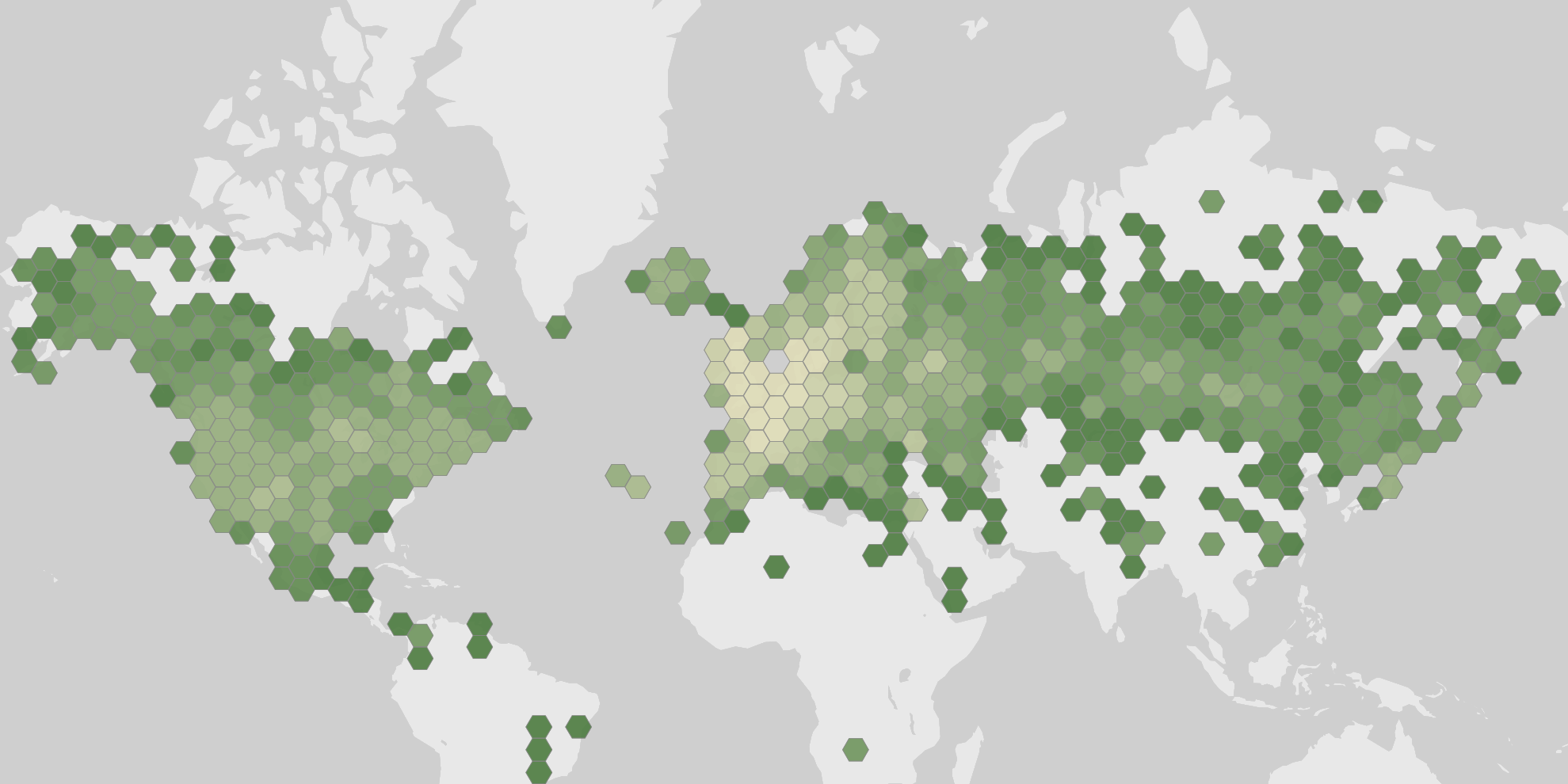
A perennial member of the sedge family (Cyperaceae), it grows in wetlands across Europe, North Africa, and northern and central Asia, as well as North America. Its IUCN status is Least Concern. Its species name, palustris, is Latin for "of the marsh," a fitting label for a plant so tied to standing and flowing water.
Identification and Appearance
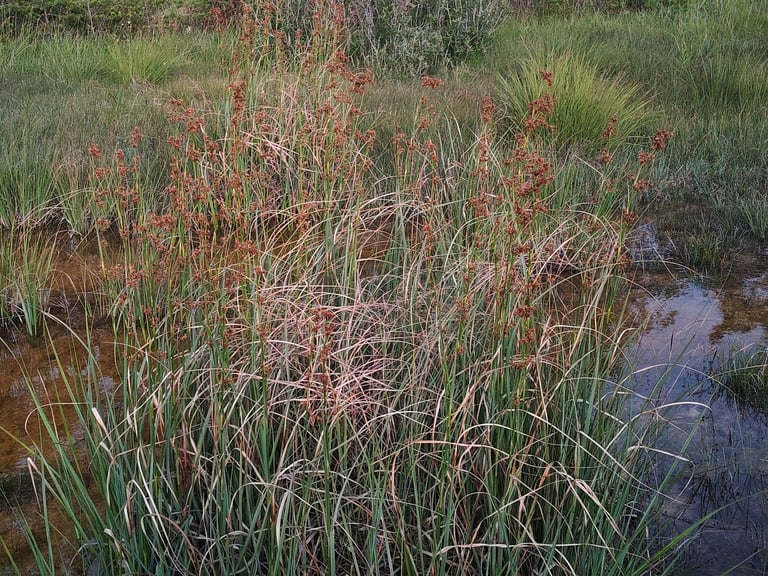
Eleocharis palustris, the common spike-rush, is most easily recognized by its leafless, round stems that rise in dense clusters and each end in a single small brownish spikelet.
Unlike grasses and many sedges, it lacks blade-like leaves, reducing them instead to sheaths at the base of the stem, which gives the plant a simple, needle-like look from a distance.
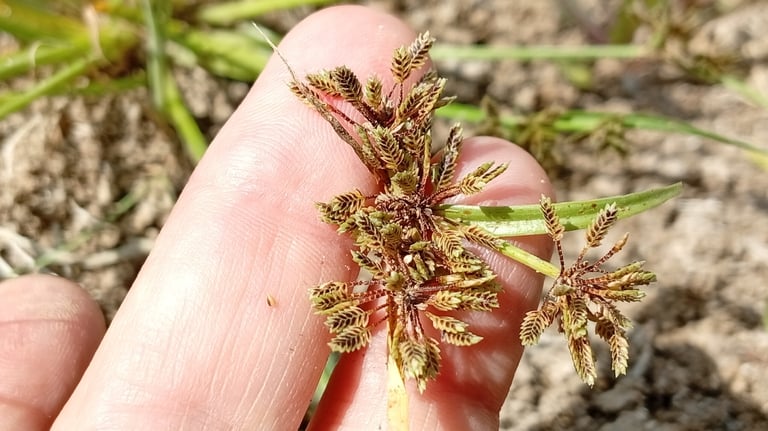
Each stem terminates in one compact, egg-shaped to cylindrical spikelet made up of overlapping scales, a feature that distinguishes Eleocharis from many related sedges that bear multiple spikelets per stem.
Distribution and Habitat
Eleocharis palustris has one of the broadest ranges of any wetland sedge, occurring from Greenland and Iceland through nearly all of Europe, North Africa, the Middle East, Central and East Asia, and across most of North America, from Alaska and Yukon down through Mexico's northeast.
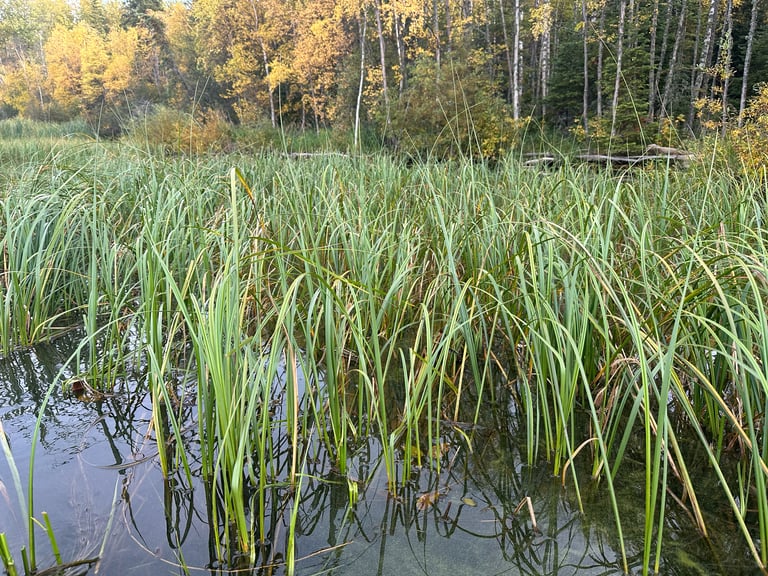
It grows almost exclusively in wet ground: fresh to slightly brackish marshes, ephemeral ponds, flooded saline playas, ditches, intermittent streams, and the margins of rivers, lakes, and reservoirs. It also occurs in wet meadows, bogs, swamps, and vernal pools, often as the dominant, sometimes monotypic, species in these stands. In parts of North Dakota's Prairie Potholes it is especially prevalent in slightly to moderately brackish marshes, while in coastal brackish marshes its culms grow broader and softer with darker scales than interior forms.
Elevation records span from sea level to as high as 3,000 meters, with regional ranges such as 0 to roughly 2,440 meters in California and up to about 3,200 meters in Utah. The species tolerates winter minimums as low as -42°C but needs at least 100 frost-free days to grow, and it is markedly drought intolerant: as water tables drop below about 61 centimeters, die-off increases sharply, reaching over half the stand when the table falls more than 107 centimeters.
Soils beneath it range from fine sands and silts rich in organic matter to heavy clays and deep peat beds, with a pH tolerance spanning roughly 4.0 to 8.0. It thrives on both acidic wetland soils and strongly calcareous or alkaline ground, a tolerance range that helps explain its enormous distribution.
Growth and Form
Eleocharis palustris is a perennial plant, persisting from year to year rather than completing its life cycle in a single season. Its mat-forming habit, built from creeping growth, allows it to spread and dominate the wet ground it colonizes over time.
Ecology and Relationships
Eleocharis palustris often grows as the dominant plant in monotypic stands across wetlands, meadows, and shorelines, a role that shapes marsh and pond-margin plant communities from Alaska to Utah and Nova Scotia to Saskatchewan.
A range of birds feed on the plant, including redpolls, skylarks, rock partridges, mallards, greylag geese, and citril finches, alongside insects such as weevils (Grypus brunnirostris, Thryogenes nereis) and grasshoppers (Aiolopus thalassinus, Epacromius tergestinus). The Essex skipper butterfly (Thymelicus lineola) has been recorded visiting its flowers, though a visit alone does not confirm pollination.
The species' tolerance of anaerobic, waterlogged soils and its ability to persist on both acidic and strongly alkaline ground let it establish in habitats too harsh for many competing plants, from saline playas to calcareous Great Basin meadows. Its spread can be hindered by invasive species, however: at Utah Lake, stands infested with Russian olive (Elaeagnus angustifolia) showed significantly lower frequency of the spike-rush than uninfested sites.
Fun Facts
- Eleocharis palustris is also known by several common names, including creeping spike-rush and marsh spike-rush, reflecting its wet, creeping growth habit.
- Its scientific name comes from Latin palustris, meaning "of the marsh," directly describing the habitat where it is most often found.
Photos
Photographs from via iNaturalist, licensed under CC0 1.0., by Марина Садыкова via iNaturalist, licensed under CC BY 4.0., by Dustin Snider via iNaturalist, licensed under CC BY 4.0., by Archer Silverman via iNaturalist, licensed under CC BY 4.0., by Ewan Shilland via iNaturalist, licensed under CC BY 4.0., by zebedeugalinha via iNaturalist, licensed under CC BY 4.0., and by Matthew Flood via iNaturalist, licensed under CC BY 4.0., credited on each photo.
Ecology and classification
Habitat
Growth habit
- Graminoid
Classification
- Phylum
- Tracheophyta
- Class
- Liliopsida
- Order
- Poales
- Family
- Cyperaceae
- Genus
- Eleocharis
- Species
- Eleocharis palustris
Sources
- GBIF Species names and classification
- iNaturalist Photos
- Wikidata Common names and conservation status
- Wikipedia Summary extract
- Encyclopedia of Life Habitat, diet and behavior traits
- Plants of the World Online Native range, life form and climate (WCVP)
- GloBI What it eats, what eats it, parasites and pollinators
- trophiCH