Known variously as the sweet chestnut, Spanish chestnut, or European chestnut, Castanea sativa carries three common names across the regions it has long inhabited. It is a deciduous tree in the family Fagaceae, related to oaks and beeches, and it grows across the Mediterranean basin and beyond.
The IUCN lists the species as Least Concern, reflecting its wide distribution and long history alongside human cultivation. Few trees have been so woven into the daily life, economy, and folklore of the regions where they grow, and its story spans millennia rather than centuries.
Identification and Appearance
The most reliable field mark is the bark: mature trunks develop a distinctive net-shaped (retiform) pattern of deep furrows that spiral in both directions up the trunk, a feature that becomes more pronounced with age. The trunk grows mostly straight, with branching starting relatively low, and can reach 20 to 35 meters in height with a diameter often around 2 meters. Exceptional individuals grow far larger: around 20 recorded trees exceed 4 meters in diameter, including one measured at 7.5 meters at breast height, and Sicily's famous Hundred Horse Chestnut was historically recorded at 18 meters in diameter, though it has since split into multiple trunks above ground.
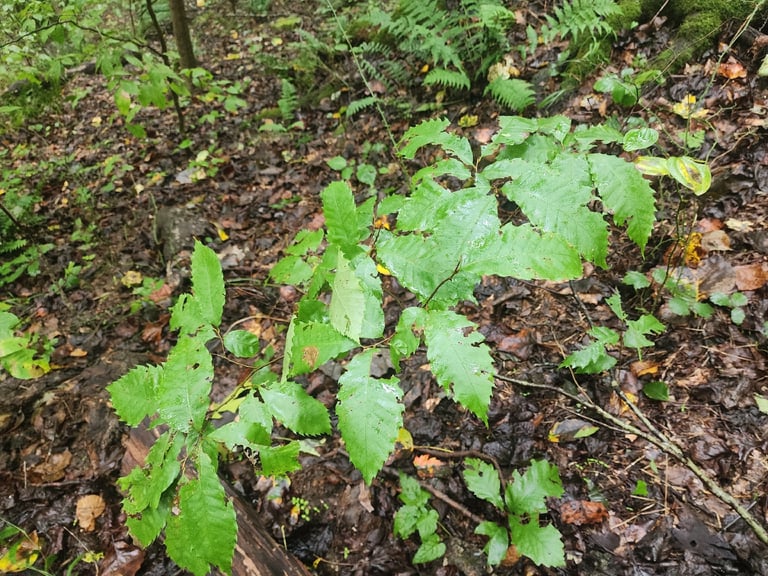
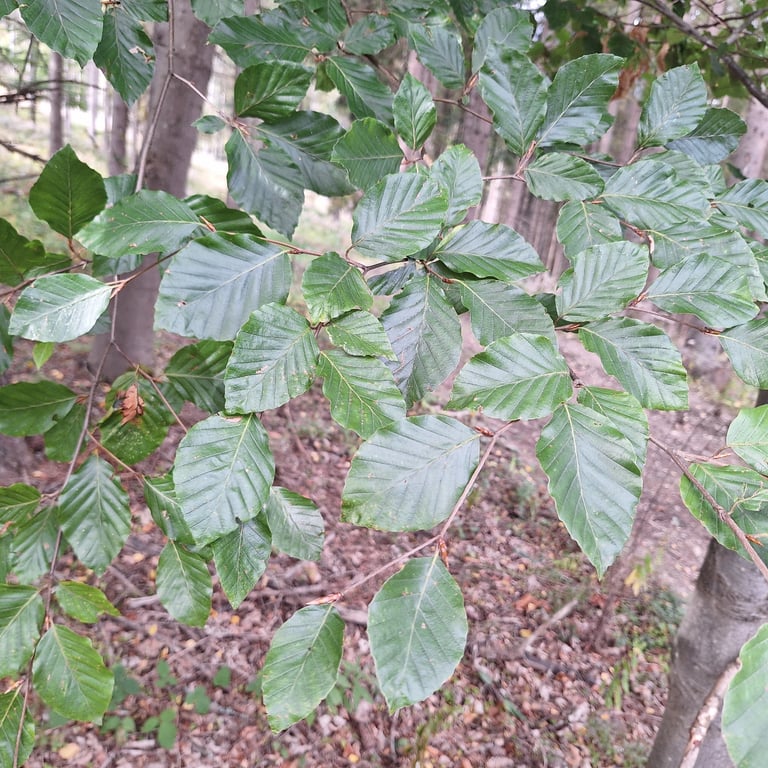
Leaves are oblong-lanceolate with bold marginal teeth, measuring 15 to 32 centimeters long and 5 to 10 centimeters wide. In the Northern Hemisphere, upright catkins 10 to 20 centimeters long appear from late June into July, with male flowers clustered in the upper portion and female flowers below. By autumn the female flowers mature into spiny cupules that shed 3 to 7 brownish nuts in October; the spines deter predators from reaching the seeds inside.
The species is naturally self-incompatible, so cross-pollination between different trees is required for nut production. Cultivars vary in seed number, with some producing a single large nut per cupule and others up to three. Each nut has two skins, an outer glossy brown layer and an inner skin clinging to the fruit, surrounding a creamy-white edible interior derived from the cotyledons. Sweet chestnut trees typically live 500 to 600 years, and cultivated specimens have been recorded surviving 1,000 years or more.
Distribution and Habitat
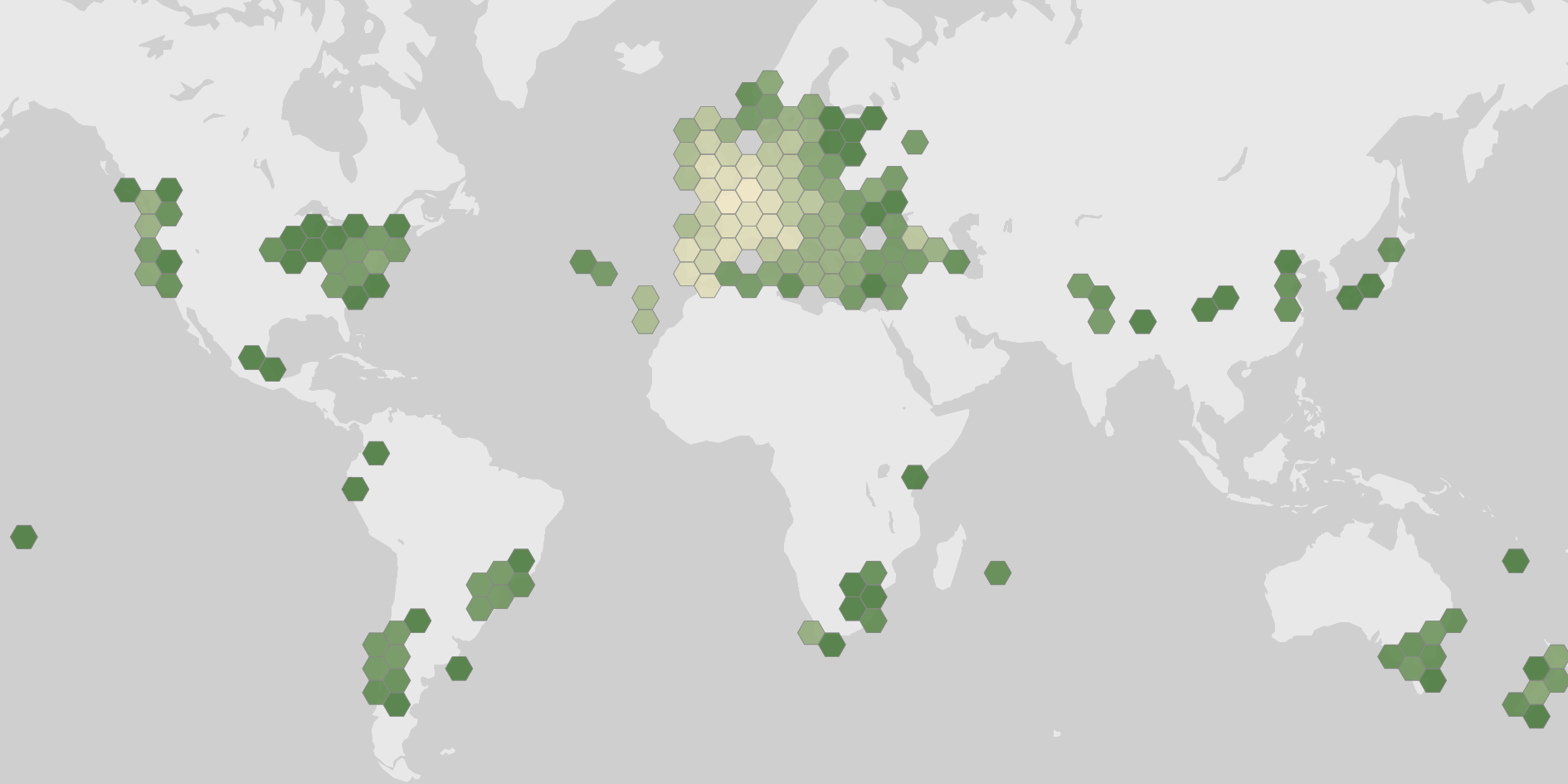
Castanea sativa is native to Southern Europe and Anatolia, occurring across the Mediterranean region from the Caspian Sea to the Atlantic Ocean. It is believed to have survived the last ice age in several refuges, including the southern coast of the Black Sea, the southern slope of the Caucasus, and northwestern Syria, possibly extending into Lebanon.
Today the species is widely distributed across Europe. In 2004 it covered roughly 2,250,000 hectares of forest, of which about 1,780,000 hectares were managed mainly for wood and 430,000 hectares for fruit production. In some countries, such as Slovakia and the Netherlands, it has only been introduced in recent times, extending its range beyond the historic Mediterranean core.
The tree needs a mild climate and reliable moisture to grow well and produce a good nut harvest. Its annual growth, though not the rest of the tree, is sensitive to late spring and early autumn frosts, and it does not tolerate lime-rich soils. Under forest conditions it copes well with moderate shade.
Monthly observation records show a clear seasonal pattern, rising from roughly 8,000–22,000 sightings in winter months to a peak above 37,000–41,000 in May and June before declining again through autumn and winter. This pattern most likely reflects when the tree is easiest to notice, in leaf and flower, rather than any real change in its population, and should not be read as a measure of abundance.
Ecology and Relationships
The tree's leaves feed a range of insects, including the case-bearing moth Coleophora anatipennella and the North American rose chafer beetle Macrodactylus subspinosus. These interactions place Castanea sativa within a broader web of Lepidoptera and beetle herbivory typical of Fagaceae trees.
Two fungal diseases have shaped the species' ecology profoundly. Chestnut blight, caused by Cryphonectria parasitica, destroyed most chestnut populations in North America and Southern Europe during the 20th century, though biological control methods have since allowed regeneration and the species is no longer considered threatened by it. Ink disease, caused by Phytophthora cambivora and P. cinnamomi, mainly affects trees growing in humid soils: the fungal mycelium invades the roots, causing leaf wilting and loss of fruit formation, ultimately leading to dieback, and is named for the black exudate that appears at the base of affected trunks. Resistant cultivars now exist, though P. cambivora continues to damage new plantations in Europe after causing serious losses in Asia and the United States.
A further threat comes from the gall wasp Dryocosmus kuriphilus, introduced to Southern Europe from Asia and difficult to control. Alongside these pressures, the tree's requirement for mild, moist conditions and its tolerance of moderate forest shade shape where it can persist as a component of mixed woodland.
Uses and Human Relationships
Human use of sweet chestnut stretches back roughly four thousand years: pollen evidence points to the first human-driven spread of the species around 2100–2050 B.C. in Anatolia, northeastern Greece, and southeastern Bulgaria, though it was a minor and unevenly distributed crop at that time. The earliest charcoal remains date to around 850–950 B.C., and the richest early written record comes from Theophrastus's Historia plantarum in the third century B.C., which focuses on the wood's value as timber and charcoal and notes the fruit chiefly for the digestive difficulties it caused, while still praising its nourishing quality. Several Greek writers also described the sweet chestnut as a remedy for lacerations of the lips and esophagus.
The tree is thought to have reached the Italian peninsula through Greek colonization, alongside grapevine and olive cultivation; Pliny the Elder links its cultivation there specifically to Greek colonies. Carbonized chestnuts have been found in a Roman villa at Torre Annunziata near Naples, buried by the eruption of Mount Vesuvius in A.D. 79, yet Roman aristocratic writers, including Pliny, were often dismissive of the fruit's value even as appreciation for the wood's versatility grew, with increased use as poles and in construction and pier building between A.D. 100 and 600.
Widespread cultivation across western Europe took hold in the early Middle Ages and flourished by the late Middle Ages; mid-seventh-century Lombard law even set a fine of one solidus for felling someone else's chestnut tree. Since the early 20th century, rural depopulation, the abandonment of the chestnut as a dietary staple, and the spread of blight and ink disease caused cultivation to decline sharply, though the crop is now seeing renewed interest as high-value chestnut products meet the changing tastes of urban consumers. Modern management includes coppicing, used mainly for wood extraction, among other cultivation systems.
Fun Facts
- Ancient Greeks dedicated the sweet chestnut to Zeus, reflecting the reverence the tree held in classical culture.
- The genus name Castanea is thought to derive from Castanum or Castonis, a town in Thessaly, Greece, where the tree grew in abundance.
- The species name sativa comes from Latin, meaning "cultivated," while an early English name for the tree was "Chesten-nut."
- Castanea sativa belongs to the same family as oaks and beeches, and some records credit individual trees with lifespans of up to 700 years.
Conservation status
- LC
- NT
- VU
- EN
- CR
Least Concern
Ecology
Habitat
- Forest
- Mountain
Growth habit
- Tree