First described by Carl Linnaeus in the 10th edition of his Systema Naturae in 1758, Cerura vinula carries one of the longest-standing scientific names among European moths.
Known commonly as the puss moth, it belongs to the family Notodontidae within the order Lepidoptera, part of the class Insecta and the wider animal kingdom Animalia. Its long taxonomic history and unusual larval form make it a species that has drawn attention from naturalists for centuries.
Identification and Appearance
The single best clue to this species is its fluffy, cat-like body, the trait that gives the puss moth its English name. The head, thorax, and body are densely covered in soft hair, giving the adult a plush, almost mammalian look unlike most other moths.
Adults have a wingspan of 58 to 75 millimeters, with males running slightly smaller than females. The forewings are white or yellowish-gray, crossed by several wave-like dark lines, while the body is whitish-gray with the dorsal abdomen banded in black. Hindwing color separates the sexes: males show light gray or whitish hindwings, while females have hindwings suffused with blackish shading yet still almost transparent. The antennae are bipectinated, meaning they carry paired branches along their length like a double comb.
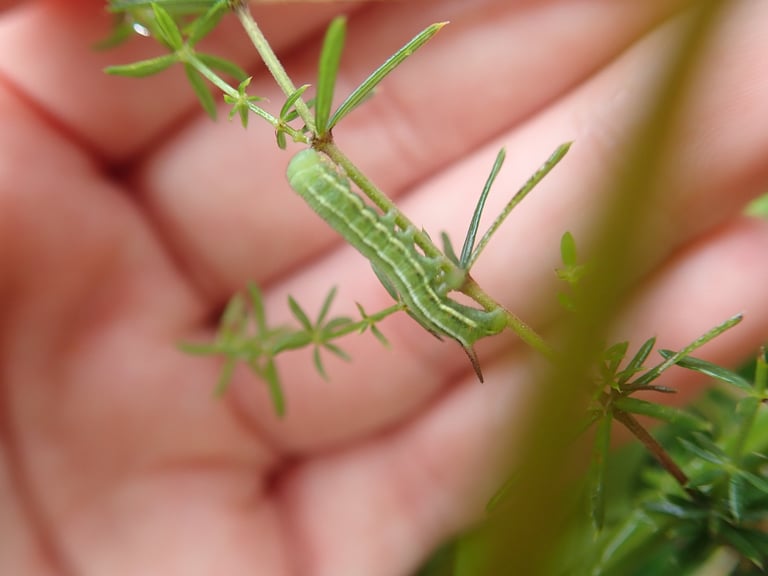
The caterpillar looks nothing like the adult and is just as distinctive. It grows to about 80 millimeters, starting out completely black before molting into light green marked with a dark dorsal pattern outlined in white or yellow. Its most bizarre feature is a forked tail bearing two long, dark-tipped projections that can extend red flagellae, an unmistakable structure not shared by similar species.
The pupal stage is equally recognizable: a reddish-brown chrysalis enclosed in a hard cocoon fixed to the host plant, tough enough to be mistaken for a woody growth.
Distribution and Habitat
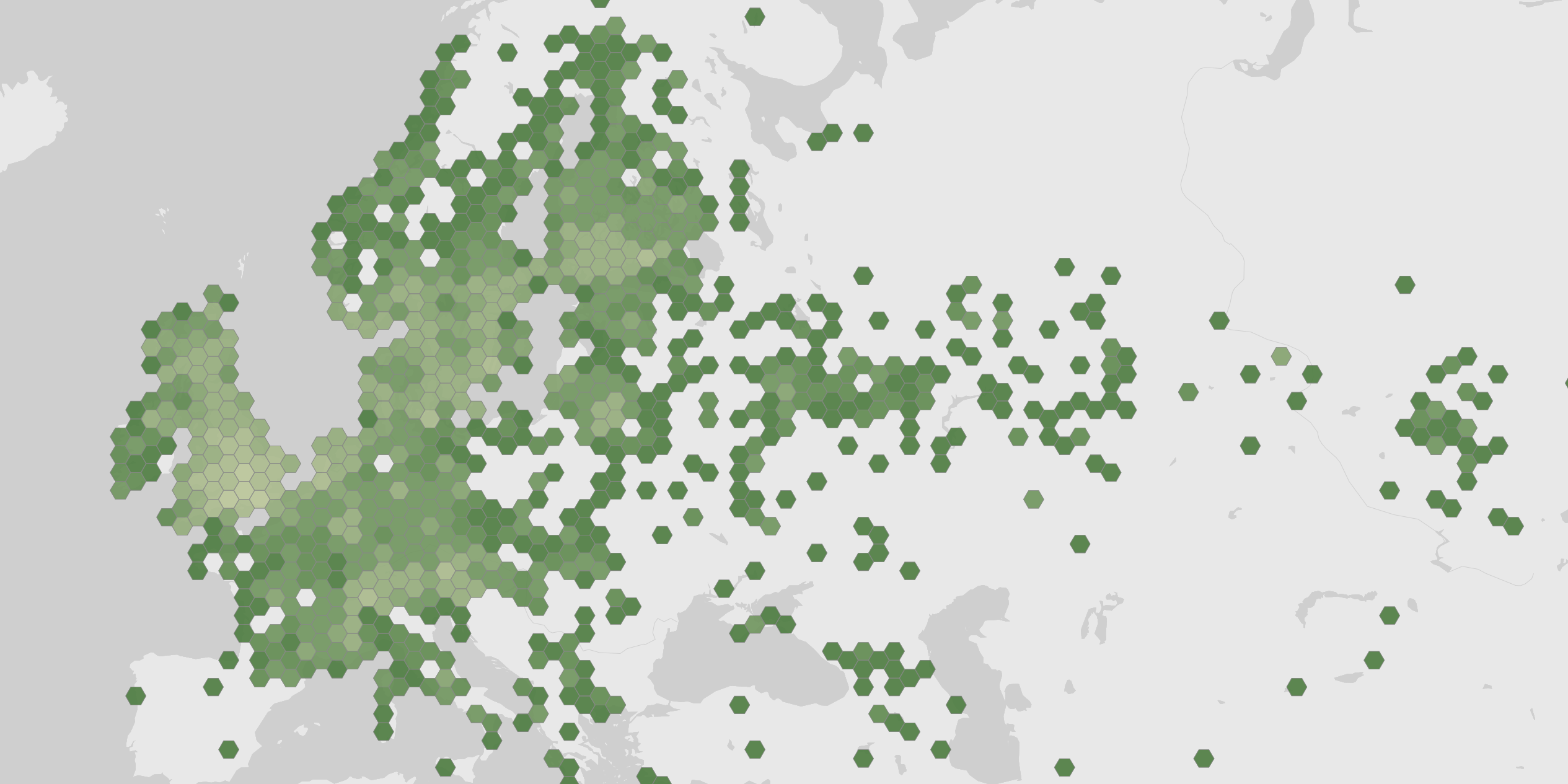
Cerura vinula is a Palearctic species found across nearly the whole of Europe, from Ireland and the United Kingdom east through Belarus, Ukraine, and European Russia, and south to the Balkans, Italy, and Spain. Its range extends further across temperate Asia to China and reaches into North Africa, making it one of the more widely distributed Notodontid moths.
The species favors very dense woodland, where its host trees and dense cover suit both the fluffy adults and their well-camouflaged caterpillars.
Monthly observation records show a sharp seasonal pattern, with counts climbing from a low base in winter (21 to 135 records per month from November to March) to a pronounced peak in May (15,258 records) and continued high numbers through April, June, and July. This pattern likely reflects the adult flight period and peak larval activity in late spring and early summer rather than year-round abundance, since these figures are presence observations and not a measure of population size or complete range.
Fun Facts
- Its common name comes directly from its appearance: the fluffy, cat-like head, thorax, and body give it the look of a tiny domestic cat with wings.
- The caterpillar is one of the odder-looking larvae found among European moths, with a forked tail that can extend red, whip-like flagellae quite unlike anything on the adult.
- The caterpillar's color changes dramatically as it grows, starting out entirely black before molting into light green patterned with white or yellow outlines.
- Its chrysalis is protected inside a cocoon hard enough to resemble bark or wood, attached directly to the host plant rather than hidden in leaf litter.
Ecology
Habitat
- Forest