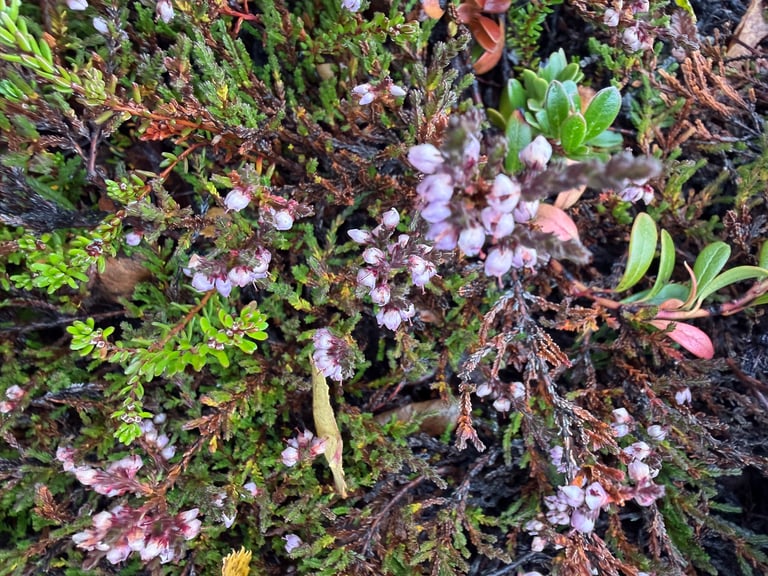
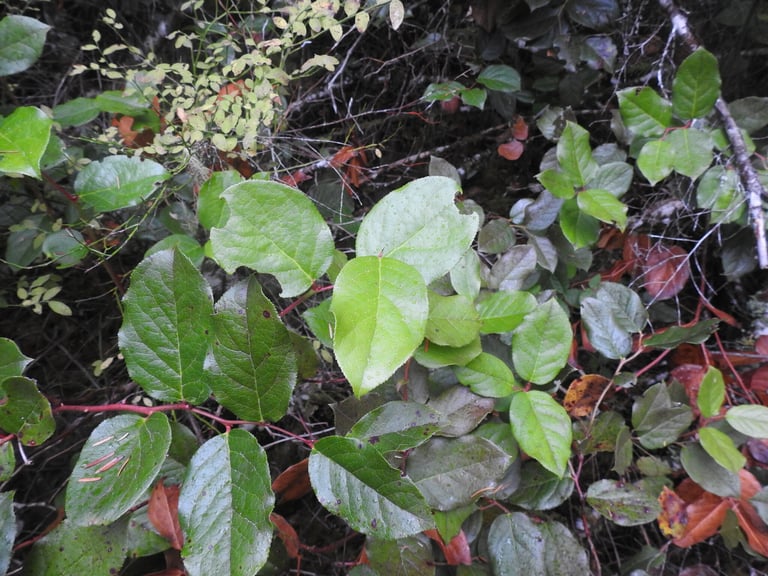
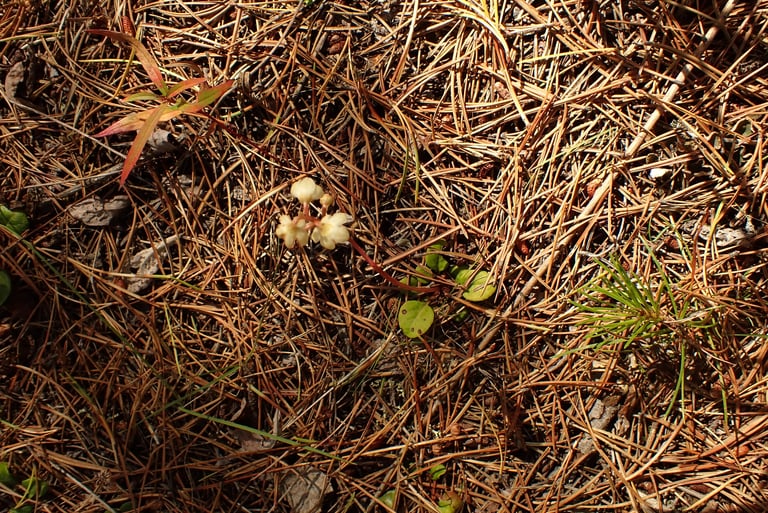
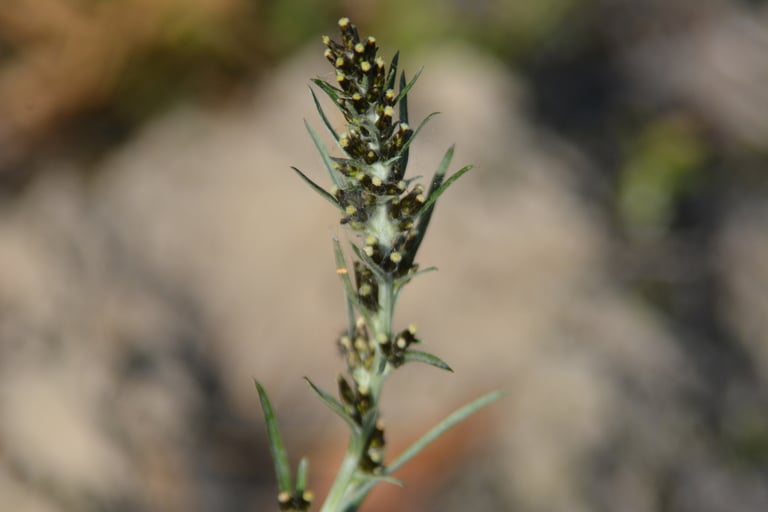
Chimaphila maculata stands out among forest floor plants for its dark green leaves striped with pale white veins, a variegation pattern that makes it easy to spot even in deep shade.
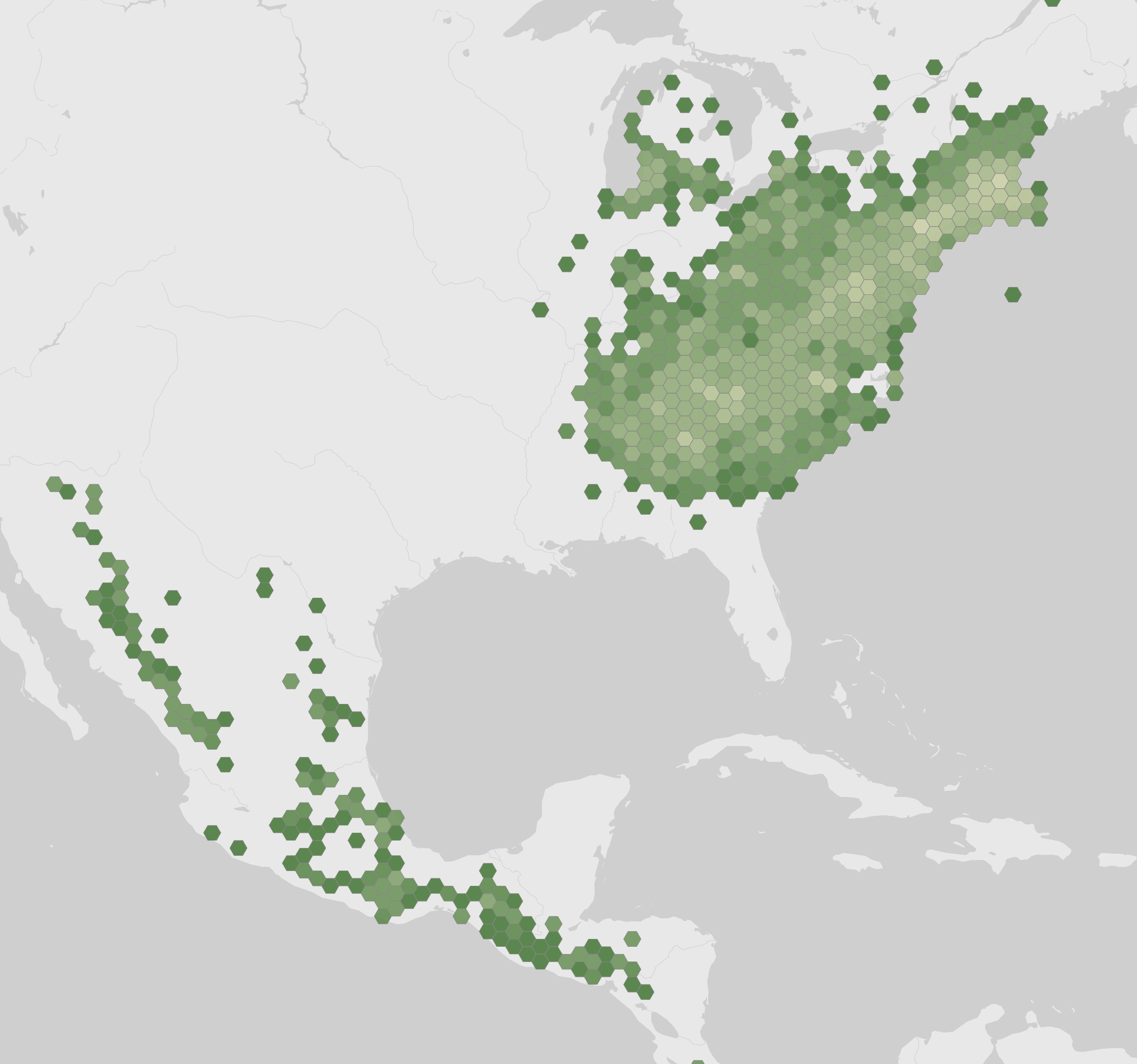
Native to eastern North America and Central America, it ranges from southern Quebec west to Illinois and south through Florida into Panama. Its conservation status varies sharply by region, being endangered in Canada while remaining more common farther south. Beyond its striking foliage, the plant carries a long history of use by Native American peoples, making it a species of both ecological and cultural interest.
Identification and Appearance
The most useful field mark is the leaf variegation: dark green leaves with contrasting white veins running through them, found on stems that rise from creeping rhizomes.
The leaves measure 2 to 7 centimeters long and 6 to 26 millimeters wide, and the plant's stems grow only 10 to 25 centimeters tall. This low stature keeps it close to the forest floor.
In early summer, nearly round white or pinkish flowers appear atop tall stalks above the foliage. Insects pollinate these flowers, which later mature into small capsules, 6 to 8 millimeters across, holding seeds that disperse on the wind.
Distribution and Habitat
Chimaphila maculata occurs across a wide swath of eastern North America and into Central America, with a native range stretching from southern Quebec and Ontario west to Illinois, south through the eastern United States to Florida, and onward through Mexico into Guatemala, Honduras, Nicaragua, El Salvador, Costa Rica, and Panama. It has also been introduced to France.
Within this range the species favors sandy habitats, well-drained upland forests, wooded slopes, oak-pine woods, and old-growth forests, thriving in mesic, acidic, and shaded conditions.
Monthly observation counts show a rise through spring into a peak around May and June, tapering off by late fall and winter, which may reflect increased detectability of the plant during its active growing season rather than a true change in where it occurs.
Growth and Form
Chimaphila maculata grows as a subshrub, a small, low, woody-based perennial rather than a true herbaceous plant or a tree. Its evergreen leaves persist through the year, giving the plant a constant presence on the forest floor regardless of season.
Ecology and Relationships
The species is closely tied to well-drained, acidic, shaded woodlands, including sandy habitats, wooded slopes, oak-pine woods, and old-growth forests, where it tolerates conditions too acidic or shaded for many other plants.
Like many members of the Ericaceae, Chimaphila maculata is believed to partially depend on mycorrhizal fungi, possibly forming ericoid mycorrhizal connections, to obtain nutrients from the soil. This underground partnership may help explain its preference for the specific, often nutrient-poor forest environments where it is found.
Uses and Human Relationships
Chimaphila maculata has long been harvested from the wild by Native American peoples for local use as both a food and a medicine. The Creek called it "pipsisikweu," meaning "breaks into small pieces," reflecting a belief in its ability to break down gallstones and kidney stones.
Leaf tea made from the plant was used to treat rheumatism and stomach problems, while crushed leaves were applied as a poultice to sores and wounds. Some Native American cultures are also reported to have used the plant in fermenting beverages, giving it a place in traditional practices beyond medicine alone.
Conservation and Threats
The species faces distinct regional pressures rather than a single global threat. In Canada it is endangered, with only four living populations remaining in southern Ontario and one extremely small population in Quebec.
Within the United States, it carries protective status in several places: listed as endangered in Illinois, threatened in Maine, and considered Exploitably Vulnerable in New York. These designations point to a species that remains more secure in the core of its range farther south but grows increasingly rare toward the northern edges of its distribution.
Fun Facts
- The plant's common name "pipsisikweu," given by the Creek, translates to "breaks into small pieces," referencing its traditional use for gallstones and kidney stones.
- Its range spans an unusually long north-south distance for a small forest herb, reaching from southern Quebec all the way to Panama.
Photos
Photographs from via iNaturalist, licensed under CC0 1.0., by Brandon Corder via iNaturalist, licensed under CC BY 4.0., by Jessica Williams via iNaturalist, licensed under CC BY 4.0., by Norma Piedra via iNaturalist, licensed under CC BY 4.0., by Chris Reardon via iNaturalist, licensed under CC BY 4.0., and by Peter Quakenbush via iNaturalist, licensed under CC BY 4.0., credited on each photo.
Ecology and classification
Classification
- Phylum
- Tracheophyta
- Class
- Magnoliopsida
- Order
- Ericales
- Family
- Ericaceae
- Genus
- Chimaphila
- Species
- Chimaphila maculata
Sources
- GBIF Species names and classification
- iNaturalist Photos
- Wikidata Common names and conservation status
- Wikipedia Summary extract
- Plants of the World Online Native range, life form and climate (WCVP)