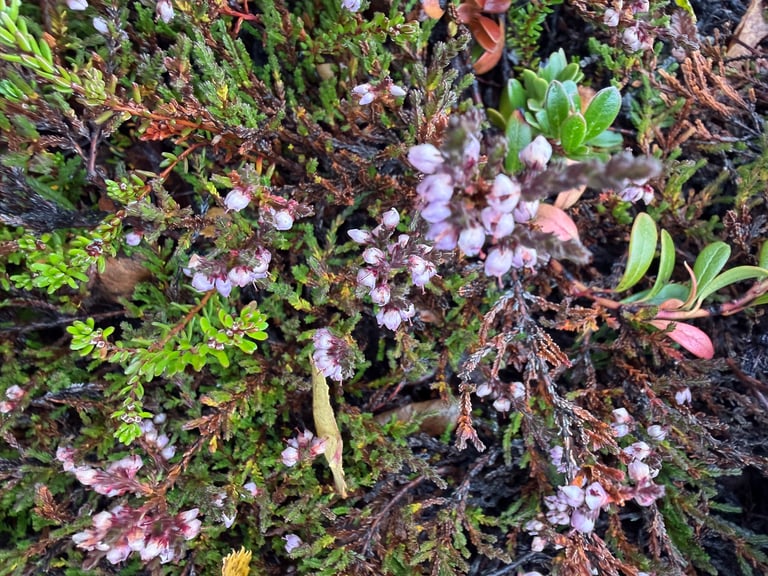
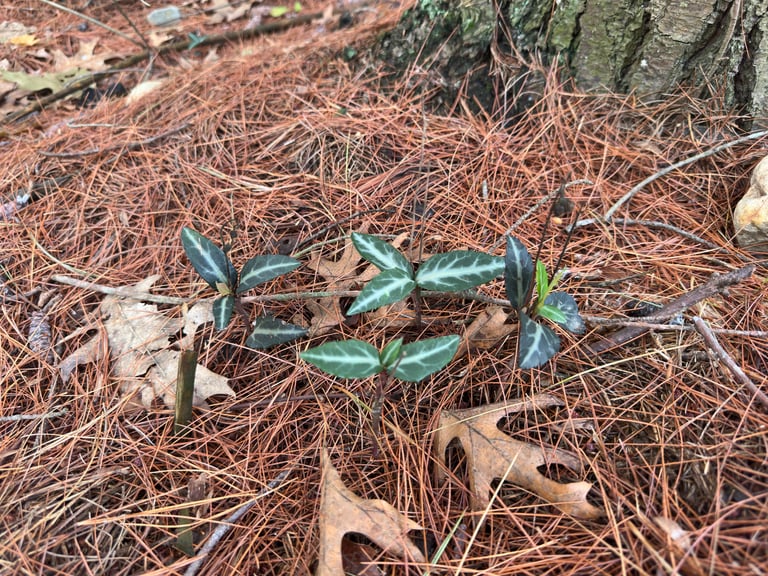
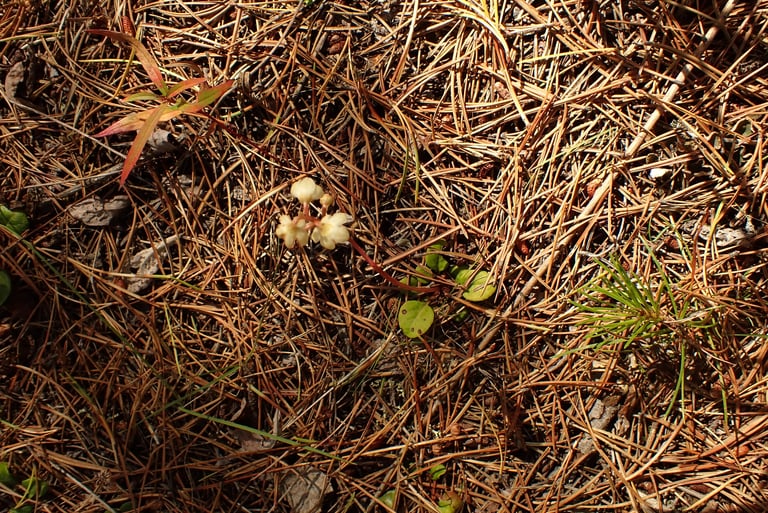
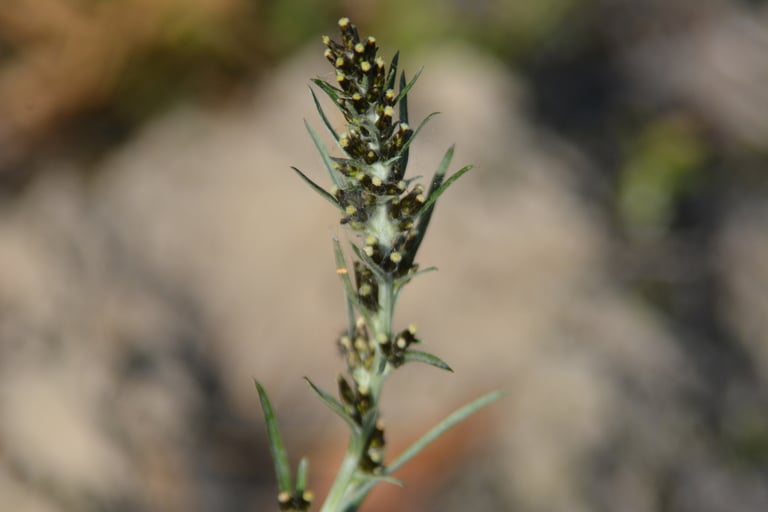
Salal forms thickets so dense they can become nearly impenetrable, a trait that has shaped both forest ecology and human use across the Pacific Northwest for generations.
Gaultheria shallon, commonly called salal, is an evergreen shrub in the heather family (Ericaceae), native to western North America. Beyond its ecological role, salal has a long history of food and cultural use among Native American communities, and it remains a familiar sight in gardens and floral arrangements today.
Identification and Appearance
Salal is most easily recognized by its leathery, egg-shaped leaves, shiny dark green above and rougher, lighter green below, each finely and sharply serrate and 5 to 10 centimeters long. The shrub ranges from 0.4 to 3.05 meters tall, sprawling in open sites or more erect in denser stands, with reddish-brown twigs that shed their bark in strips.
Individual twigs can persist for 16 years or more, though they only bear leaves during their first few years, and each leaf itself lives for 2 to 4 years before being replaced. The flowers appear in one-sided, bracteate racemes of 5 to 15 blooms at branch tips; each flower has a deeply five-parted, glandular-haired calyx and an urn-shaped, pink-to-white corolla 7 to 10 millimeters long.
The fruit is a rough-surfaced, hairy, nearly spherical pseudoberry 6 to 10 millimeters across, ranging from reddish to blue, and technically a capsule formed from a fleshy outer calyx rather than a true berry. Each fruit holds an average of 126 tiny brown, reticulate seeds about 0.1 millimeters long.
Distribution and Habitat
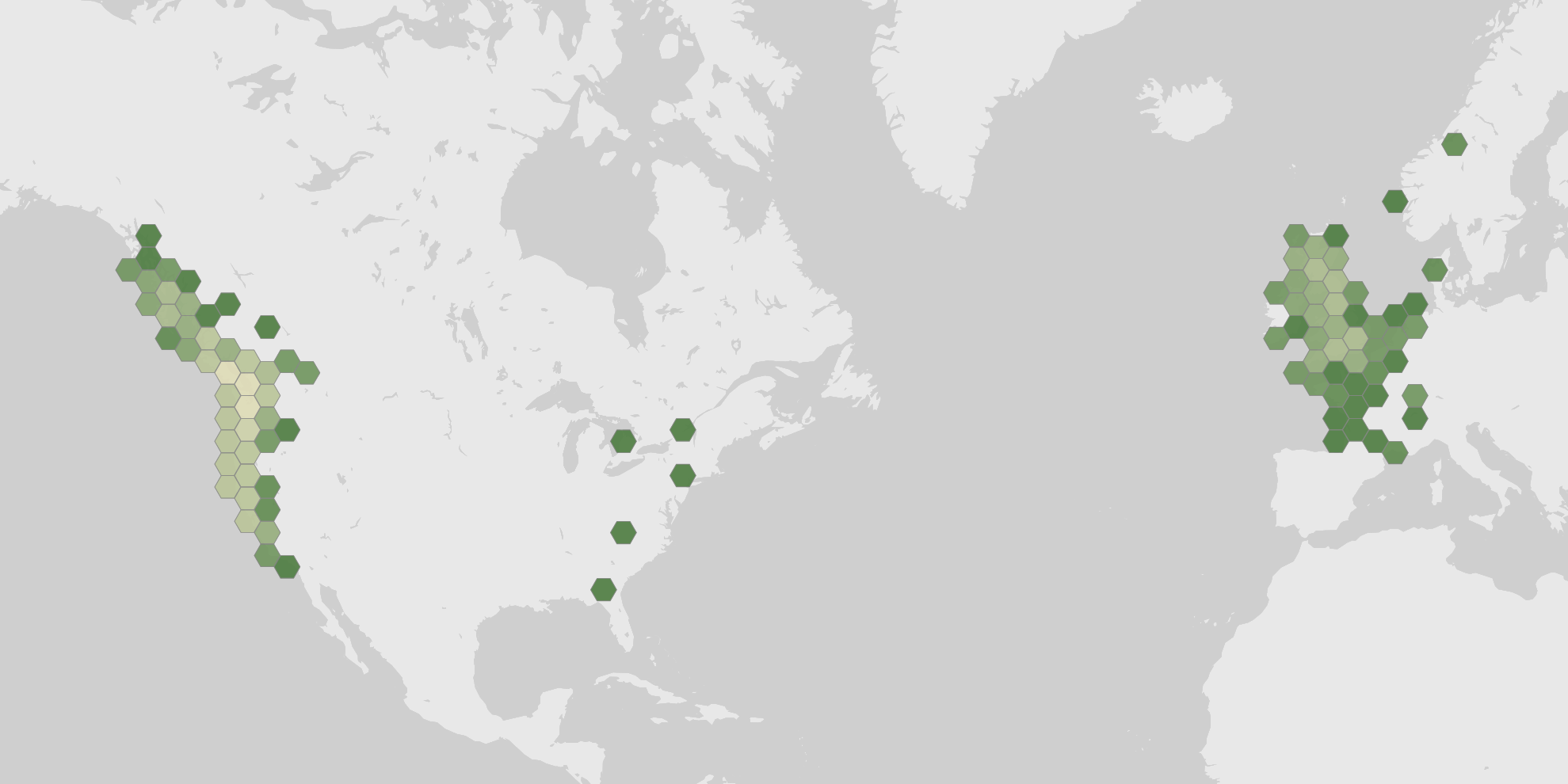
Salal's native range stretches from Southeast Alaska, as far north as Baranof Island, south through British Columbia, Washington, and Oregon, and along much of the California coast, in a temperate climate zone. In the California Coast Ranges it commonly grows alongside western poison oak.
The species occupies a range of coastal habitats, from forests and forested peatland to swamps, and it was introduced to Britain in 1828 by David Douglas, originally intended as an ornamental and reportedly used as game-bird cover on shooting estates. It has since also been introduced to France, Ireland, and the South Island of New Zealand.
Observation records show a pronounced seasonal rise in reported sightings during late spring and summer, peaking around May through July, consistent with flowering and the period of greatest visibility and field activity, though these counts reflect presence observations rather than actual population size or range extent.
Growth and Form
Salal is a shrub, sprawling to erect, ranging from 0.4 to 3.05 meters tall depending on growing conditions. Individual plants may live for hundreds of years, continually expanding and renewing themselves through spreading rhizomes rather than relying solely on the aboveground stems, which themselves can persist for 16 years or more.
Ecology and Relationships
Salal dominates the understory of moist to dry coniferous forests from lowland coasts to montane elevations across the Pacific Northwest, spreading extensively through its rhizomes and sometimes forming near-monocultures where shade is moderate rather than heavy. It tolerates salt spray and thrives on stabilized dunes, exposed bluffs, and coastal brushfields, while also establishing readily on decaying wood and stumps or even growing epiphytically in very humid sites.
The shrub is a critical winter food source for deer and elk: in western Washington, salal made up 30.4% of deer diet by volume in January compared to just 0.5% in June, though its relatively low nutritional value means deer relying on it exclusively can show signs of malnutrition. Beavers, white-footed voles, and domestic goats and sheep also browse the leaves, while its fruit draws band-tailed pigeons, wrentits, grouse, songbirds, red squirrels, Douglas squirrels, Townsend's chipmunks, black bears, and black-tailed deer. Bumblebees, including Bombus flavifrons and Bombus mixtus, along with other bees and flies, visit the flowers, though flower visits alone do not confirm pollination.
Salal is adapted to infrequent fire regimes of 50 to 500-plus years; its underground rhizomes typically survive light to moderate burns and resprout afterward, though severe fires on shallow, dry soils can kill the plant outright. In parts of southern England it has become an aggressive colonizer of heathland and acidic woodland, forming tall, dense stands that can smother other vegetation, though traditional cattle grazing has been shown to break up these stands and restore a more scattered presence.
Uses and Human Relationships
Salal's dark blue berries and young leaves are edible, valued historically as an effective appetite suppressant with a distinctive flavor. The berries were a major food resource for Native American tribes of the Pacific Northwest, eaten fresh or dried into cakes, and the Haida used them to thicken salmon eggs, while the leaves were sometimes used to flavor fish soup.
Today the berries appear locally in jams, preserves, and pies, often paired with Oregon-grape since salal's mild sweetness offsets that fruit's tartness. The plant is also widely cultivated as an ornamental ground cover both inside and outside its native range, and harvesting its foliage supports a substantial cut-greenery industry supplying floral arrangements worldwide, where it is sold commercially as "Lemon Leaf."
Salal has also been used medicinally by local Native peoples for generations, with leaves prepared as a tea or tincture thought to ease internal inflammation, indigestion, sore throats, and menstrual cramps, and a leaf poultice applied externally for insect bites and stings.
Fun Facts
- Salal berries were historically mixed with grease or combined with other berries by Northwest Coast communities, in addition to being eaten fresh or dried into cakes.
- When Scottish botanist David Douglas first stepped ashore near the mouth of the Columbia River on April 8, 1826, after a nine-month voyage from England, Gaultheria shallon was the very first plant he picked up.
Photos
Photographs from via iNaturalist, licensed under CC0 1.0., by John Brew via iNaturalist, licensed under CC BY 4.0., by Rachel Stringham via iNaturalist, licensed under CC BY 4.0., by Alexis Tinker-Tsavalas via iNaturalist, licensed under CC BY 4.0., by Z via iNaturalist, licensed under CC BY 4.0., by Emerson via iNaturalist, licensed under CC BY 4.0., and by Rita Clare via iNaturalist, licensed under CC BY 4.0., credited on each photo.
Ecology and classification
Classification
- Phylum
- Tracheophyta
- Class
- Magnoliopsida
- Order
- Ericales
- Family
- Ericaceae
- Genus
- Gaultheria
- Species
- Gaultheria shallon
Sources
- GBIF Species names and classification
- iNaturalist Photos
- Wikidata Common names and conservation status
- Wikipedia Summary extract
- Plants of the World Online Native range, life form and climate (WCVP)
- GloBI What it eats, what eats it, parasites and pollinators
- MammalBase
- Guzman et al. 2022