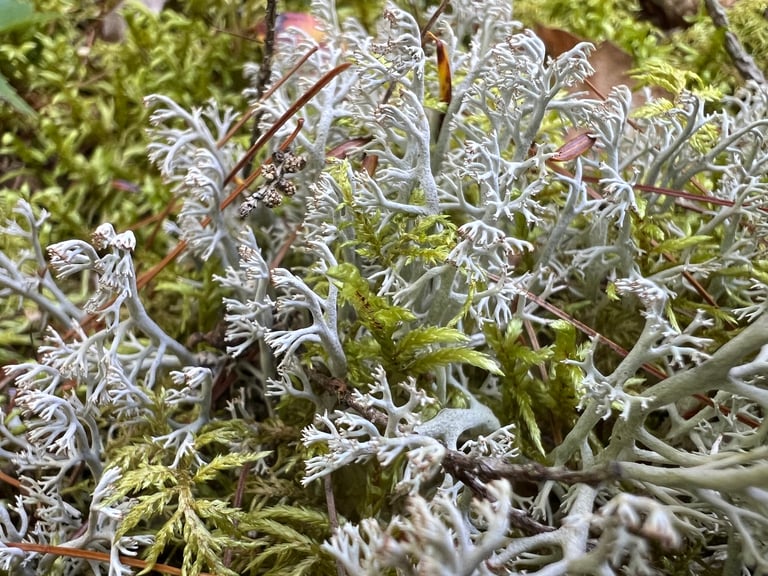
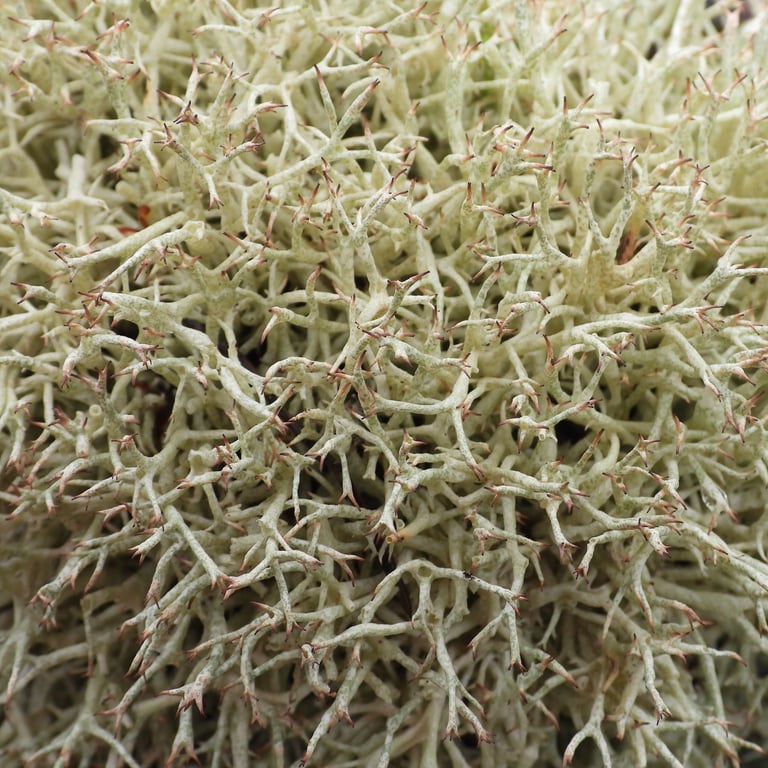
Southern soldiers, Cladonia didyma, is a fruticose lichen with characteristic red ascocarps that hold sexually reproductive asci. Its common name refers to the upright, branching growth that gives the lichen a sentinel look.
As a lichen, Cladonia didyma is a partnership between a fungus in the phylum Ascomycota and a photosynthetic partner. It belongs to the family Cladoniaceae, within the class Lecanoromycetes.
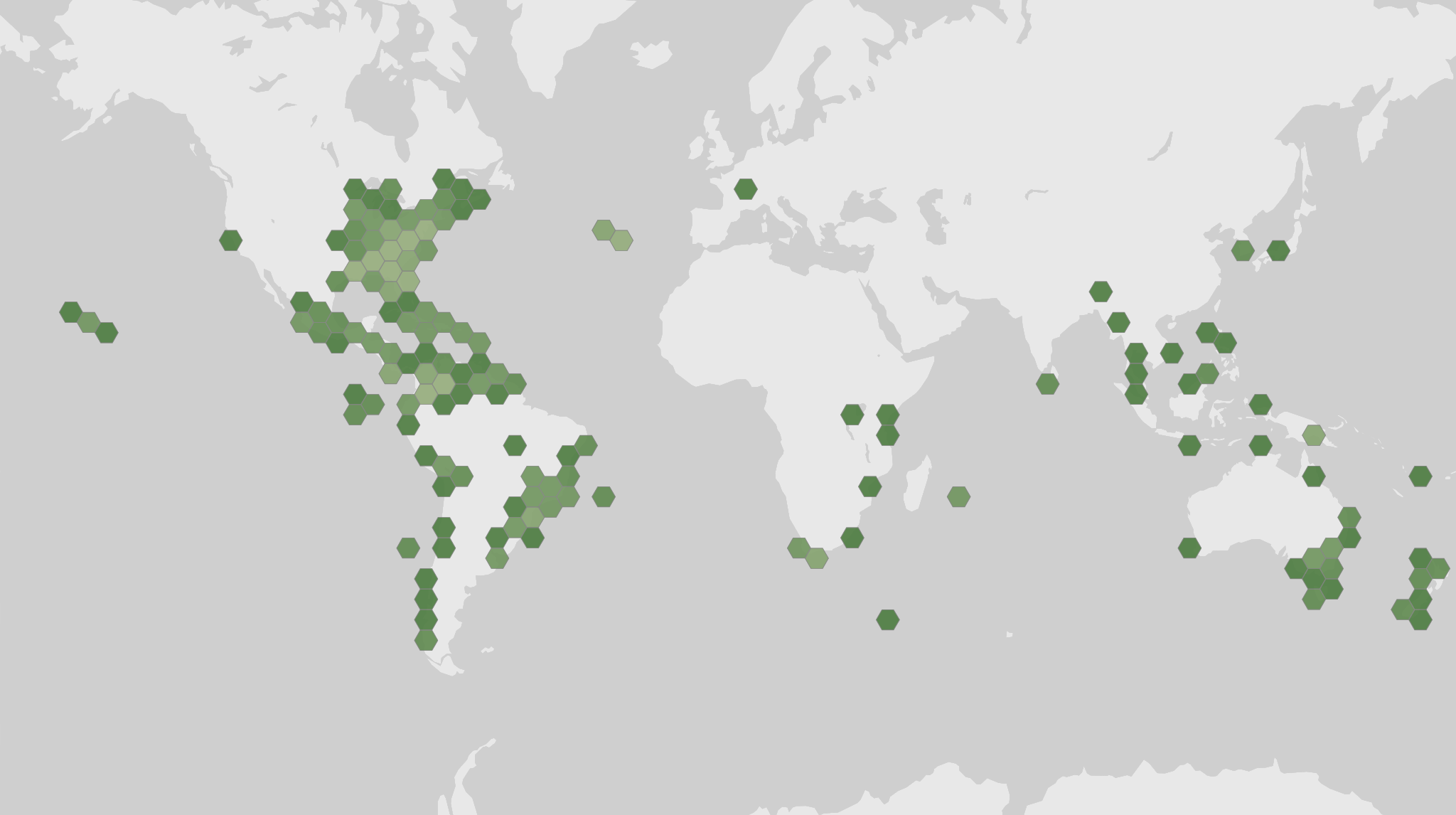
The lichen is worth reading about for its wide reach. It occurs across most of the world's continents and oceanic regions, under a broad range of conditions.
Distribution and Habitat
Cladonia didyma has one of the widest distributions in its genus. It is found on nearly every continent and oceanic region, under many different environmental conditions.
The lichen grows from sea level up to altitudes as high as 3,400 meters. Across that range it occupies habitats from mesic to xeric forests.
In forests, it is often found on dying or decaying trees, growing among other mosses and lichens. It also persists in sandy soils and on rocks.
Fungal DNA from Cladonia didyma has appeared in mycorrhizal sequencing analyses of epiphytic orchids. Presence data show a clear peak in July, though this says nothing about how abundant the lichen is.
Photos
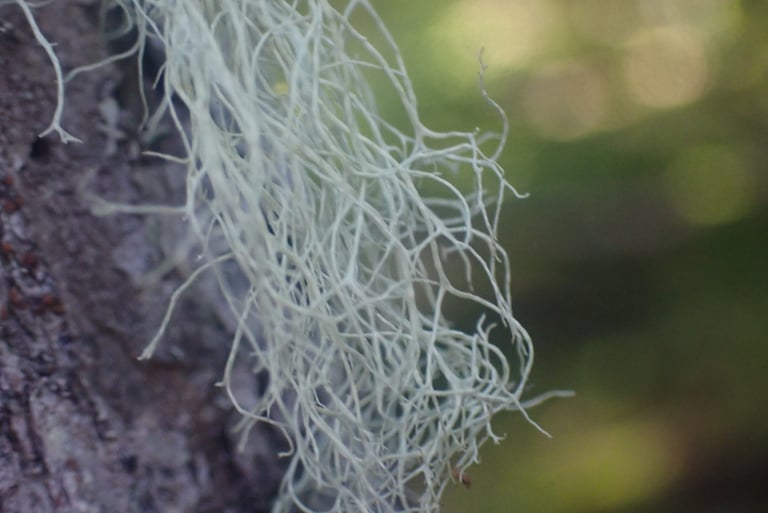
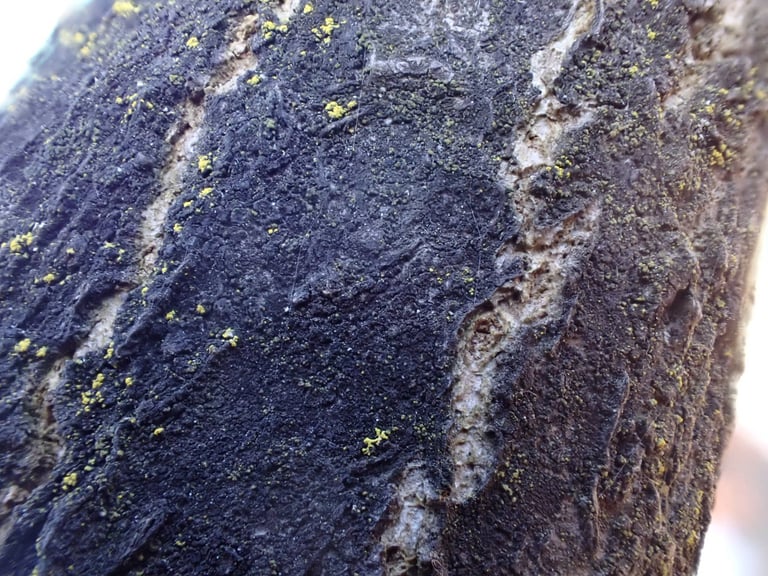
Photographs from via iNaturalist, licensed under CC0 1.0., credited on each photo.
Ecology and classification
Habitat
Classification
- Phylum
- Ascomycota
- Class
- Lecanoromycetes
- Order
- Lecanorales
- Family
- Cladoniaceae
- Genus
- Cladonia
- Species
- Cladonia didyma
Sources
- GBIF Species names and classification
- iNaturalist Photos
- Wikidata Common names and conservation status
- Wikipedia Summary extract