Clitocybe vibecina is a common, inedible mushroom that often grows in rings on needle litter, typically appearing late in the year.
It belongs to the genus Clitocybe within the family Tricholomataceae, in the order Agaricales. As a member of the Agaricomycetes, it is a gilled fungus found in forested settings where conifer needles accumulate on the ground.
Its habit of fruiting in rings and its late-season timing make it a recognizable, if modest, presence among needle-litter fungi.
Fruiting Body and Identification
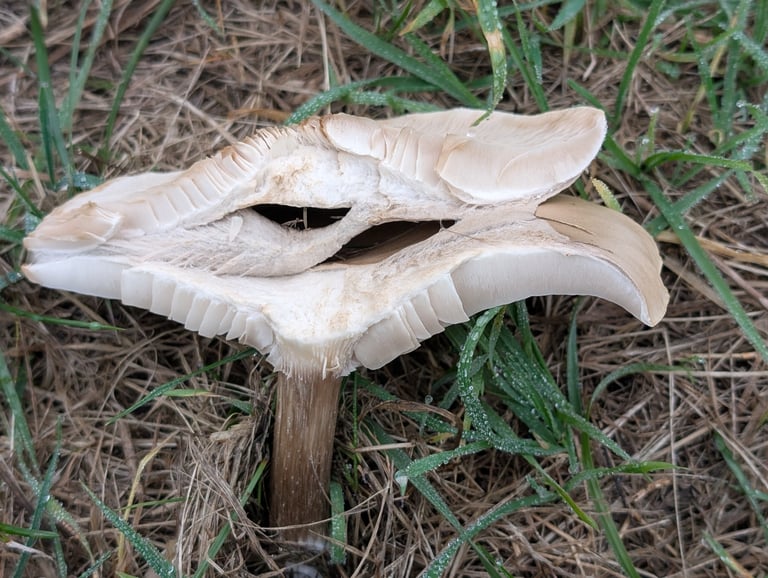
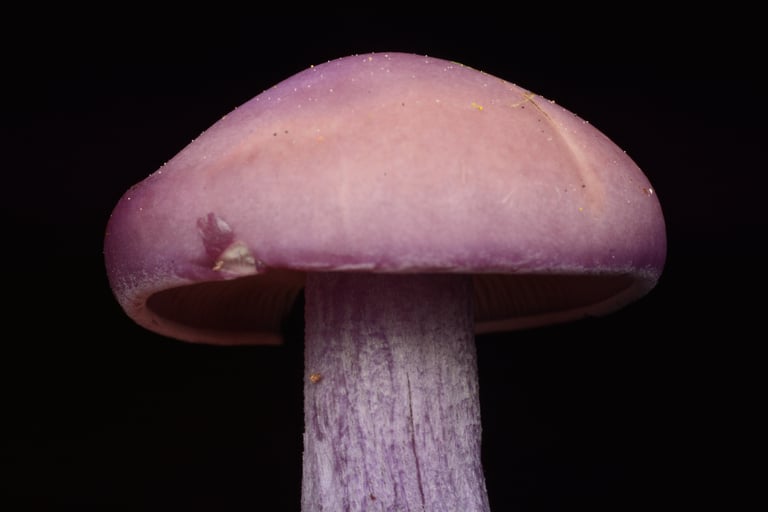
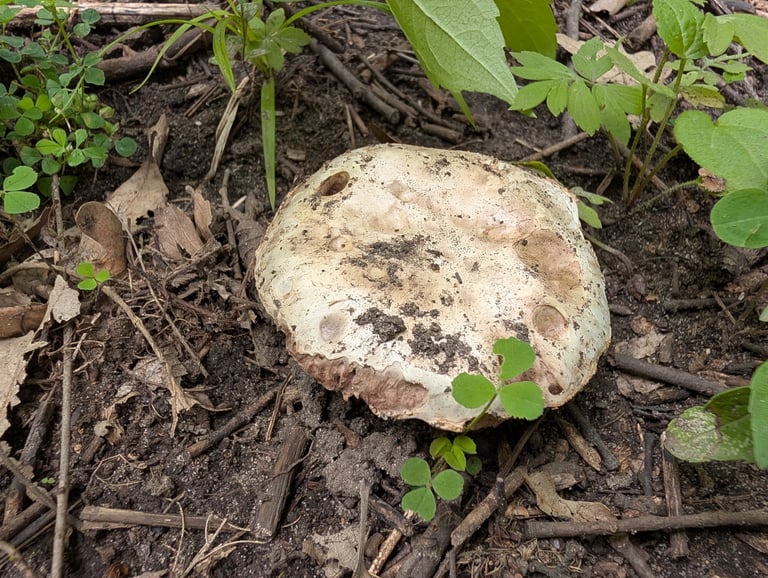
The most useful identifying features of Clitocybe vibecina are its umbilicated, down-turned cap and its rancid-smelling, watery grey flesh. The cap reaches up to 5 cm across and is only rarely funnel shaped, instead usually keeping a central depression with a downturned margin.
When moist, the cap is dark grey with a brownish grey center and shows faint striations, while in dry conditions it fades to a whitish grey. This pattern of slightly raised striations gives the species its Latin epithet, vibecina, meaning "with weals or welts."
The gills are grey, fairly thick, and a little decurrent, running slightly down the stem. The spore print is white. The stem itself ranges from grey to white, and the flesh, as noted, is watery, grey, and carries a rancid odor rather than a pleasant mushroom smell.
Distribution and Habitat
Clitocybe vibecina grows on needle litter, indicating an association with coniferous forest floors where fallen needles build up. Observation records show a strong seasonal pattern, with numbers rising sharply from late summer into autumn and peaking in the fall months before tapering off through winter, consistent with its habit of fruiting late in the year.
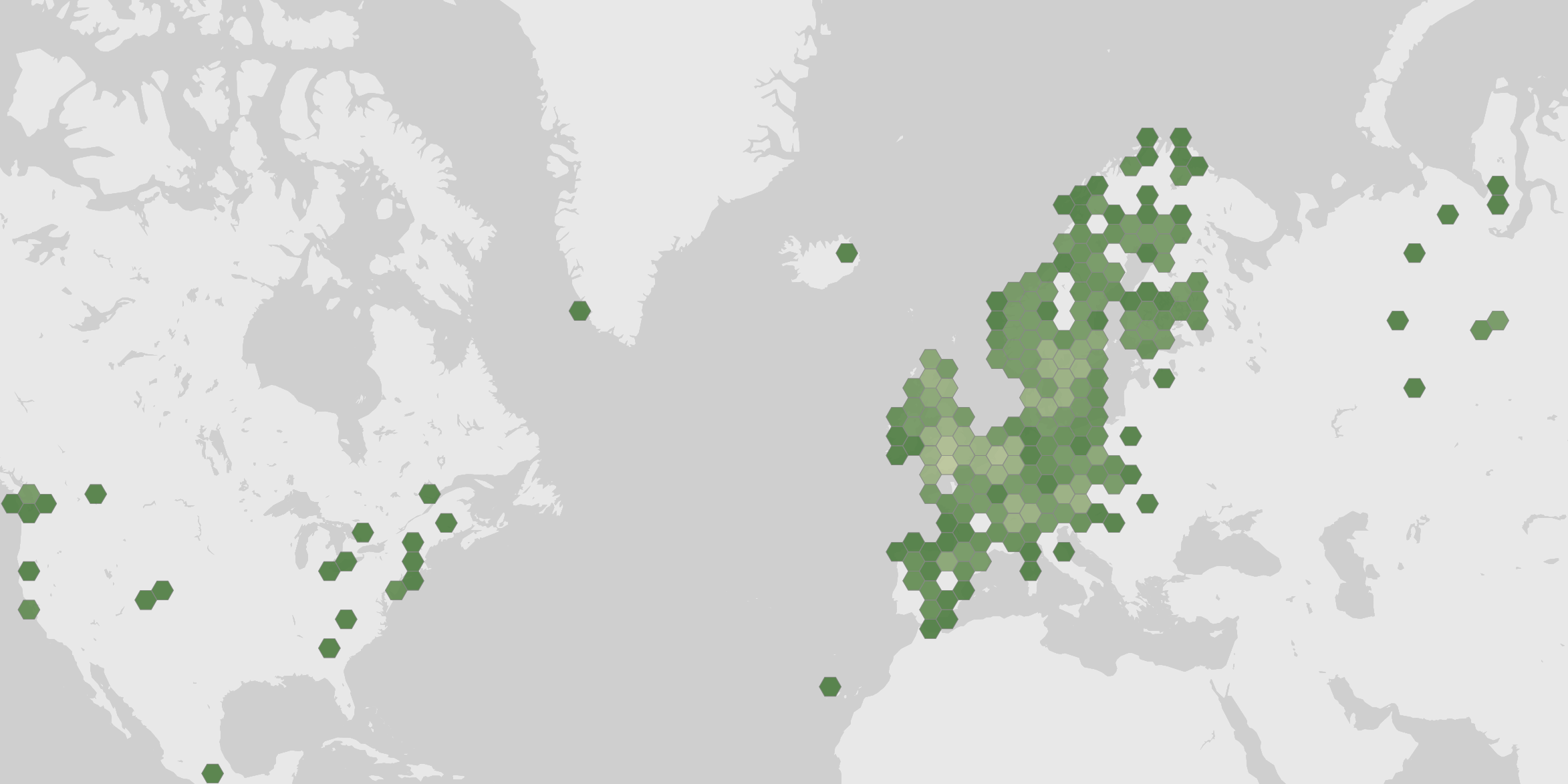
These observation counts reflect presence records rather than a measure of abundance or a complete picture of its range, so the true extent of where the species occurs may be broader than the data alone suggest.
Fun Facts
- The species name vibecina comes from the Latin word for weals or welts, describing the slightly raised striations on the cap surface.
- It typically grows in rings rather than as scattered single mushrooms, spreading across needle litter in this circular pattern.
Photos
Photographs from by Jason Grant via iNaturalist, licensed under CC BY 4.0., by victor laborde via iNaturalist, licensed under CC BY 4.0., by Tatiana Strus via iNaturalist, licensed under CC BY 4.0., by Mitch Van Dyke via iNaturalist, licensed under CC BY 4.0., by Yuliana Leshchenko via iNaturalist, licensed under CC BY 4.0., by Nina Filippova via iNaturalist, licensed under CC BY 4.0., and by Camille Stephens via iNaturalist, licensed under CC BY-SA 4.0., credited on each photo.
Ecology and classification
Habitat
Classification
- Phylum
- Basidiomycota
- Class
- Agaricomycetes
- Order
- Agaricales
- Family
- Tricholomataceae
- Genus
- Clitocybe
- Species
- Clitocybe vibecina
Sources
- GBIF Species names and classification
- iNaturalist Photos
- Wikidata Common names and conservation status
- Wikipedia Summary extract