The common chiffchaff can live up to , a long life for a leaf warbler that weighs only about 6 to 8 grams. Its simple, repeated song gives the species its name, and it is one of the first birds to sing when spring returns.
This small songbird is a leaf warbler in the family Phylloscopidae. It breeds in open woodlands across northern and temperate Europe and the Palearctic, from Atlantic coasts east to eastern Siberia. Its conservation status is Least Concern.
The species is worth reading about because its migration and its wide breeding range are closely linked to the seasons. Its breeding habits, its close resemblance to related warblers and its winter movements toward western Europe all show how a common bird can still be hard to identify and study.
Identification and Appearance
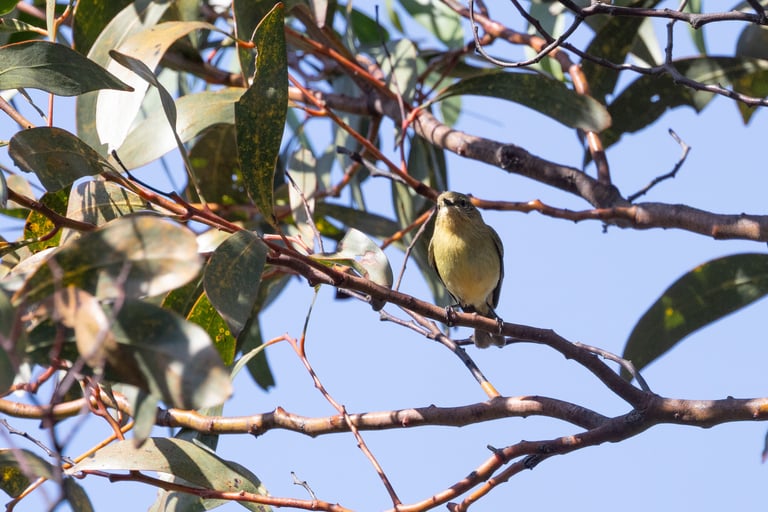
The most useful field mark is the song: a repetitive chiff-chaff that is much simpler than the song of related warblers. When the bird is silent, look for dark legs, a fine dark bill and a short whitish eyebrow stripe on a dull green back.
The common chiffchaff is a small, dumpy bird, about 10 to 12 centimetres (3.9 to 4.7 inches) long. Males weigh about 7 to 8 grams and females about 6 to 7 grams. The spring adult of the nominate western subspecies has brown-washed, dull green upperparts and off-white underparts that become yellowish on the flanks.
Plumage changes through the year. Worn feathers look duller and browner, and the yellow on the flanks often fades. After breeding, the bird undergoes a long complete moult before migration. The juvenile is browner above, with yellow-white underparts, and after its moult about 10 weeks later both adult and juvenile look brighter and greener.
The willow warbler is the most common look-alike. It has a longer primary projection, a sleeker, brighter appearance and generally pale legs. Bonelli's warbler has a plain face and green in the wings. Non-singing birds of the nominate subspecies are hard to separate from the Iberian chiffchaff in the field.
Distribution and Habitat
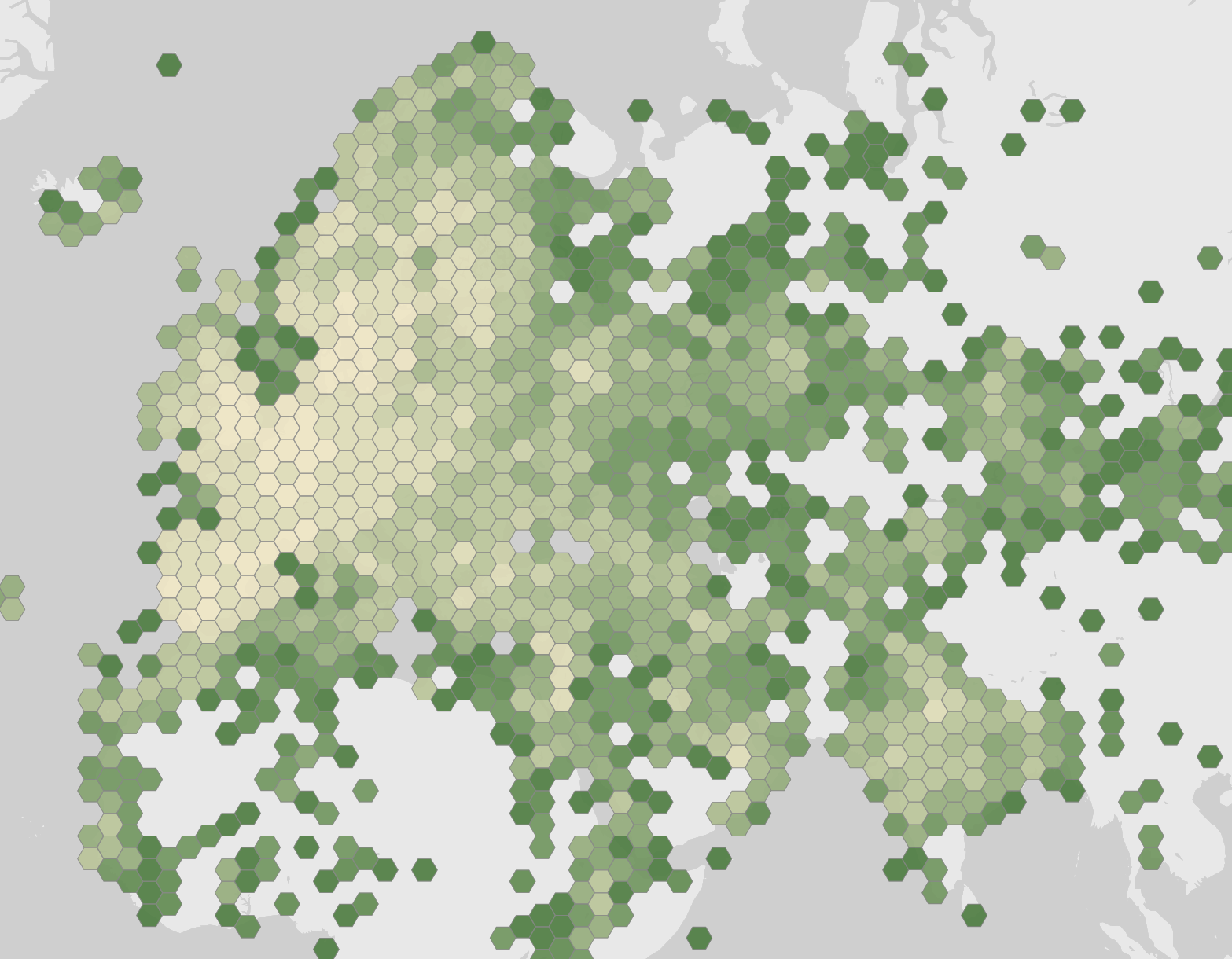
The common chiffchaff breeds across Europe and Asia, reaching east to eastern Siberia and north to about 70°N. Isolated populations occur in northwest Africa, northern and western Turkey and northwestern Iran.
When breeding, it favors open woodlands with some taller trees, usually at least 5 metres (16 feet) high. The understory is an open, poor to medium mix of grasses, bracken, nettles or similar plants, which gives the ground cover it needs for nesting. The willow warbler prefers younger trees, and the wood warbler prefers less undergrowth, so the chiffchaff's choice of site is more specific than that of its relatives.
In winter it uses a wider range of habitats, including scrub, and depends less on trees. It is often found near water, unlike the willow warbler, which tolerates drier ground.
More birds now spend the winter well north of the traditional range, especially in coastal southern England and the mild urban climate of London. Some of these winter visitors come from eastern subspecies, so not all of them bred locally.
Behavior and Lifestyle
The male is highly territorial during the breeding season. His core territory is typically about 20 metres (66 feet) across, and he defends it fiercely against other males. Other small birds may also be chased out.
The male is bold near the nest. He attacks even dangerous predators such as the stoat when they come close, and he drives off egg thieves such as the Eurasian jay. He sings from a favored, prominent perch, which advertises an established territory and helps him attract a female.
Beyond the core territory lies a larger feeding range that varies in size. It is typically ten or more times the area of the breeding territory, and the female is thought to range more widely than the male.
After breeding, the species leaves its territory behind. Birds may join small mixed flocks with other warblers before they migrate south.
Recordings
call, song · France · Lionel Triboulin · Public domain
flight call · France · Philippe Grange · Public domain
call · France · Philippe Grange · Public domain
call, flight call · France · Philippe Grange · Public domain
song · France · Noé Ferrari · CC BY
Diet and Nutrition
Like most Old World warblers, the common chiffchaff is an insectivore. It moves restlessly through foliage and sometimes hovers briefly to take prey, so it finds food by searching leaves and branches rather than by waiting in one place.
Its prey includes insects from more than 50 families, mainly flies. Other small and medium-sized invertebrates are also taken. Caterpillars and eggs of moths and butterflies are part of the diet, especially those of the winter moth.
The species needs about one-third of its body weight in insects each day. In autumn it feeds almost continuously, building up extra fat as fuel for its long migration flight.
Nesting and Breeding
The male returns to the breeding territory two or three weeks before the female and begins singing at once to claim it. Once a female is found, he performs a slow, butterfly-like flight as part of courtship. After a pair bond forms, other females are driven from the territory.
The female builds a domed nest on or near the ground, hidden in brambles, nettles or other dense low vegetation. The nest has a side entrance and is made of coarse material such as dead leaves and grass, with finer material inside and a final lining of feathers. A typical nest is about 12.5 centimetres (4.9 inches) high and 11 centimetres (4.3 inches) across. The male plays little part in nest building and mainly defends the territory.
The clutch holds two to seven cream-coloured eggs, normally five or six, marked with tiny ruddy, purple or blackish spots. The female incubates them for 13 to 14 days. The chicks hatch naked and blind, and the female broods and feeds them for another 14 to 15 days until they fledge. The male rarely feeds the young, though he sometimes does, especially in bad weather or if the female disappears.
After fledging, the young stay near the nest for three to four weeks and are fed and roosted with the female. These contacts decline after about the first 14 days. In the north there is time for only one brood because the summer is short, but a second brood is common in central and southern areas.
Population and Ecological Role
The species has an enormous range. Its population in Europe alone is estimated at 60 to 120 million individuals.
As a small insect-eater, it links the insects of its woodlands and scrub to the predators that feed on it, including crows, jays and carnivores such as foxes and wolves.
Conservation and Threats
The IUCN Red List rates the common chiffchaff as Least Concern. Its population is not believed to approach the IUCN thresholds for decline, which are a fall of more than 30 percent in ten years or three generations, so it is not considered threatened.
Most deaths occur in the first year of life, and adults rarely live beyond four years, although records of seven years or more exist. Stoats, weasels and crows such as the European magpie take eggs, chicks and fledglings, and sparrowhawks hunt adults. Weather also affects these small birds during migration and on their breeding and wintering grounds.
Humans affect the species mostly through woodland clearance, predation by cats, and collisions with windows, buildings and cars. Woodland clearance is the only one of these that could seriously affect populations. Brood parasitism by cuckoos is occasional, and the chiffchaff rarely loses a nest this way because it rejects eggs that do not match its own.
Its population is increasing slowly in the Czech Republic, and the range of the nominate subspecies appears to be expanding north into Scotland, Norway and Sweden.
Photos
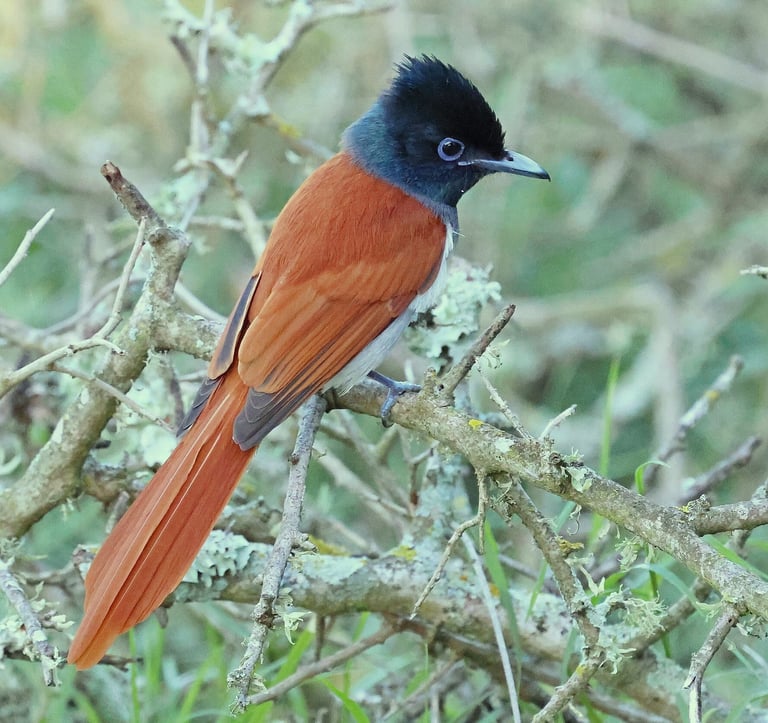
Photographs from via iNaturalist, licensed under CC0 1.0., by Lukas Zangl via iNaturalist, licensed under CC BY 4.0., by Coralie via iNaturalist, licensed under CC BY 4.0., by Šimun Aščić via iNaturalist, licensed under CC BY 4.0., by Louis Aureglia via iNaturalist, licensed under CC BY 4.0., by Alain Le Magueresse via iNaturalist, licensed under CC BY 4.0., by Edoardo Nardelli via iNaturalist, licensed under CC BY 4.0., and by Ксения Волянская via iNaturalist, licensed under CC BY 4.0., credited on each photo.
Ecology and classification
Classification
- Phylum
- Chordata
- Class
- Aves
- Order
- Passeriformes
- Family
- Phylloscopidae
- Genus
- Phylloscopus
- Species
- Phylloscopus collybita
Sources
- GBIF Species names and classification
- iNaturalist Photos
- Wikidata Common names and conservation status
- Wikipedia Summary extract
- Xeno-canto Audio recordings
- AnAge Longevity
- AVONET Bird mass, habitat, migration, diet and range size
- GloBI What it eats, what eats it, parasites and pollinators
- trophiCH
- DoPI
- TETRA-EU