Nearly 173 years passed between the first scientific description of this mushroom and its final placement in the genus it now calls home. Coprinellus radians was originally named Agaricus radians in 1828 by the Belgian mycologist John Baptiste Henri Joseph Desmazières, and it was not until 2001 that Vilgalys, Hopple, and Jacq. Johnson moved it into the genus Coprinellus.
The species belongs to the family Psathyrellaceae, within the order Agaricales, class Agaricomycetes, and phylum Basidiomycota — the group of fungi that produce spores on club-shaped cells called basidia. Its long taxonomic history reflects how classification within this family has shifted as mycologists have refined their understanding of related species.
Fruiting Body and Identification
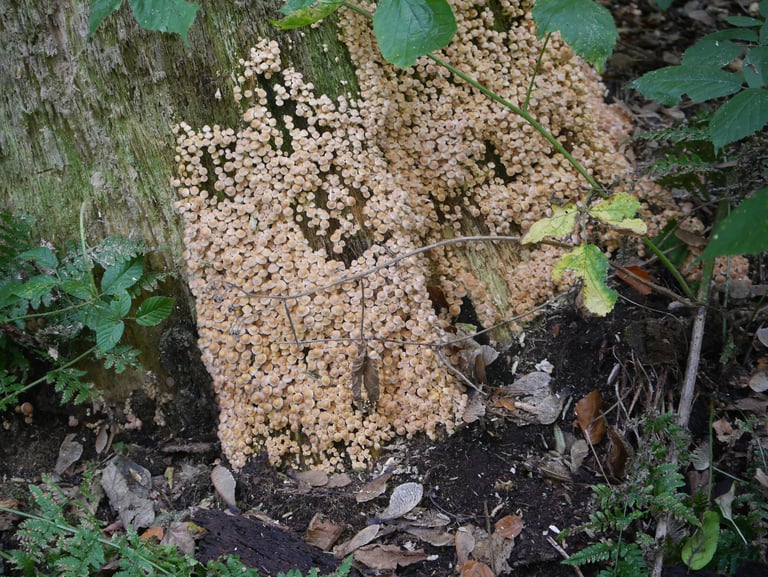
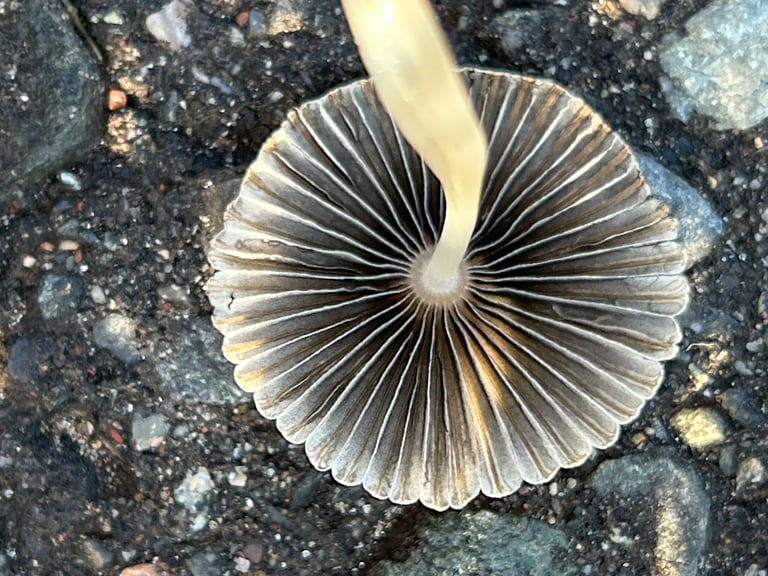
Detailed descriptions of the fruiting body's cap, gills, stem, and spore print are not available in current records for this species. What is documented is its taxonomic identity: Coprinellus radians was first classified under Agaricus, a broad genus historically used for many gilled mushrooms, before being recognized as distinct enough to warrant placement in Coprinellus in 2001.
This reclassification points to features that distinguish it from other Agaricus-type mushrooms, though the specific morphological traits used to draw that distinction are not recorded here.
Distribution and Habitat
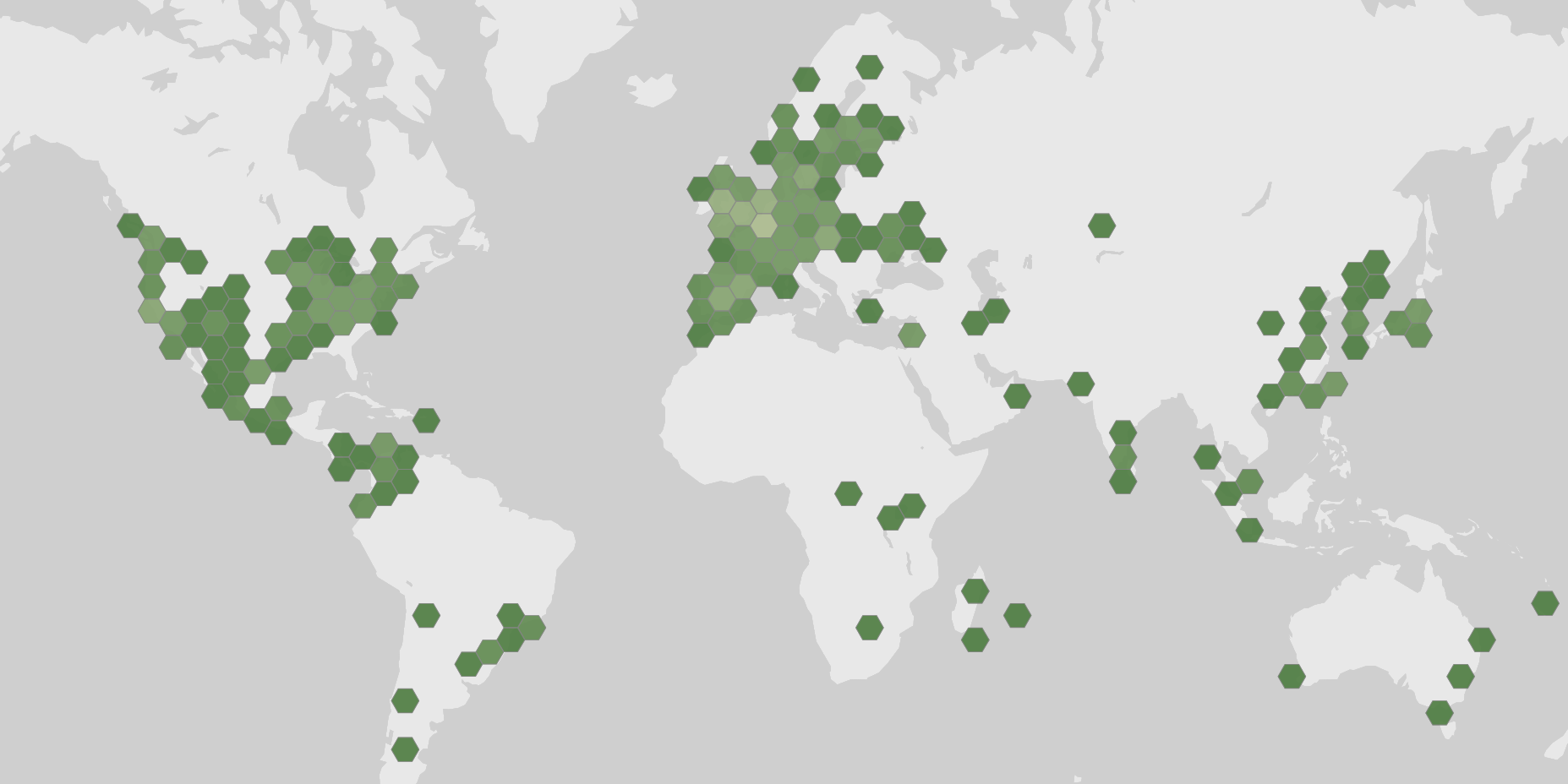
Observation records show Coprinellus radians appearing across all months of the year, with counts ranging from a low of 58 in February to a high of 269 in May. The data suggests two periods of heightened detection: a stronger peak in spring, centered on April and May, and a secondary rise in autumn, most notable in October with 223 recorded observations.
These figures come from GBIF occurrence data, which record presence rather than abundance, population size, or the full extent of the species' native range. The pattern likely reflects when fruiting bodies are most visible and reported rather than a complete picture of the fungus's activity underground, where its mycelium may persist through the drier or colder months without producing visible mushrooms.
Fun Facts
- Coprinellus radians was first described in 1828 as Agaricus radians by the mycologist John Baptiste Henri Joseph Desmazières.
- It took until 2001 for the species to be moved into its current genus, Coprinellus, by Vilgalys, Hopple, and Jacq. Johnson.
- The species belongs to the family Psathyrellaceae, a group within the order Agaricales known for producing spores on basidia.