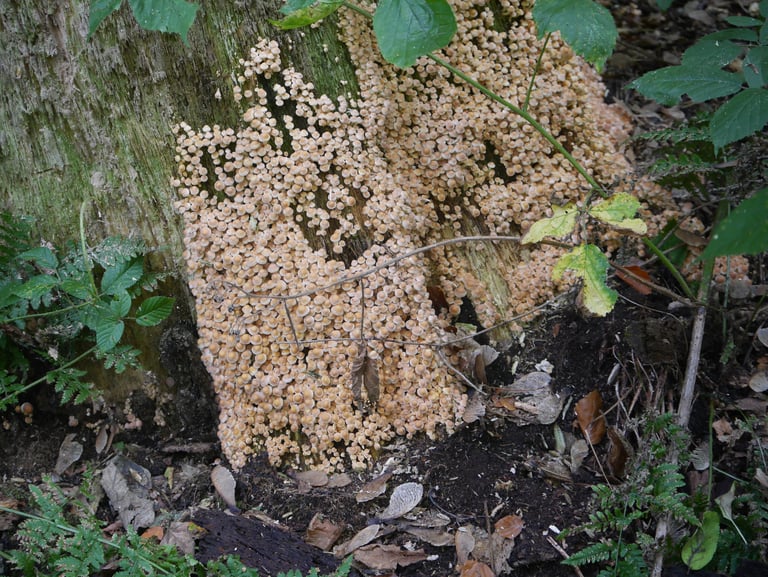
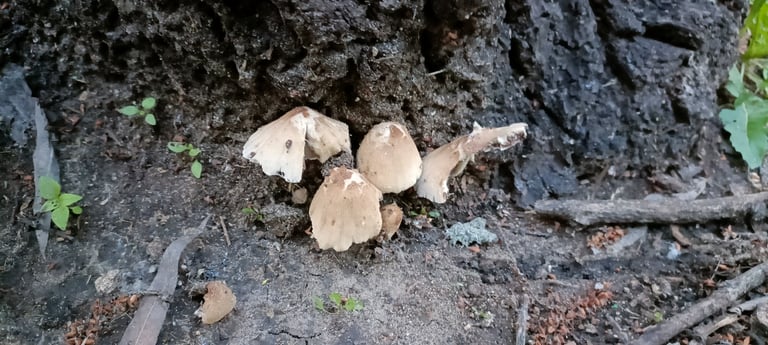
Coprinopsis lagopus, known as the hare's foot inkcap, is a fungus whose young fruit body loosely resembles the paw of a white rabbit. That resemblance gives the species its common names, including harefoot mushroom and rabbit's foot inky cap.
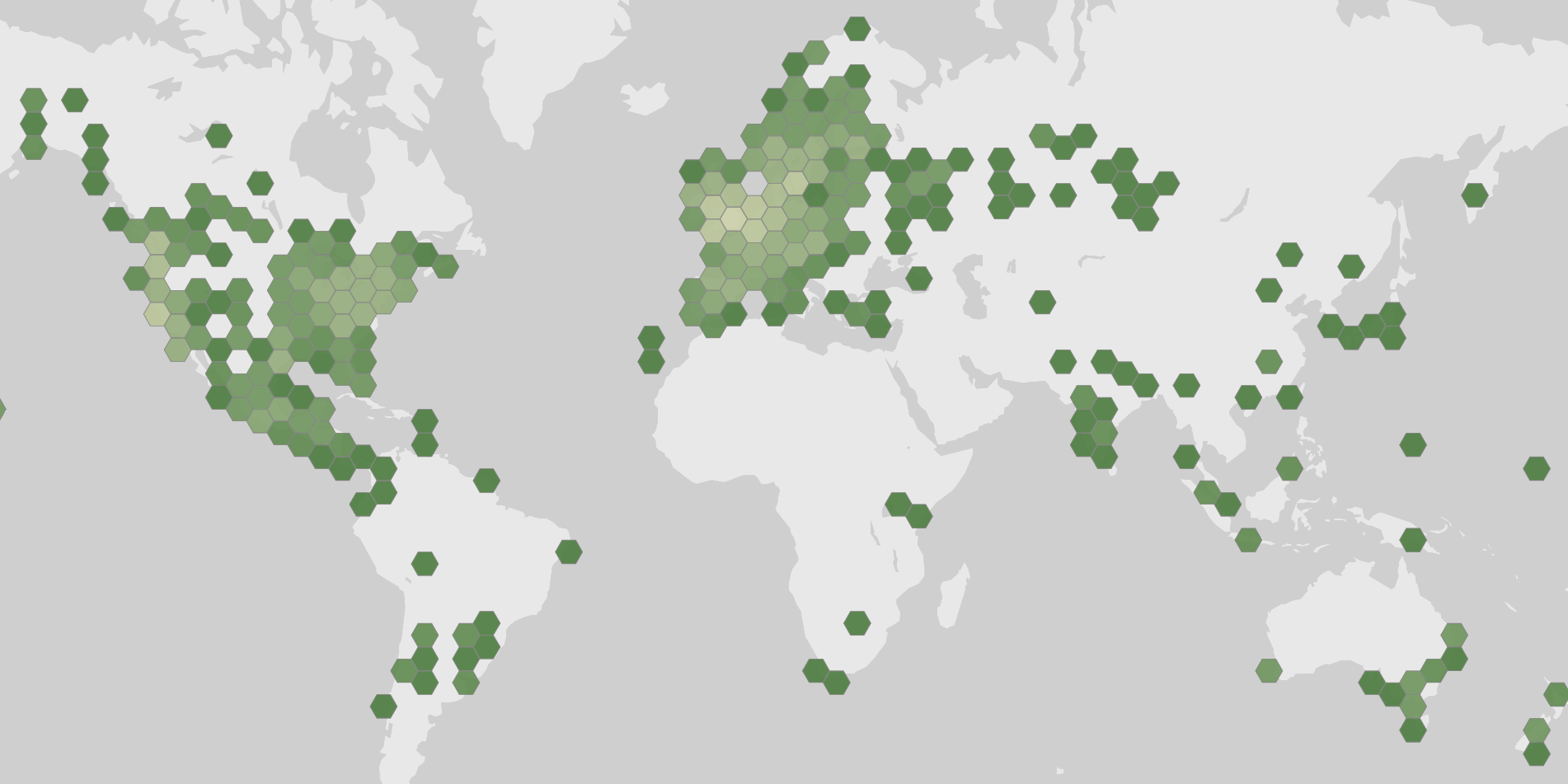
The species belongs to the family Psathyrellaceae in the order Agaricales. It is a gilled mushroom that grows across the world and is found in many parts of the globe.
The mushroom is short-lived and changes quickly, which makes it a useful subject for seeing how inkcaps break down as they age.
Fruiting Body and Identification
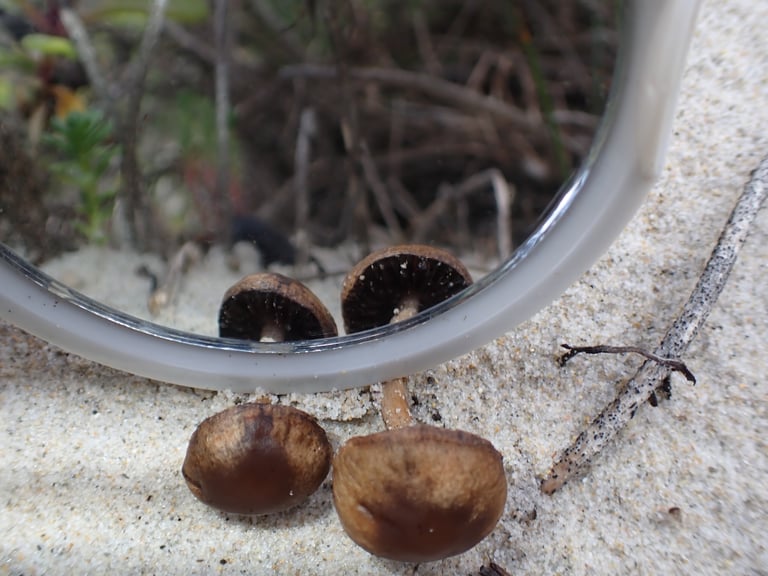
The fruit body varies greatly in size. Large specimens have stems 5 to 18.5 cm tall and caps 2 to 5 cm across, while dwarf fruit bodies can have stems only 1 to 10 mm tall and caps 0.75 to 3 mm wide. Dwarf forms are fully able to produce and release spores.
The cap is pale to very dark brown at its center, beneath a whitish to silvery grey veil, and it is paler toward the margin. As it matures, the cap becomes conical or convex, then flattens with its edges curved upward. The veil splits and becomes hairy with age.
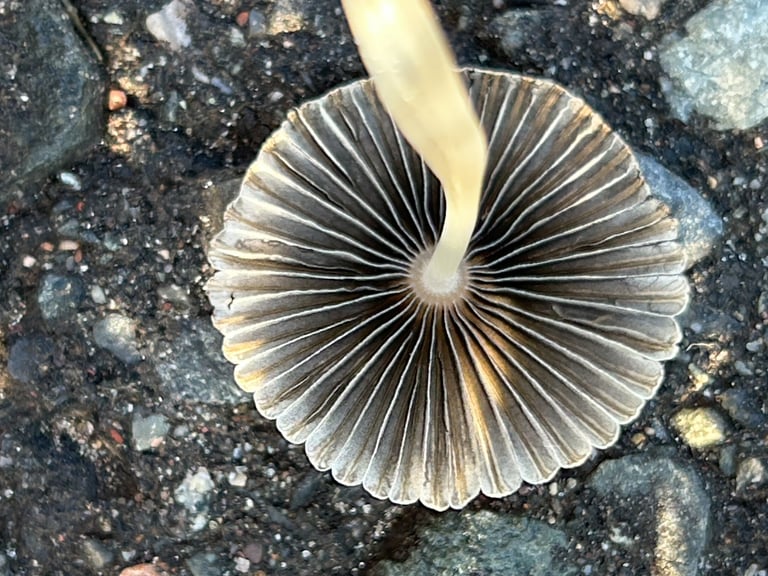
The gills are free from the stem, thin, and crowded closely together. They start white, turn grayish-brown, and finally become black as the spores mature. In age the gill edges dissolve into a black liquid, a process called deliquescence, and the mushrooms last only a few hours. The whitish stem is hollow and hairy at first, becoming smooth with age. The spore print is violet-black.
The spores measure 11 to 13 by 6 to 8 μm. They are ellipsoid or ovoid, dark red-brown, and nonamyloid. The closely related Coprinopsis lagopides is similar in appearance but usually grows on humus or burnt wood, and its smaller, roughly spherical spores measure 6 to 9 by 5 to 7 μm.
Distribution and Habitat
Coprinopsis lagopus has a widespread distribution throughout the world. It grows solitarily or in groups.
The fungus lives in soil and on wood chips, compost heaps, vegetable refuse, and horse or cattle dung. Its use of dung and compost places it often in disturbed, human-influenced ground.
It appears from autumn to mid-winter. Observations are most frequent in October, with fewer records in the months that follow.
Photos
Photographs from via iNaturalist, licensed under CC0 1.0., by joy russell via iNaturalist, licensed under CC BY 4.0., and by Katrin Simon via iNaturalist, licensed under CC BY 4.0., credited on each photo.
Ecology and classification
Habitat
Classification
- Phylum
- Basidiomycota
- Class
- Agaricomycetes
- Order
- Agaricales
- Family
- Psathyrellaceae
- Genus
- Coprinopsis
- Species
- Coprinopsis lagopus
Sources
- GBIF Species names and classification
- iNaturalist Photos
- Wikidata Common names and conservation status
- Wikipedia Summary extract