Parasola plicatilis, commonly called the pleated inkcap, is a small saprotrophic mushroom in the family Psathyrellaceae, within the order Agaricales, class Agaricomycetes, and phylum Basidiomycota. Its scientific name reflects a taxonomic history spanning centuries: originally described by Curtis, the species was later reclassified by Redhead, Vilgalys, and Hopple.
As a saprotroph, Parasola plicatilis obtains its nutrients by breaking down dead organic matter rather than forming symbiotic relationships with living plants. No conservation status has been assessed for this species.
Though small and easily overlooked, the pleated inkcap represents one of many understudied fungi that quietly contribute to the breakdown of organic material in the ecosystems where they grow.
Fruiting Body and Identification
The clearest clue to identifying Parasola plicatilis lies in its common name, the pleated inkcap, which points to the pleated texture of its cap. It is classified as a small saprotrophic mushroom, obtaining nutrients from dead organic matter rather than living tissue.
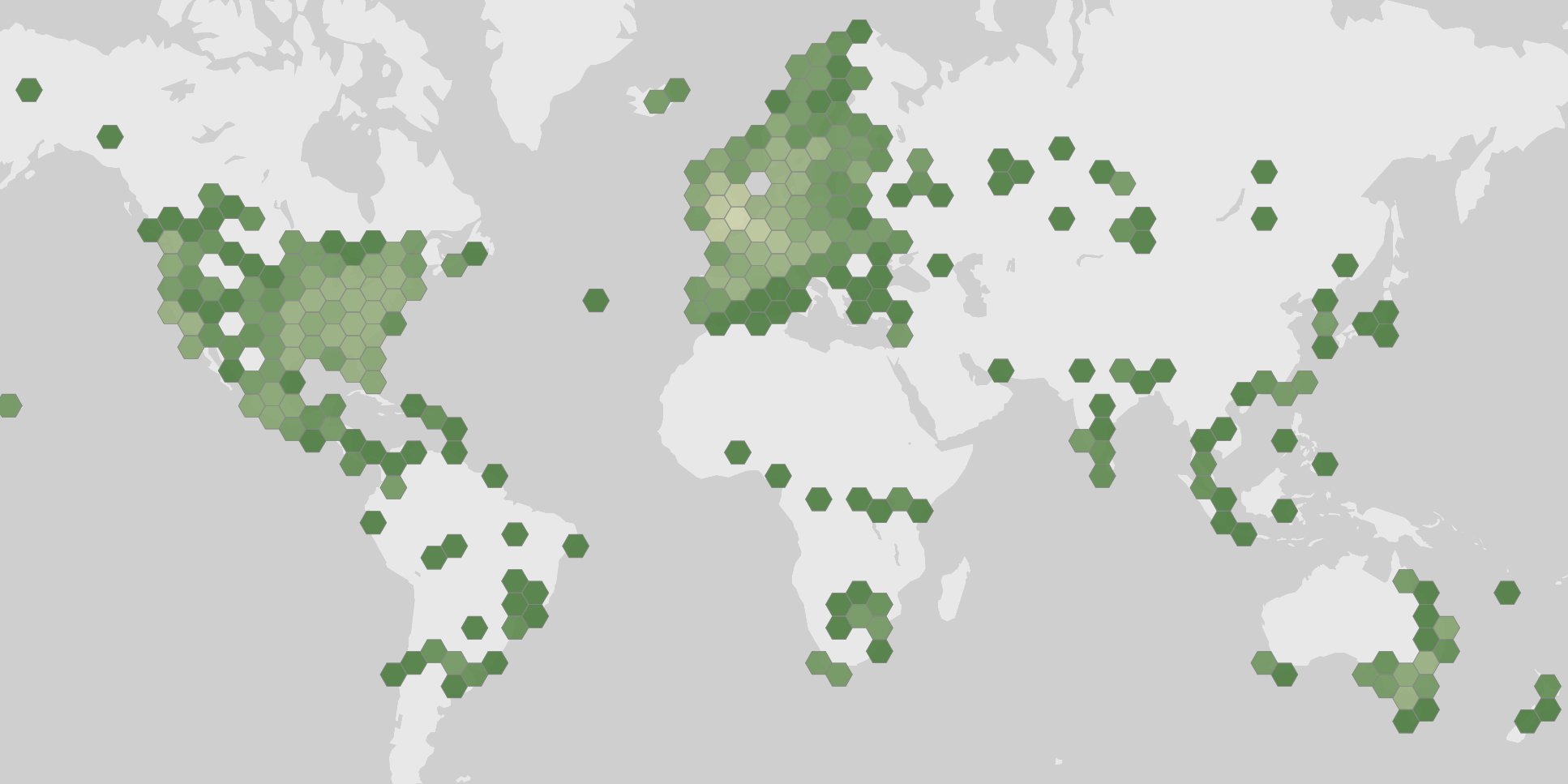
Distribution and Habitat
Observation data compiled through GBIF show a distinct seasonal pattern for Parasola plicatilis. Sightings are lowest in winter, with only 81 records in February and 181 in January, and remain modest through early spring, reaching 168 in March and 603 in April.
Numbers rise sharply through late spring and summer, climbing to 1,300 in May, 1,369 in June, and 1,437 in July, before reaching their highest points in early autumn: 1,680 in August, 3,480 in September, and a peak of 4,206 in October. Counts then fall abruptly to 1,173 in November and 230 by December.
This pattern suggests that Parasola plicatilis is most frequently observed fruiting in late summer and especially autumn, with September and October standing out as the peak period. These figures represent presence-only observation records, however, and do not measure true abundance, population size, or the species' complete range.
Uses and Cultural History
Parasola plicatilis holds little place in folklore, tradition, or written cultural history. Unlike fungi with rich ethnomycological backgrounds, such as Amanita muscaria, long associated with shamanic ritual, or Psilocybe cubensis, known for its psychoactive properties, the pleated inkcap has not attracted comparable cultural attention. No documented culinary, medicinal, or ceremonial uses accompany this species in the available record.
Fun Facts
- Despite its distinctive pleated cap and status as a small saprotrophic mushroom, Parasola plicatilis remains largely undocumented in folklore or ethnomycological writing, standing in contrast to widely referenced fungi like Amanita muscaria and Psilocybe cubensis.