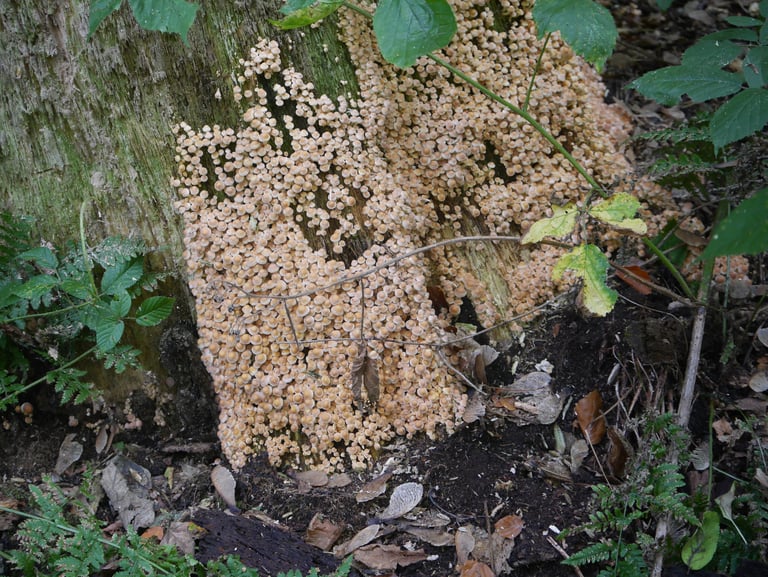
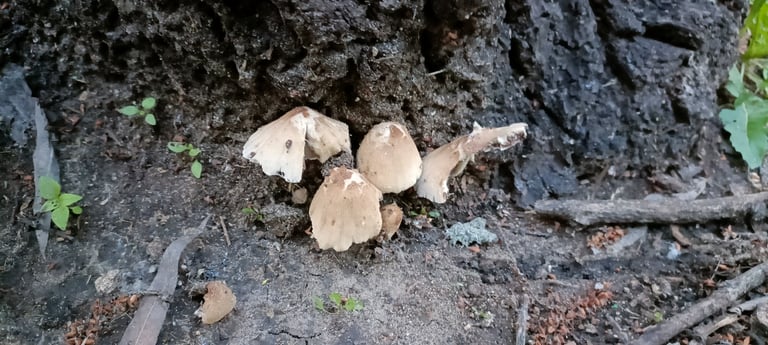
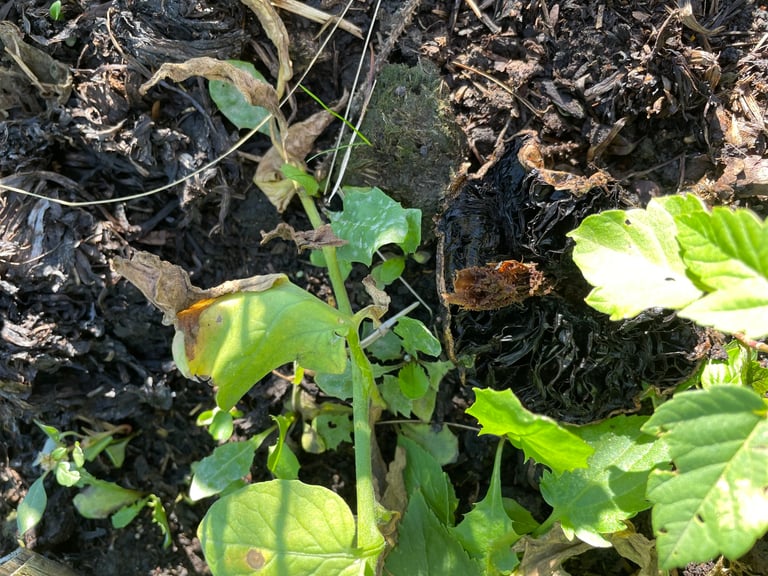
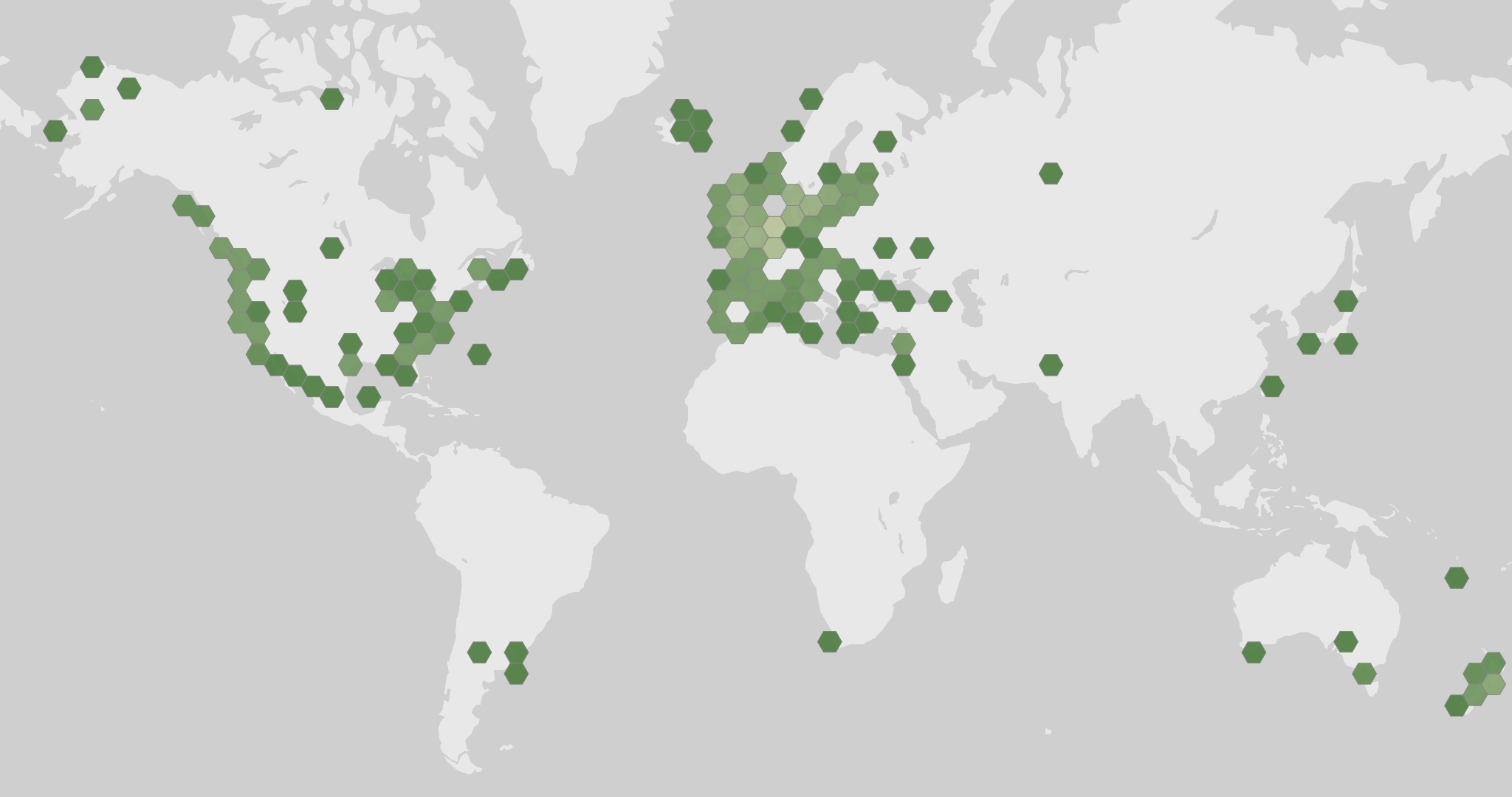
Psathyrella ammophila is a small agaric fungus that grows in sand, often sprouting on dunes beside marram grass. It is commonly called the dune brittlestem.
This mushroom belongs to the family Psathyrellaceae and is found throughout Europe. Outside Europe it has been collected in limited coastal locations, including Algeria, New Zealand and Canada.
It grows singly or in small clumps and feeds on the decaying roots of marram grass. Its growing season in the Northern Hemisphere runs from about May to November, which makes it a dependable autumn find on sand dunes.
Fruiting Body and Identification
The cap is the easiest feature to notice. It is light clay-brown or tan when young and darkens to a dark brown as the mushroom ages. The cap is generally smooth but has microscopic hairs and is often coated with sand particles. It starts campanulate or convex and gradually flattens, sometimes becoming depressed. The cap is about 1 to 4 centimeters across and does not change color as it dries or absorbs water.
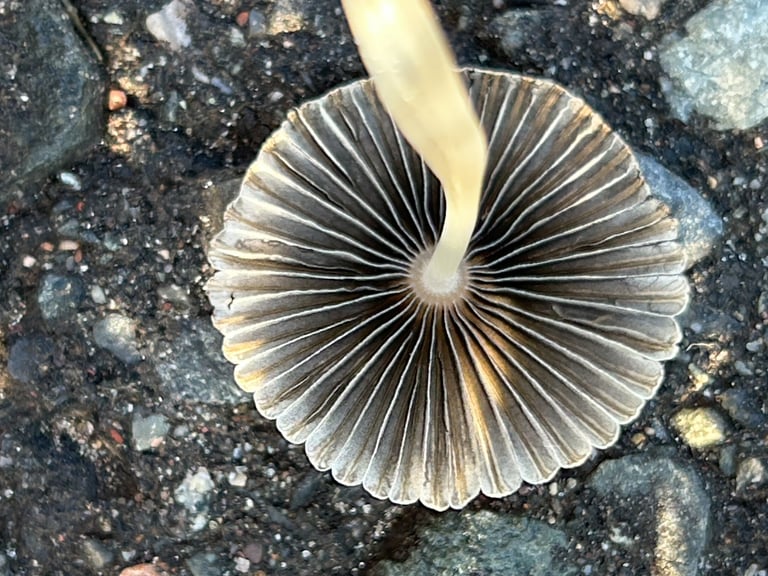
The gills are crowded and attached to the stem, usually broadly and occasionally narrowly. They are pallid brown when very young and dark brown for most of the mushroom's life, sometimes turning black.
The stem is light gray to pale brown and sits centrally on the cap. Its surface is smooth, sometimes with small vertical ridges. The stem is slender, about 2 to 5 millimeters wide and 3 to 7 centimeters tall above ground, and it has no ring. Below ground it reaches deep into the sand to feed on marram grass roots and anchor the mushroom.
The flesh of the cap and stem is pale, thin and brittle. Neither the taste nor the odor is distinctive. Its spores are dark brown, smooth and ellipsoid, measuring 10 to 11 micrometers by 6 to 7 micrometers, with a large germ pore on each spore. Conocybe dunensis looks similar but can be told apart by the rust color of its gills.
Distribution and Habitat
Psathyrella ammophila is widely but sparsely spread across the European continent. Outside Europe it occurs only in a few coastal locations.
Most mushrooms appear in established sand dunes and dune slacks farther inland. It can also grow near the shoreline within the littoral zone, but it is far more common in stable dunes.
Marram grass is central to where this fungus grows. The mushroom uses the decaying roots of the grass as its food, so it is seldom found far from marram stands.
The mushrooms often grow alongside the fly Delia albula. The fly's fungivorous larvae develop inside P. ammophila, though they also attack other fungi.
Photos
Photographs from by Em Lamond via iNaturalist, licensed under CC BY 4.0., via iNaturalist, licensed under CC0 1.0., by Michel Langeveld via iNaturalist, licensed under CC BY 4.0., by Zach Earl via iNaturalist, licensed under CC BY 4.0., by Moe Meikle via iNaturalist, licensed under CC BY 4.0., by Nicola Crockford via iNaturalist, licensed under CC BY 4.0., by CaracalShan via iNaturalist, licensed under CC BY 4.0., by Barry Stewart via iNaturalist, licensed under CC BY 4.0., by biogeek via iNaturalist, licensed under CC BY 4.0., by Maciej Boenisch via iNaturalist, licensed under CC BY 4.0., by Julia Szilvas via iNaturalist, licensed under CC BY 4.0., by Andrejus Gaidamavičius via iNaturalist, licensed under CC BY 4.0., and by Andrew Sebastian via iNaturalist, licensed under CC BY 4.0., credited on each photo.
Ecology and classification
Habitat
Classification
- Phylum
- Basidiomycota
- Class
- Agaricomycetes
- Order
- Agaricales
- Family
- Psathyrellaceae
- Genus
- Psathyrella
- Species
- Psathyrella ammophila
Sources
- GBIF Species names and classification
- iNaturalist Photos
- Wikidata Common names and conservation status
- Wikipedia Summary extract