Few dragonflies are as easy to spot as the male scarlet dragonfly, whose abdomen is a bright scarlet red. It belongs to the family Libellulidae, the skimmers, and it is also known as the broad scarlet, the common scarlet-darter and the scarlet darter.
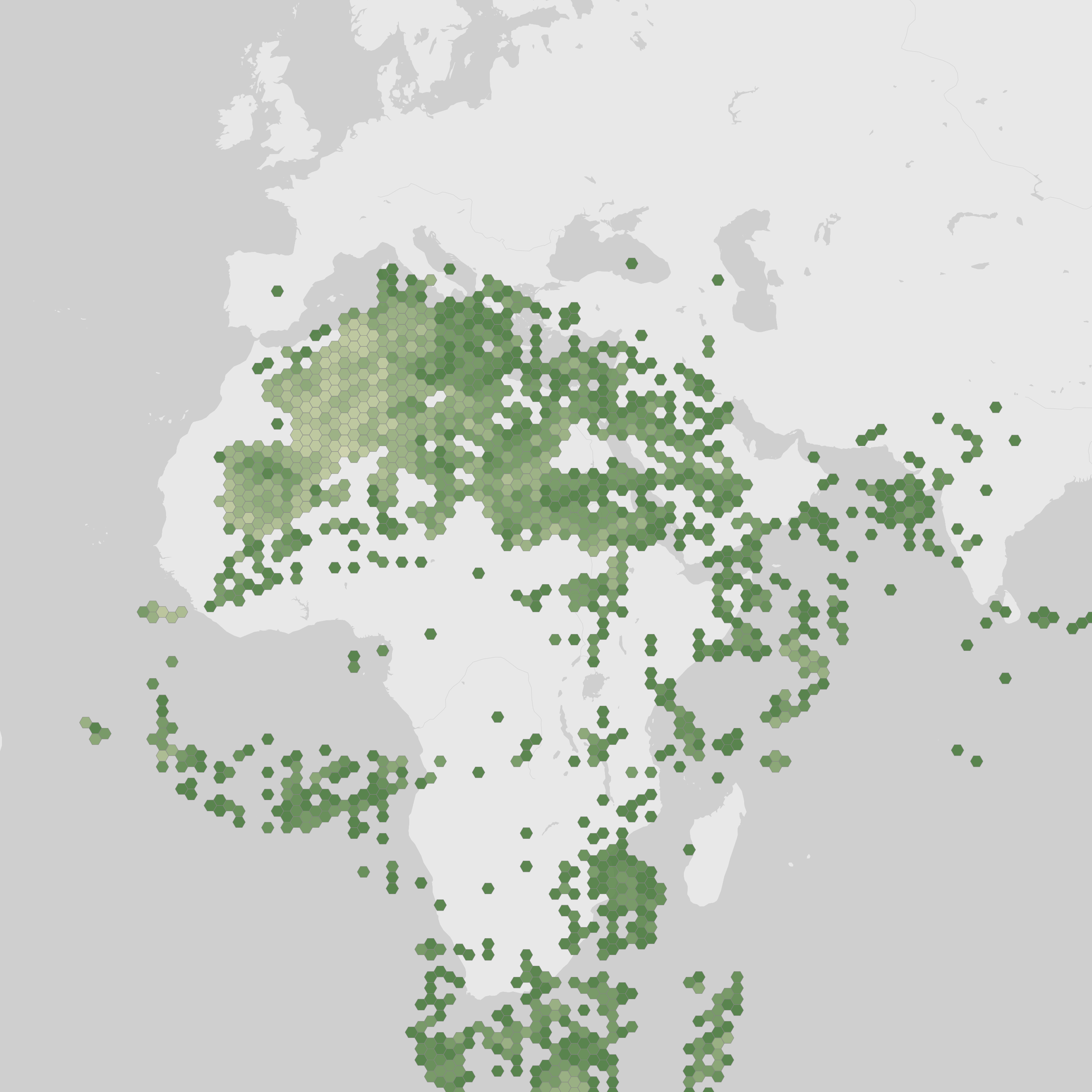
The species is common in southern Europe and throughout Africa. It also occurs across western Asia as far as southern China, so it ranges over three continents. The IUCN classifies it as Least Concern.
Its wide range and striking males make it a good example of how a single dragonfly can be both common and eye-catching across very different landscapes.
Identification and Appearance
The most useful field mark is the male's colour. Adult males have a bright scarlet red, widened abdomen, and the veins along the leading edges of the wings are also red. Small amber patches sit at the bases of the hindwings.
The abdomen is flattened and rather broad. Adults reach 33 to 44 millimeters (1.3 to 1.7 inches) in length, which places them among medium-sized dragonflies.
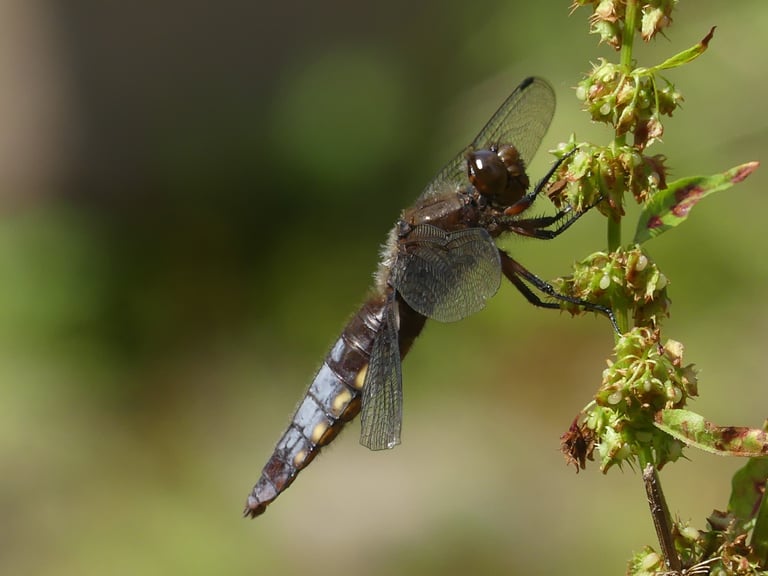
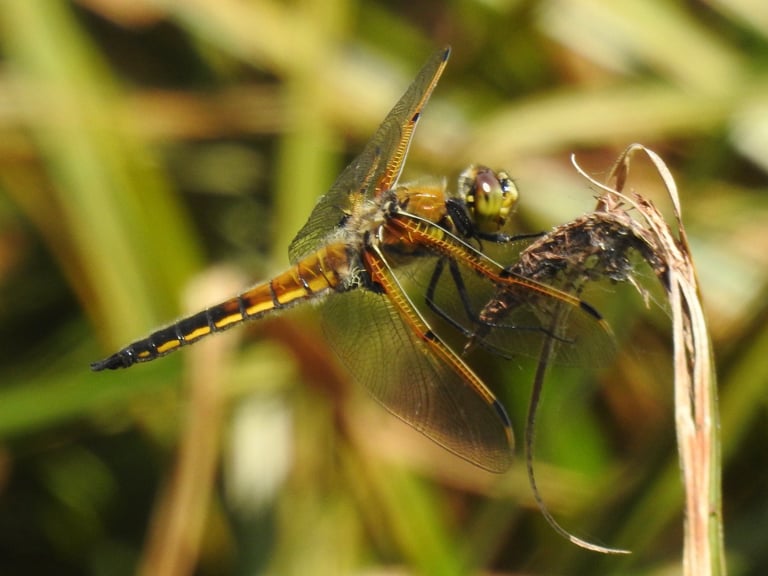
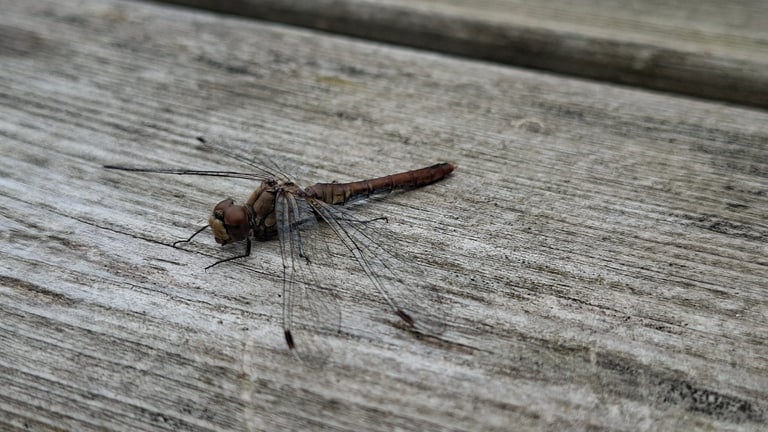
Females and immature dragonflies look quite different. They are yellow-brown and have a conspicuous pale stripe running along the top of the thorax. Anyone who sees a yellow-brown individual with that stripe should check the wings and the amber patches before deciding on the species.
Distribution and Habitat
The scarlet dragonfly uses a wide range of both running and standing waters, although it avoids shaded water. Adults also fly some distance from water, over habitats that range from desert to open woodland. Dense forest is not part of its range.
In Europe it is most common in the south. Across Africa it is found widely, and its range continues east through western Asia to southern China.
Sightings are most frequent in June and July, which reflects a clear summer peak in the year. This pattern describes when the species is seen, not how many individuals are present.
In Britain it is a very rare vagrant. Its first British record came at Hayle Kimbro Pool, The Lizard, Cornwall, on 7 August 1995. Since then, a few sightings have come from scattered coastal or near-coastal sites in southeastern England, from Dorset to Norfolk.
Population and Ecological Role
Adult scarlet dragonflies are preyed upon by a range of animals. Songbirds are among the main predators, and the white-throated dipper (Cinclus cinclus) stands out as a well-established one. Spiders, herons, falcons and grebes also take adults, and other dragonflies occasionally eat them.
Because the species is a regular food source for many predators, it links the water's edge to the wider food web. Its presence supports the birds and spiders that feed on it, while its own larvae and adults take in other insects.
Conservation and Threats
The IUCN assesses the scarlet dragonfly as Least Concern, the lowest-risk category for species that remain widespread and abundant. It is a common species in southern Europe and throughout Africa, and it occurs across western Asia as far as southern China.
In Britain the situation is different. The species is only a very rare vagrant there, and its appearances are sporadic. The first British record was at Hayle Kimbro Pool in Cornwall in 1995, and later sightings have been few and scattered along the southeastern coast from Dorset to Norfolk.
Photos
Photographs from via iNaturalist, licensed under CC0 1.0., by Kai Löhr via iNaturalist, licensed under CC BY 4.0., by Yedidya Popper via iNaturalist, licensed under CC BY 4.0., by Susan Murphy via iNaturalist, licensed under CC BY 4.0., by Patrick Jackson via iNaturalist, licensed under CC BY 4.0., by Muhammad Uzair Davids via iNaturalist, licensed under CC BY 4.0., by Tony KM via iNaturalist, licensed under CC BY 4.0., by Alan Manson via iNaturalist, licensed under CC BY 4.0., by Yves Bas via iNaturalist, licensed under CC BY 4.0., by Oksana Sintia via iNaturalist, licensed under CC BY 4.0., by Emily Nyenyedzi Davies via iNaturalist, licensed under CC BY 4.0., and by Fabian Schwarz via iNaturalist, licensed under CC BY 4.0., credited on each photo.
Ecology and classification
Habitat
Classification
- Phylum
- Arthropoda
- Class
- Insecta
- Order
- Odonata
- Family
- Libellulidae
- Genus
- Crocothemis
- Species
- Crocothemis erythraea