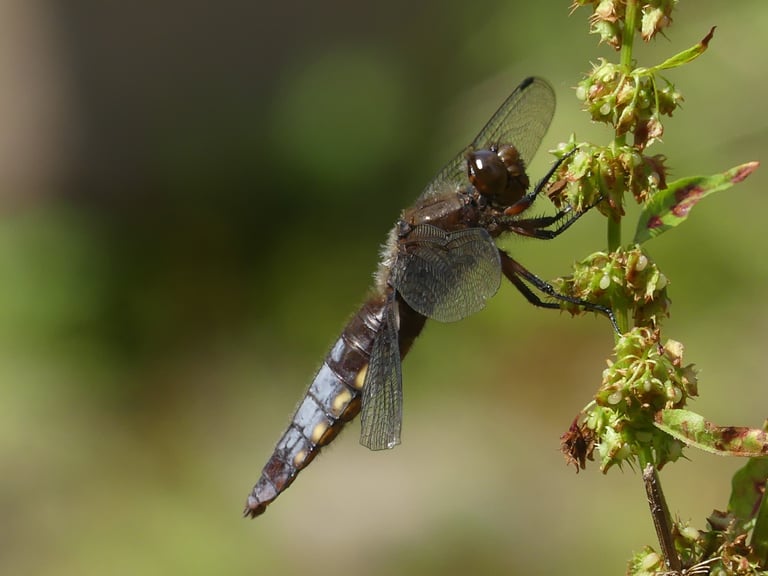
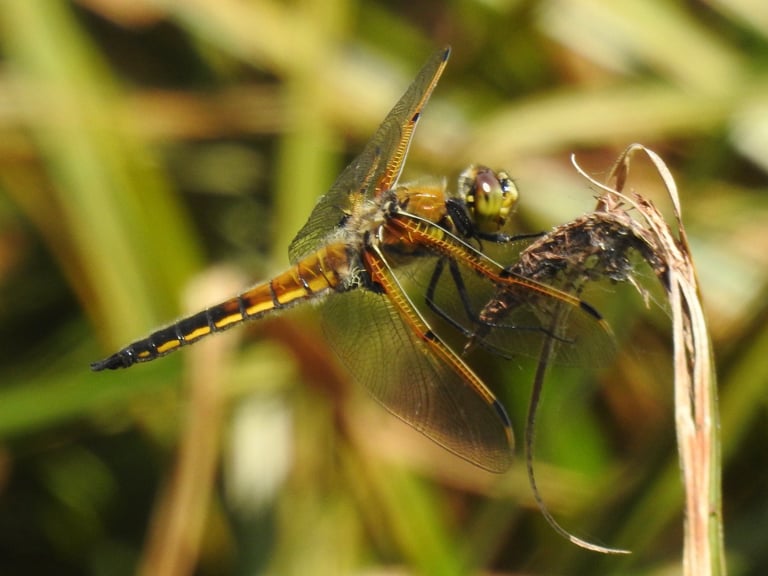
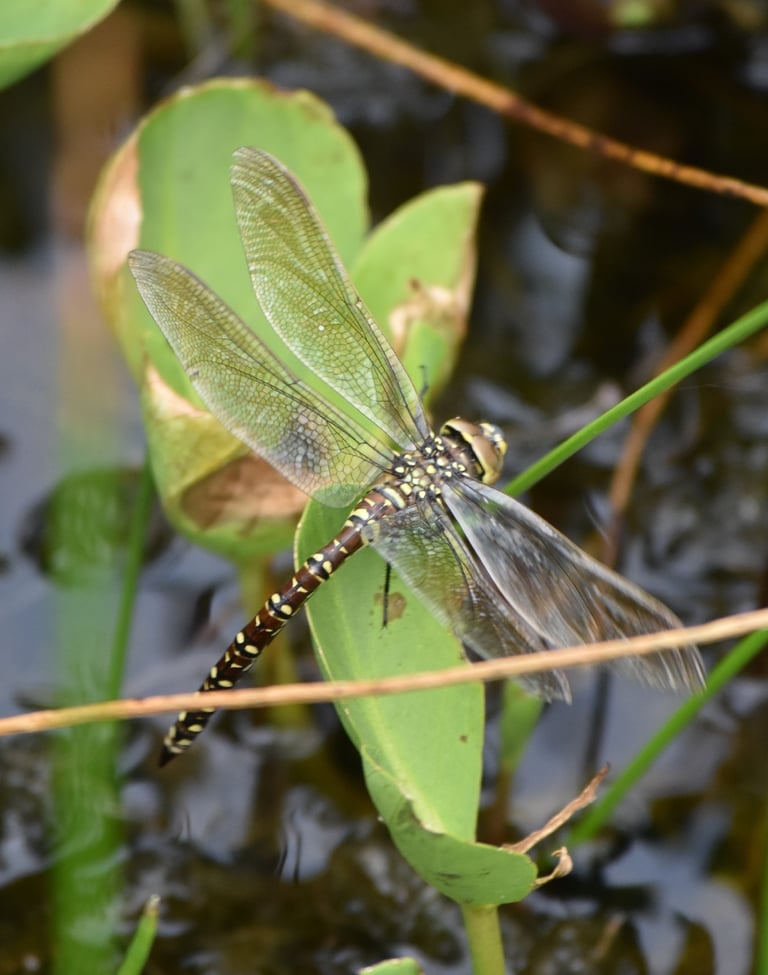
The ruddy darter stands out for the vivid blood-red color that develops across a male's head, thorax and abdomen as it matures, a trait shared by few other European dragonflies in such intensity.
This species belongs to the dragonfly family Libellulidae, within the order Odonata. It ranges across temperate Europe, extending east to Siberia and south to the northern Sahara, and its conservation status is assessed as Least Concern.
Its close resemblance to several other Sympetrum species makes it a rewarding challenge for anyone learning to identify dragonflies in the field.
Identification and Appearance
The single most reliable field mark is the ruddy darter's all-black legs, which separate it from the otherwise very similar common darter (Sympetrum striolatum) and vagrant darter (Sympetrum vulgatum), both of which show yellow stripes on their legs.
The body reaches 34 to 36 millimeters in length with a wingspan of up to 6 centimeters, making it smaller than the common darter. The wings show a brown pterostigma and orange coloring at the base, and two black marks mark segments S8 and S9 of the abdomen. The abdomen itself widens over its final third and shows a distinct pinched section where it joins the thorax.
Mature males are vivid red across the head, thorax and abdomen, with a red frons and red-brown thorax developing as they age. Females are slightly smaller and golden-yellow with black markings rather than red.
The spotted darter (Sympetrum depressiusculum) also has all-black legs but can be told apart by its more clubbed abdomen and brighter pterostigmata.
Distribution and Habitat
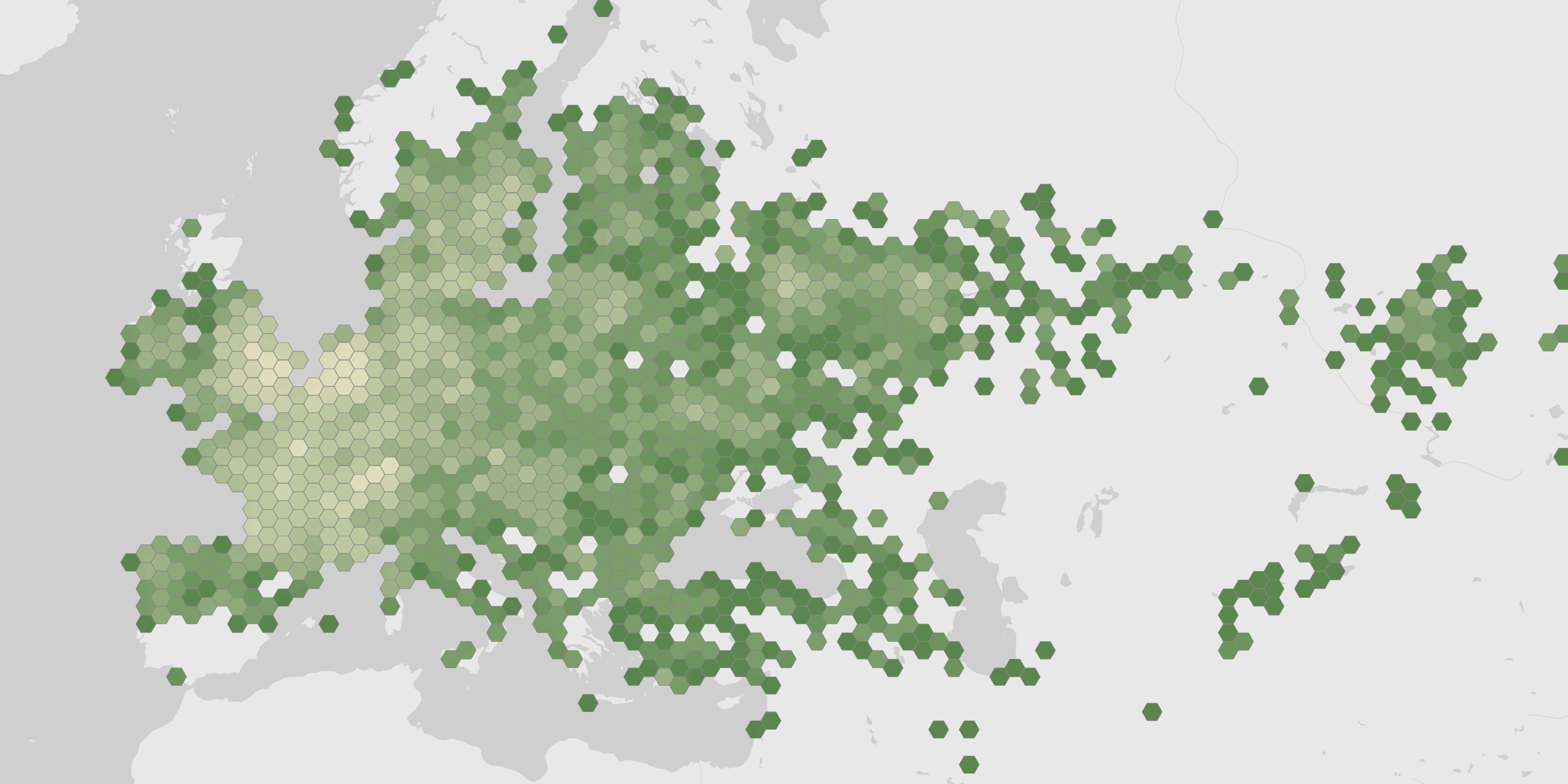
The ruddy darter occurs across temperate regions of Europe, extending east to Siberia and south to the northern Sahara, with confirmed presence in countries from Ireland and Portugal to Kazakhstan and Tajikistan.
It favors quiet bodies of water with semi-aquatic vegetation such as rushes and reeds, making still ponds and slow wetlands its typical habitat.
Observation records peak sharply in the summer months, consistent with the flight season typical of this dragonfly, though these figures reflect reported sightings rather than actual population size.
The species appears to be expanding its range, with increasing numbers reported in central England and a northward spread at its northern limit in northeastern England.
Hunting and Diet
As an insectivore, the ruddy darter hunts other insects, and recorded prey and interactions span a wide range of small flies and midges, including craneflies, caddisflies and hoverflies, along with various non-biting midges such as species of Ablabesmyia.
The broad spread of recorded interactions, drawn largely from midges and small dipterans, points to an opportunistic hunting style typical of darters, which take available flying insects near their wetland habitat rather than specializing on one prey type.
Fun Facts
- The ruddy darter's scientific name, Sympetrum sanguineum, references the blood-red color of the mature male.
- Despite its resemblance to several other red darter species, its all-black legs offer a quick way to set it apart in the field.
- The species has been documented on film and in biodiversity archives, including footage held by open biodiversity literature collections.
Photos
Photographs from via iNaturalist, licensed under CC0 1.0., by Andrejus Gaidamavičius via iNaturalist, licensed under CC BY 4.0., by Константин Селивёрстов via iNaturalist, licensed under CC BY 4.0., by Ирина Хохрякова via iNaturalist, licensed under CC BY 4.0., by Kai Löhr via iNaturalist, licensed under CC BY 4.0., by Марина Садыкова via iNaturalist, licensed under CC BY 4.0., by Artem Abdukakharov via iNaturalist, licensed under CC BY 4.0., by Евгений Маринкин via iNaturalist, licensed under CC BY 4.0., by Oleg Kosterin via iNaturalist, licensed under CC BY 4.0., by Mattis via iNaturalist, licensed under CC BY 4.0., and by Adam Górski via iNaturalist, licensed under CC BY 4.0., credited on each photo.
Ecology and classification
Classification
- Phylum
- Arthropoda
- Class
- Insecta
- Order
- Odonata
- Family
- Libellulidae
- Genus
- Sympetrum
- Species
- Sympetrum sanguineum