The yellow foot waxcap gets its name from the distinctive yellow flush at the base of its stem, a feature that sets it apart from most of its grayish relatives. Cuphophyllus flavipes is a gilled fungus in the family Hygrophoraceae, found across Europe in old, agriculturally unimproved grassland.
The species has been assessed as Vulnerable on the IUCN Red List, reflecting the ongoing loss of its grassland habitat. Its combination of subtle beauty and habitat sensitivity makes it a useful indicator of the health of traditional pastureland.
Fruiting Body and Identification
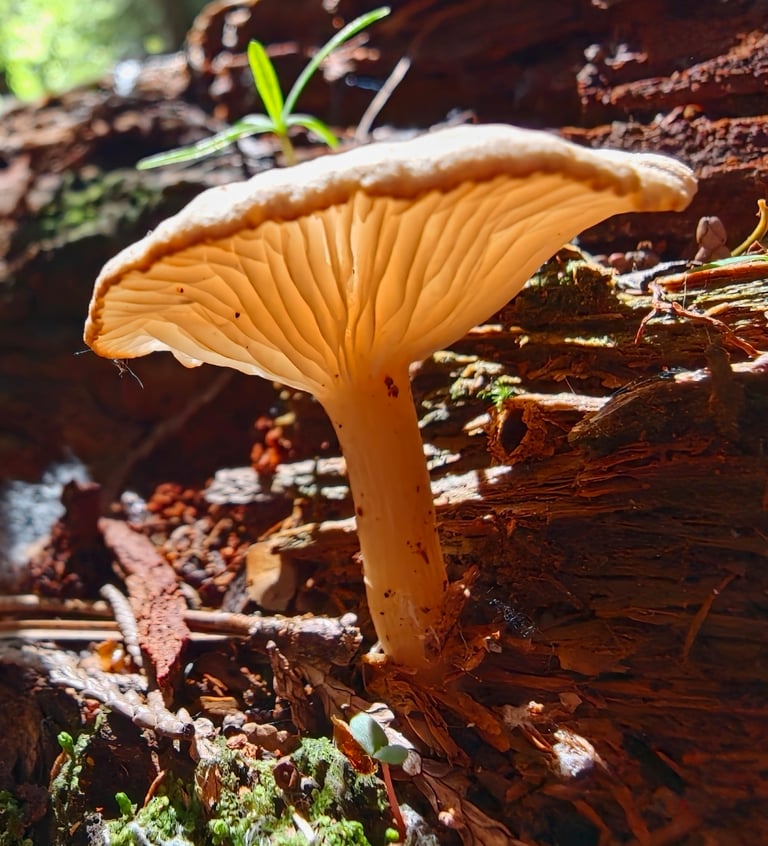
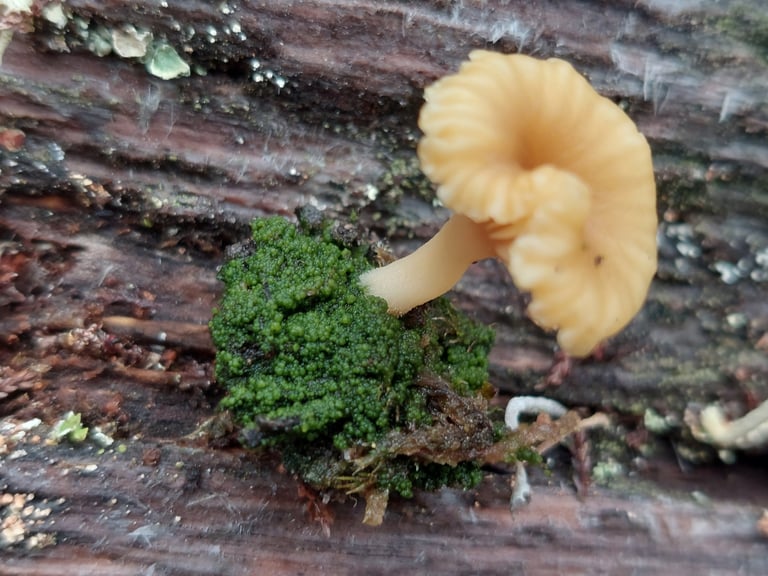
The most reliable identifying feature of Cuphophyllus flavipes is the yellow color at the base of an otherwise pale stem, set against an overall grayish fruiting body. The cap reaches up to 40 mm across, starting broadly conical before flattening or even becoming slightly depressed with age; its surface is smooth and slightly greasy when damp, colored grey to brownish grey.
The gills are waxy and thick, running down the stem (decurrent), and colored pale to dark grey. The stipe grows up to 60 mm tall, smooth, pale greyish to white along most of its length but flushed yellow near the base, and lacks a ring. The spore print is white, with smooth, ellipsoid spores measuring roughly 6 to 7.5 by 5 to 6 micrometers under a microscope.
Distribution and Habitat
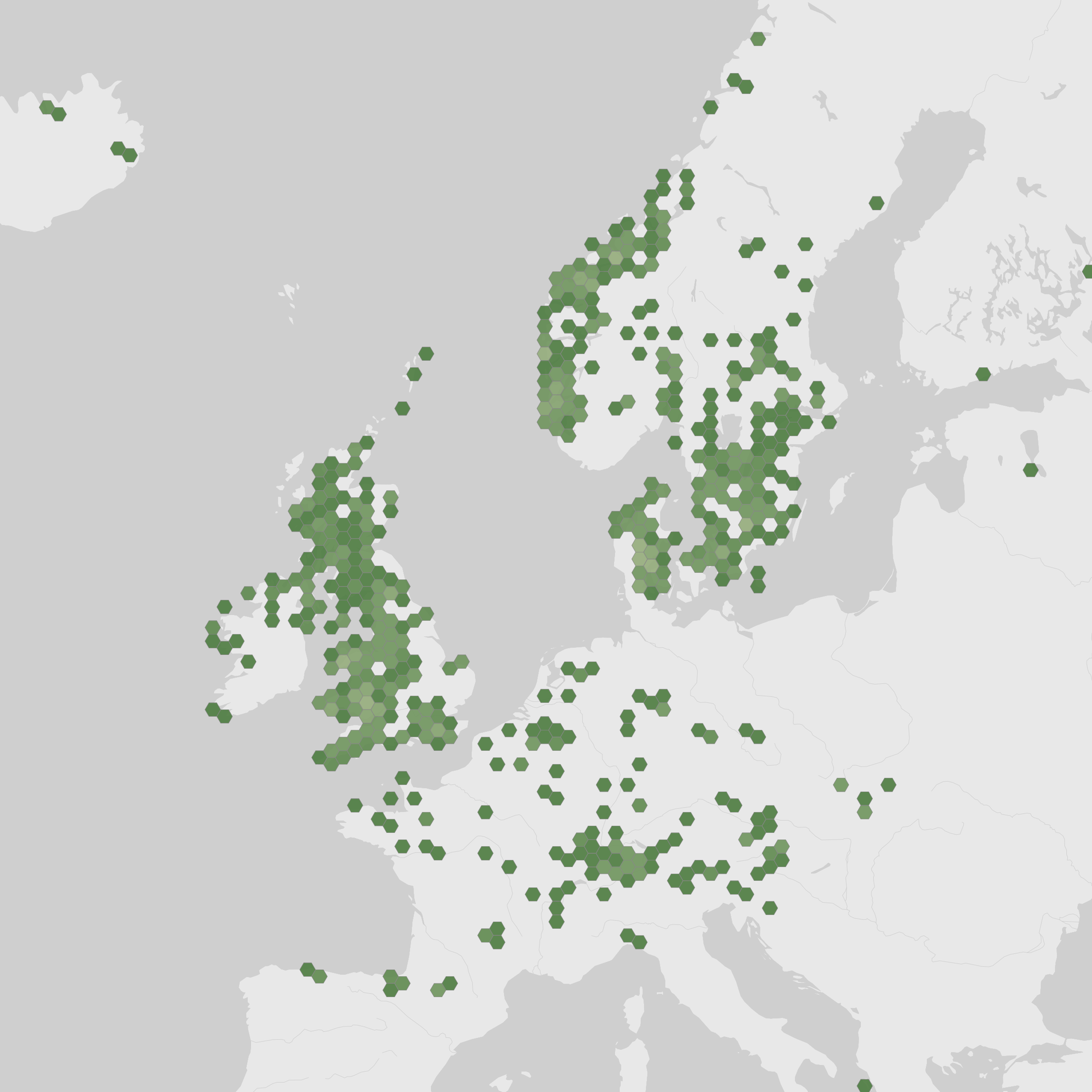
Cuphophyllus flavipes is widespread but uncommon across Europe, favoring old, agriculturally unimproved, short-sward grassland such as traditional pastures and lawns. This habitat preference places it among the group of European waxcaps that depend on grasslands untouched by modern fertilizers.
Recent research suggests waxcaps like this one are neither mycorrhizal nor saprotrophic, but may instead form associations with mosses, a relationship still being clarified.
Observation records show a strong seasonal concentration in late summer and autumn, with counts rising sharply from August through October before tapering off, consistent with typical waxcap fruiting patterns in grassland habitats.
Conservation and Threats
Cuphophyllus flavipes is listed as Vulnerable on the IUCN Red List of Threatened Species, a status driven by the loss of waxcap grasslands. These old, unimproved pastures are declining across Europe due to changing agricultural practices, including fertilizer use and the conversion of traditional grassland to more intensive farmland.
As this habitat disappears, so does the species' foothold, since it depends on grassland conditions that take decades to develop and cannot be easily recreated.
Fun Facts
- The genus name Cuphophyllus combines Greek roots meaning 'curved' and 'gills,' translating roughly to 'with curved gills.'
- Its former genus name, Hygrocybe, means 'watery head,' referring to the moist look of related grassland fungi.
- The species epithet flavipes literally means 'with a yellow foot,' a direct reference to the colored base of its stem.
Photos
Photographs from via iNaturalist, licensed under CC0 1.0., by ionafraser via iNaturalist, licensed under CC BY 4.0., by Mark Breaks via iNaturalist, licensed under CC BY 4.0., by David Callender via iNaturalist, licensed under CC BY 4.0., by Ben Deed via iNaturalist, licensed under CC BY 4.0., by Dave via iNaturalist, licensed under CC BY 4.0., by Tomos Hughes via iNaturalist, licensed under CC BY 4.0., by Patrick Bayan via iNaturalist, licensed under CC BY 4.0., and by betony13 via iNaturalist, licensed under CC BY 4.0., credited on each photo.
Ecology and classification
Habitat
Classification
- Phylum
- Basidiomycota
- Class
- Agaricomycetes
- Order
- Agaricales
- Family
- Hygrophoraceae
- Genus
- Cuphophyllus
- Species
- Cuphophyllus flavipes
Sources
- GBIF Species names and classification
- iNaturalist Photos
- Wikidata Common names and conservation status
- Wikipedia Summary extract