Few mushrooms lead a double life quite like Lichenomphalia umbellifera. Beneath its unassuming fruiting body lies a basidiolichen, a fungus that partners with unicellular algae of the genus Coccomyxa to form a lichenized thallus before ever producing a mushroom.
Classified in the family Hygrophoraceae within the phylum Basidiomycota, this species — also called the lichen agaric or green-pea mushroom lichen — belongs to the class Agaricomycetes and the order Agaricales. It ranges across the Northern Hemisphere, with a particular presence in Arctic regions.
What makes it worth a closer look is not size or color but biology: a small, easily overlooked mushroom that doubles as a living partnership between kingdoms.
Fruiting Body and Identification
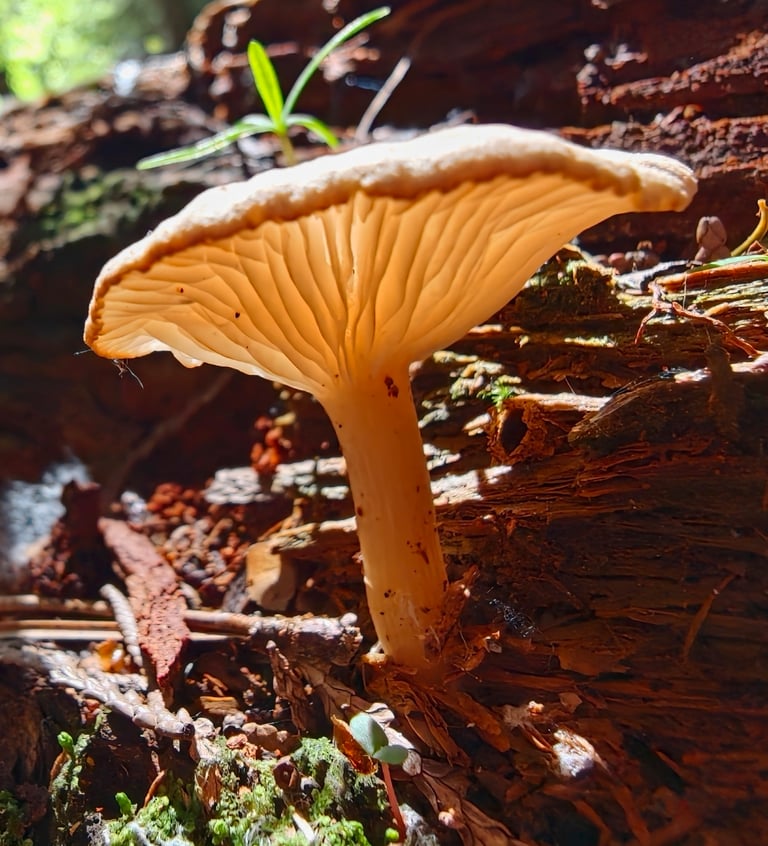
The most reliable identifying feature of Lichenomphalia umbellifera is its small, hygrophanous cap, which shifts in appearance as it dries and ranges from white to yellowish-tan. The cap reaches only up to 3 cm wide, giving the mushroom a delicate, easily missed presence on the substrates it colonizes.
The stalk stands 1 to 3 cm tall and just 1 to 3 mm wide, a proportion that keeps the whole fruiting body diminutive. Spores are white to yellowish and produce a white spore print, a detail useful for distinguishing it from similarly colored species.
Several mushrooms can be confused with L. umbellifera in the field. Lichenomphalia grisella is uncommon but has a distinctly brown cap rather than the white to yellowish-tan tones seen here. Other lookalikes include Chromosera cyanophylla, Chrysomphalina aurantiaca, Chrysomphalina chrysophylla, Contumyces rosellus, and Rickenella fibula, all of which share the small, omphalinoid shape typical of this group.
The species is regarded as nonpoisonous, though its tiny size gives it little culinary interest regardless of edibility.
Distribution and Habitat
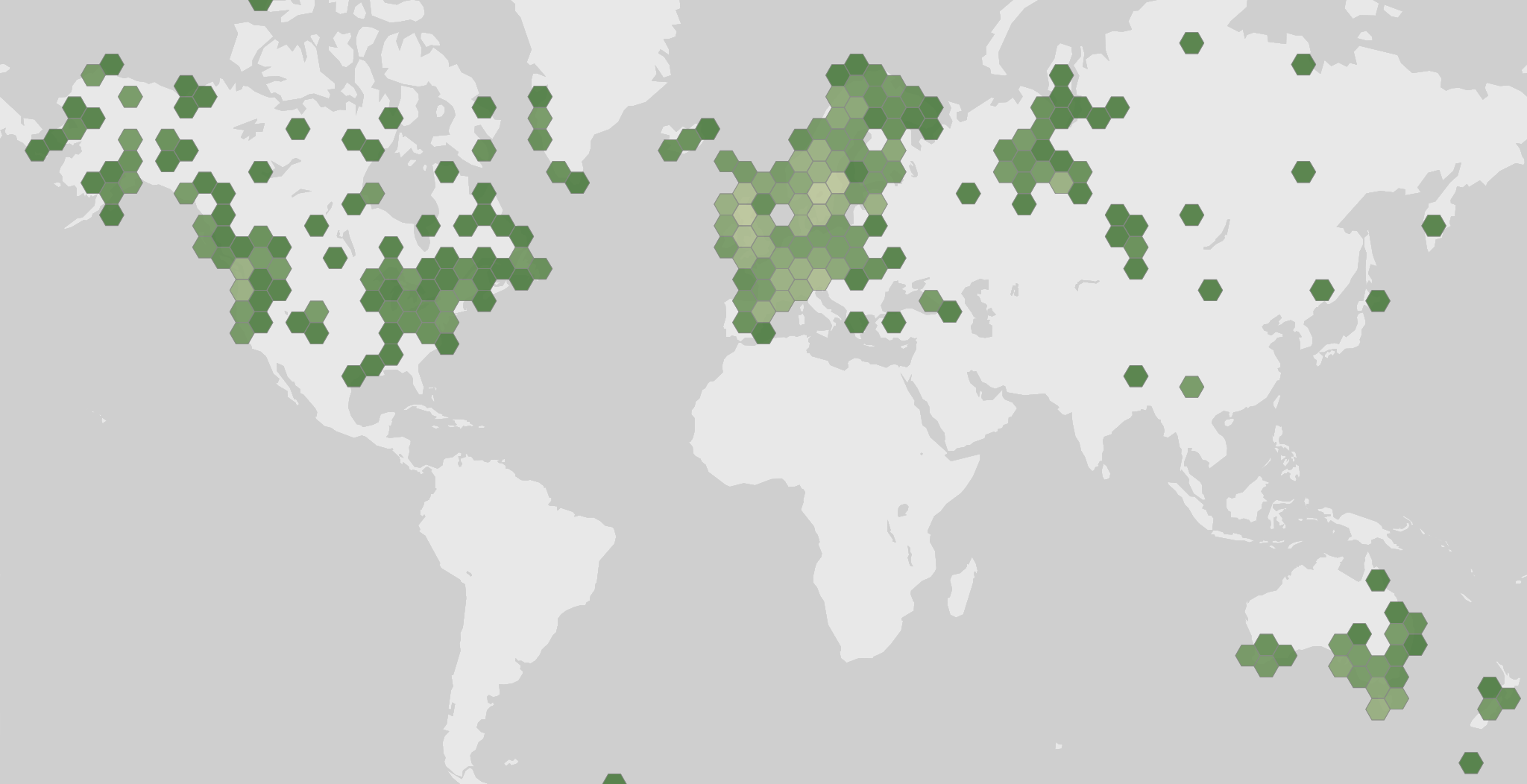
Lichenomphalia umbellifera occurs across the Northern Hemisphere, with a notable concentration in Arctic regions. In North America, it is common along the Pacific Northwest and extends northward from as far south as Santa Cruz, California.
It grows on damp soil and rotting wood, and unlike many fungi tied to a narrow fruiting window, it can be found throughout most of the year on suitable substrate.
Monthly observation records show a clear seasonal pattern, rising from a low of around 99–131 sightings in December and January to a peak of nearly 1,975 in August, before tapering off again through autumn. This pattern suggests the mushroom is most frequently observed, and likely most actively fruiting, during the warmer summer months, though these figures reflect presence observations rather than actual abundance or population size.
Fun Facts
- Carl Linnaeus first described this species in 1753 under the name Agaricus umbelliferus, long before its lichen partnership was understood.
- It was not transferred to the genus Lichenomphalia until 2002, reflecting how recently its dual fungal-algal identity was formally recognized.
- The species shows considerable phenotypic plasticity across its range, yet phylogenetic research has confirmed that these varied populations belong to the same species.
- Before scientists connected the nonlichenized mushroom fruitbodies to their lichenized thalli, botanists and lichenologists repeatedly named the asexual lichen form under several different genus names, including in Linnaeus's original 1753 description.
- Because of its subtle appearance and lack of culinary or toxic significance, Lichenomphalia umbellifera has never gathered the folklore or symbolic status attached to larger or more visually striking fungi.
Ecology
Habitat
- Forest
- Tundra