Despite its name, the small blue is barely blue at all. Males show only a light bluish suffusion at the base of their upperwings, and both sexes are otherwise dark brown, making this butterfly one of the least conspicuous members of its family.
A Palearctic species in the family Lycaenidae, it ranges across Europe and Asia into Siberia and the Russian Far East, and holds the title of the United Kingdom's smallest butterfly. Its IUCN status is Least Concern, but its colonial habits and dependence on a single host plant make it a species worth watching closely.
Identification and Appearance
The most reliable field mark is the combination of small size and dark brown upperwings speckled with scattered bright blue scales in males; females lack this blue speckling entirely. Wingspan ranges from 16 to 27 millimeters, with males tending toward the smaller end of that range.
Both sexes share a silvery underside patterned with black spots, a feature that helps distinguish the species even when the upperwing coloring is ambiguous. The male's bluish tint at the wing base echoes the coloring on the upper surface.
Cupido minimus is easily confused with the female Osiris blue, whose coloring closely resembles that of the male small blue, making underside spotting and size the more dependable clues for separating the two.
Distribution and Habitat
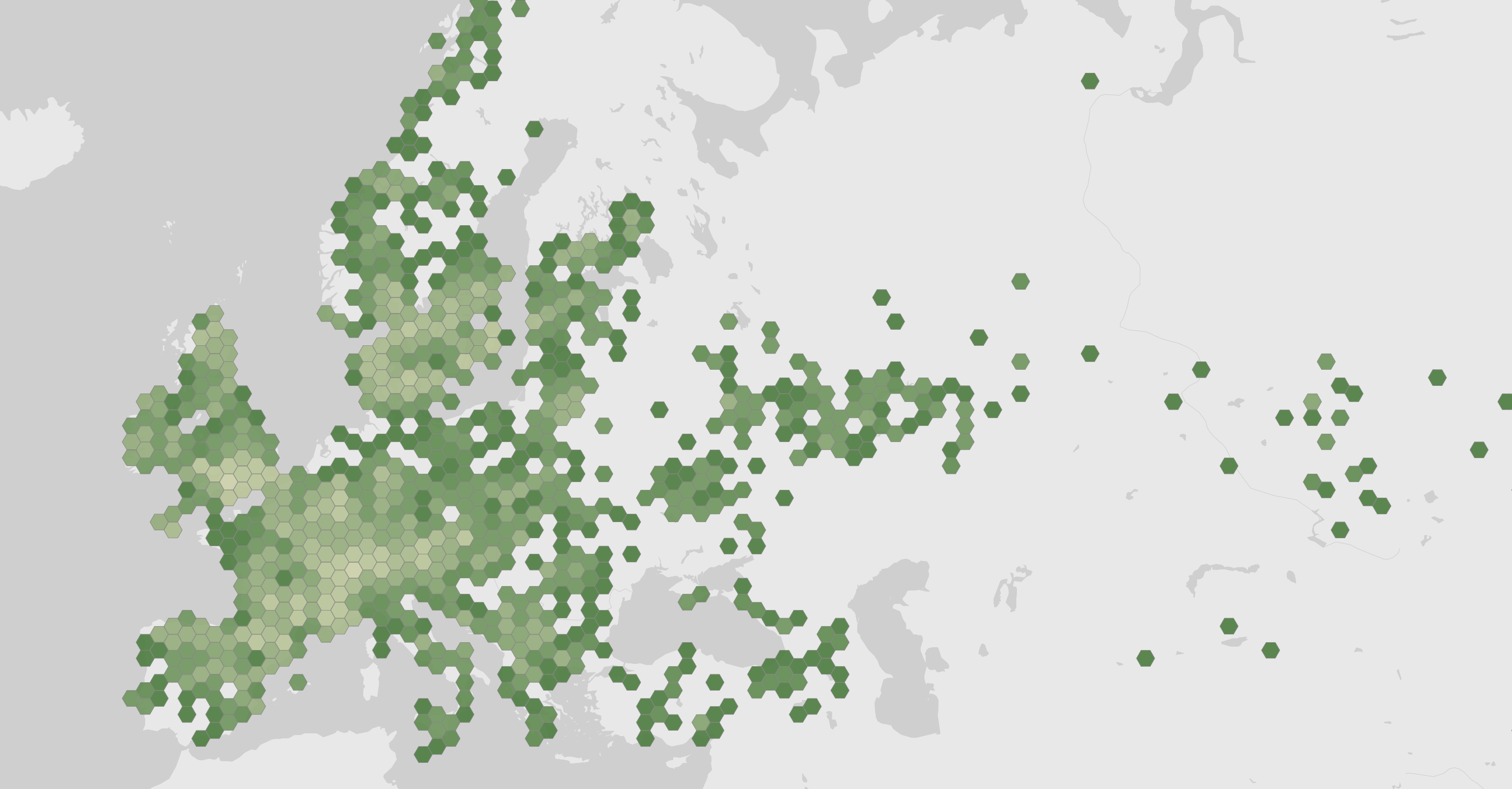
The small blue has a wide Palearctic range, occurring across Europe, Asia Minor, Transcaucasia, the Tian Shan, western, central and southern Siberia, the Russian Far East, Amur, Mongolia, Magadan and Kamchatka. Within the United Kingdom, where it is the smallest butterfly species, its distribution is patchy, with strongholds concentrated in the chalk and limestone grasslands of southern England, including the Cotswolds and Salisbury Plain.
Elsewhere in Great Britain and Ireland, colonies are scattered and often found along the coast, with isolated populations reaching into northern England and the far north of Scotland. This patchiness has made it a Priority Species for conservation in Northern Ireland and under the UK Biodiversity Action Plan.
The species favors calcareous grasslands, abandoned quarries, railway embankments, and woodland edges and clearings, habitats that share open, sparsely vegetated conditions suited to its host plant. Observation records peak sharply in the warmer months, consistent with adult flight activity concentrated in a narrow summer window rather than year-round presence.
Diet and Nutrition
In the United Kingdom, small blue caterpillars feed exclusively on kidney vetch, on which females also lay their eggs, tying the species' life cycle tightly to this single host plant. Elsewhere in its range, recorded larval food plants extend to several other legumes, including Oxytropis campestris, Astragalus alpinus, Lotus corniculatus, species of Medicago and Coronilla, and Anthyllis vulneraria.
Feeding strategies diverge between the sexes as adults. Females obtain all their nutrients from plants, while males supplement their diet by extracting salts and minerals from carrion, dung, and mud puddles, a behavior common among lycaenid butterflies seeking nutrients unavailable from nectar alone.
Reproduction and Life Cycle
Courtship begins with males perching on grass or low shrubs to wait for passing females, defending these chosen spots with notable territoriality against rival males. When a virgin female flies past, mating occurs without elaborate courtship display.
Once mated, females avoid further males by retreating into the grass out of sight, a behavior that reduces the disturbance and energy cost of repeated mating attempts.
Conservation and Threats
The small blue carries an IUCN status of Least Concern globally, but this masks a more precarious picture in parts of its range. In the United Kingdom, the species has lost much of its habitat, prompting its designation as a Priority Species for conservation in Northern Ireland and under the UK Biodiversity Action Plan.
It is also listed among the 41 species of principal importance under Schedule 5 of the 1981 Wildlife and Countryside Act and the 1985 Northern Ireland Wildlife Order, reflecting formal recognition of its conservation needs in Britain and Ireland despite its more secure standing elsewhere.
Cultural Significance
The genus name Cupido draws on the Roman god Cupid, the deity of desire and romantic love, often portrayed as the son of Venus and Mars and known in Greek tradition as Eros. Roman culture adapted the Greek Eros into Cupido, reshaping his stories and attributes to fit Roman values.
This mythological figure later found new life in medieval and Renaissance art, merging with Christian concepts of divine love and innocent joy, and giving rise to the winged infant putti that populated religious and mythological scenes alike. The butterfly's diminutive, easily overlooked form stands in a naming tradition that links it, through its genus, to this long-running figure of love and desire in Western art and popular culture.
Fun Facts
- The small blue is the smallest butterfly species found in the United Kingdom.
- Its genus name, Cupido, references the Roman god of love, though the butterfly itself shows little of the vivid blue its common name suggests.
- Colonies can number up to several hundred individuals, concentrated tightly around patches of the host plant.
Photos
Photographs from via iNaturalist, licensed under CC0 1.0., by Edmundas Greimas via iNaturalist, licensed under CC BY 4.0., by James Heal via iNaturalist, licensed under CC BY 4.0., by Barry Stewart via iNaturalist, licensed under CC BY 4.0., by Oleg Kosterin via iNaturalist, licensed under CC BY 4.0., by relew via iNaturalist, licensed under CC BY 4.0., by Sylvain Eichhorn via iNaturalist, licensed under CC BY 4.0., and by Claude Kolwelter via iNaturalist, licensed under CC BY 4.0., credited on each photo.
Ecology and classification
Classification
- Phylum
- Arthropoda
- Class
- Insecta
- Order
- Lepidoptera
- Family
- Lycaenidae
- Genus
- Cupido
- Species
- Cupido minimus
Sources
- GBIF Species names and classification
- iNaturalist Photos
- Wikidata Common names and conservation status
- Wikipedia Summary extract
- GloBI What it eats, what eats it, parasites and pollinators
- trophiCH
- Schwarz et al. 2021
- EuPPollNet