The small copper is known for its notoriously aggressive males, who defend territory against intruders with a fierceness unusual among small butterflies. Also called the American copper or common copper, Lycaena phlaeas belongs to the Lycaenidae, the gossamer-winged butterfly family.
This butterfly is one of the most widespread in the world, occurring across Europe, Asia, North America, and parts of North Africa into Ethiopia. It faces no special conservation concern, remaining stable across its range, which makes it a reliable and rewarding sight for anyone exploring open, sunny ground almost anywhere in the Northern Hemisphere.
Identification and Appearance
The bright orange upperside of the forewings, bordered in dark brown and marked with eight or nine black spots, is the clearest way to recognize this species. The hindwings are dark with a narrow orange border.
Some females carry an extra row of blue spots inside that orange border, a form known as caeruleopunctata, distinguishing them from typical individuals.
The undersides are paler versions of the same pattern: the forewing spots are outlined in yellow against a pale brownish-grey ground, while the hindwings share that same grey-brown tone with small black dots and a narrow orange edge.
Caterpillars are usually green, though some individuals show a purple stripe running down the back and along each side.
Distribution and Habitat
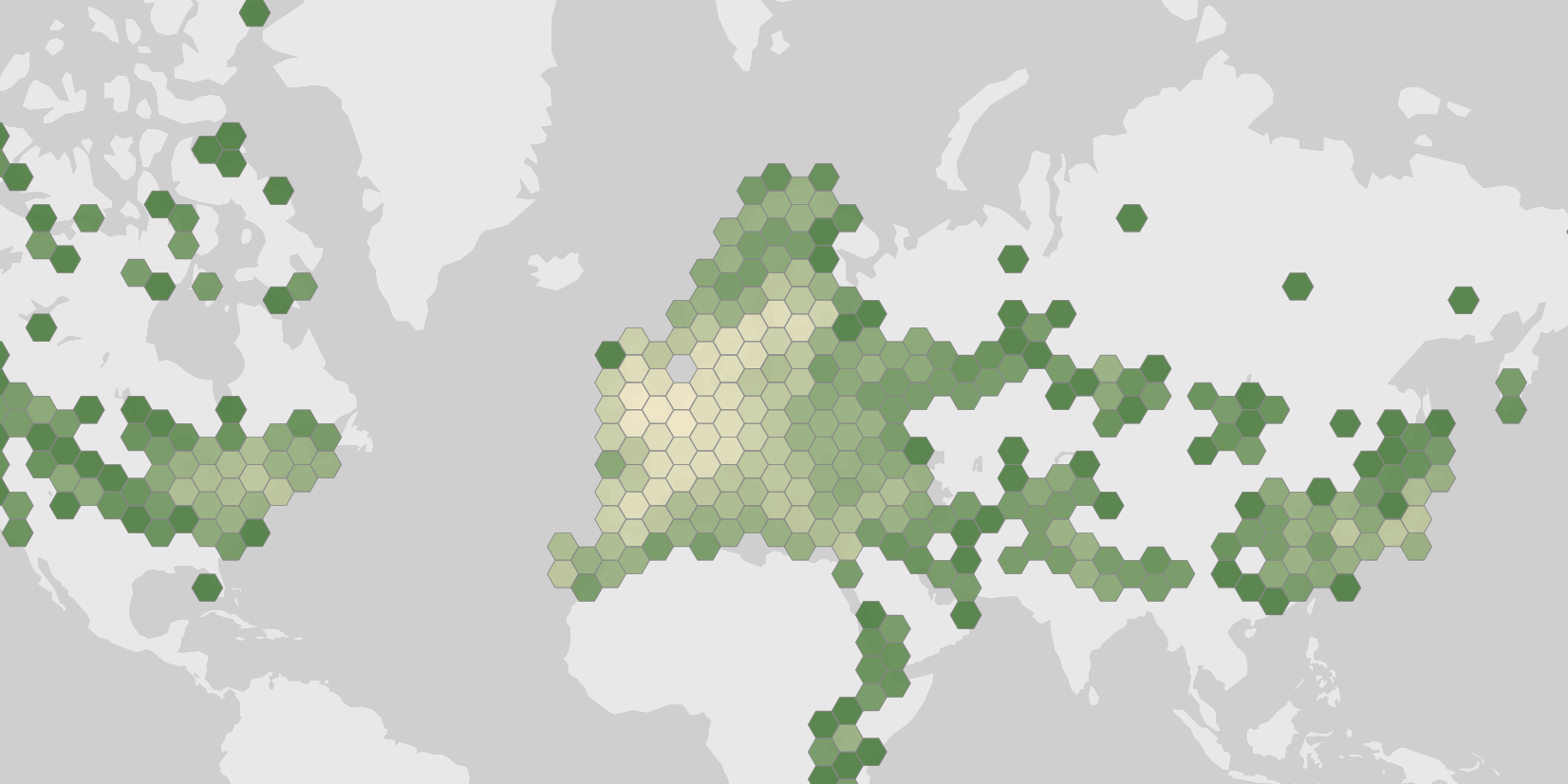
This is a holarctic species, widespread and common across Europe, Asia, and North America, with populations also reaching North Africa and south to Ethiopia. In Britain it can be found almost anywhere across southern and central England and Wales, though rarely in large numbers, and its distribution grows patchier toward northern England, Scotland, and Ireland.
It occupies an unusually broad range of habitats, from moist mountain meadows above the tree line to chalk downlands, heathland, woodland clearings, churchyards, and waste ground in cities. In North America it turns up in disturbed areas such as fields, sandy prairies, and powerlines, as well as rocky sites in the Rockies and alpine fell-fields in the Sierra Nevada and Arctic tundra.
Observation records through the year show activity building sharply from spring, peaking around mid-summer, and tapering off by late autumn, consistent with its warm-season flight period rather than any measure of how many individuals exist.
Behavior and Lifestyle
Small coppers are active from early morning until dusk, with a flight pattern that is diurnal and extends into crepuscular hours. They frequently pause to sun themselves, resting with wings spread on tall flowers such as daisies, yarrow, and Queen Anne's lace.
Males are notoriously aggressive in defending territory, chasing off rivals and other insects from favored perches. This territorial habit, combined with their habit of basking in open sunny spots, makes them conspicuous despite their small size.
Communication
Communication in this species relies mainly on visual signals, likely including wing pattern and posture, along with touch used during courtship encounters. Chemical cues also play a role in how individuals perceive their surroundings and potential mates.
Diet and Nutrition
Adult small coppers feed on nectar from a wide range of flowering plants, including common buttercup, clovers, yarrow, oxeye daisy, butterflyweed, alfalfa, blazing star, wild strawberry, and mountain mint. Dandelion and various asters also feature among recorded nectar sources.
The larvae are specialist feeders on docks (Rumex), including sheep sorrel, curly dock, and Oxyria digyna, with European populations also using Polygonum species associated with Rumex alpestris. This tie to docks and sorrels shapes where females lay their eggs and where caterpillars can develop.
Reproduction and Life Cycle
Courtship begins with males perching on the tops of leaves and flowers in low spots, waiting for females to pass by; alpine males instead stake out nooks at the base of rocky slopes. Males identify females by their wing pattern before pairing.
Mating occurs between early spring and fall, and females lay eggs after fertilization, which is internal. In the northern parts of its range this species produces a single brood each year, but in southern areas it can manage up to three broods across the flight season.
There is no parental care after eggs are laid; the species is iteroparous, breeding repeatedly across its life within the seasonal flight window that runs from early spring into fall.
Population and Ecological Role
Small coppers act as minor pollinators while foraging on nectar, though their main ecological role lies in supporting other species as prey. A wide range of birds are recorded preying on them, spanning groups such as warblers, pipits, larks, and swifts, reflecting their place as a food source within diverse habitats they share with these predators.
Conservation and Threats
The small copper carries no special conservation status: it is not listed under the IUCN Red List, the US Federal List, CITES, or Michigan's state list, and is considered stable across its range. This wide stability likely reflects its tolerance of many habitat types, from natural meadows to disturbed and urban ground.
Cultural Significance
Butterfly watchers value the small copper for its bright colors and territorial antics, and as part of the broader community of butterfly species it contributes to ecotourism that draws visitors and their spending to natural areas.
Fun Facts
- Some females display an extra row of blue spots inside the orange border of their wings, a form known as caeruleopunctata.
- Alpine males stake out territory in nooks at the base of rocky slopes rather than on open flowers.
- The species can produce up to three broods a year in the southern parts of its range, compared to a single brood further north.
Photos
Photographs from via iNaturalist, licensed under CC0 1.0., by Martin Wood-Weatherill via iNaturalist, licensed under CC BY 4.0., by Barry Stewart via iNaturalist, licensed under CC BY 4.0., by Stephanie J Morgan via iNaturalist, licensed under CC BY 4.0., by mami_t_t via iNaturalist, licensed under CC BY 4.0., by John Lyden via iNaturalist, licensed under CC BY 4.0., by Stuart Fraser via iNaturalist, licensed under CC BY 4.0., by Jon Mortin via iNaturalist, licensed under CC BY 4.0., by Guillaume Petit via iNaturalist, licensed under CC BY 4.0., by Andrzej Chruślak via iNaturalist, licensed under CC BY 4.0., by Dimitǎr Boevski via iNaturalist, licensed under CC BY 4.0., and by Annett Gallwas via iNaturalist, licensed under CC BY 4.0., credited on each photo.
Ecology and classification
Behavior
- Territorial
- Aggressive
- Diurnal
- Crepuscular
Diet
- Herbivore
Classification
- Phylum
- Arthropoda
- Class
- Insecta
- Order
- Lepidoptera
- Family
- Lycaenidae
- Genus
- Lycaena
- Species
- Lycaena phlaeas
Sources
- GBIF Species names and classification
- iNaturalist Photos
- Wikidata Common names and conservation status
- Wikipedia Summary extract
- Encyclopedia of Life Habitat, diet and behavior traits
- Animal Diversity Web Animal habitat, behavior and diet
- GloBI What it eats, what eats it, parasites and pollinators
- trophiCH
- DoPI
- Schwarz et al. 2021
- EuPPollNet