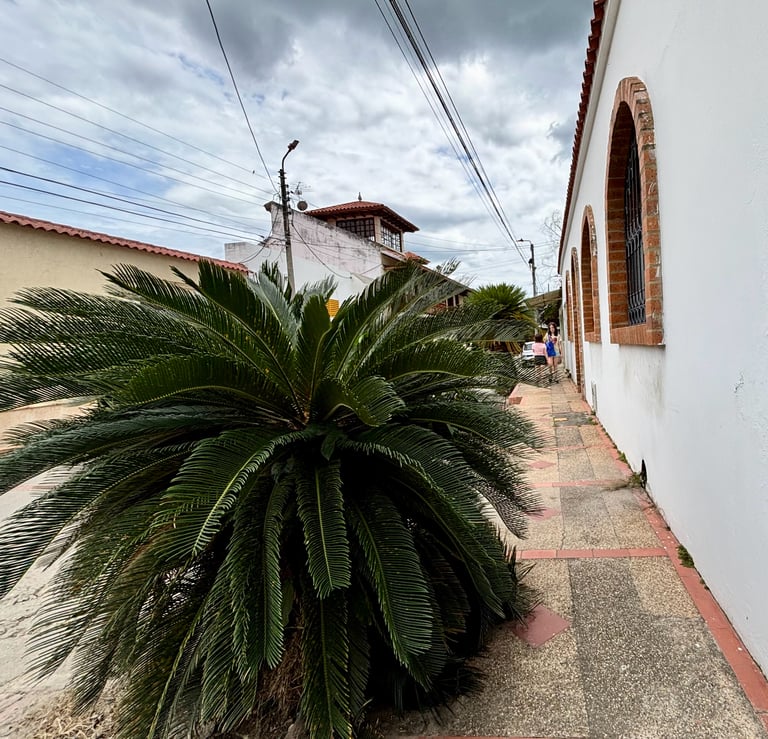
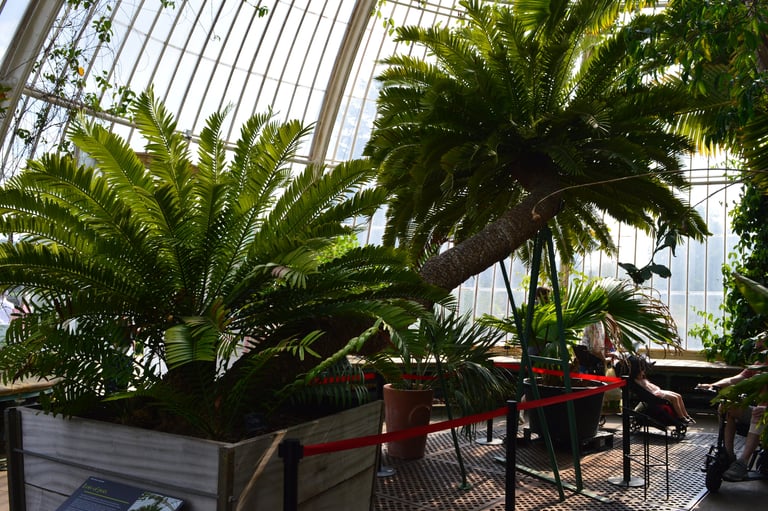
Cycas circinalis, the queen sago, holds a singular distinction: it is the only gymnosperm species found among native Sri Lankan flora, making it a botanical outlier on an island otherwise dominated by flowering plants.
This cycad is known from the wild only in southern India, where it grows as part of the region's native plant communities. Its rarity in the wild, paired with its wide cultivation elsewhere, gives it a curious double life: scarce in its natural range but a familiar sight in gardens and ceremonies far beyond it.
Identification and Appearance
Cycas circinalis is recognized above all as a cycad, a woody seed plant that predates flowering plants in evolutionary terms and is often mistaken for a palm or fern at a glance despite belonging to neither group.
As the only gymnosperm native to Sri Lanka's flora, it stands apart from every other native seed plant on the island, a fact that alone helps confirm identification in that setting. Beyond this distinction, detailed field marks such as precise size, color, and sex differences are not well documented in the available record for this species.
Distribution and Habitat
Cycas circinalis is found growing in fairly dense shrub-woodlands in hilly, upland terrain, showing that it favors elevated, semi-open woody vegetation over open grassland or deep forest.
The species also proves adaptable in habitat choice, growing equally well on rocky hill outcrops inland and on coastal habitats at sea level. This flexibility, spanning from hillside scrub to shoreline, suggests a tolerance for varied soil and moisture conditions rather than a narrow ecological niche.
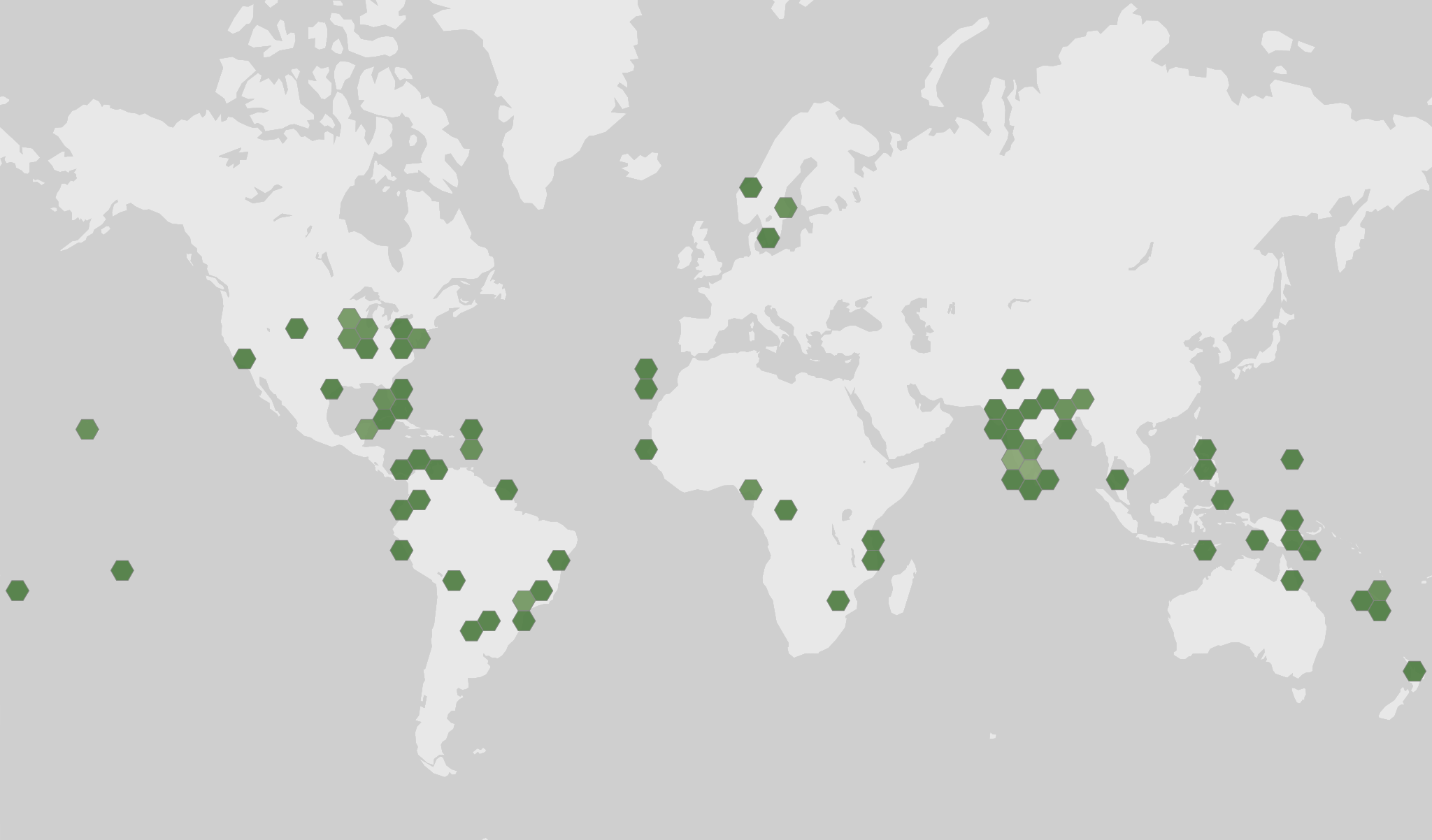
Monthly observation records show counts ranging from a low of 37 to a high of 78 sightings, with the clearest peak in June and July. This pattern may reflect a period of greater visibility or field activity during those months rather than any change in the plant's actual abundance, since these figures represent presence observations only, not population size or a complete picture of its range.
Uses and Human Relationships
Cycas circinalis plays a visible role in South Indian ceremonial life, where potted specimens are used to decorate temples, churches, and wedding pandals, marking auspicious events tied to the Hindu calendar.
The species is also valued in traditional medicine, where it has been used to treat ailments including skin diseases and rheumatism. Its seeds are counted among the edible cycad seeds gathered from species such as the queen sago and the Australian nut palm, and its pithy stem, like that of related cycads, has served as a source of sago starch.
Beyond its native range, the plant is widely cultivated in Hawaii, prized both for its ornamental presence in landscaping and interior design and for use as cut foliage.
Fun Facts
- Cycas circinalis was once thought to be linked to lytico-bodig, a degenerative disease recorded on Guam, but the Guam cycad responsible was later reclassified in 1994 as a distinct species, Cycas micronesica.
- Leaflets of Cycas circinalis contain biflavonoids, plant compounds noted in chemical studies of the species.
- In South India, this cycad is traded as a potted plant specifically for use in temple, church, and wedding decorations tied to auspicious dates on the Hindu calendar.
Ecology
Habitat
- Coastal
- Woodland
- Shrubland
- Mountain