A single seed of Cycas revoluta carries enough of the toxin cycasin to cause fatal liver damage, yet this same plant sits in office lobbies, temple courtyards, and botanical gardens across the world. It is a gymnosperm in the family Cycadaceae, native only to southern Japan, including the Ryukyu Islands, where it grows in coastal thickets and sparse hillside forests. The IUCN lists it as Least Concern, a status that says nothing about how slow and deliberate its life actually is.
Often mistaken for a palm because of its feathery crown and stout trunk, Cycas revoluta belongs to a far older lineage of plants that predates flowering plants entirely. That mix of ancient biology, worldwide ornamental popularity, and hidden toxicity makes it one of the more paradoxical plants found in gardens today.
Identification and Appearance
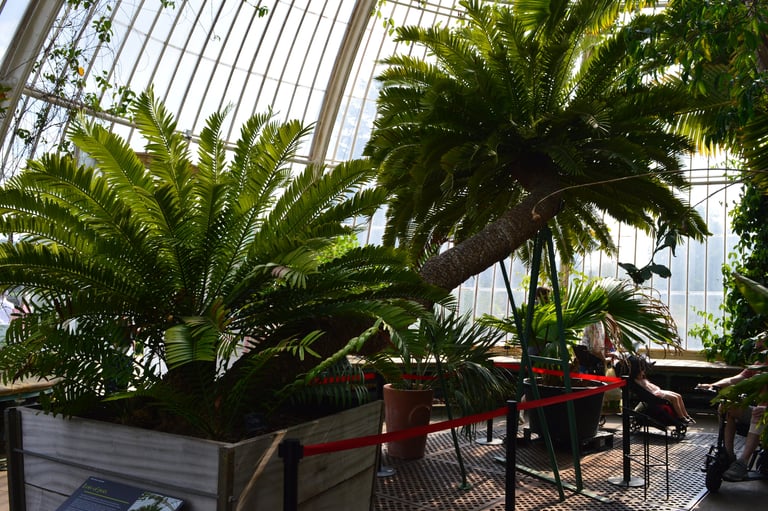
The single most reliable field mark is the trunk itself: thick, shaggy, and wrapped in a coat of persistent brown leaf-base fibers, unlike the smooth or ringed trunks of true palms. This trunk is usually about 20 centimeters in diameter, though it can grow wider, and stays low or subterranean in young plants before rising above ground with age. Given enough time, it can reach 6-7 meters in height, and the largest known cultivated specimen, at Ryugeji Temple in Shimizu, Japan, stands 8 meters tall and 1.6 meters thick. Trunks can branch repeatedly, producing several separate crowns of leaves on one plant.
The leaves are deep, semiglossy green and measure 50-150 centimeters long once the plant reaches reproductive age, arranged into a feather-like rosette up to 1 meter across. Individual leaflets are crowded and stiff, 8-18 centimeters long, with edges so strongly recurved they appear rolled under, a trait known as revolute. The lowest leaflets near the base taper into spine-like points, and the 6-10 centimeter petioles bear small protective barbs.
Below ground, the roots form distinctive coralloid clusters that host a symbiotic relationship with the cyanobacterium Anabaena, allowing the plant to fix its own nitrogen; tannin-rich cells on either side of this algal layer help keep the association in check.
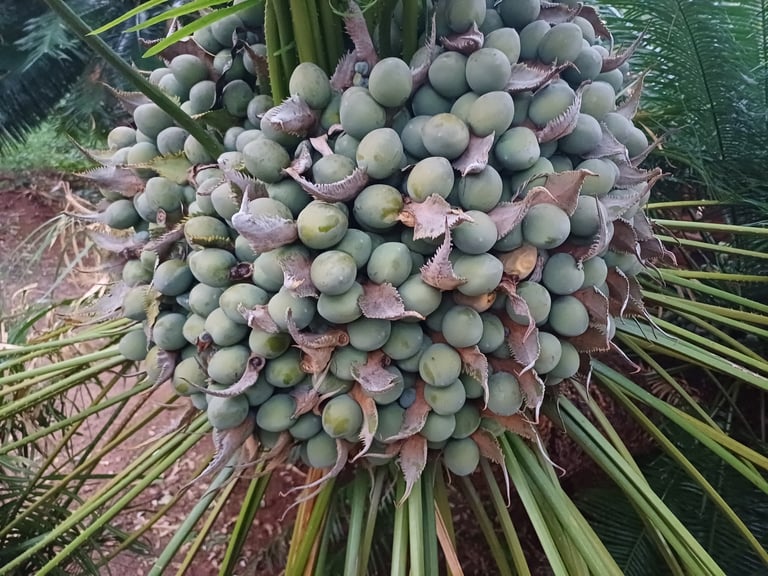
Like all cycads, Cycas revoluta is dioecious, meaning individual plants are either male or female. Males produce upright pollen cones called strobili, while females bear clustered megasporophylls instead of a true cone. Pollination happens naturally through insects, though growers sometimes pollinate plants by hand.
Distribution and Habitat
Cycas revoluta is native to southern Japan, including the Ryukyu Islands, where it grows at elevations of roughly 100-500 meters. On the islands it favors thickets on hillsides, while on the mainland it occurs in sparser forest settings, always rooted in well-drained ground.
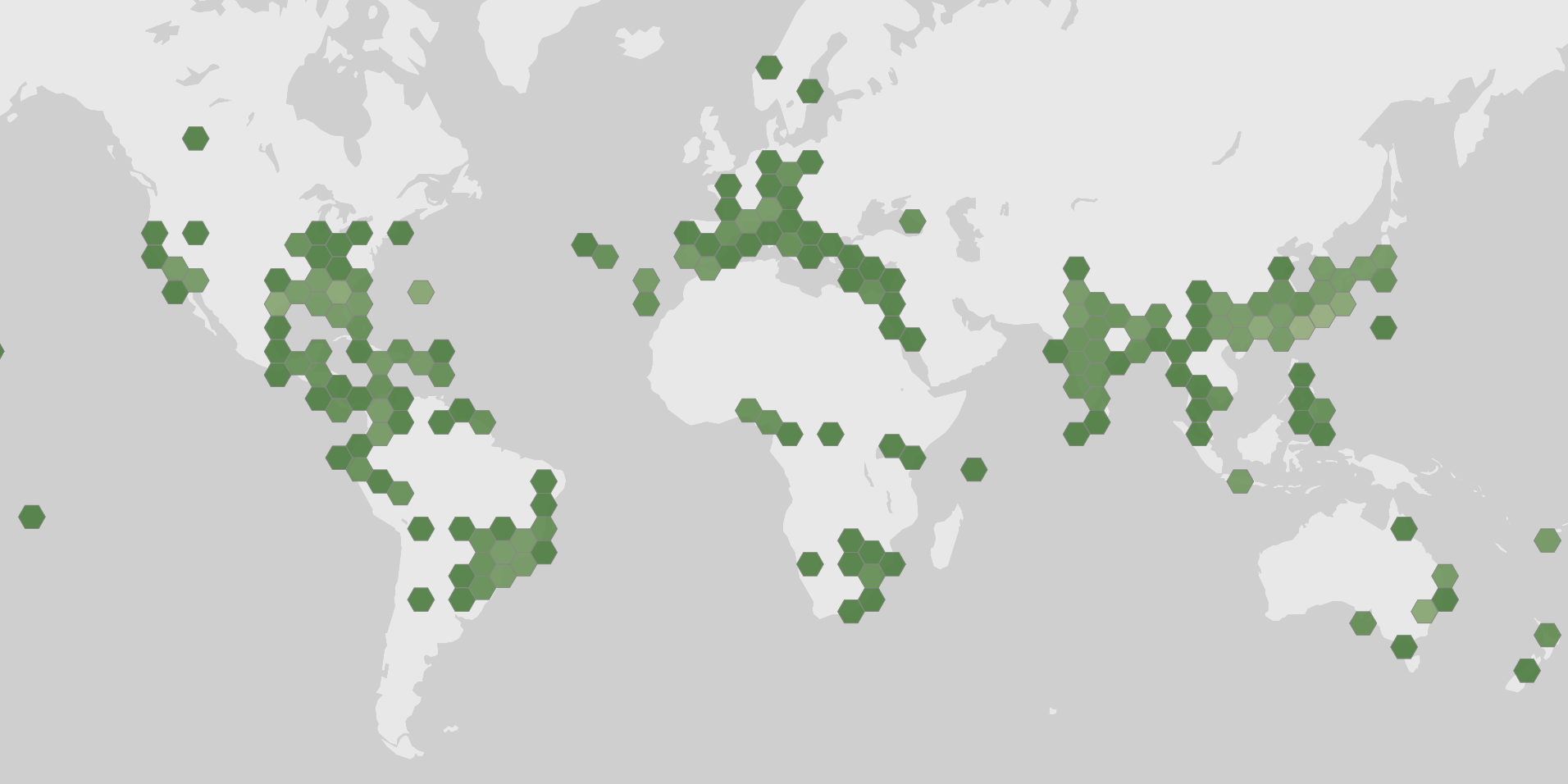
Beyond its native range, the species has been carried far and wide as an ornamental, now grown outdoors in warm temperate and subtropical regions worldwide or under glass in colder climates, and propagated vegetatively by removing basal offsets called bulbils.
Monthly observation records show a pronounced spike of 663 sightings in one month against a baseline closer to 115-180 in the others. Because these figures are presence observations rather than measures of population size or abundance, the spike likely reflects patterns in when and where people record the plant rather than any true seasonal absence, since Cycas revoluta is evergreen and visible year-round.
Uses and Human Relationships
Cultivated from seed or from basal offsets, Cycas revoluta is the most popular cycad in horticulture, appearing in botanical gardens on nearly every continent and widely used as a landscape and bonsai plant. It has held the Royal Horticultural Society's Award of Garden Merit since being confirmed in 2017, and growers value it for tolerating mild cold as long as the soil stays dry, though frost below -10°C can damage it; in temperate climates it often drops its leaves in winter and flushes new growth by spring. Its popularity has also made it a target for the scale insect Aulacaspis yasumatsui, which can destroy an untreated plant.
The starchy pith of the trunk has long been processed into sago, extracted by cutting and grinding the pith, then washing the resulting flour repeatedly to leach out natural toxins before drying and cooking it into a starch similar to palm sago. The seeds, however, are never safe to eat: they hold the highest concentration of cycasin, a toxin that can survive even thorough washing and has been linked to serious long-term illness.
Fun Facts
- In Feng Shui traditions, the sago cycad is considered an auspicious plant, associated with the wood element and the eastern direction, believed to encourage growth, resilience, and family harmony.
- In some cultural traditions the plant is called the "iron tree," and its flowering is said to symbolize tenacity, perseverance, and patience, a nod to how rarely and slowly it produces its reproductive structures.
- Cycas revoluta has a long history of ethnobotanical use in its native Japan, predating its modern status as a global ornamental favorite.
Conservation status
- LC
- NT
- VU
- EN
- CR
Least Concern
Ecology
Habitat
- Forest
- Shrubland
- Mountain
Growth habit
- Tree