Every Encephalartos woodii alive today, roughly 500 plants scattered across botanical gardens and private collections worldwide, is a genetically identical clone of a single male plant. No female has ever been found, which means this cycad cannot reproduce on its own and has been formally extinct in the wild for decades.
A member of the family Zamiaceae, Wood's cycad is endemic to the oNgoye Forest of KwaZulu-Natal, South Africa, and carries the IUCN status of Extinct in the Wild. It is named for John Medley Wood, curator of the Durban Botanic Garden, who discovered it in 1895. Its story, part botanical mystery and part conservation cautionary tale, has made it one of the most talked-about rare plants in the world.
Identification and Appearance
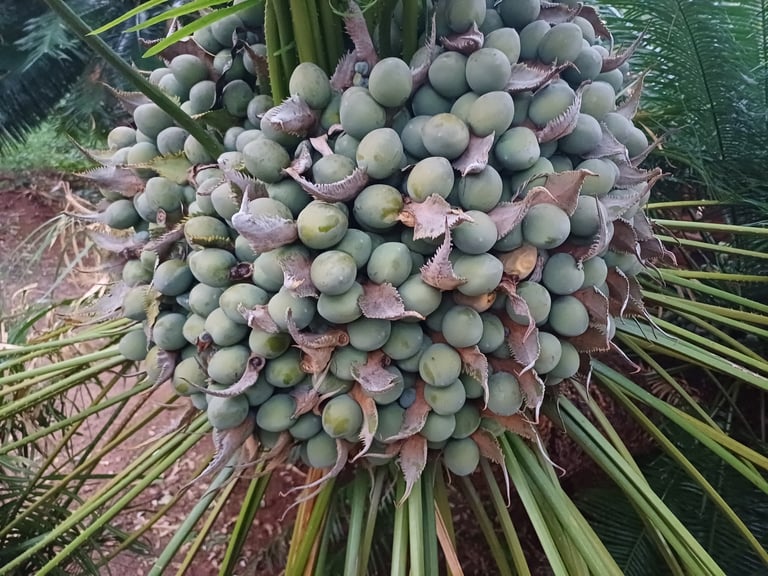
The most useful field mark is the male cone: cylindrical, vivid yellow-orange, and typically 20 to 40 centimeters long, though exceptional cones can reach 120 centimeters. A single plant may carry six to eight of these cones at once, each 15 to 25 centimeters in diameter.
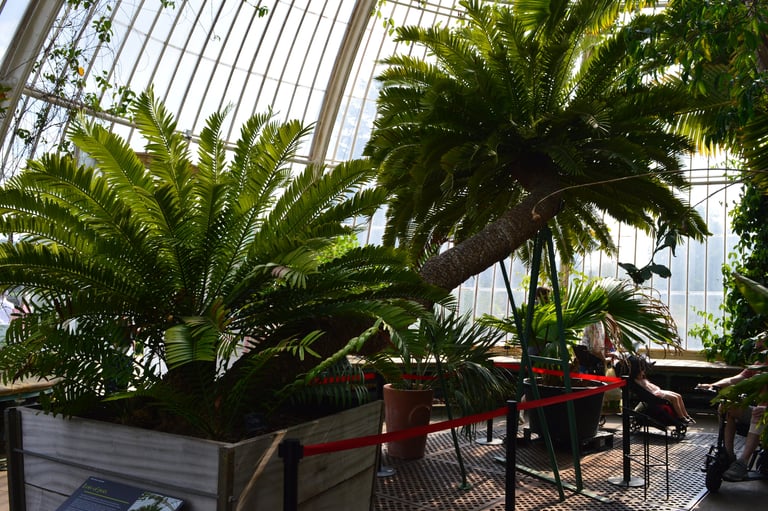
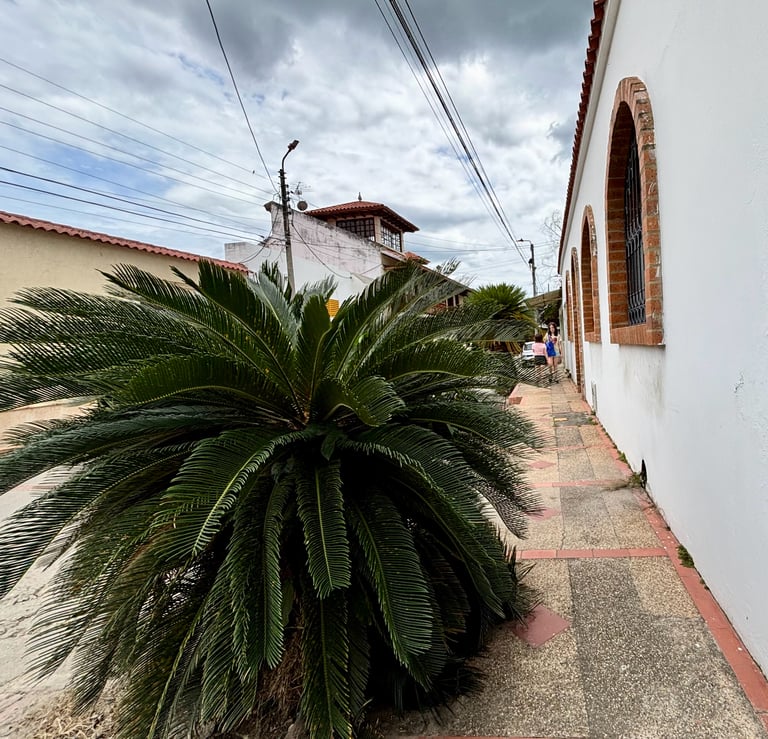
Encephalartos woodii grows palm-like, reaching up to 6 meters in height with a trunk 30 to 50 centimeters in diameter, thickest at the base. The trunk is topped by a dense crown of 50 to 150 leaves, each 150 to 250 centimeters long and keeled, glossy, and dark green.
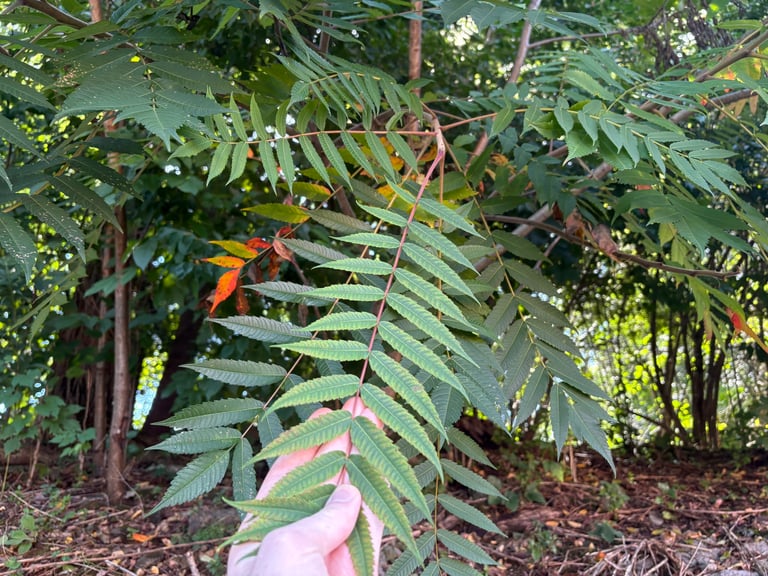
Each leaf carries 70 to 150 leaflets that are falcate, or sickle-shaped, measuring 13 to 15 centimeters long and 20 to 30 millimeters wide. The overall effect is a strongly architectural, symmetrical crown atop a stout, patterned trunk.
The species is dioecious, meaning male and female cones should occur on separate plants, but no female plant has ever been documented. As a result, every known individual is male, and there are no sex-based or seasonal color variations to distinguish since only one form exists in cultivation.
Distribution and Habitat
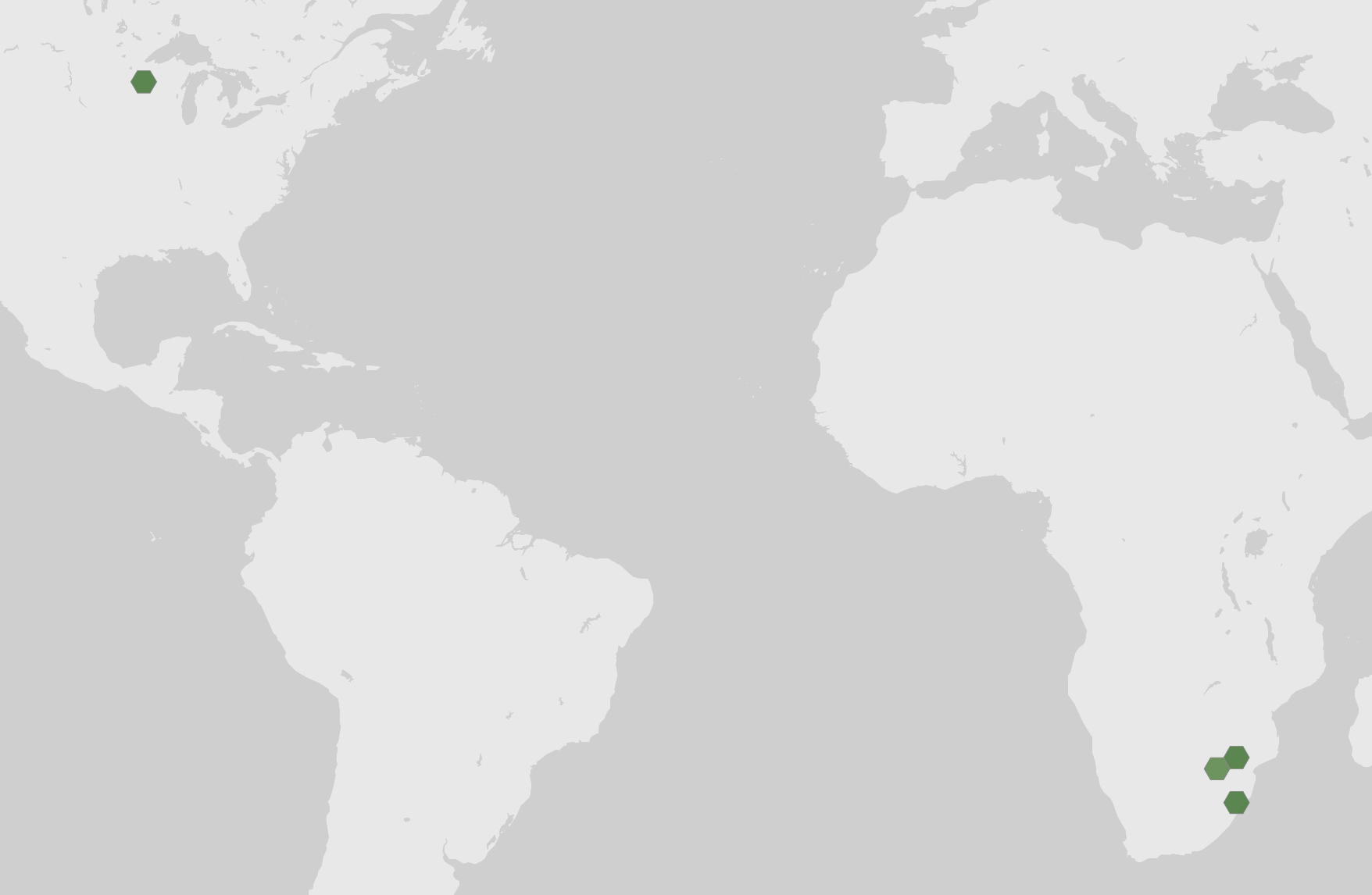
Encephalartos woodii is endemic to a single known site: the fringes of the oNgoye Forest in KwaZulu-Natal, South Africa, on a steep, south-facing slope where annual rainfall runs between 750 and 1,000 millimeters and summers are hot with mild winters. Despite repeated searches of the oNgoye-Mtunzini area, no second wild population was ever located.
The original cluster of four stems, found by Wood in 1895, was progressively removed over the following decades. A basal offset went to Kew Gardens in 1899, three offsets went to Durban Botanic Gardens in 1903, and the last remaining wild trunk was removed to Pretoria in 1916, reportedly dying there in 1964. From that point, the species existed only in cultivation.
Today descendants grow in botanical collections across multiple continents, including Durban Botanic Gardens and Kirstenbosch in South Africa, Kew Gardens and Glasnevin in Europe, Hortus Botanicus in Amsterdam, Orto Botanico di Napoli in Italy, and in the United States at Longwood Gardens in Pennsylvania and Lotusland in California. The species is noted as relatively fast-growing and vigorous for an Encephalartos in cultivation.
Monthly observation records show scattered counts through the year with modest peaks in April and October, but since every surviving plant is cultivated, these records reflect institutional and garden documentation rather than any natural seasonal pattern or wild range.
Reproduction and Life Cycle
Because no female Encephalartos woodii has ever been found, the species cannot reproduce sexually in the traditional sense, and every plant in existence has been propagated from basal offsets, or suckers, that grow rapidly from the original clone.
Botanists have explored fertile hybridization with the related Encephalartos natalensis as a workaround, using a backcrossing strategy: crossing hybrid offspring repeatedly with E. woodii pollen over several generations to produce female plants that increasingly resemble a hypothetical female E. woodii.
However, genetic analysis of chloroplast DNA in first-generation hybrids showed that all chloroplasts are inherited from the female E. natalensis parent. This means that no matter how many generations of backcrossing occur, the resulting plants would always carry E. natalensis chloroplast DNA and could never be considered a genetically pure E. woodii.
Uses and Human Relationships
Encephalartos woodii has become a cultural symbol of loneliness and uniqueness, referenced in various media because of its extraordinary status as a species reduced to clones of one male plant. Its story, rather than any practical product, is what has captured public imagination.
Beyond its symbolic weight, the plant's role today is largely horticultural and scientific: it is grown and displayed in botanical gardens and specialist collections around the world, valued for its rarity, its striking form, and the ongoing curiosity surrounding its unresolved reproductive fate.
Conservation and Threats
Encephalartos woodii is classified as Extinct in the Wild, meaning no populations survive outside of cultivation. The original wild cluster of four stems was entirely removed by 1916, and despite numerous follow-up excursions to the oNgoye-Mtunzini area, no other individual, and critically no female, has ever been rediscovered.
The defining threat to this species is not habitat loss in the ongoing sense but the historical, irreversible removal of every wild stem for cultivation and study, combined with the total absence of a known female to enable natural reproduction. With no wild population left, there is no population trend to track; the species persists only as approximately 500 cloned individuals maintained in gardens and collections.
Legal protections are in place at both national and international levels. In South Africa, permits from Nature Conservation authorities are required to move, sell, buy, cultivate, or even own adult specimens of this protected flora. Internationally, all species and hybrids of Encephalartos are listed on CITES Appendix I, requiring export and import permits for any movement of plants, cones, pollen, or seed across borders, even for artificially propagated material.
Conservation status
- EW
Extinct in the Wild
Fun Facts
- John Medley Wood, who discovered the species in 1895, reportedly described it as "the handsomest of all" Encephalartos species.
- The specimen sent to Kew Gardens in 1899 lived in the Palm House for nearly a century before moving to the Temperate House in 1997, where it finally produced its first recorded male cone in September 2004.
- The Longwood Gardens specimen in Pennsylvania, received in 1969, produces its cones in early winter.
- Horticulturists have created several artificial hybrids using E. woodii pollen, including crosses with E. gratus, E. natalensis, E. transvenosus, E. arenarius, and E. horridus, grown in collections in South Africa, Italy, and the United States.
- For a genus known for slow growth, E. woodii is considered relatively fast-growing and vigorous once established in cultivation.
- A single plant can bear six to eight of its striking orange-yellow cones at the same time.
Ecology
Habitat
- Forest
Growth habit
- Tree