Autumn brings pink and white flowers to Cyclamen hederifolium before its leaves appear, and the ivy-like shape of those leaves gives the plant its name, ivy-leaved cyclamen. It belongs to the family Primulaceae and grows in woodland, shrubland and rocky areas at altitudes of up to 1,200 metres.
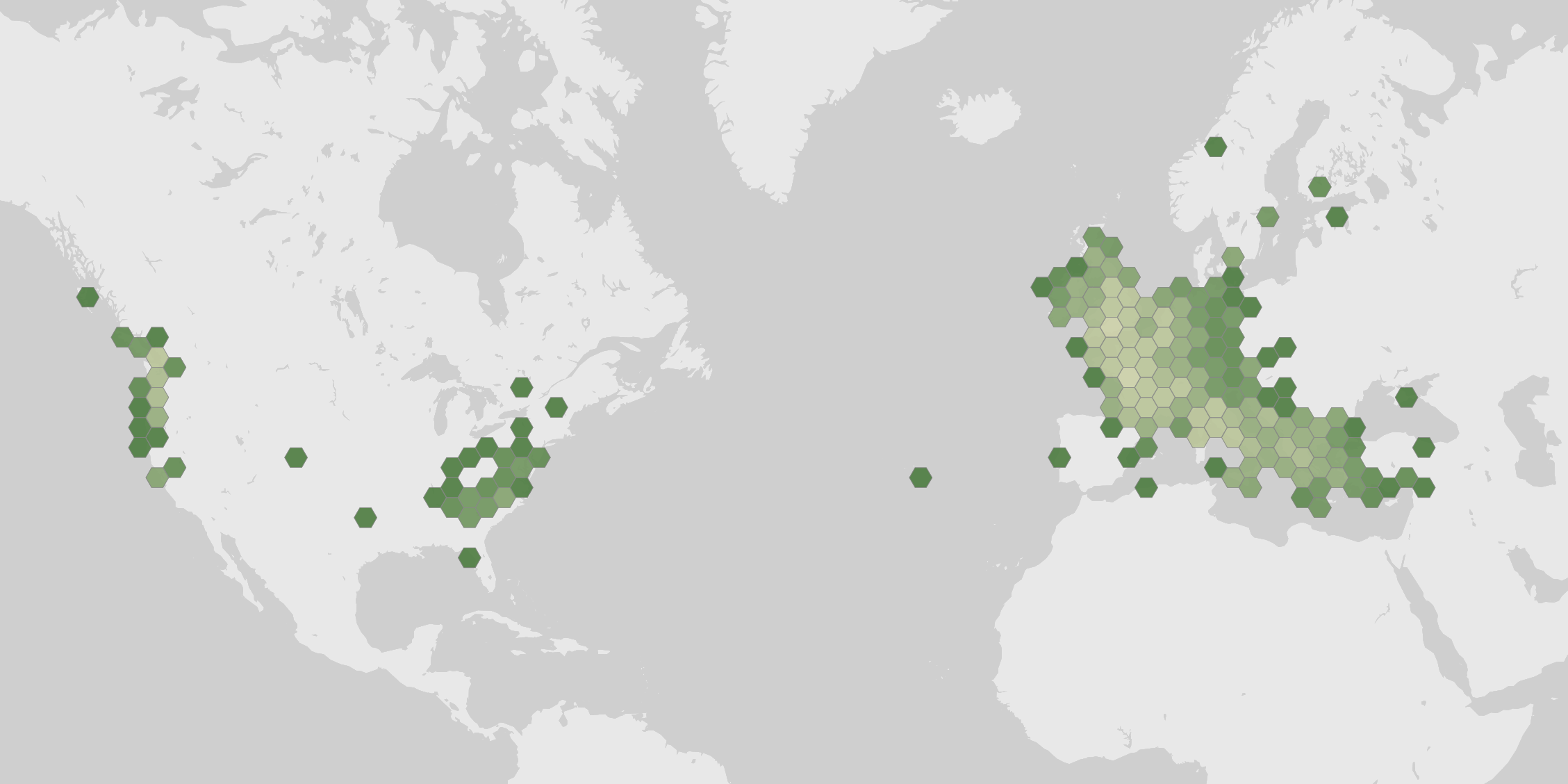
The species is native across the Mediterranean region, from southern France to western Turkey and on Mediterranean islands. It has naturalised farther north in Europe and in Oregon.
It is widely cultivated and is among the most hardy and vigorous cyclamens in oceanic climates, which makes it a useful case for anyone interested in how a wild plant becomes a garden staple.
Identification and Appearance
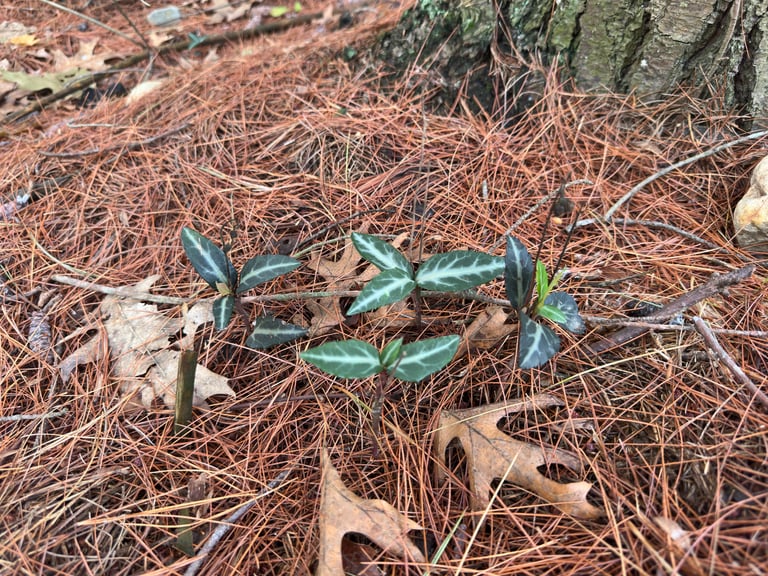
The most useful field mark is the leaf. The leaves are heart-shaped to long and arrow-shaped, usually with two or three angled lobes on each side, and they resemble the juvenile leaves of ivy (Hedera). They are naturally variegated, most often with a silver to grey-green pattern over various shades of green.
The plant is small. It grows up to 30 cm tall, and its leaves measure 2.5 to 8 cm long. The five-petalled flowers are 1.2 to 2.5 cm long.
Flowers are usually pink, purple or white, and most carry a streaky magenta V-shaped marking on the throat. Some are pure white with no markings. The petals curve outward near their tips into strong auricles, and the flowers are occasionally fragrant. Their shape ranges from long and thin to short and squat.
The closely related Cyclamen africanum can be told apart by its flower stalks, which rise straight up from the tuber without a bend near the base. The name hederifolium refers to the ivy-like leaves.
Distribution and Habitat
The species is native to Albania, Bulgaria, the East Aegean Islands, France, Greece, Italy, the northwestern Balkans, Switzerland and Türkiye. Its range is usually described as running from France to Türkiye, and it grows in a temperate climate.
Outside its native range, it has become established in Belgium, Germany, Great Britain, Ireland and Oregon.
It grows in woodland, shrubland and rocky areas, reaching altitudes of up to 1,200 metres.
Observations of the species cluster in September and October, the weeks when its flowers open.
Growth and Form
Cyclamen hederifolium is a tuberous geophyte, a plant that survives the dry season and the cold as a underground storage organ. It grows up to 30 cm tall and flowers and produces leaves in autumn, grows through the winter, and then rests through the summer once its seed capsules have ripened and opened.
The tuber is round and flattened. Roots emerge from its top and sides, leaving the base bare. Older tubers grow larger, and mature specimens commonly exceed 20 cm (8 in) across. Leaves and flowers arise from buds on the exposed upper surface.
After flowering, the flower stem coils tightly, beginning at its tip, and rests above the tuber while the seed capsule matures.
Uses and Human Relationships
Gardeners value this species as the hardiest cyclamen, and it is usually listed as such. In oceanic climates it self-seeds abundantly, and if it is planted with less vigorous species such as Cyclamen coum, it will crowd them out. In cold continental climates, such as Calgary, Alberta, it may not survive. It is hardy to zone 6, tolerating temperatures down to -18°C, or down to -30°C where reliable snow cover protects it.
The plant has won the Royal Horticultural Society's Award of Garden Merit, confirmed in 2017. Several cultivars are grown, including 'Amaze Me', which has dark pink flowers and blooms early, 'Ruby Glow', with deep all-magenta flowers, and 'Stargazer', which has upward-facing flowers.
The species has sometimes been divided into two forms based on leaf and flower traits: forma hederifolium, with pink or purple flowers and darker markings at the base of the petals, and forma albiflorum, with white flowers. The Plants of the World Online database treats forma albiflorum as a synonym, and the white-flowered form has won the RHS Award of Garden Merit.
Photos
Photographs from via iNaturalist, licensed under CC0 1.0., by Tommy Andriollo via iNaturalist, licensed under CC BY 4.0., by ponpon42 via iNaturalist, licensed under CC BY 4.0., by David Elrington via iNaturalist, licensed under CC BY 4.0., by DDutrey via iNaturalist, licensed under CC BY 4.0., and by lizixer via iNaturalist, licensed under CC BY 4.0., credited on each photo.
Ecology and classification
Classification
- Phylum
- Tracheophyta
- Class
- Magnoliopsida
- Order
- Ericales
- Family
- Primulaceae
- Genus
- Cyclamen
- Species
- Cyclamen hederifolium
Sources
- GBIF Species names and classification
- iNaturalist Photos
- Wikidata Common names and conservation status
- Wikipedia Summary extract
- Plants of the World Online Native range, life form and climate (WCVP)