The common carp is one of the few fish species to earn a place on the list of the world's 100 worst invasive species, a title that sits oddly alongside its long history as a prized food and ornamental animal.
It is a freshwater fish native to the lakes and large rivers of Europe and Asia, and although the Cyprinus carpio is assessed globally as Least Concern, its original wild populations are considered vulnerable to extinction, a split fate between the wild ancestor and the widely introduced, domesticated form that now dominates most of the world's waterways.
Few freshwater animals illustrate the tension between human use and ecological disruption as clearly as this one: farmed for food and beauty on one hand, blamed for collapsing water quality and native habitats on the other.
Identification and Appearance
The clearest measurable trait available for the common carp is its size: adults can reach up to 10.6 kilograms, placing it among the larger members of the carp family, Cyprinidae, a family it lends its name to.
Beyond this weight record, detailed data on coloration, scale pattern, or fin shape is not available here, so specific field marks cannot be confirmed from the evidence at hand.
Distribution and Habitat
The common carp naturally occupies temperate fresh or slightly brackish waters, tolerating a pH range of 6.5 to 9.0, salinity up to about 0.5%, and temperatures from 3 to 35°C, with an ideal range of 23 to 30°C and spawning triggered once water reaches 17 to 18°C. It favors large, slow-moving or standing water bodies with soft, vegetative sediments, including lakes, ponds, marshes, and slow or fast-moving stream pools, and it can survive an oxygen-poor winter under ice by gulping air at the surface.
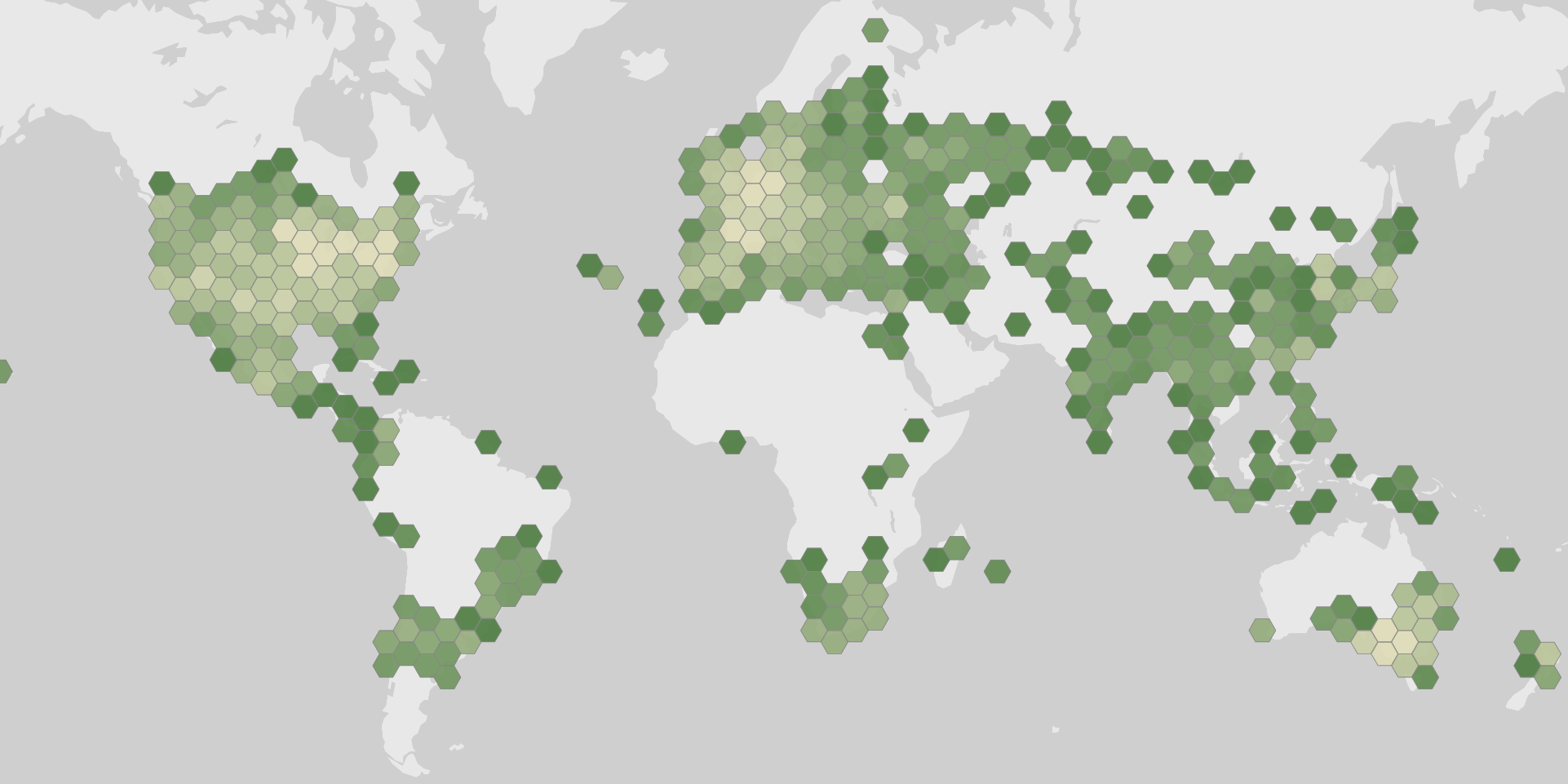
Beyond its native range, the species has been introduced to roughly 59 countries and most continents. In the absence of natural predators or fishing pressure, it can alter its environment substantially by grubbing through bottom sediments for food, which destroys and uproots submerged vegetation important to native fish and waterfowl such as canvasbacks.
Australia offers a clear case study: carp arrived over 150 years ago but were not recognized as a serious pest until the "Boolarra" strain escaped in the 1960s and spread through the Murray–Darling Basin, aided by major flooding in 1974. The species is now established in every Australian state and territory except the Northern Territory, and control efforts have included attempts to eradicate a small colony from Tasmania's Lake Crescent and proposals to use the carp-specific koi herpesvirus. In the United States, carp were introduced in 1831 and later distributed nationwide as a food fish; in Utah Lake, netting campaigns aim to cut the population by 75 percent.
Monthly observation counts show a clear seasonal pattern, rising from about 11,000 in January to a peak near 33,700 in June before declining through the autumn to roughly 10,400 in December. Since these are presence observations rather than a measure of abundance, the pattern most likely reflects when carp are easiest to detect near the surface or in shallow water, such as during spring and summer activity, rather than a true count of how many fish are present.
Behavior and Lifestyle
Common carp typically travel in small schools, but larger individuals often break away to live a more solitary existence. This shift from group living to solitary habits as fish grow larger suggests that social behavior may be tied more to size and vulnerability than to a fixed pattern for the species.
Beyond this contrast between schooling juveniles and solitary large adults, no further detail on territoriality, seasonal movement, or daily activity patterns is available.
Communication
Common carp appear to rely primarily on chemical and tactile cues rather than sound or vision for sensing their environment. These channels likely support finding food in murky, sediment-rich water and detecting other carp nearby, though no further detail on specific signals or their uses is documented here.
Diet and Nutrition
Common carp are selective benthic omnivores, feeding on whatever invertebrates and plant material they can find in bottom sediments rather than pursuing live prey. They feed by sucking up mouthfuls of mud, ejecting it, and then selectively consuming the food items as they float back down, leaving behind depressions in the sediment known as feeding galleries that are easy to spot in shallow water.
Diet shifts markedly with age. Newly hatched carp feed on zooplankton such as rotifers and copepods along with algae, while young-of-year fish move on to macroinvertebrates including chironomid larvae, caddisflies, mollusks, ostracods, and crustaceans.
Adults broaden their diet further, taking insects, crustaceans, annelid worms, mollusks, fish eggs, fish remains, and plant material such as tubers and seeds. This flexibility, combined with their disruptive feeding method, allows common carp to exploit nearly any freshwater habitat with soft sediment.
Reproduction and Life Cycle
Common carp are egg-layers that reproduce through external fertilization, with males and females segregating into shallow-water groups to spawn together rather than pairing off. Spawning typically occurs in spring and early summer as water warms past 17 to 18°C, though in tropical regions it can happen year-round, and a single female may spawn more than once in a season.
During spawning, females actively scatter eggs over dense macrophyte cover in the shallows, and the eggs stick to the vegetation on contact. A typical female around 45 centimeters long can produce roughly 300,000 eggs in one spawning, with cumulative seasonal totals estimated as high as one million. Incubation is fast, taking as little as four days at water temperatures between 25 and 32°C, and the resulting fry measure only about 5 to 5.5 millimeters at hatching.
Once fry reach about 8 millimeters, their yolk sac is used up and they begin actively feeding on their own; growth from that point depends on water temperature, stocking density, and food availability. Parents provide no further care after the eggs are laid. Males typically reach sexual maturity at 3 to 5 years old, and females slightly later at 4 to 5 years.
In commercial aquaculture, spawning is often induced artificially through a technique called hypophysation, in which pituitary extract is injected into the fish to trigger the hormone release needed for gonad maturation.
Population and Ecological Role
Common carp exert an outsized influence on their ecosystems relative to their numbers, largely through their feeding method. By grubbing through bottom sediments, they cause bioturbation that uproots aquatic macrophytes, consume tubers and young shoots directly, and increase water turbidity that blocks sunlight needed by submerged plants.
The species also acts as what researchers describe as a "nutrient pump": carp consume nutrient-rich sediment and then excrete those nutrients back into the water column in a form readily available to phytoplankton and other organisms, further degrading water clarity and quality. This combination of habitat disturbance and nutrient cycling, paired with the species' high fecundity, is the main reason common carp are widely regarded as a nuisance wherever they become established outside their native range.
Domestication and Human History
Carp farming has ancient roots, with the Romans raising common carp in ponds, a tradition later continued through European monasteries and still practiced today. In East Asia, carp aquaculture in China, Korea, and Japan dates back to at least the Yayoi period, roughly 300 BC to AD 300.
The scale of modern carp farming is immense: China alone produces roughly three million tonnes of common carp annually, accounting for about 14 percent of all farmed freshwater fish worldwide as of 2002 and around 70 percent of global carp production. The species remains an important food fish across most of the world, though it is generally considered unpalatable and avoided as food in Australia and North America.
Selective breeding produced the ornamental koi, a more colorful form of the same species bred in captivity and sold worldwide as pond fish. Beyond the pet trade and food markets, common carp also draw strong interest from anglers across Europe, with growing popularity among spear, bow, and fly fishers, and a slowly rising following among anglers in the United States and southern Canada despite the species' pest reputation there.
Conservation and Threats
The IUCN currently lists the common carp globally as Least Concern, and it holds no special protective status under the US Federal List or CITES. This reflects the species' overall abundance worldwide rather than the status of its original wild lineage, which the broader record describes as vulnerable to extinction in its native range, a distinction worth keeping in mind since global abundance and native population health are not the same measure.
No specific threats, population trend figures, or protection programs for the species are documented here beyond its regulatory status.
Conservation status
- LC
- NT
- VU
- EN
- CR
Least Concern
Cultural Significance
In Chinese mythology, common carp are said to swim upstream against a powerful current toward a waterfall known as the Dragon's Gate; only the strongest and most capable fish manage the final leap over the falls, and those that succeed are believed to transform into dragons. This story underlies much of the symbolism later attached to the species' ornamental form.
That ornamental form, the koi, is prized for bold, striking coloration and has become a subject of its own artistic and cultural tradition in East Asia, with imagery drawn from the fish's mythic transformation used to represent perseverance and achievement.
Beyond myth and art, the common carp holds a practical place in human life as both a food source and a fixture of the ornamental pet trade, with koi bred specifically for display in ponds around the world.
Fun Facts
- In 2020, scientists demonstrated that a small proportion of fertilized carp eggs can survive being eaten by waterfowl, passing through the digestive tract and hatching after being retrieved from droppings, a possible overlooked way the species spreads to new waters.
- Common carp can survive an oxygen-poor pond frozen over in winter by gulping air at the surface, so long as some open water remains beneath the ice.
- Their feeding method leaves behind visible depressions in the sediment called feeding galleries, formed as the fish suck up mud, eject it, and pick out food items as they resettle.
- Ornamental koi are not a separate species but selectively bred, brightly colored common carp.
- Victoria, Australia declared the common carp a noxious pest species back in 1962, and to this day anglers there face no limit on how many they can take.
Ecology
Habitat
- Wetland
- Freshwater
Behavior
- Burrowing
- Solitary
- Aquatic
- Social
Diet
- Omnivore
Photos
SourcesGBIFiNaturalistWikidataWikipediaAnimal Diversity WebAnAge