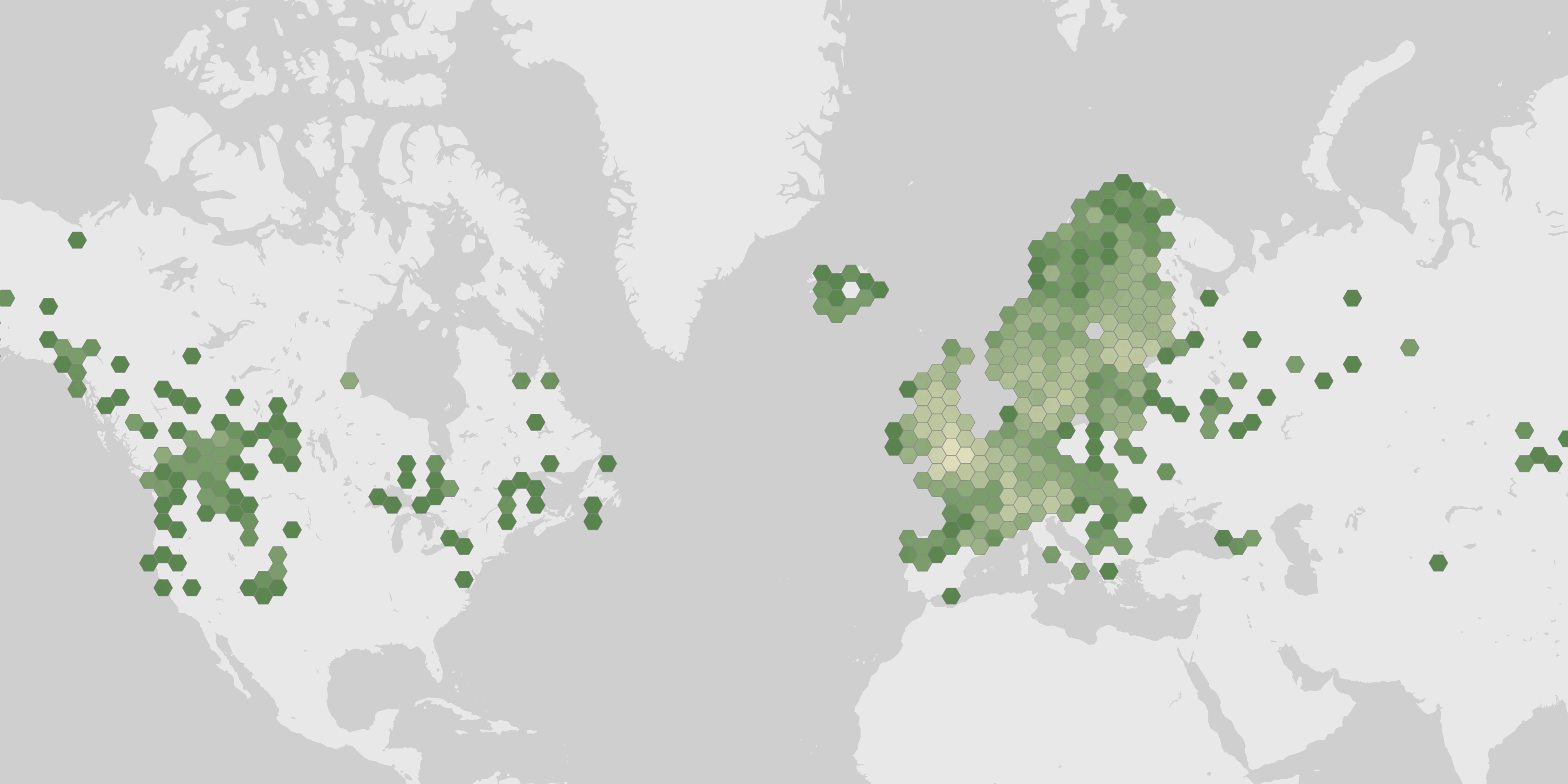
The July highflyer moth, Hydriomena furcata, is found across a vast stretch of the Northern Hemisphere. Its range runs from Europe and the Caucasus through Siberia and the Russian Far East to China and Korea, and across North America from Alaska to British Columbia and Newfoundland.
The moth belongs to the family Geometridae, the geometer moths. Carl Peter Thunberg first described it in 1784, and it sits within the Holarctic ecozone that covers the northern continents.
What makes this species worth a closer look is its variability. Wing colour and banding differ so much between individuals that the pattern alone can mislead, and the species is best told apart by a combination of marks.
Identification and Appearance
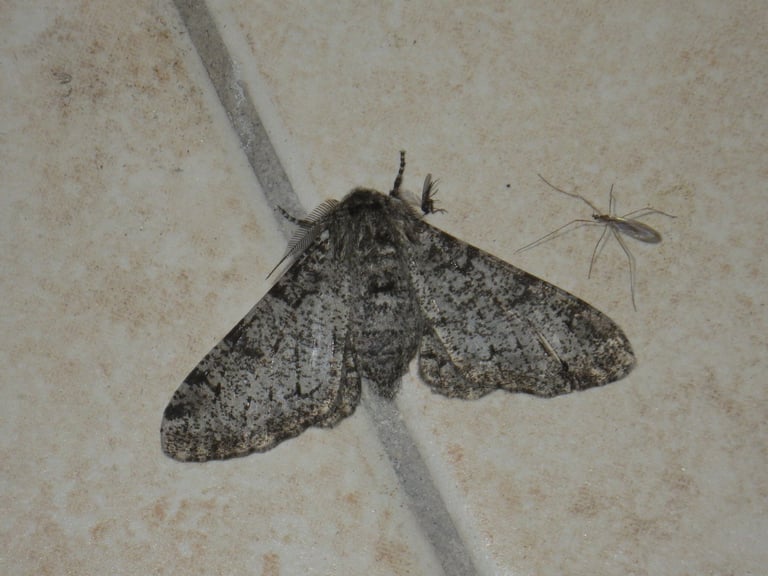
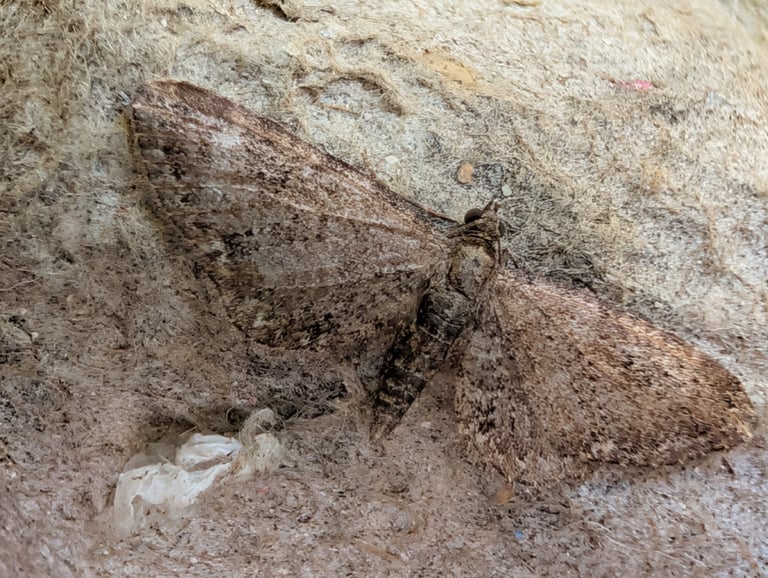
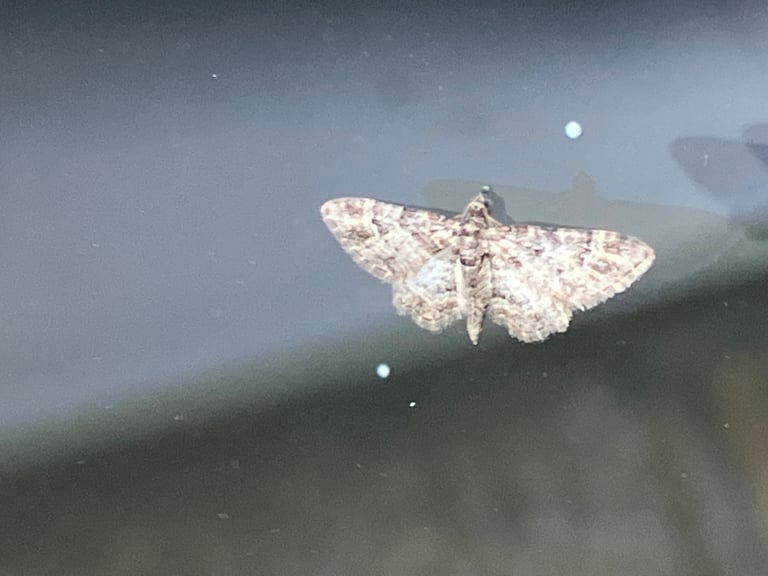
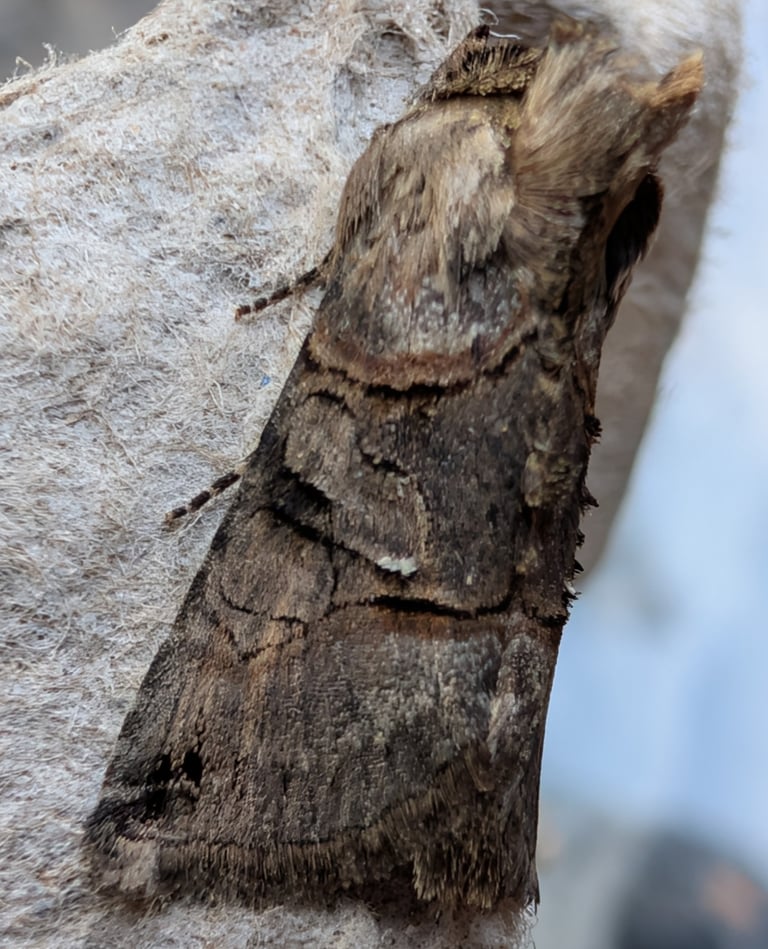
The most useful field mark is the dark cross band on the forewing. Its dark subterminal band is nearly always interrupted by a white or pale spot near the middle, and this feature separates the species from its relatives in Europe.
Adults have a wingspan of 23–30 mm. The ground colour ranges from olive green to grey, greyish brown and reddish brown. The cross bands vary in intensity and pattern, running from reddish brown to blackish, with whitish spots and dark speckles. A short anapical streak marks the forewing tip, and the hindwings are pale brown. The forewing edge is angled near the base.
Among the other European species of Hydriomena, this moth has a shorter palpus. Its markings between the subbasal line and the median space are more angled or irregular, and it lacks the black vein-streaks near the apex that appear on several relatives.
The caterpillar is dark grey on its back and dark red underneath, with white side stripes. The pupa is reddish brown and shiny, measuring 10 to 14 mm long and 3 to 3.8 mm wide. Its cremaster bristles provide a reliable way to separate it from related species.
Distribution and Habitat
Hydriomena furcata occurs across Europe, the Caucasus, Transcaucasia, the Urals, Kazakhstan, Siberia, the Russian Far East, northern Mongolia, China and Korea. In North America, it occurs from Alaska to British Columbia and Newfoundland.
Abundance changes sharply with latitude. The moth is extremely abundant in northern Europe, becomes more local in central Europe, and is apparently almost absent in the south of the continent. In Siberia and central Asia, by contrast, it has a wide range.
The preferred habitat is moorland in sub-alpine and montane regions. The moth also uses hedgerows and woodland margins, which connect it to farmland and forest edges as well as open uplands.
Observations peak in mid-summer, with the strongest records falling in July. Adults are most often seen in this period.
Diet and Nutrition
The caterpillars feed on the leaves of woody plants and heaths. Their food plants include hazel, several willows, aspen, beech and white poplar, along with bilberry, bog bilberry and heather.
The food plants fall into a small number of plant groups. Most of them belong to the rose order, the Rosales, and the willows and their relatives in the Malpighiales. Heath-family plants, the Ericales, also form a major part of the diet, alongside the Fagales that include hazel and beech.
Heath-family shrubs stand out because the moth draws on them from moorland and montane habitats, not only from woodland. This matches the open uplands where the species is most often found.
Population and Ecological Role
Adults and their caterpillars serve as food for several predators. Bats are among the main consumers, with the serotine bat and Nathusius' pipistrelle both taking the moth. Bush-crickets, including the long-winged cone-head and the great green bush-cricket, are also main predators. Beetles are another main group of consumers.
Some predators take the moth only occasionally. The cattle egret, a wading bird of the heron family, and the harlequin ladybird appear among its consumers, but these are not usual for the species.
By feeding on leaves and being eaten in turn, the moth links plant communities to a range of insect-eating animals. Its role as prey is part of how energy moves through its woodland and upland habitats.
Photos
Photographs from via iNaturalist, licensed under CC0 1.0., by Demian Hiß via iNaturalist, licensed under CC BY 4.0., by Josh Boe via iNaturalist, licensed under CC BY 4.0., by Brodie Cass Talbott via iNaturalist, licensed under CC BY 4.0., by Julia Palmer via iNaturalist, licensed under CC BY 4.0., by Scott Shanks via iNaturalist, licensed under CC BY 4.0., by Geoff Morgan via iNaturalist, licensed under CC BY 4.0., by Andrew Skotnicki via iNaturalist, licensed under CC BY 4.0., by ionafraser via iNaturalist, licensed under CC BY 4.0., by Rainer Breitling via iNaturalist, licensed under CC BY 4.0., by Sylvain Eichhorn via iNaturalist, licensed under CC BY 4.0., and by Will Taylor via iNaturalist, licensed under CC BY 4.0., credited on each photo.
Ecology and classification
Classification
- Phylum
- Arthropoda
- Class
- Insecta
- Order
- Lepidoptera
- Family
- Geometridae
- Genus
- Hydriomena
- Species
- Hydriomena furcata