The dusky woodswallow catches many of its insects in mid-air, picking them up on its wing while it flies. It is a songbird in the family Artamidae, the woodswallows, and lives in temperate and subtropical regions of eastern and southern Australia, reaching into tropical areas around the Atherton Tableland.
The species is rated Least Concern by the IUCN. Its global population has not been formally confirmed, but it is generally regarded as common across its local habitat. Individuals can live up to about .
Its sociable habits make it worth reading about. Flocks roost together and nest in groups, and the birds sometimes work together to steal food from other birds.
Identification and Appearance
The most useful field mark is the white patch on the outer wing, which sets the dusky woodswallow apart from other woodswallows. The bird is otherwise dark brown with a smoky tone, and a black patch sits in front of each eye.
The dusky woodswallow is medium-sized and swallow-like, weighing about . Its wings are grey, sometimes with black, and streaked with white. The tail is black with white tips, the underwing is silver, and the bill is blue-grey with a black cap.
The bird often wags or swivels its tail in quick bursts, a habit shared by many woodswallow species. Some individuals look grey rather than brown.
The little woodswallow is smaller and darker and is also smoky brown, but it lacks the white outer-wing patch. That patch is the reliable way to tell the two apart.
Distribution and Habitat
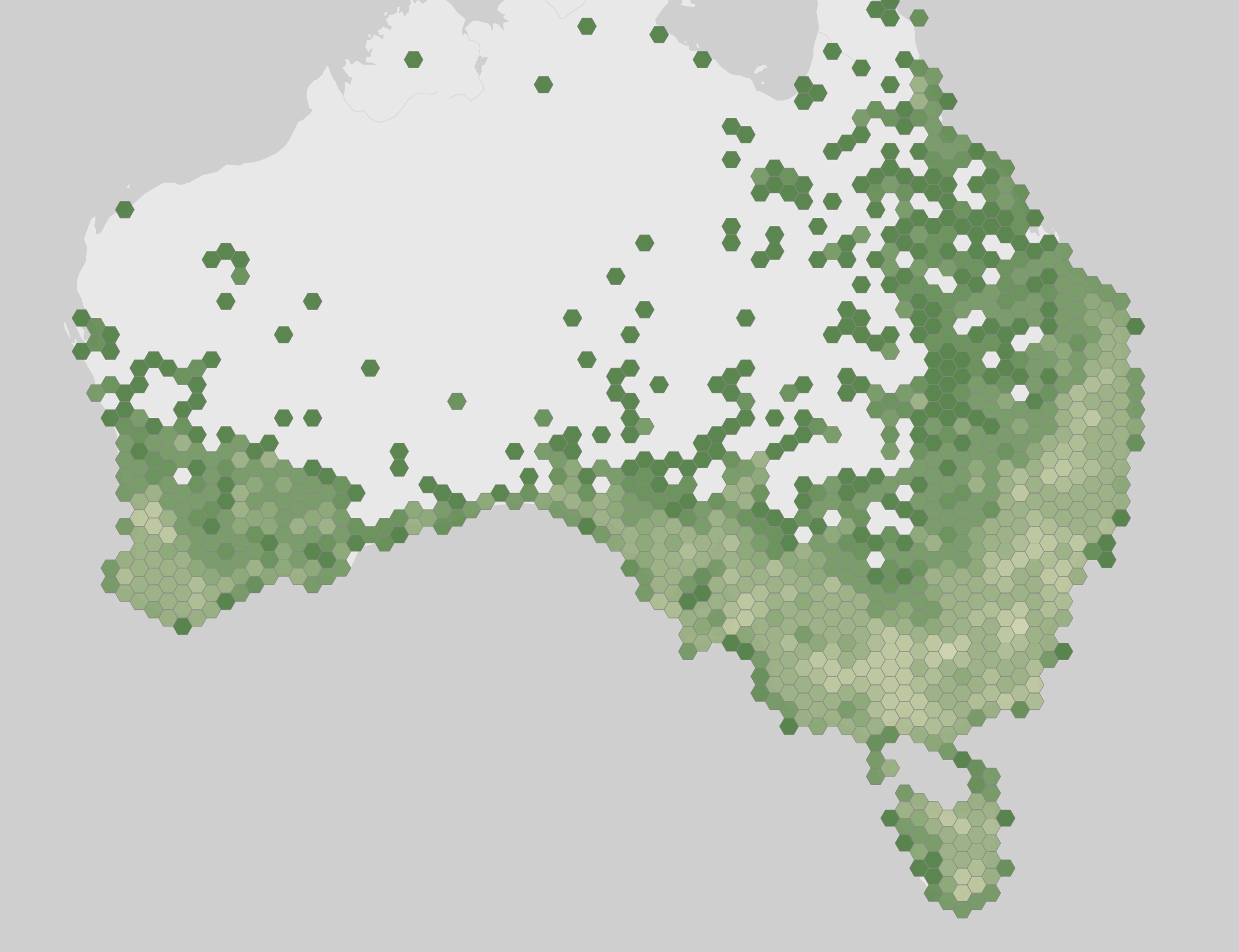
The dusky woodswallow lives mostly in open eucalyptus forests and woodlands. Its range runs from the Atherton Tableland in Queensland south to Tasmania and west to the Eyre Peninsula in South Australia, covering about 3,900,000 km².
The birds are nomadic and tend to move quite spontaneously across the landscape. Birds from the south-eastern part of the range make a clear seasonal move, migrating north for autumn.
Dusky woodswallows roost communally, usually at night. Observations are most concentrated from September to December, which may reflect when the birds are most active in the landscape.
Hunting and Diet
The dusky woodswallow eats a varied diet. It takes insects such as termites and butterflies, and it also feeds on foliage and grassy material from the ground, trees and shrubs. Birds also drink nectar from flowers.
The most distinctive feeding method is aerial. The bird catches flying insects on the wing, but it also takes prey from the ground. While waiting for prey, it perches in inconspicuous places such as utility lines.
It sometimes steals food from others. Groups of dusky woodswallows have been seen working together to rob a restless flycatcher of its prey.
Nesting and Breeding
Nest building takes place from August to January. The nest is a bowl of twigs, roots and similar plant material, matted together and lined with grass. It is placed behind bark, high in a tree branch or sometimes in a hollowed tree stump, where it is sheltered.
The mated pair guards the nest while other birds help care for the young. The female lays white eggs, usually three or four per clutch, though the number can vary. Incubation lasts about 16 days.
The young take around twenty days to fledge after they hatch.
Conservation and Threats
The IUCN lists the dusky woodswallow as Least Concern. Its very large range covers much of eastern and southern Australia, and it is expected to be as numerous as other birds in its densest range, which is labeled common.
The population size has not yet been quantified or estimated. Because the species is widespread and considered common, it is not currently listed as threatened.
Photos
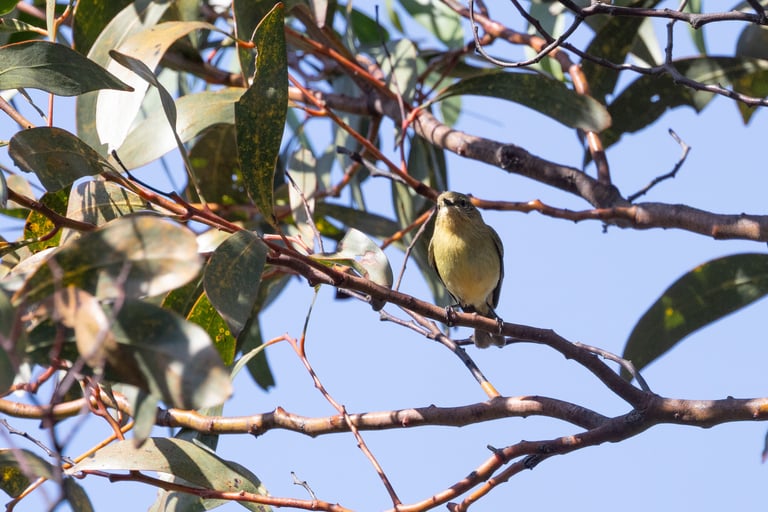
Photographs from via iNaturalist, licensed under CC0 1.0., by Sid Miller via iNaturalist, licensed under CC BY 4.0., by Tom Field via iNaturalist, licensed under CC BY 4.0., by SNSSO via iNaturalist, licensed under CC BY 4.0., by David Gobbett via iNaturalist, licensed under CC BY 4.0., by rBirdy via iNaturalist, licensed under CC BY 4.0., and by Roman Soroka via iNaturalist, licensed under CC BY 4.0., credited on each photo.
Ecology and classification
Classification
- Phylum
- Chordata
- Class
- Aves
- Order
- Passeriformes
- Family
- Artamidae
- Genus
- Artamus
- Species
- Artamus cyanopterus