The dark sword-grass gets its scientific name, Agrotis ipsilon, from the black markings on its forewings shaped like the letter "Y" or the Greek letter upsilon. This small noctuid moth is found worldwide, making it one of the most widely distributed moth species on the planet.
As a member of the family Noctuidae, its larvae are known as "cutworms" for their habit of cutting through plant stems. These larvae are serious agricultural pests, feeding on nearly all varieties of vegetables and many important grains, which makes this unassuming moth a significant concern for farmers across much of the world.
Identification and Appearance
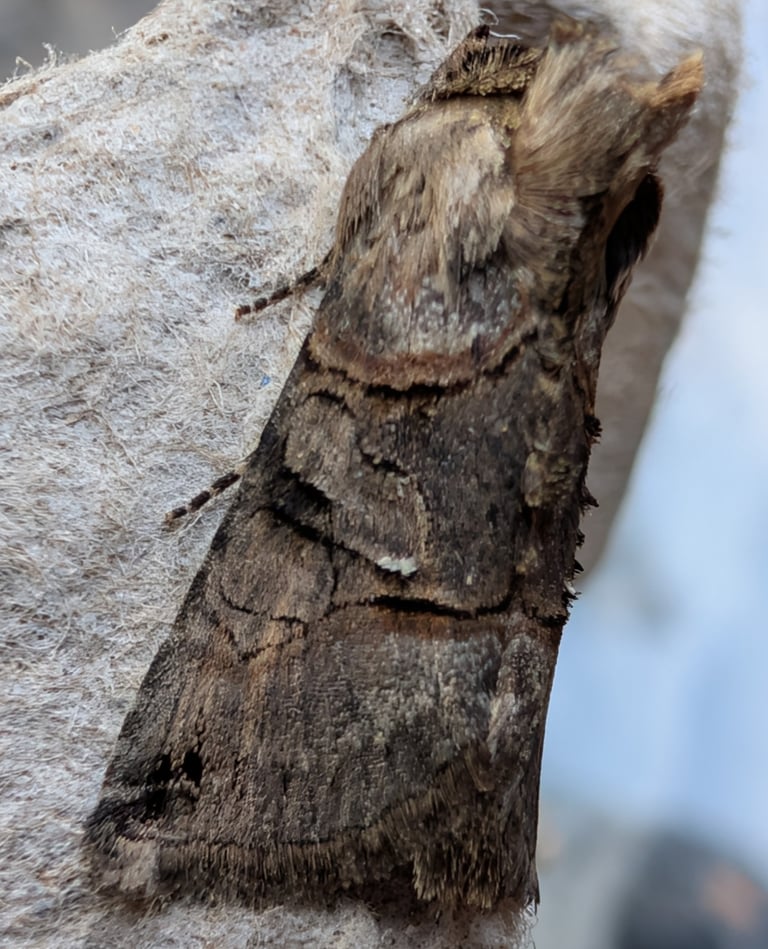
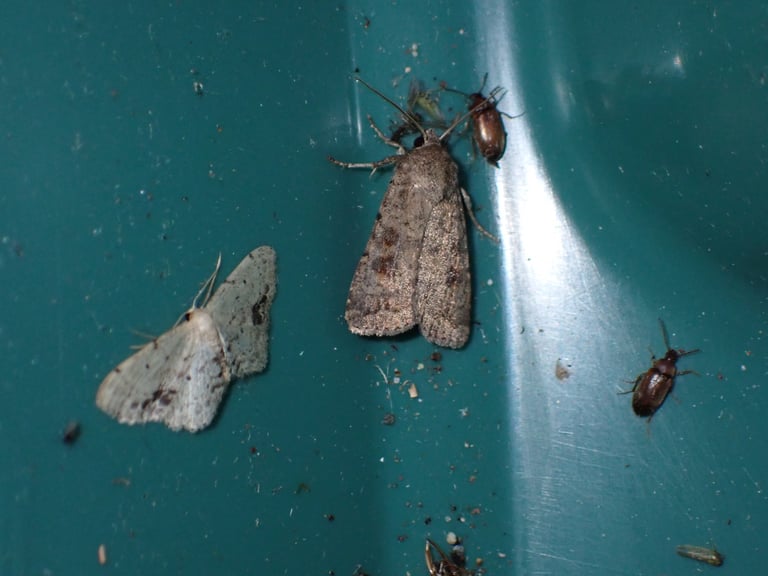
The clearest field mark is the black, Y-shaped or upsilon-shaped marking on the forewing, which gives the species its scientific name. Adults measure 38 to 48 millimeters across, with brown, reddish-tinged forewings mixed with pale greyish-ochreous tones.
The costa, and sometimes the median area, is suffused with dark fuscous shading, and the first and second lines are edged with dark fuscous. The reniform spot is outlined in black and followed by a short black dash, while the subterminal line is obscure, usually preceded in the middle by two fine black marks. Hindwings are whitish-grey or whitish, with fuscous suffusion toward the edges.
Males can be distinguished by their bipectinated (feather-like) antennae, a feature not shared by females. The larvae look quite different from the adults: they are ochreous brownish or bronzy-grey, sometimes greenish along the sides, with dorsal, subdorsal, and spiracular lines that are faintly darker or lighter, usually edged in a contrasting shade, and a head marked with brown suffusion.
Distribution and Habitat
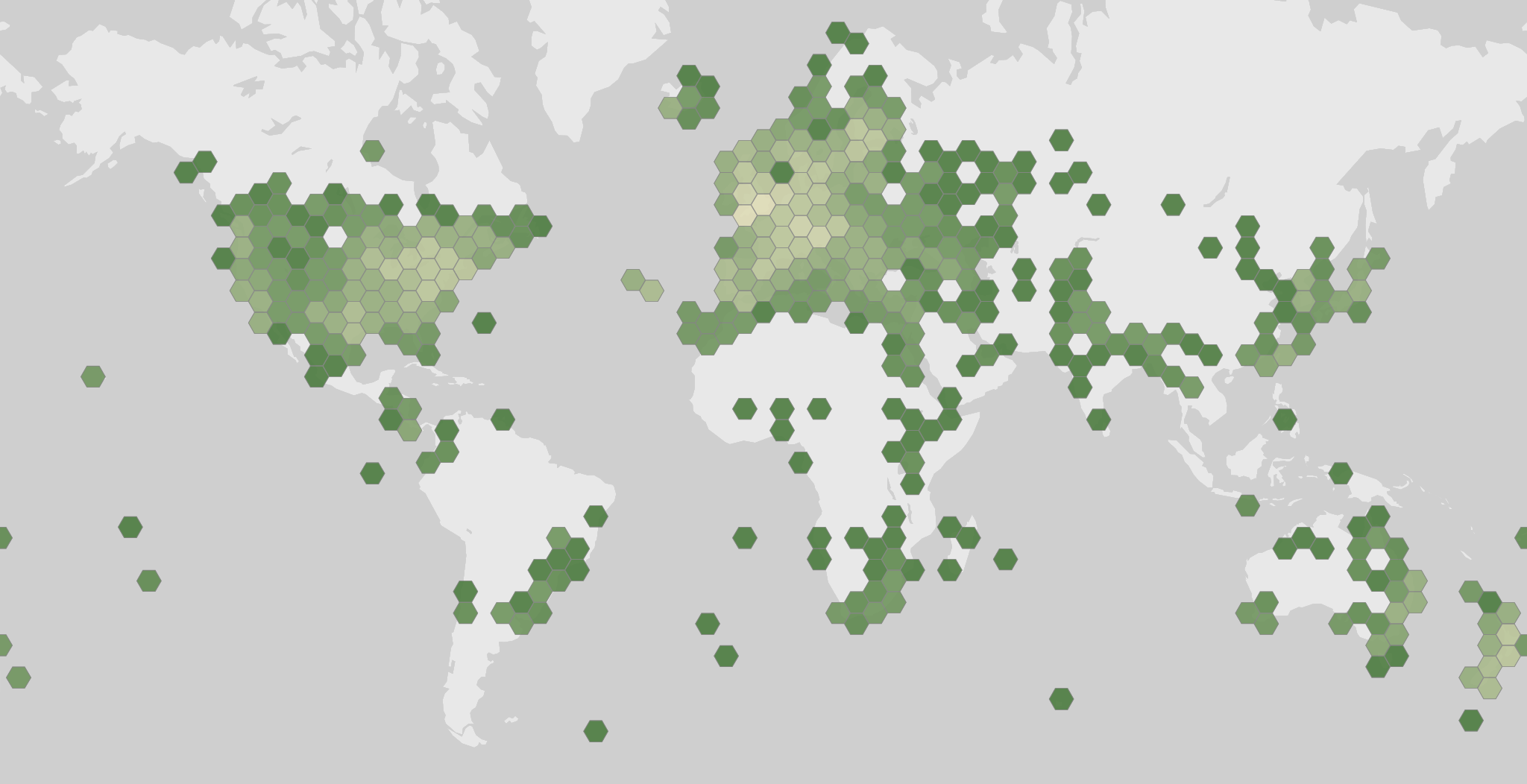
The dark sword-grass has one of the broadest ranges of any noctuid moth, found in southern Canada, 48 of the United States plus Hawaii, Mexico, Central and South America, Australia, New Zealand, the Pacific Rim, North Africa, Europe, and Asia. It is absent from some tropical regions and colder areas, and is notably more widespread across the Northern Hemisphere than the Southern.
This wide distribution is tied to its migratory behavior: the species moves north in spring and south in fall, tracking favorable conditions across continents. Observation records rise sharply through the warmer months, consistent with this seasonal northward movement and buildup before the species retreats southward again in autumn.
Its habitats include open, disturbed ground such as agricultural fields and grasslands, environments where its larval hosts, including weeds and crop plants, are abundant.
Behavior and Lifestyle
Much of the documented behavior in this species centers on the calling behavior of females, the act of releasing sex pheromones to attract mates. Calling behavior increases during the first three days after a female emerges as an adult, then declines as she ages.
Interestingly, older females shift the timing of calling to earlier in the period, a strategy that appears to compensate for producing less pheromone than younger females. By calling earlier, older females can still achieve mating success despite being less chemically conspicuous. This suggests a coordinated internal timing system linking pheromone quantity to the onset of calling behavior.
Diet and Nutrition
As larvae, dark sword-grass caterpillars feed on a wide range of weeds, including bluegrass, curled dock, lambsquarters, yellow rocket, and redroot pigweed, often stripping available weeds before turning to cultivated crops. Once weeds are exhausted, favored crops include most vegetable plants, alfalfa, clover, cotton, rice, sorghum, strawberry, sugarbeet, and tobacco, with occasional feeding on grains and grasses.
Recorded host plants reflect this broad appetite, spanning tobacco, potato, corn, beets, cabbage relatives, cannabis, lettuce, and grapevine, underscoring the larvae's status as generalist feeders capable of damaging many unrelated crop families.
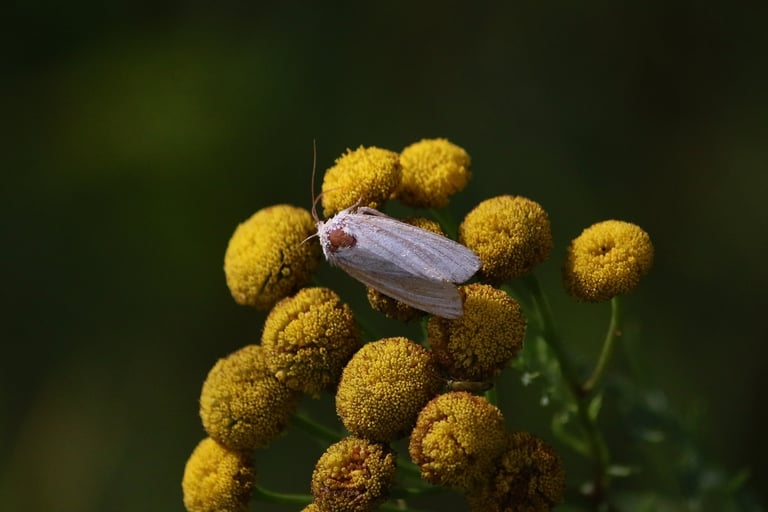
Adults shift entirely to a different diet, feeding on flower nectar rather than foliage. They are drawn to deciduous trees and shrubs such as linden, wild plum, crabapple, and lilac, and the species also acts as a pollinator of fetterbush lyonia as it visits flowers for nectar.
Reproduction and Life Cycle
Reproduction in this species is driven by a finely tuned hormonal system. Females produce a sex pheromone from a gland at the tip of the abdomen to attract males, with production controlled by a neurohormone called pheromone biosynthesis activating neuropeptide (PBAN), a 33-amino-acid peptide present in the brain-suboesophageal ganglion of both sexes.
The juvenile hormone (JH), released by a pair of glands called the corpora allata, is essential for pheromone production and release. It appears to act on two separate neuroendocrine pathways: one controlling ovary development and another controlling pheromone production. When the corpora allata is removed, calling behavior and pheromone production stop entirely, and ovaries fail to develop. Injecting decapitated females with synthetic juvenile hormone restores ovarian development, confirming its dual role.
In males, juvenile hormone governs responsiveness to female pheromones. Removing the corpora allata eliminates a male's sexual response to female signals, but reimplanting the gland restores both responsiveness and mating behavior, demonstrating how tightly linked hormone signaling is to successful reproduction in this species.
Population and Ecological Role
The dark sword-grass larva, the black cutworm, faces pressure from a range of natural enemies that help regulate its numbers. Several wasp species prey on it, and parasitoid wasps such as Meteorus leviventris reduce larval feeding by 24% and cutting of seedlings by 36% when infestation occurs. Additional parasitoid flies, including Archytas cirphis, Bonnetia comta, Gonia sequax, Eucelatoria armigera, and Sisyropa eudryae, along with ground beetles, also target the larvae.
Ants, particularly Lasius neoniger, prey on cutworm eggs, adding another layer of natural control. An entomopathogenic nematode, Hexamermis arvalis, infects up to 60% of larvae in the central United States, thriving especially in moist soil and ultimately killing its host.
As adults, dark sword-grass moths are preyed upon by a range of bats, including several Plecotus species, Eptesicus serotinus, and Nyctalus noctula, as well as bush-crickets such as Decticus species, making the moth an important part of the diet for insectivorous bats across parts of its range.
Cultural Significance
The dark sword-grass has a significant economic relationship with agriculture as the black cutworm, a recognized pest of crops including corn, cotton, tobacco, sunflower, tomatoes, sugar beet, and potato. In the midwestern United States, it is considered a serious pest of corn, with young plants at the one-leaf stage being especially vulnerable, while plants at the four- or five-leaf stage are relatively unaffected.
Each larva can consume over 400 square centimeters of foliage during its development, feeding above ground until about the fourth instar before switching to cutting young plants off at ground level, the behavior that gives cutworms their name.
Farmers manage cutworm damage through three main strategies: pre-plant soil insecticide treatments, planting-time insecticide applications, and rescue treatments applied after an infestation is already underway, sometimes called the wait-and-see approach, which has become more favored given a recent decline in outbreak frequency.
Fun Facts
- The moth's scientific name comes directly from the black, Y-shaped mark on its forewings, resembling the Greek letter upsilon, which the alternate name "ipsilon dart" also references.
- Insecticide resistance has been documented in some black cutworm populations, complicating control efforts in affected regions.
- A related species, the bogong moth (Agrotis infusa), holds historical importance as a seasonal food source for Indigenous Australians, highlighting the cultural significance some Agrotis moths have held beyond agriculture.
Photos
Photographs from via iNaturalist, licensed under CC0 1.0., by unipon via iNaturalist, licensed under CC BY 4.0., by Barry Stewart via iNaturalist, licensed under CC BY 4.0., by ncb1221 via iNaturalist, licensed under CC BY 4.0., by Andrew Bastian via iNaturalist, licensed under CC BY 4.0., by Petra Holland via iNaturalist, licensed under CC BY 4.0., and by Bethany Dennis via iNaturalist, licensed under CC BY 4.0., credited on each photo.
Ecology and classification
Classification
- Phylum
- Arthropoda
- Class
- Insecta
- Order
- Lepidoptera
- Family
- Noctuidae
- Genus
- Agrotis
- Species
- Agrotis ipsilon
Sources
- GBIF Species names and classification
- iNaturalist Photos
- Wikidata Common names and conservation status
- Wikipedia Summary extract
- GloBI What it eats, what eats it, parasites and pollinators
- trophiCH
- Wardeh et al. 2015 (EID2)
- DoPI