The smoky wainscot ranges across nearly the entire Palearctic realm, from Ireland in the west to Japan in the east, one of the broadest distributions among European noctuid moths.
Mythimna impura belongs to the family Noctuidae within the order Lepidoptera, and was first described by Jacob Hübner in 1808. In Europe it occurs from north of the Arctic Circle down to Spain, Italy, and northern Greece, making it a familiar sight across a huge range of latitudes and climates.
Identification and Appearance
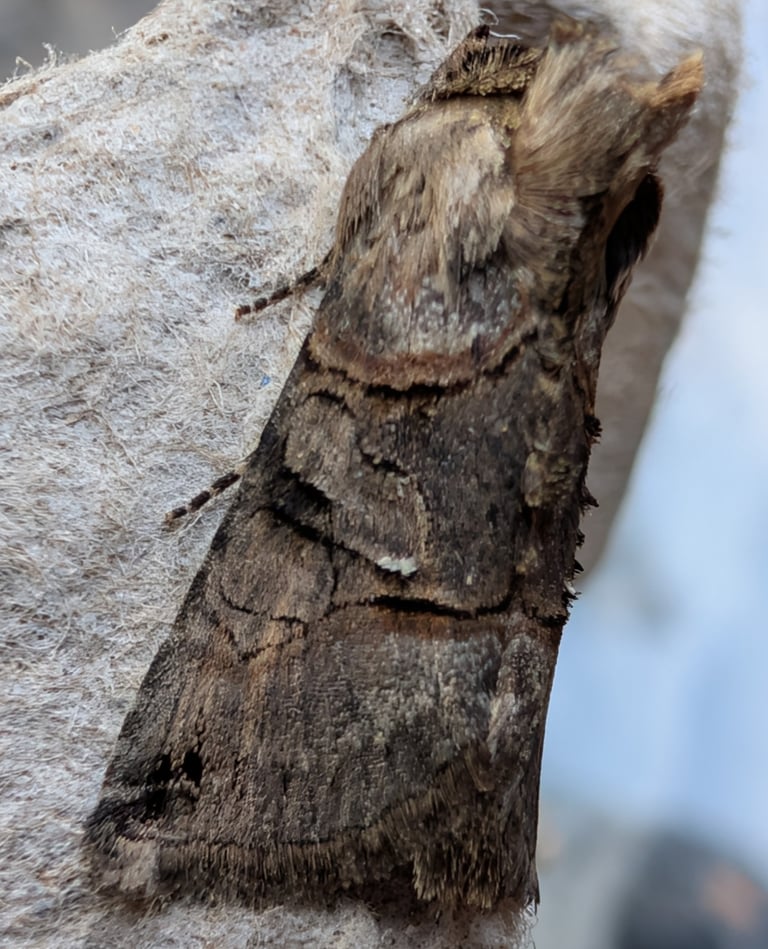
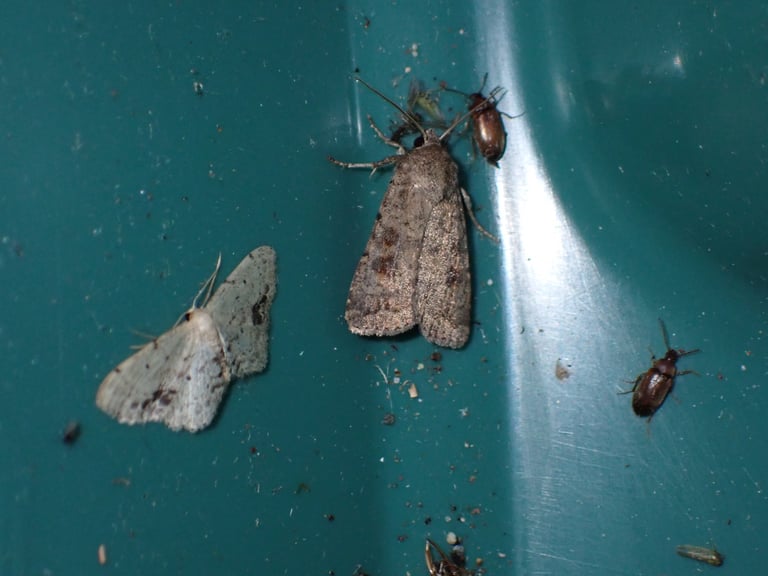
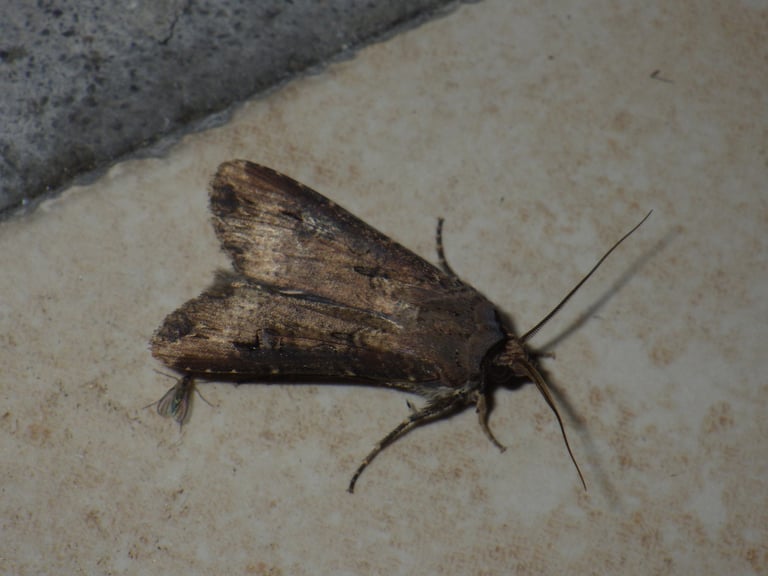
The forewing is ochreous with a rufous tinge, its veins—especially the median vein—appearing whiter than the surrounding wing and lined by fine brown streaks that also show in the spaces between veins. A dark shade sits below the median nervure, and a small black clot marks the lower angle of the wing cell. An outer row of dots is only partly visible, showing as spots on veins 2 and 5 rather than a complete line. The hindwing is dull grey, contrasting with the more patterned forewing.
Several regional forms vary from the typical pattern. The form dungana, from Turkestan and Tibet, is darker and more fuscous, with its dark streaks obscured. The transbaikalensis form from Transbaikal shows a forewing dusted with red-brown and streaks that are nearly gone. The amurensis form is darker overall, but with the white veins and dark markings standing out more sharply. A smaller form, fuscipennis, found in Calabria and at La Grave in the Hautes-Alpes, has a blackish-fuscous hindwing.
Distribution and Habitat
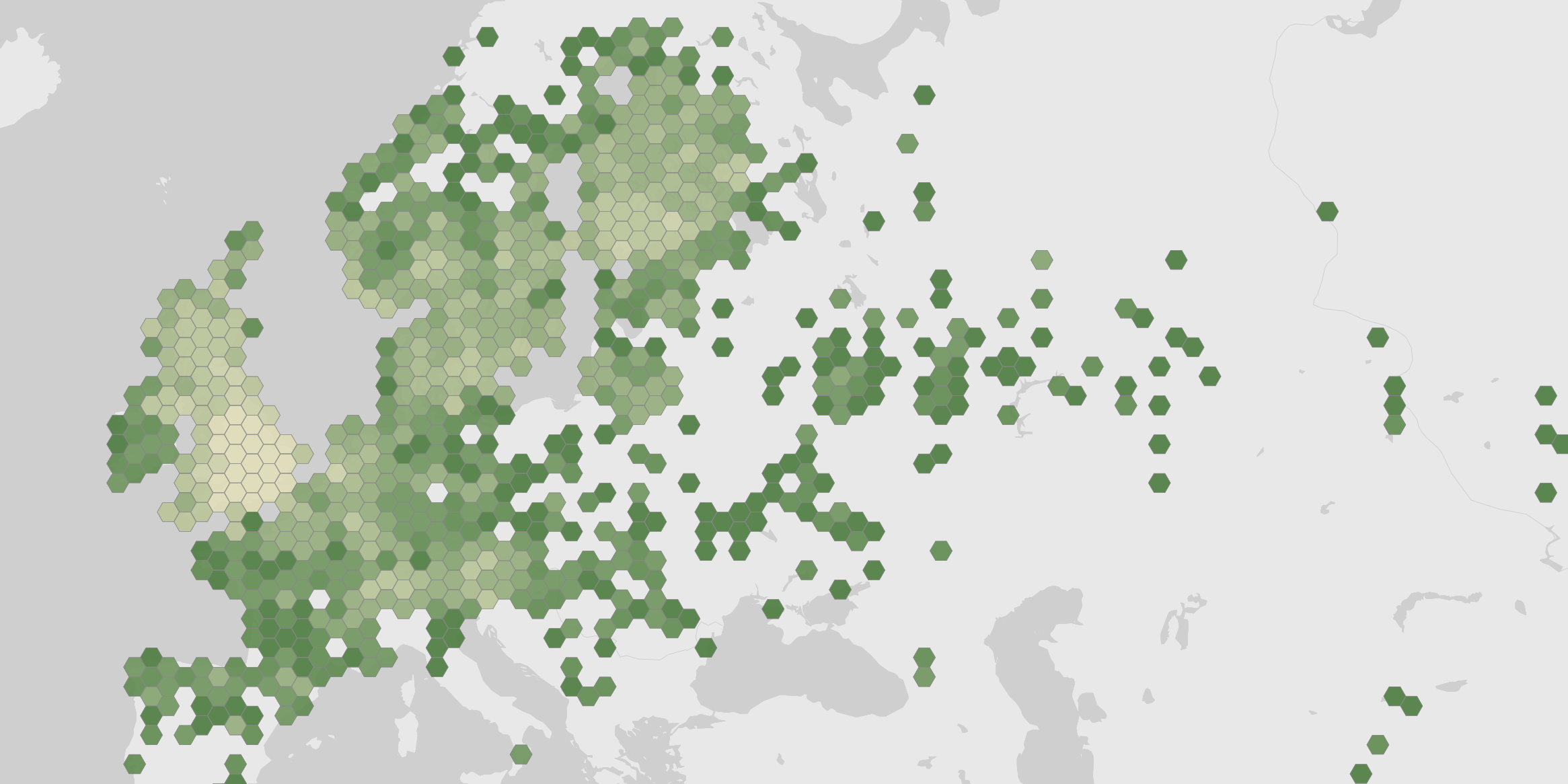
The smoky wainscot occurs across most of the Palearctic realm, from Ireland eastward through continental Europe, the Caucasus, Turkey, Syria, and Kazakhstan, into Russia, Siberia, Mongolia, and Japan. Within Europe it ranges from north of the Arctic Circle down to Spain and Italy, and into the northern parts of Greece, covering a wide span of climates and latitudes.
Observation records collected through the year show a sharp concentration in the warmer months, peaking around the middle of summer before dropping off through autumn and winter. This pattern points to strong seasonal presence in summer, when the adult moths are most active and most likely to be recorded, rather than any change in the species' overall range.
Diet and Nutrition
The smoky wainscot feeds on a range of grasses and sedges rather than on any single plant. Recorded food plants include cock's-foot (Dactylis glomerata), purple moor-grass (Molinia caerulea and related Molinia forms), tall oat-grass (Arrhenatherum elatius), tufted hair-grass (Deschampsia cespitosa), common reed (Phragmites australis), wood small-reed (Calamagrostis epigejos), and slender-tufted sedge (Carex acuta).
One standout among its recorded associations is Buddleja davidii, the butterfly bush, which appears alongside the grasses and sedges that make up most of its diet. The overall pattern points to a species whose caterpillars rely heavily on grassland and wetland-edge vegetation, particularly the tall, coarse grasses typical of river valleys, lake shores, and damp meadows.
Fun Facts
- The species was first described by Jacob Hübner in 1808, giving it a taxonomic history stretching back more than two centuries.
- It is described as a hygro-mesophilous species, meaning it favors moderately moist habitats such as steppes, river valleys, and lake shores.
- Its adult flight period spans two windows, roughly June to July and again in September, suggesting two generations or a split emergence period in some regions.
Photos
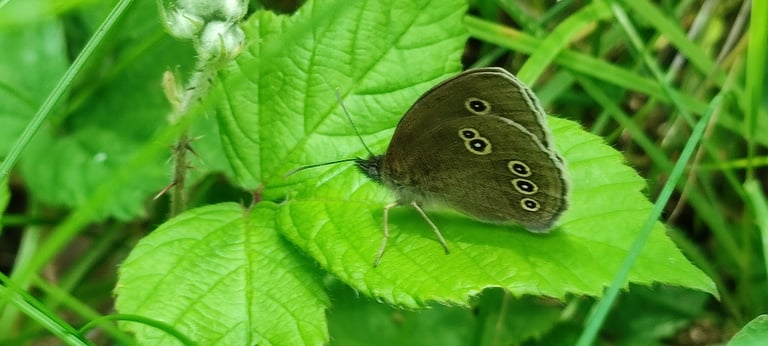
Photographs from via iNaturalist, licensed under CC0 1.0., by mark beaumont via iNaturalist, licensed under CC BY 4.0., and by ciaranrowett via iNaturalist, licensed under CC BY 4.0., credited on each photo.
Ecology and classification
Classification
- Phylum
- Arthropoda
- Class
- Insecta
- Order
- Lepidoptera
- Family
- Noctuidae
- Genus
- Mythimna
- Species
- Mythimna impura