Deltote pygarga is a moth whose range covers much of the Palearctic, from Scandinavia and the Mediterranean to Japan and Taiwan. It belongs to the family Noctuidae, the owlet moths, and the species is also known under the name Protodeltote pygarga.
The moth is known in English as the marbled white spot. Its white wings and dark markings set it apart within its family, and its broad range makes it a useful subject for studying how a moth spreads across the Palearctic.
Identification and Appearance
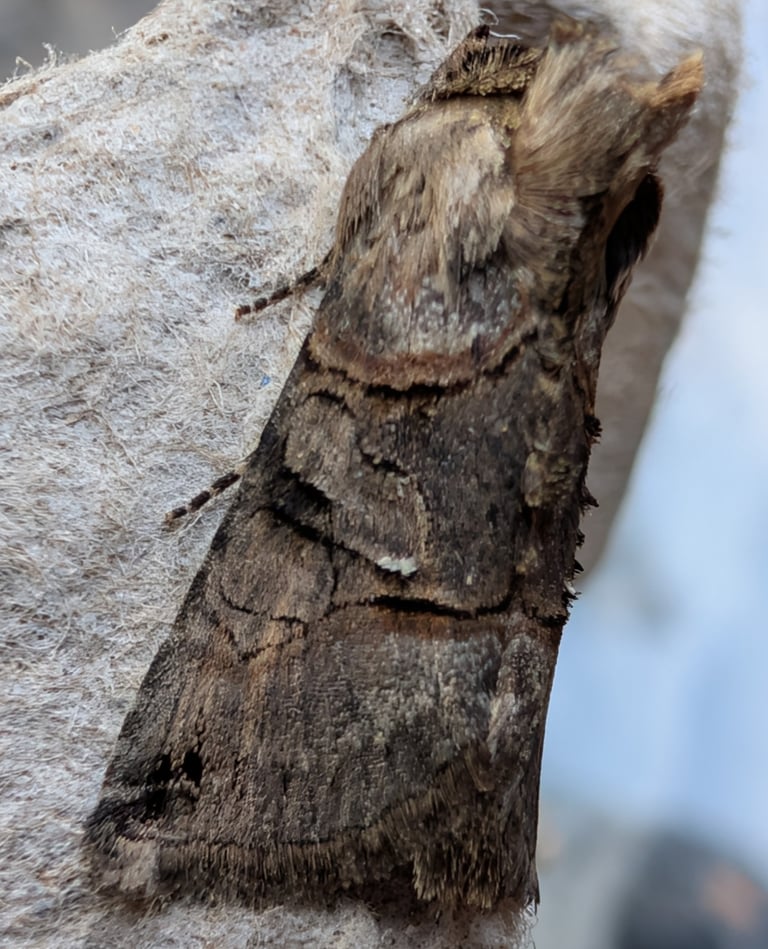
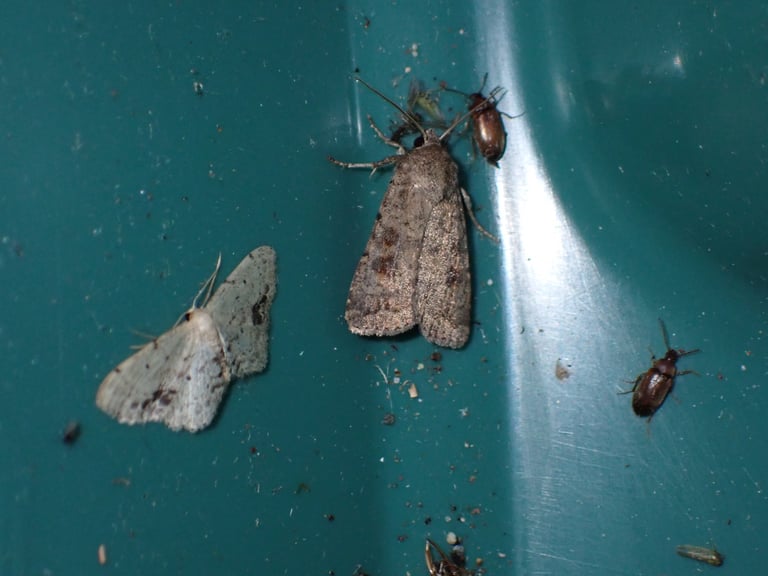
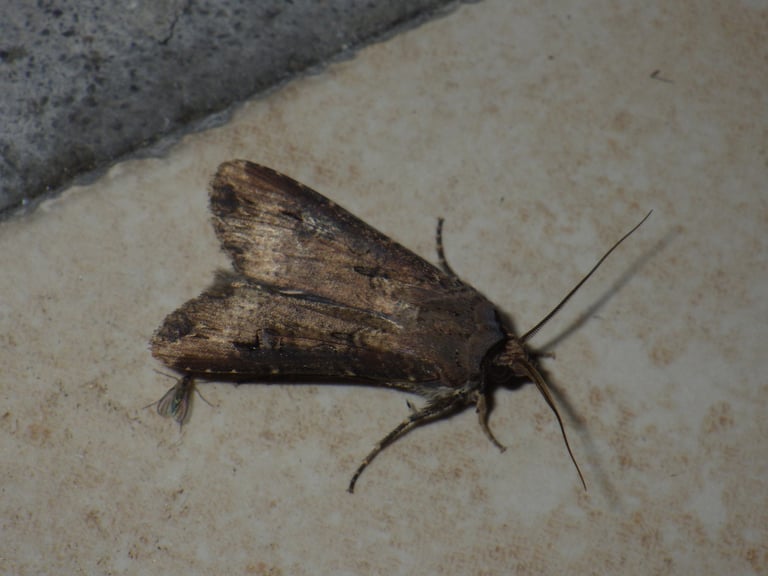
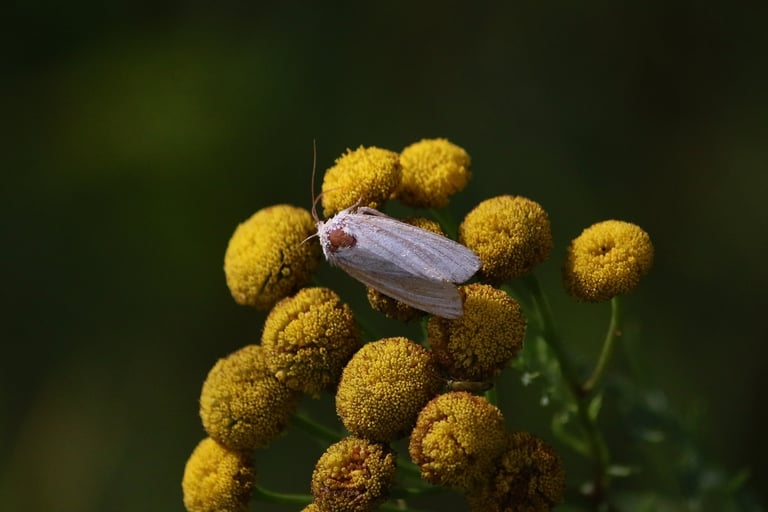
The forewing is white, suffused with fuscous and black. Its wingspan measures 20–26 mm. Both the inner and outer lines are double and blackish, and the space between them is filled with grey. The round orbicular spot and the kidney-shaped reniform spot are grey, with paler outlines, and black scaling runs between them and follows the reniform.
The grey-brown claviform spot is edged with white at its end and followed by black scaling. A pale submarginal line sits in front of dark shading that thins toward the inner margin. In the lower half of the wing, the area beyond the outer line is more or less white. The hindwing is fuscous with a whitish fringe.
The form albilinea has much stronger dark shading before the submarginal line. This leaves the white area beyond the outer line as only a narrow band from the costa to the inner margin. In the form albomarginata, weaker shading lets the white reach the costa as a broad band.
The form gueneei, described from south-west France, has wings suffused with rufous, a nut-brown tone that gives it a very different look from the typical white form.
Distribution and Habitat
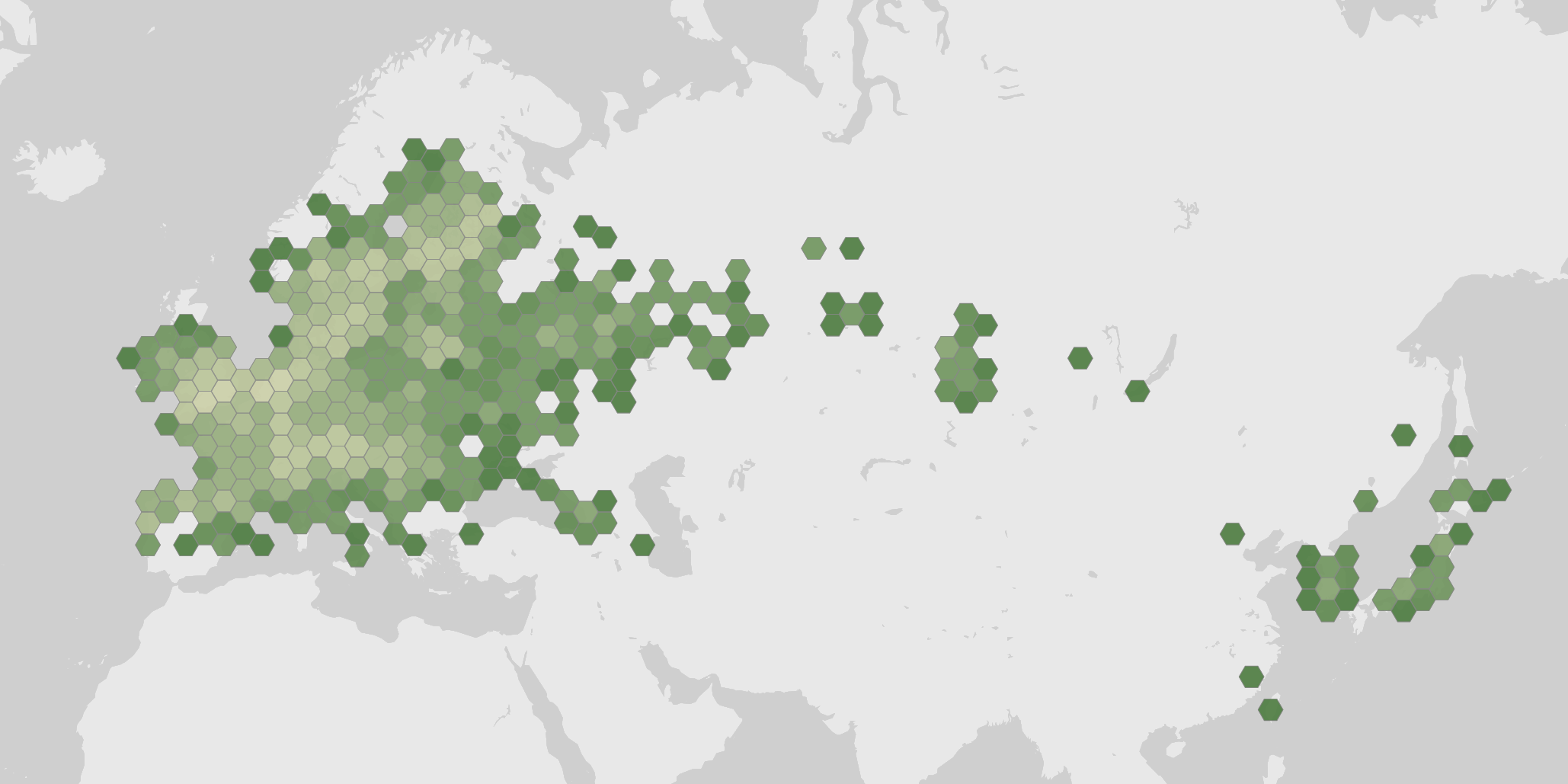
The species occurs throughout Europe, including Scandinavia. In the south, it is found in the countries bordering the Mediterranean, including some of its islands. Eastward, its range extends across Asia Minor, northern Iran, Afghanistan, southern Siberia and Central Asia, reaching China, Sakhalin, Korea, Japan and Taiwan.
In the Alps, the moth is found up to about 1,000 m. Its habitats are not described in detail in the available sources, but its wide spread across varied climates in Europe and Asia shows that it tolerates many conditions.
Records of adults are concentrated in late spring and early summer, with the strongest peak in June and a close second in July. Fewer records appear in August and September, and very few in the cooler months. This pattern reflects when the moth is most often seen, not how many individuals exist.
Population and Ecological Role
The larvae of Deltote pygarga serve as hosts for the tachinid fly Ceromya silacea, which attaches to them. This parasitic relationship links the moth to a second insect and affects the survival of its immature stages. Through this role, the moth forms part of a food chain in which a parasitic fly depends on its caterpillars.
The moth's wide range across Europe and Asia suggests that it is an established member of many woodland and open-country communities. Its caterpillars and the flies that parasitize them form a small but continuous link in these ecosystems.
Photos
Photographs from via iNaturalist, licensed under CC0 1.0., by Liem Malarney via iNaturalist, licensed under CC BY 4.0., by Claude Kolwelter via iNaturalist, licensed under CC BY 4.0., by Ilja Insect via iNaturalist, licensed under CC BY 4.0., by Oleg Kosterin via iNaturalist, licensed under CC BY 4.0., by João Lima via iNaturalist, licensed under CC BY 4.0., by Demian Hiß via iNaturalist, licensed under CC BY 4.0., and by Ирина Хохрякова via iNaturalist, licensed under CC BY 4.0., credited on each photo.
Ecology and classification
Classification
- Phylum
- Arthropoda
- Class
- Insecta
- Order
- Lepidoptera
- Family
- Noctuidae
- Genus
- Deltote
- Species
- Deltote pygarga
Sources
- GBIF Species names and classification
- iNaturalist Photos
- Wikidata Common names and conservation status
- Wikipedia Summary extract