The emperor dragonfly is the largest dragonfly found across most of Europe, a title it holds despite being an insect barely three inches long. It belongs to the hawker family Aeshnidae, within the order Odonata, and ranges across Africa, most of Europe, the Arabian Peninsula, and parts of south-western and central Asia.
The International Union for Conservation of Nature lists the species as Least Concern, reflecting a wide range and a population that shows no signs of decline. Its combination of striking color, aerial hunting skill, and an ongoing spread into new territory makes it one of the more conspicuous and closely watched dragonflies in Europe today.
Identification and Appearance
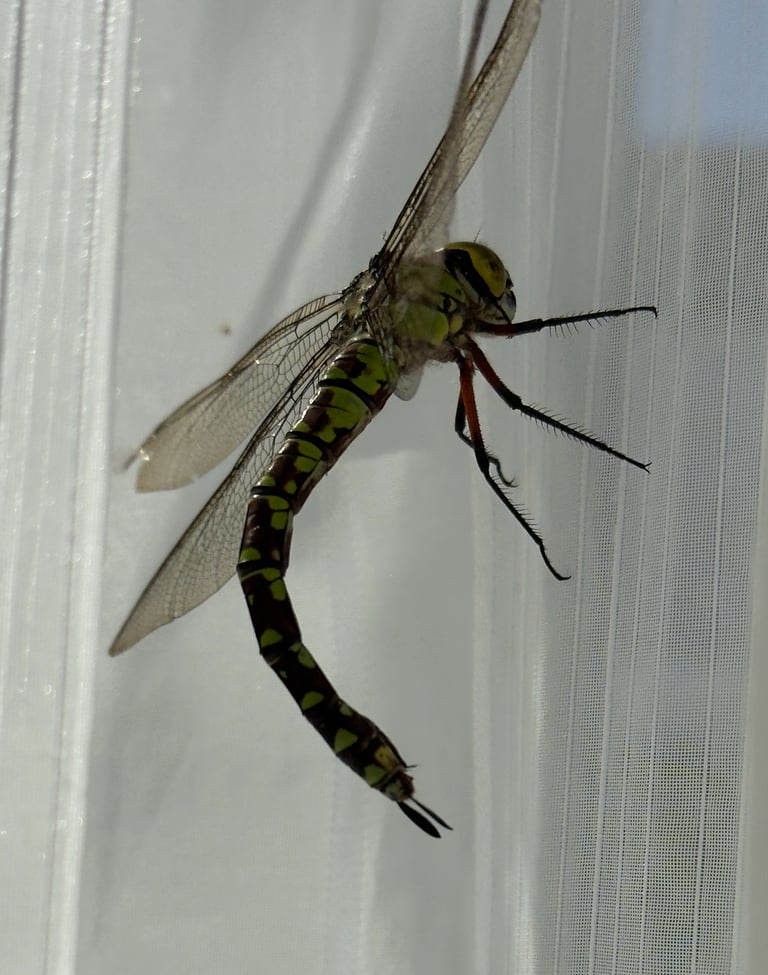
The clearest field mark on a mature male is its sky-blue to turquoise abdomen, split lengthwise by a diagnostic black dorsal stripe. This coloring can fade during spells of cold weather, so a subdued individual is not necessarily a different species.
Body length runs from 73 to 82 millimeters, averaging about 78 millimeters, with males growing larger than females. The average wingspan reaches 104 millimeters. This is a bulky, powerfully built dragonfly, and freshly emerged individuals of both sexes look quite different from mature adults: pale green with brown markings, brown legs with a yellowish base, and wings that start out black before turning yellow-brown as they harden.
Males carry an apple-green thorax and head with prominent blue eyes, while females share a similar pattern but in duller green tones; as females age, their wings darken to a browner shade. Less obvious features include a yellow costa (the leading edge vein of the wing) and small brown spots scattered across the wings. In flight, the species has a habit of holding its abdomen angled slightly downward, a useful clue even at a distance.
Because it is the largest dragonfly across most of its European range, size alone often confirms identification. Where the golden-ringed dragonfly or the magnificent emperor also occur, body length and the black-striped blue abdomen help separate Anax imperator from these similarly large relatives.
Distribution and Habitat
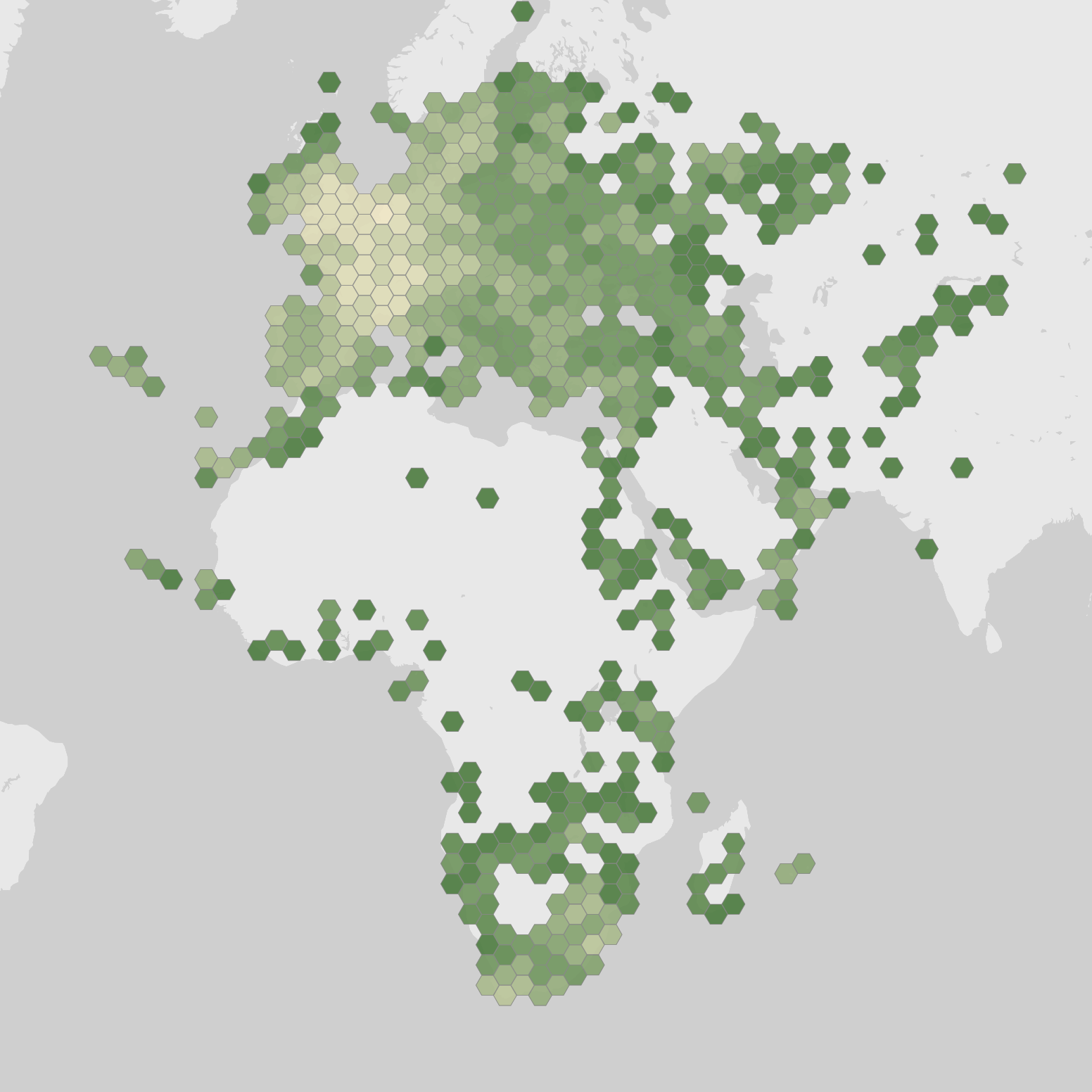
The emperor dragonfly has a broad distribution spanning Afroeurasia, occurring throughout Africa and across most of Europe, the Arabian Peninsula, and south-western and central Asia. This is not a narrow specialist's range but one of the widest among European dragonflies.
Since the 1990s, that range has been pushing both northward and to higher altitudes. The first Scandinavian record came from Denmark in 1994, followed by the first Swedish sighting in 2002 and the first Scottish record in 2004; the species is now regular in all three countries. This northward march has been linked to global warming, and the emperor dragonfly is considered among the first odonates to have shifted its range in response.
The species breeds in a variety of still and slow-moving freshwater habitats, including large ponds, dikes, and slow-moving rivers, provided there is plentiful aquatic vegetation; it will occasionally use brackish water as well.
Monthly observation records show a sharp seasonal peak, with counts climbing from a few thousand in spring to well over 180,000 in June and July before falling off through the autumn. These figures reflect when observers most often encounter the species in the field rather than a measure of its total population, but the pattern points clearly to a summer flight season.
Behavior and Lifestyle
Adult emperor dragonflies are active, high-flying hunters, often climbing well up into the sky to chase down prey such as butterflies, other dragonflies and damselflies, and tadpoles. When a hunt succeeds, the dragonfly typically eats its catch on the wing rather than landing.
Breeding draws the species back down to water. Females lay their eggs alone, inserting them into aquatic plants such as pondweed, and never share the task with other females at the same time. The resulting larvae are large, around 46 millimeters long, and notably aggressive; their voracious habits are thought to influence the composition of native species in the freshwater ecosystems where they establish themselves.
Adult males defend territories around breeding waters and are known for being difficult to approach, patrolling their patch of pond or riverbank and driving off rival males.
Conservation and Threats
The IUCN classifies the emperor dragonfly as Least Concern, a status that reflects both a wide geographic range and a population assessed as stable rather than declining. Unlike many odonates facing habitat loss, this species has actually expanded its range in recent decades rather than contracted.
No major threats are documented for the species at present, and its adaptability to a range of freshwater habitats, from large ponds to dikes and slow rivers, appears to support its continued stability across Africa, Europe, and parts of Asia.
Conservation status
- LC
- NT
- VU
- EN
- CR
Least Concern
Cultural Significance
The species name draws on regal imagery: the genus name Anax comes from Ancient Greek, where it means "master" or "king." In Greek mythology, Anax was a king of Anactoria, the son of Gaea (the Earth) and father of Asterius, a lineage tied to old stories of giants ruling the land.
That mythic sense of oversized, kingly stature echoes a broader pattern in ancient cultures, which often depicted rulers as literally larger than life, exaggerating their physical attributes in art and legend to emphasize authority. Naming the largest dragonfly across most of Europe after a legendary king fits neatly into that tradition of connecting size with sovereignty.
Fun Facts
- The genus name Anax comes from Ancient Greek for "master" or "king," a fitting name for one of Europe's largest dragonflies.
- In Greek mythology, Anax was a king born of Gaea, the Earth, and was said to be the father of Asterius, tying the dragonfly's name to old legends of giant rulers.
- Freshly emerged emperor dragonflies look nothing like the adults: their wings start out black and only turn yellow-brown as they mature.
- The aquatic larvae grow to about 46 millimeters, nearly two-thirds the length of the adult, and are aggressive enough to reshape which other species share their pond.
Ecology
Diet
- Carnivore
Behavior
- Predator
- Territorial
- Aggressive
Habitat
- Freshwater